Which Surface Gets Which
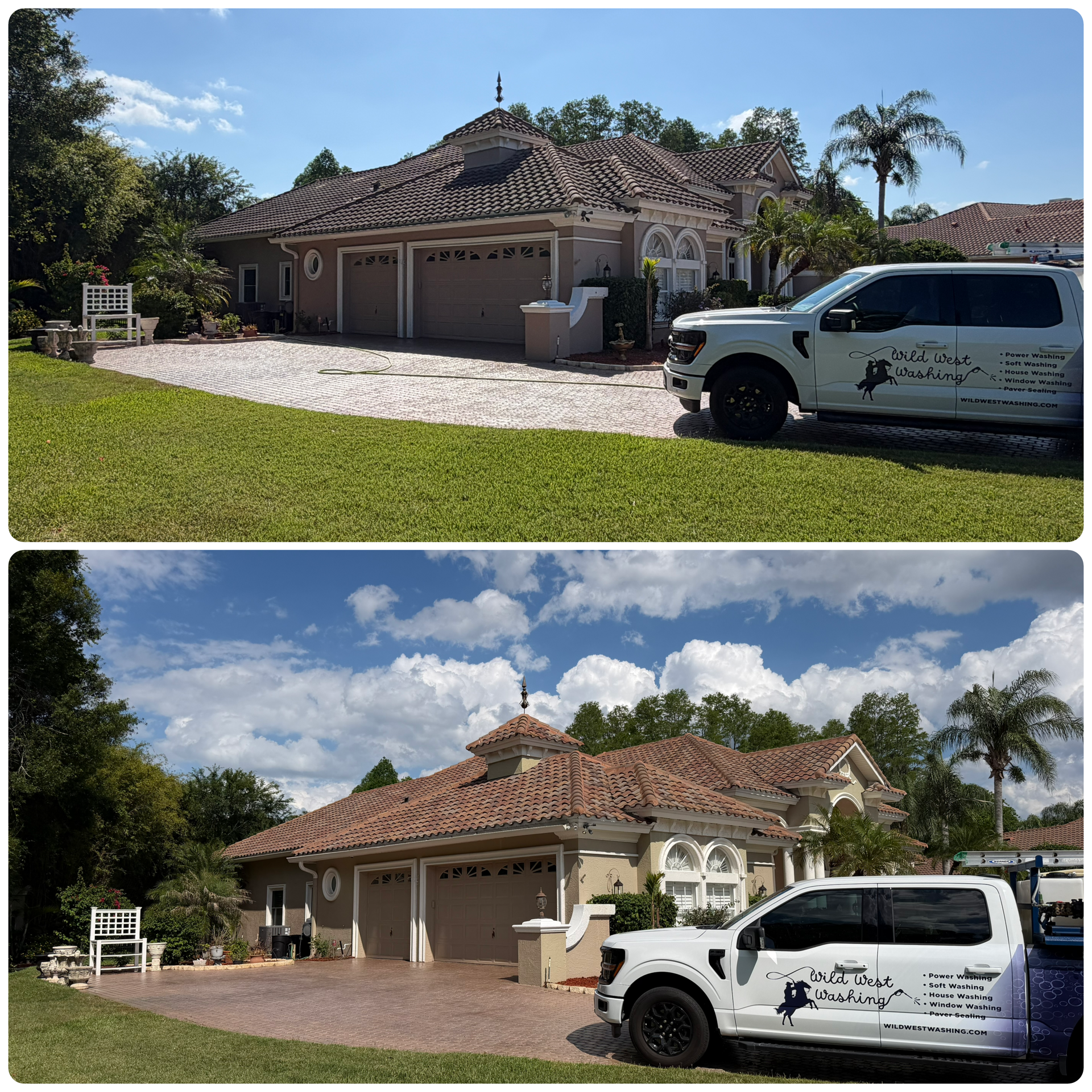
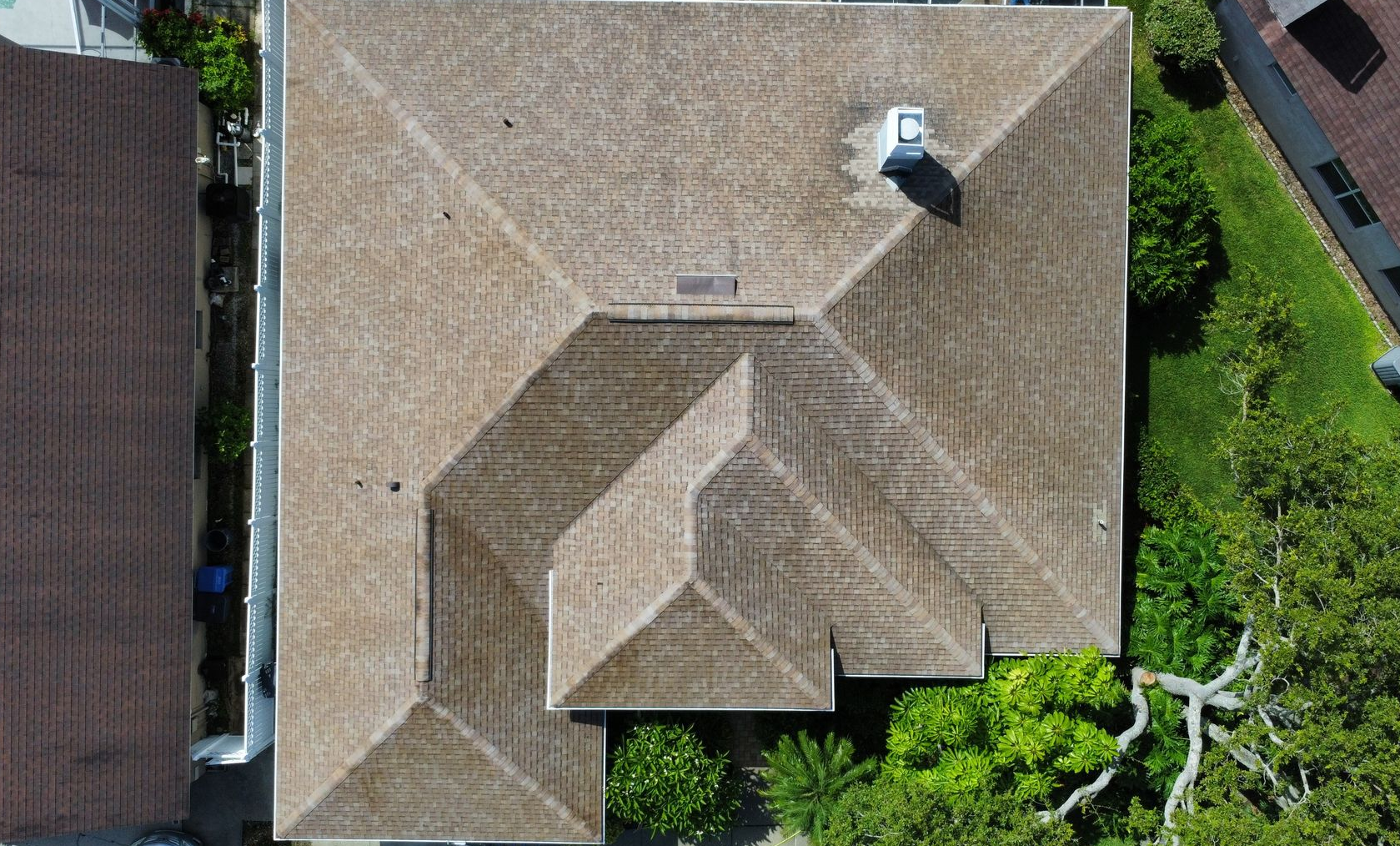
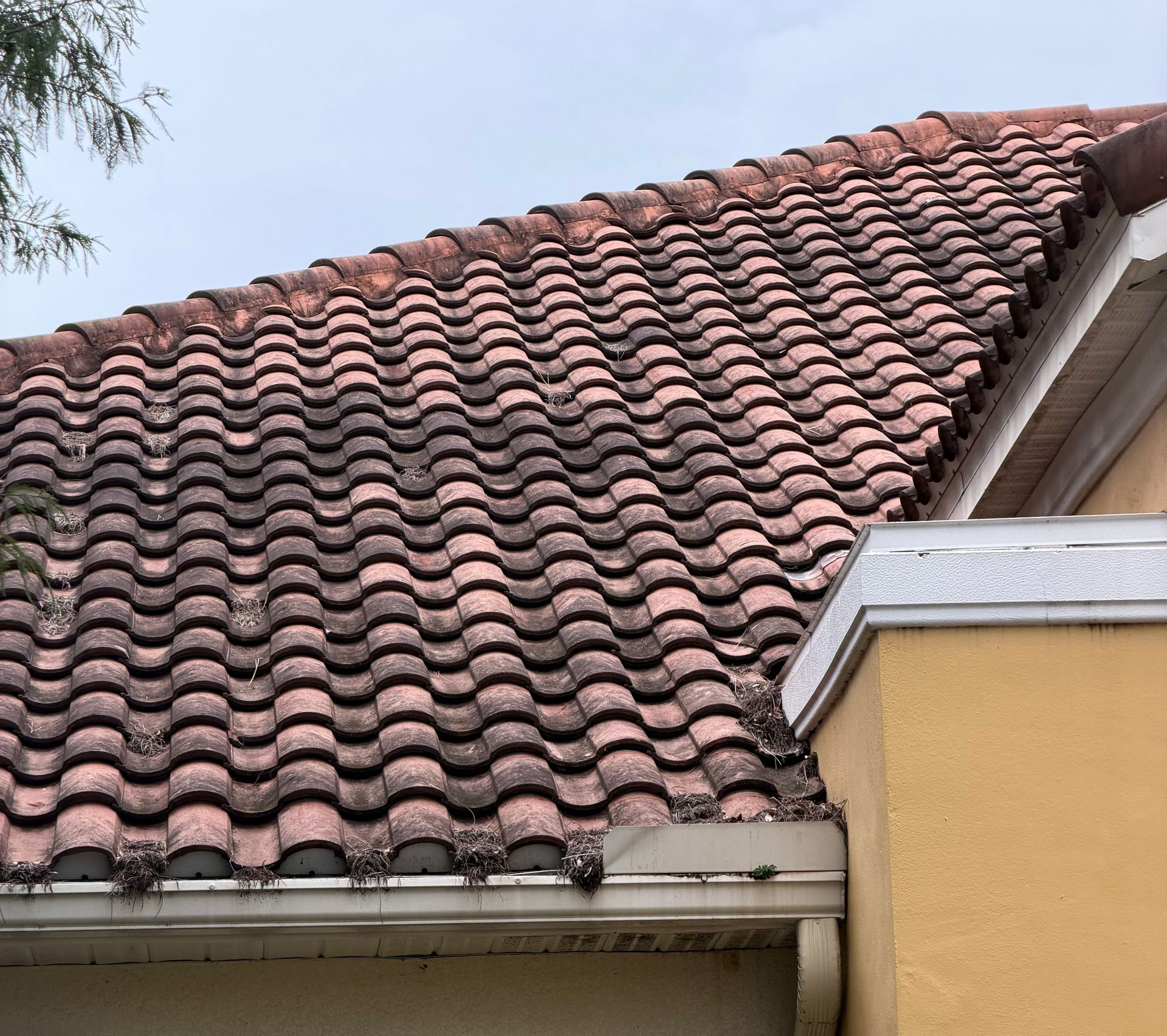
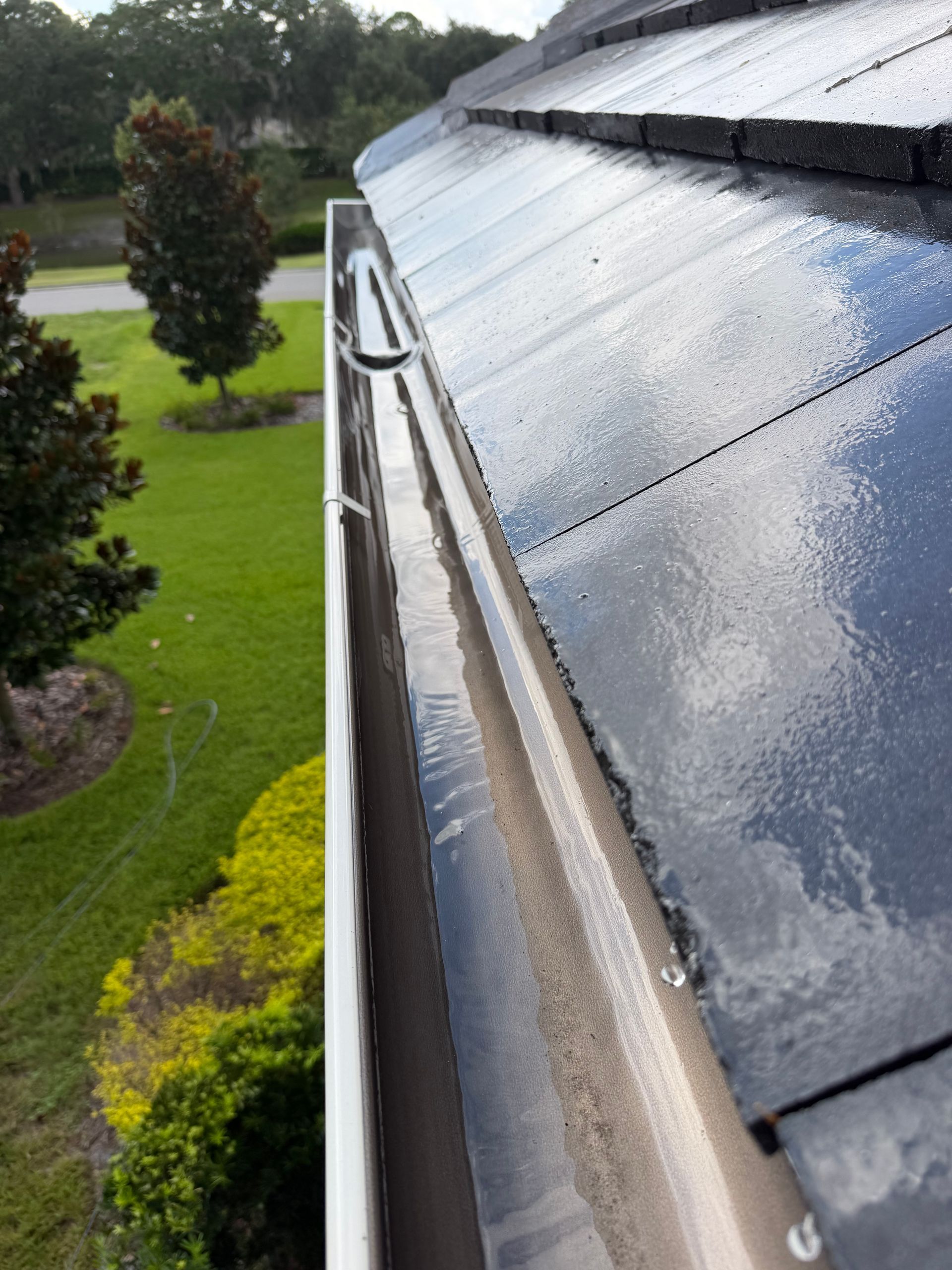
Soft washing vs pressure washing comes down to one question: is the problem alive, or is it stuck on? Soft washing uses low pressure and a cleaning solution to kill biological growth — algae, mildew, lichen, the black streaks on your roof. Pressure washing uses mechanical force to remove physical buildup from hard, durable surfaces like concrete and pavers. Use the wrong one and you either don't fix the problem or you damage the surface.
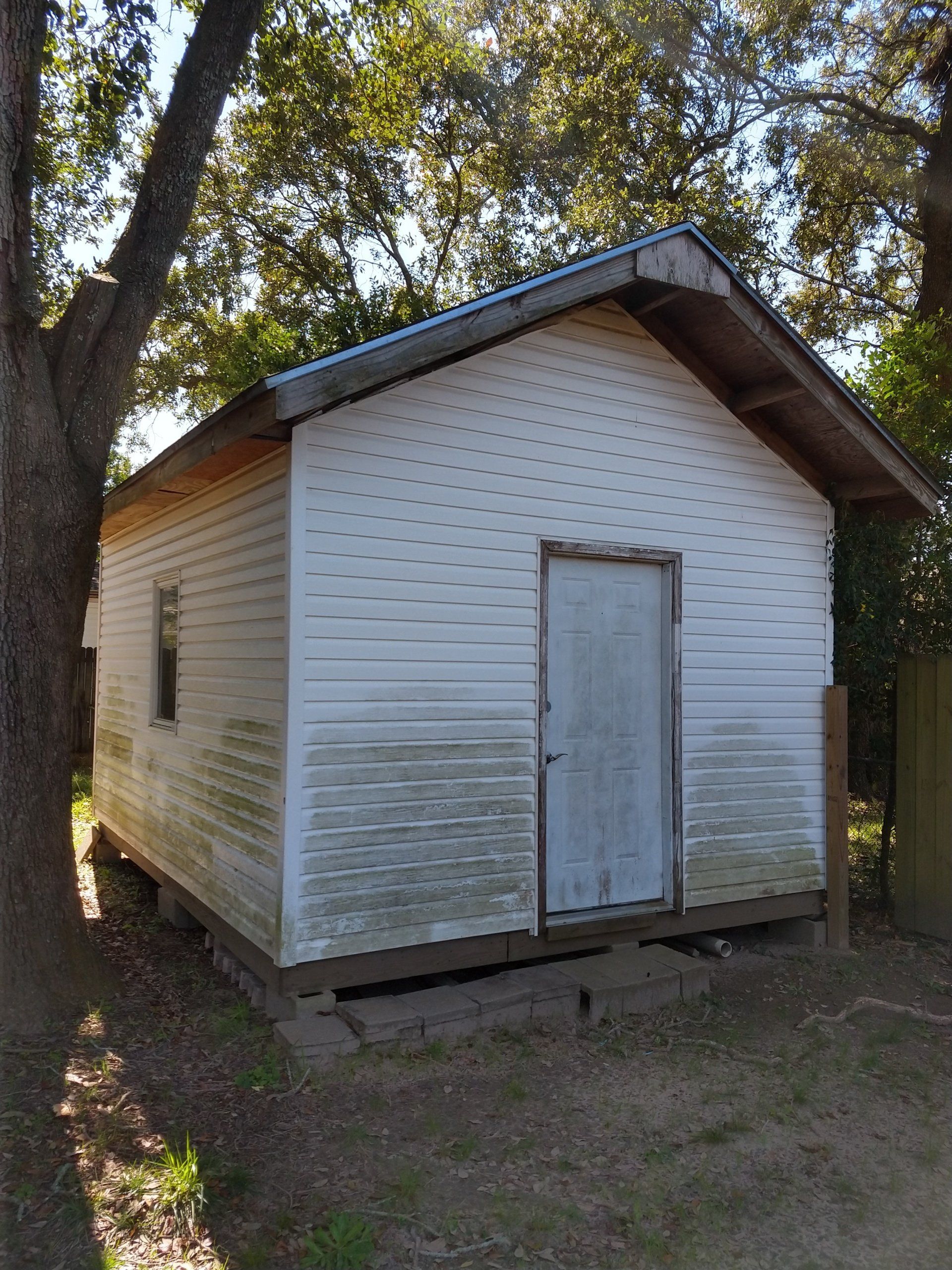
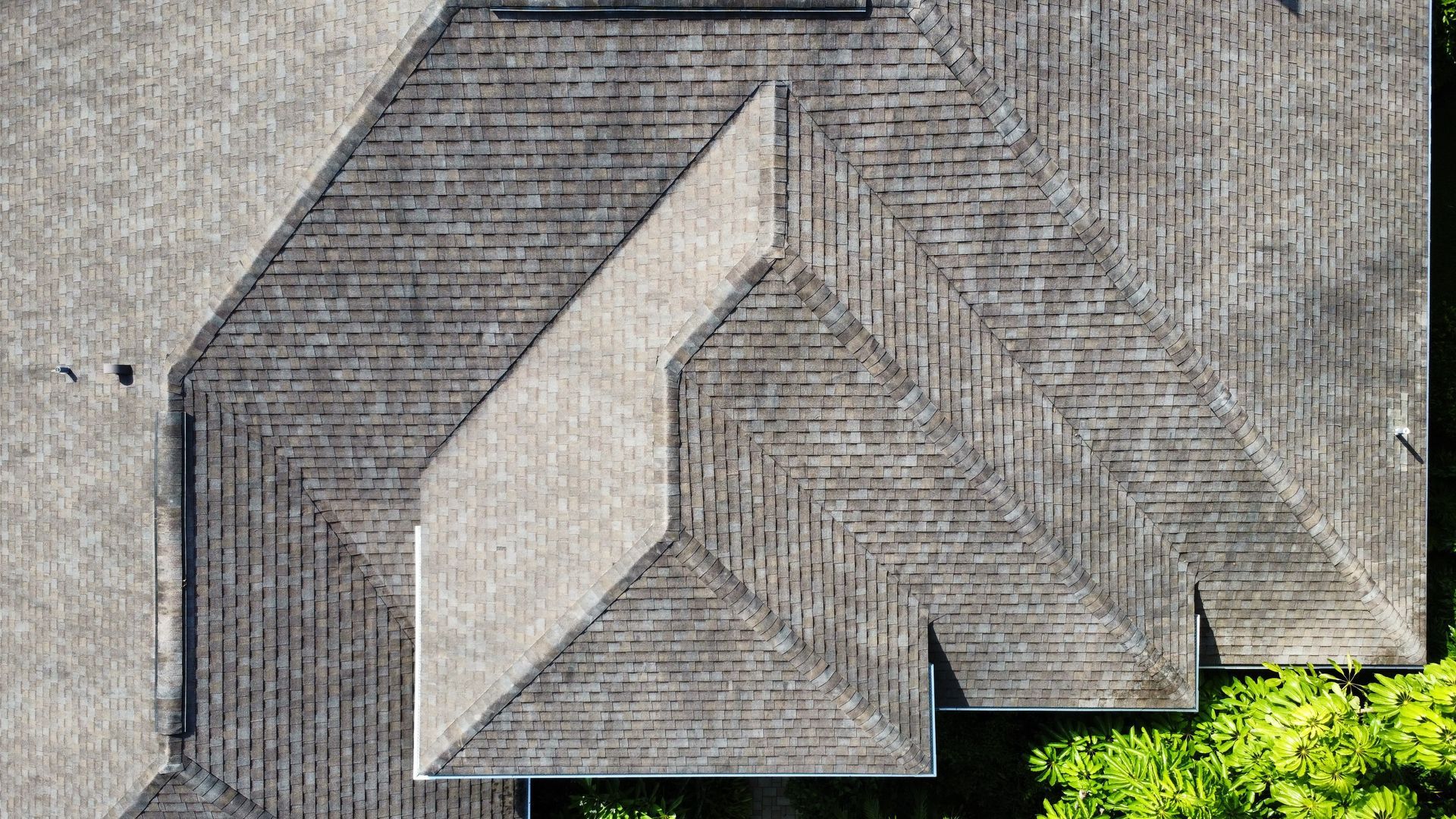
Most of what grows on a Florida house is alive. That's why soft washing covers more of a typical property than pressure does.
The actual difference in numbers
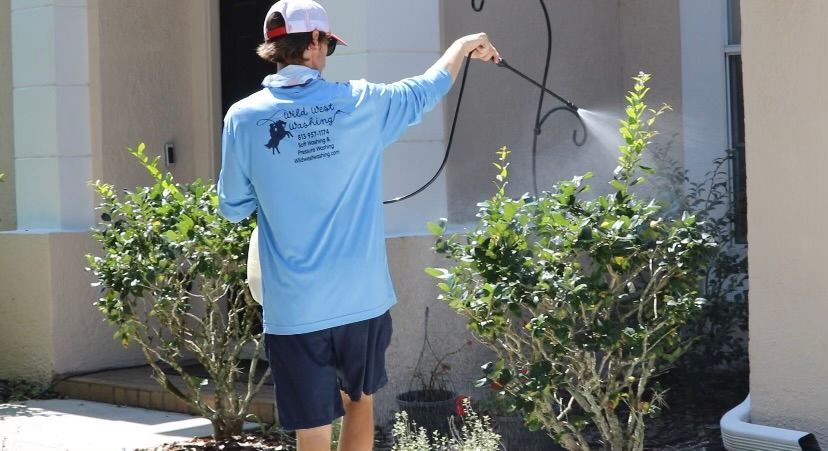
Soft washing runs at roughly 100 to 500 PSI — about what a garden hose with a decent nozzle delivers. The work is done by chemistry and dwell time. You apply a measured solution, let it sit long enough to kill the organism, then rinse gently.
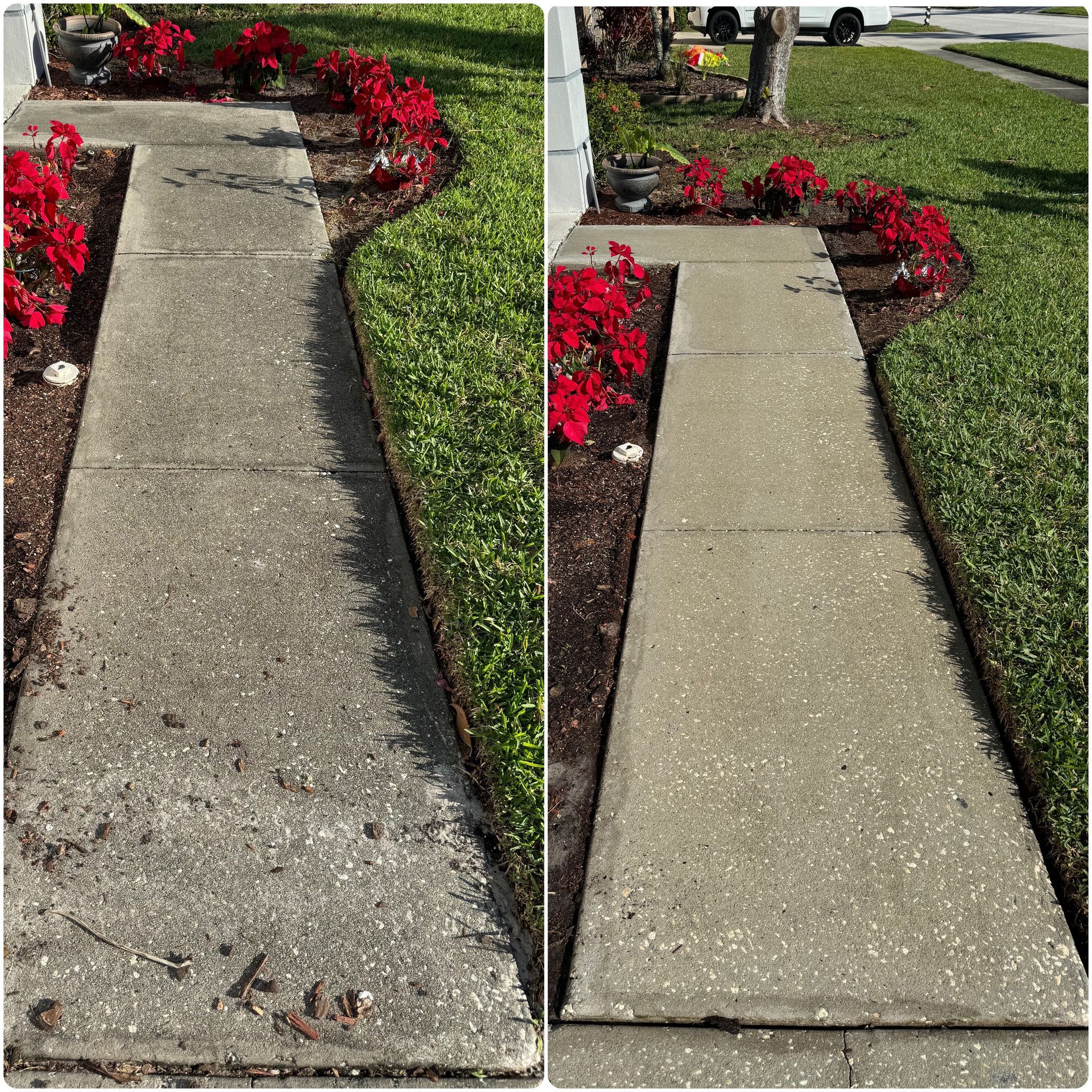
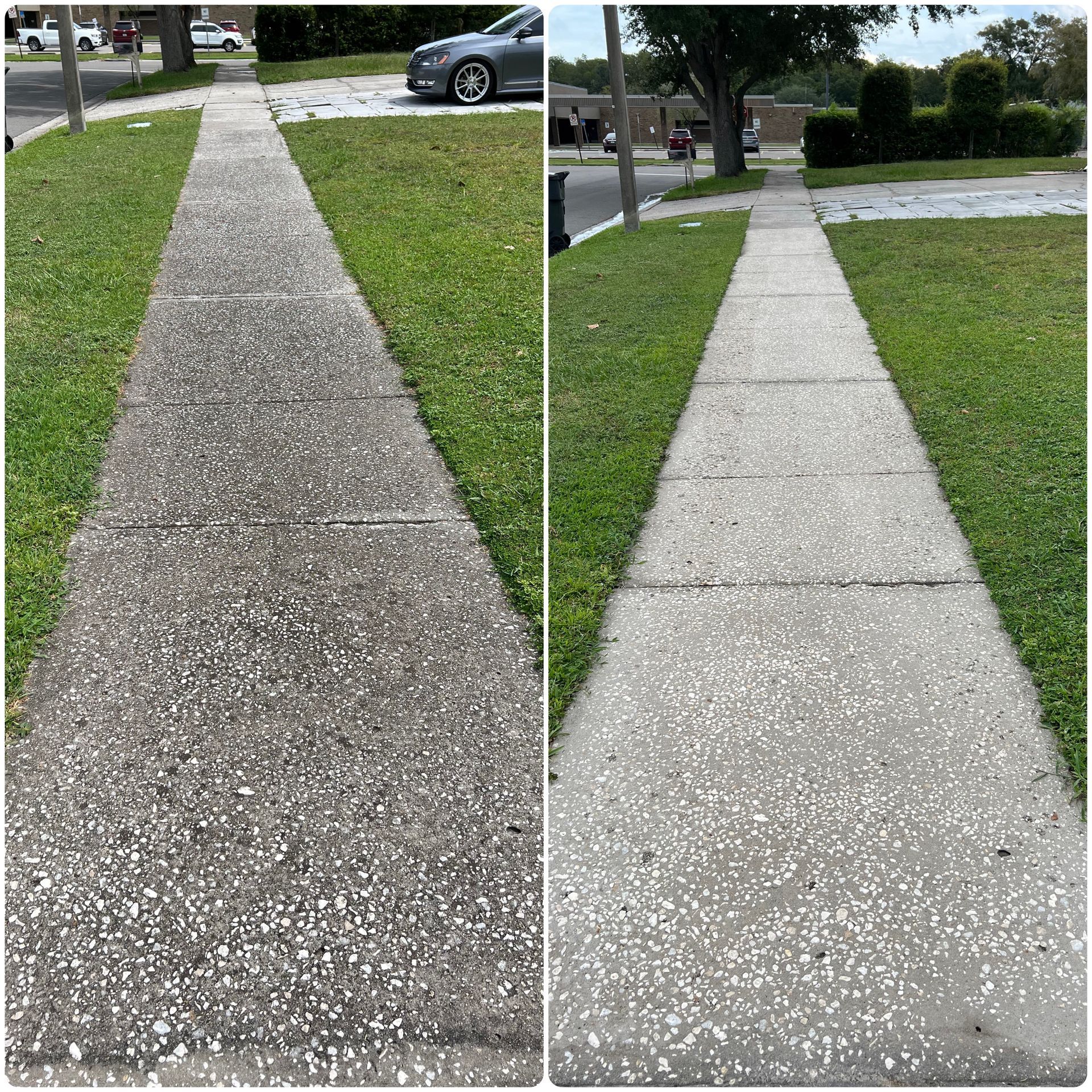
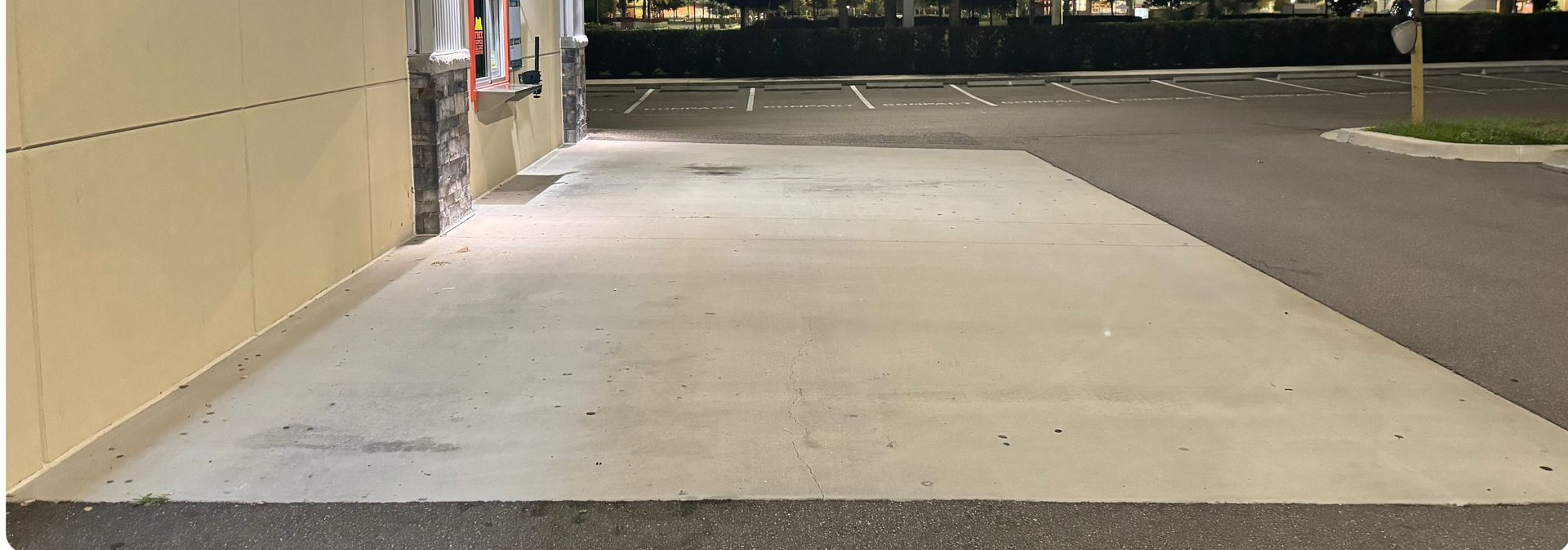
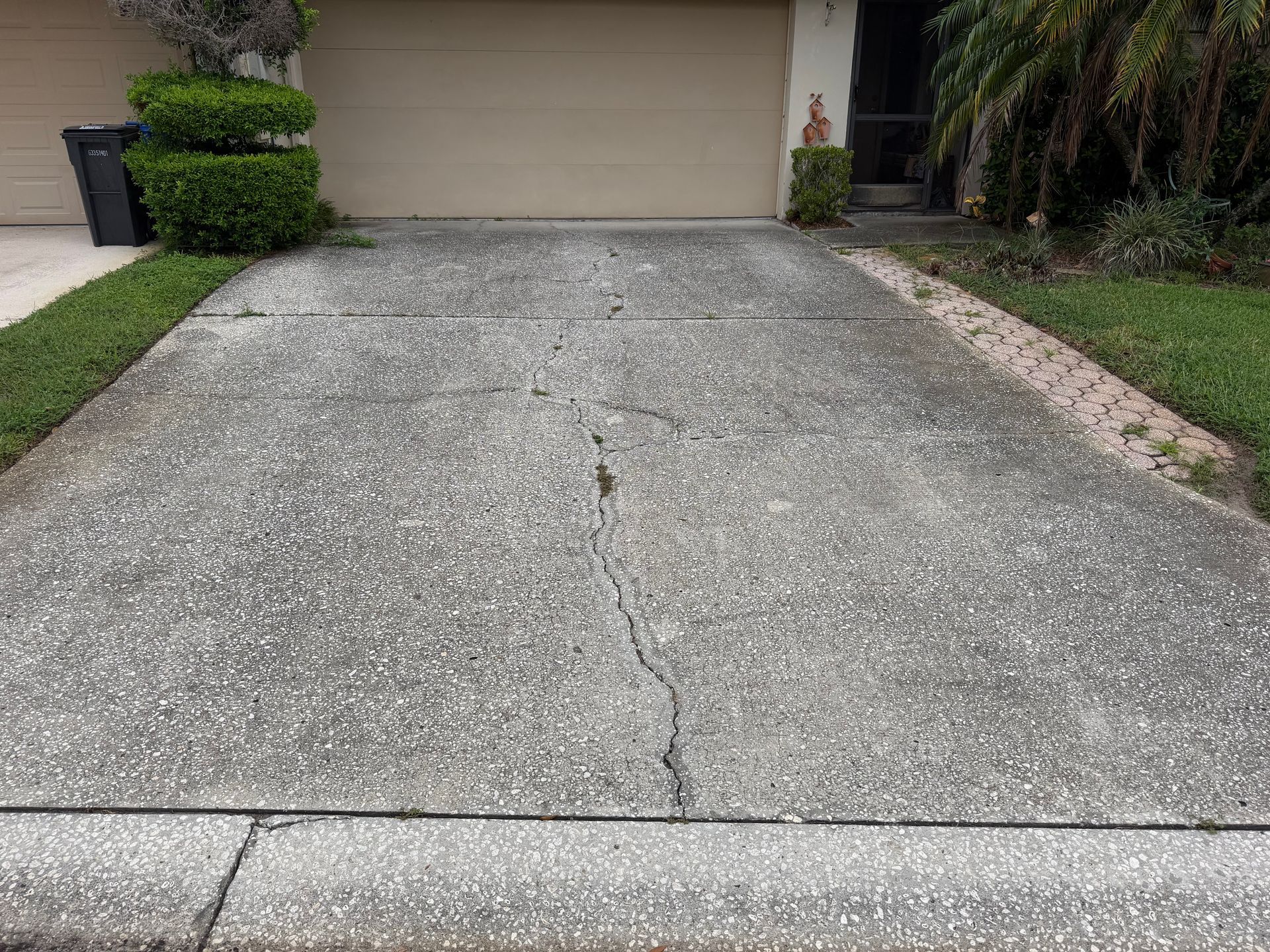
Pressure washing runs anywhere from 1,500 to 4,000+ PSI, usually through a surface cleaner on flat work. The work is done by force. There's no biology involved — you're removing what's physically stuck to concrete.
The reason this matters: 3,000 PSI against painted stucco removes the paint. 300 PSI against a stained concrete driveway accomplishes nothing. Neither tool is better; they do different jobs.
Surface-by-surface: which method belongs where
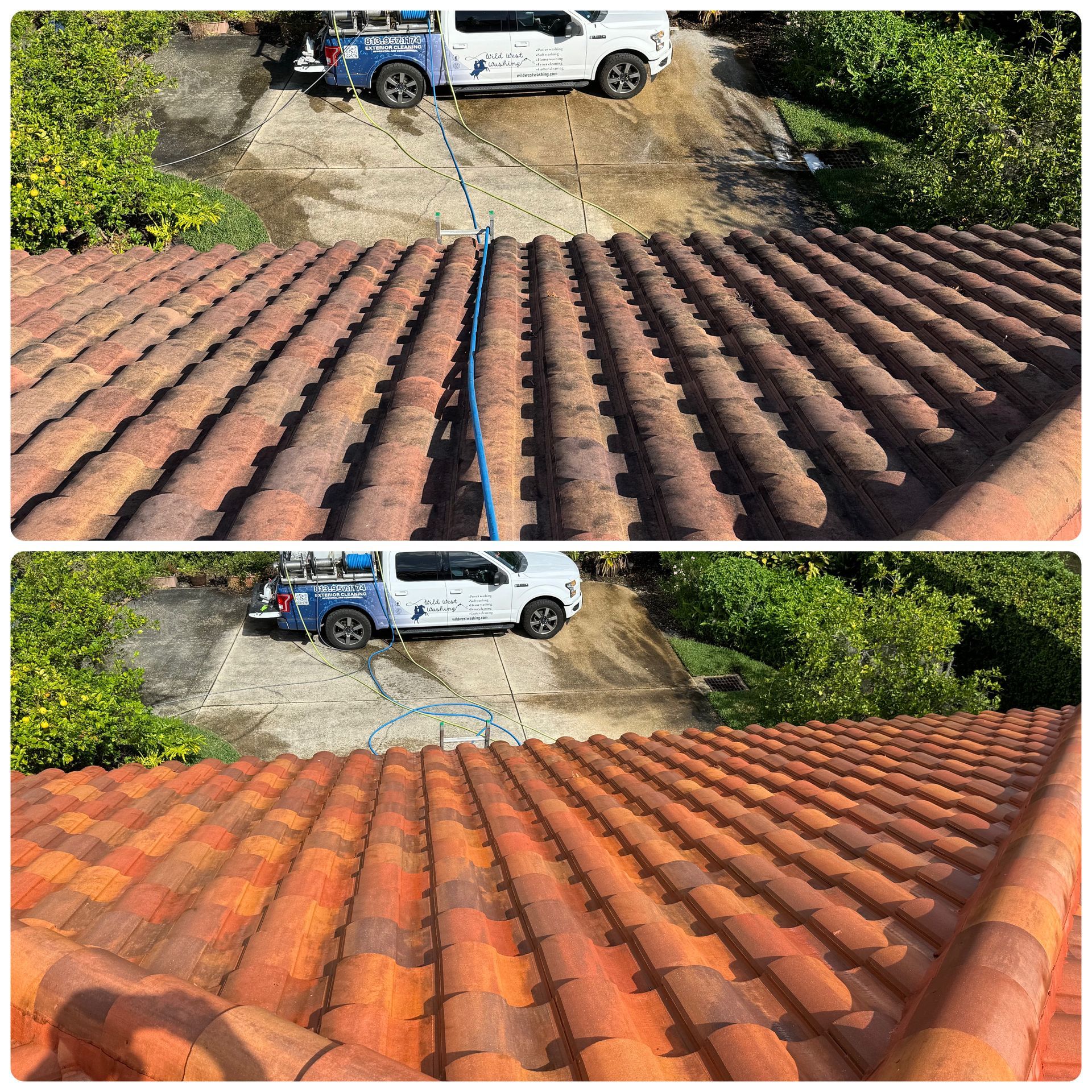
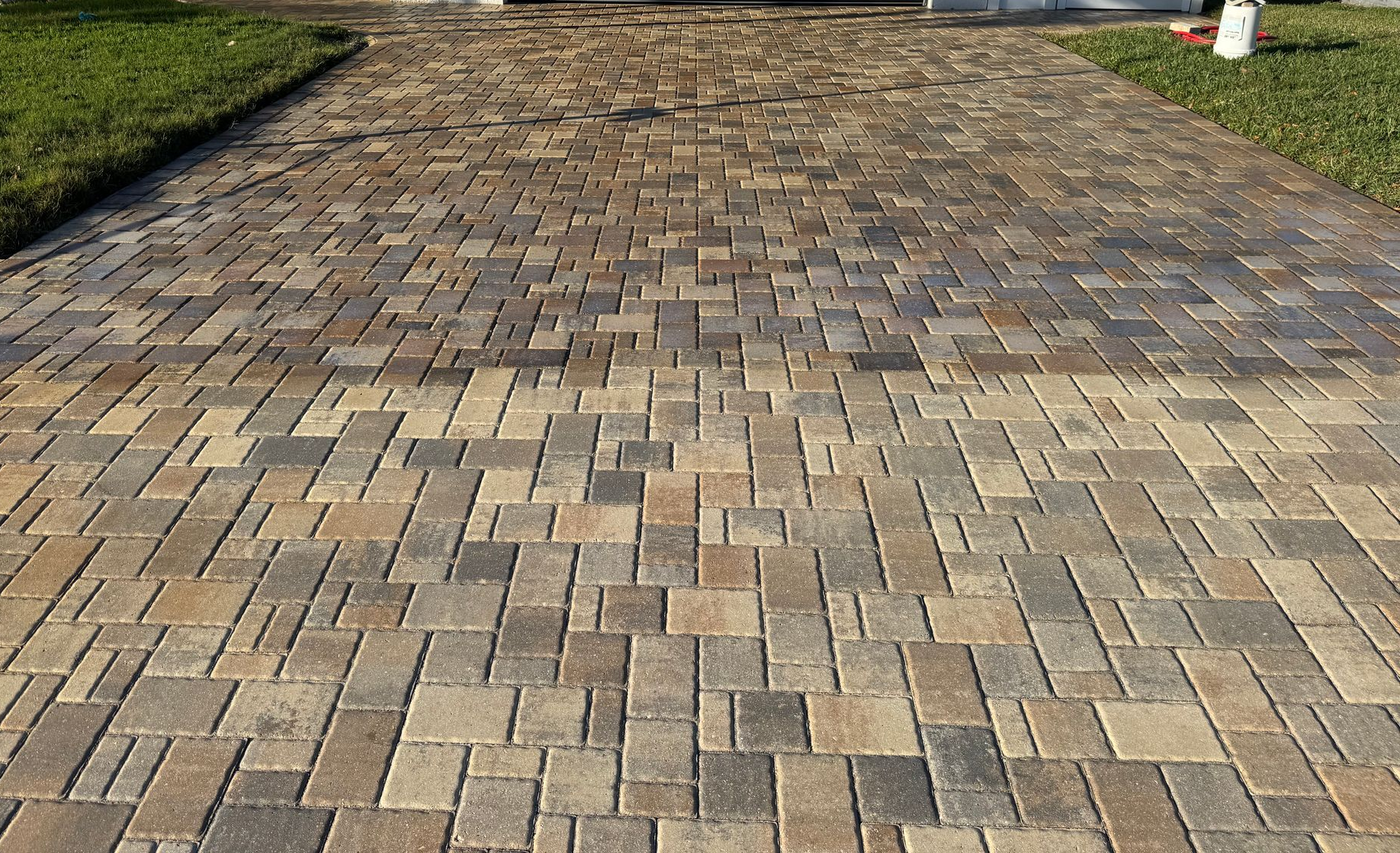
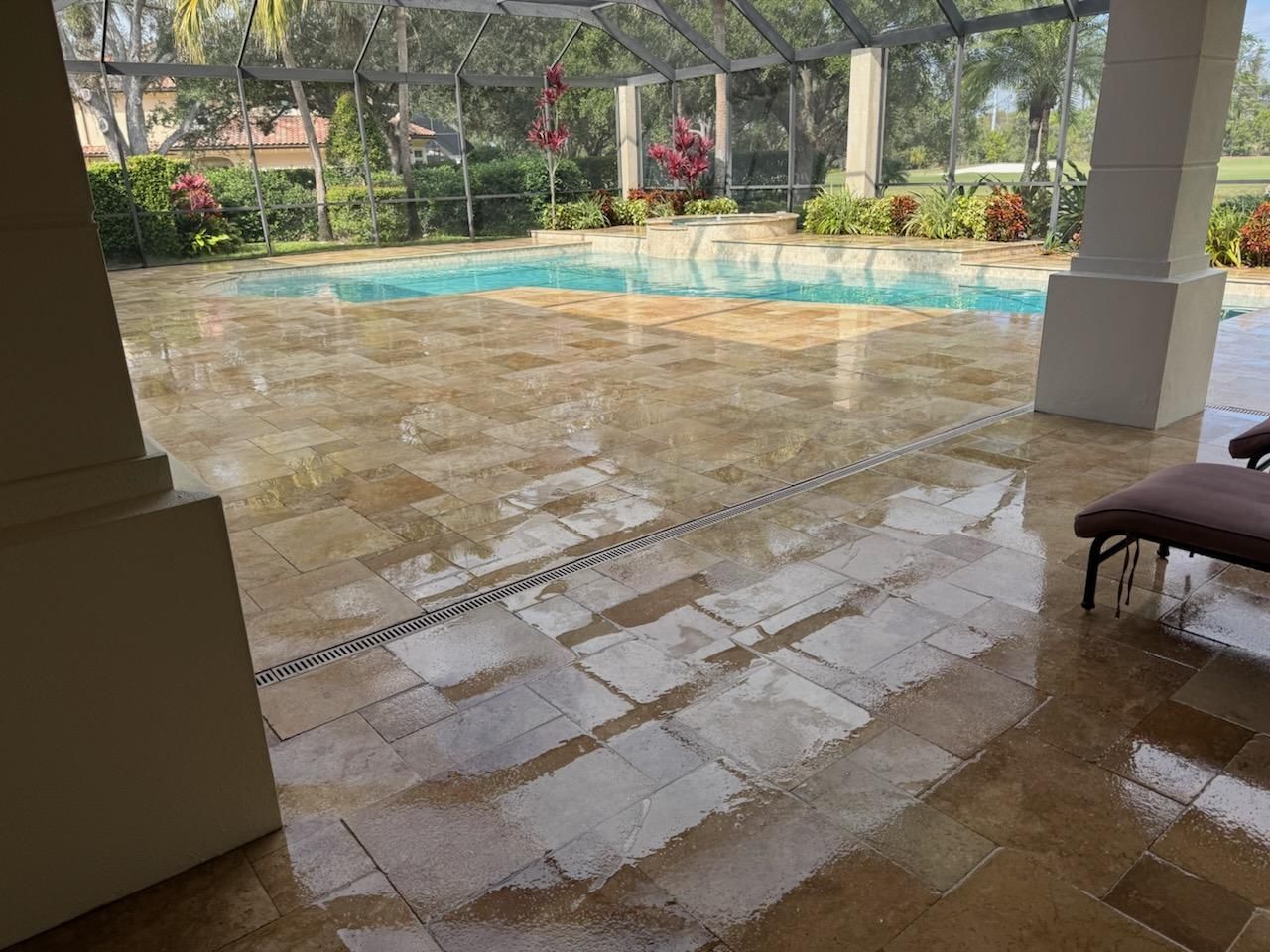
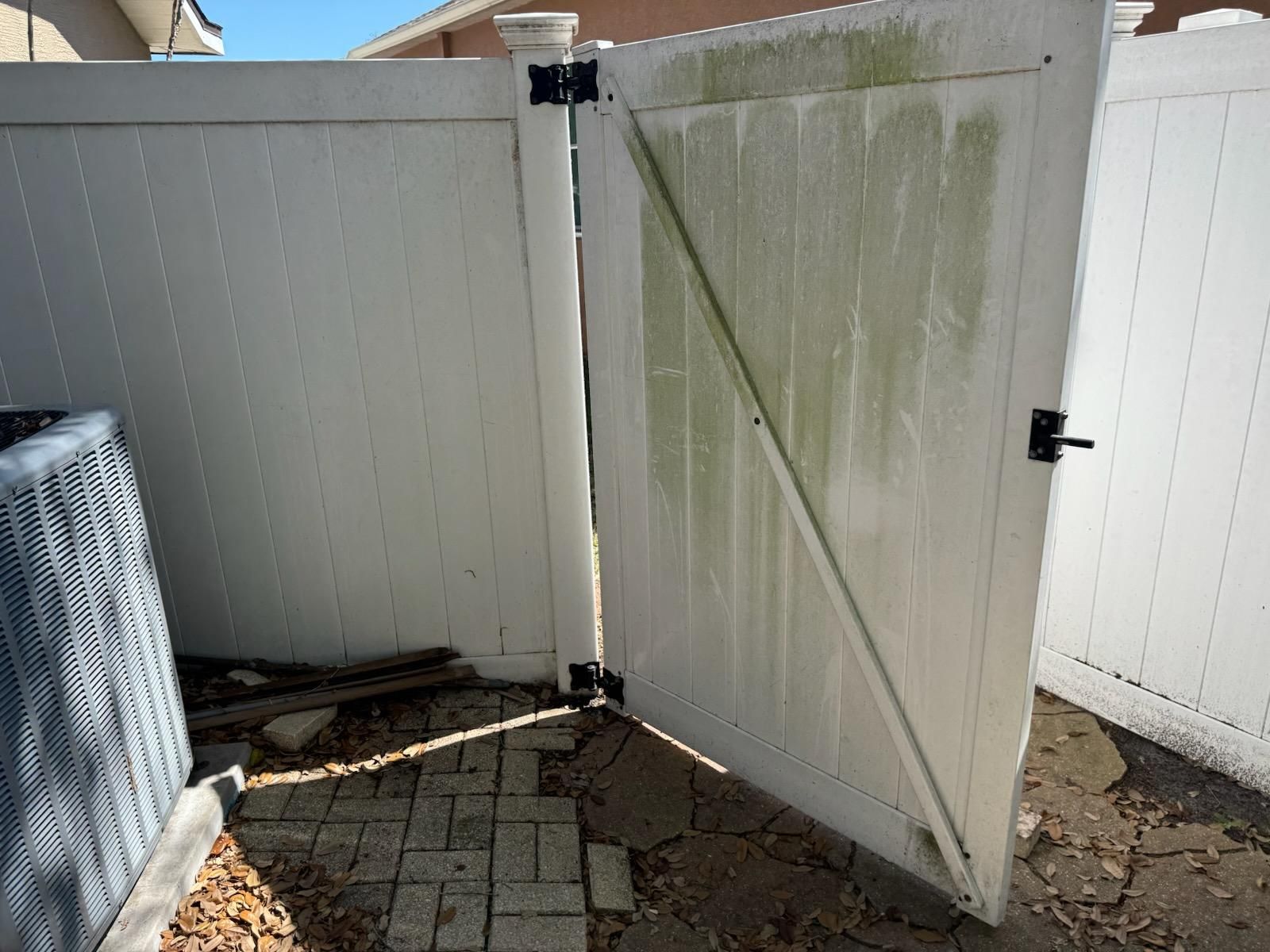
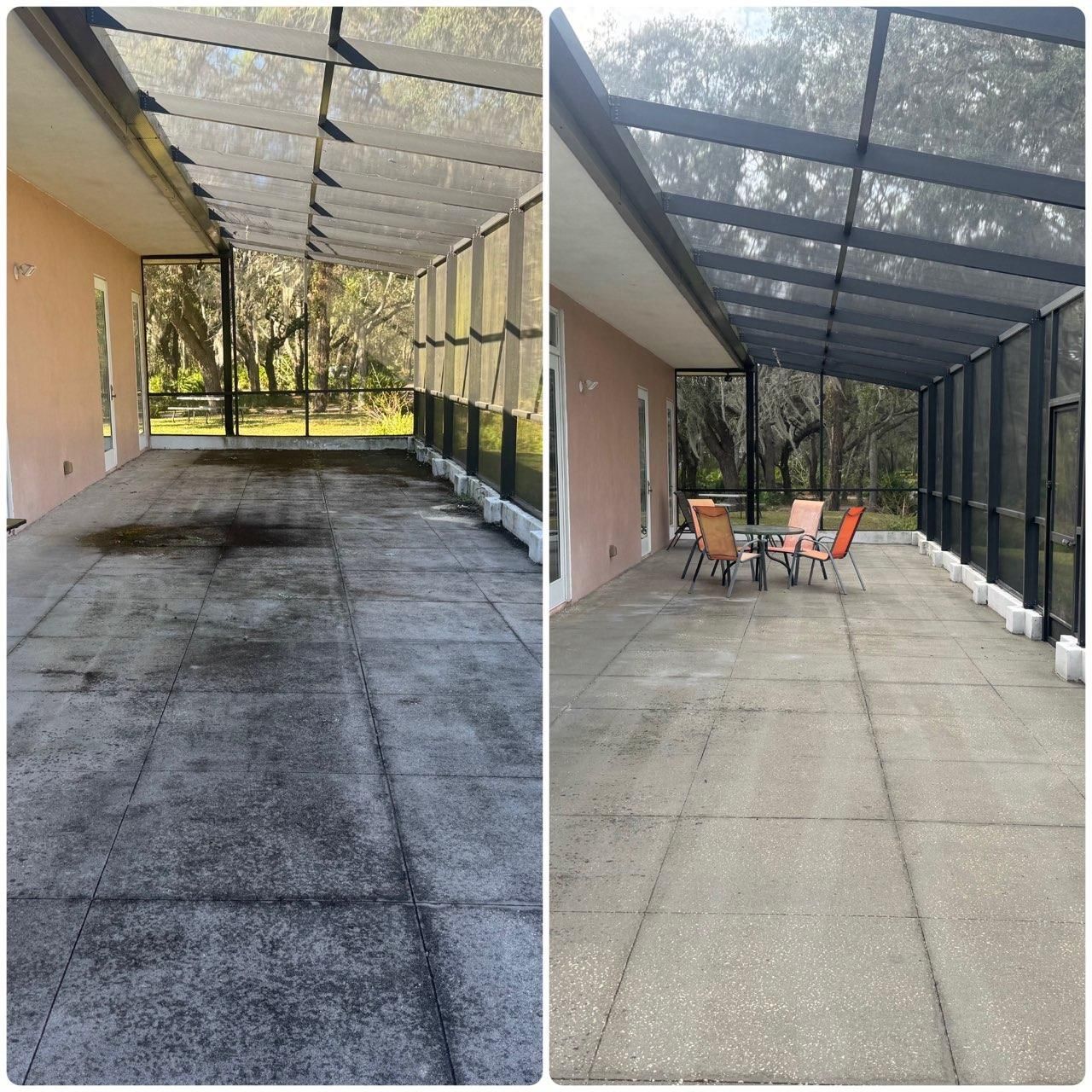
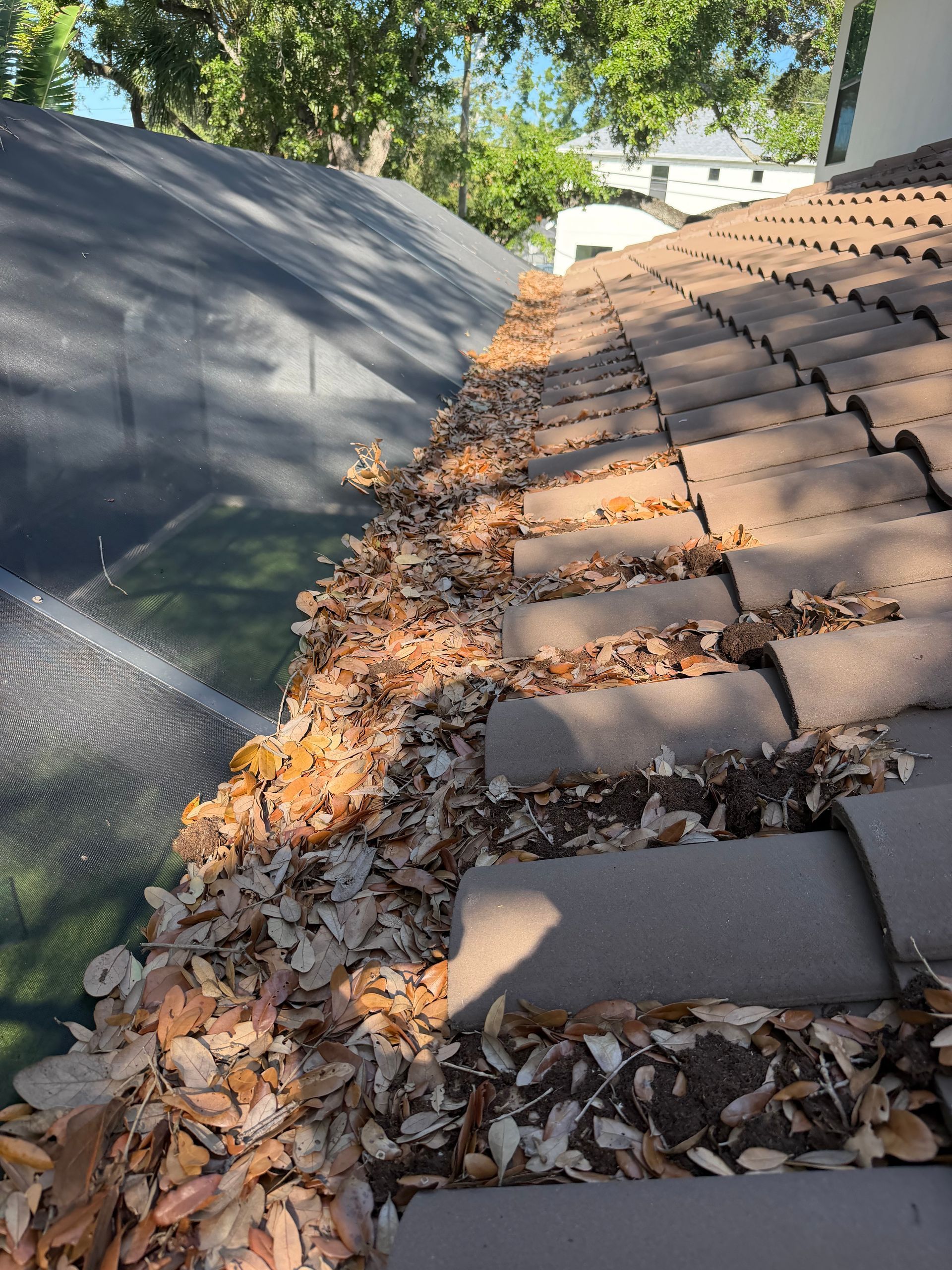
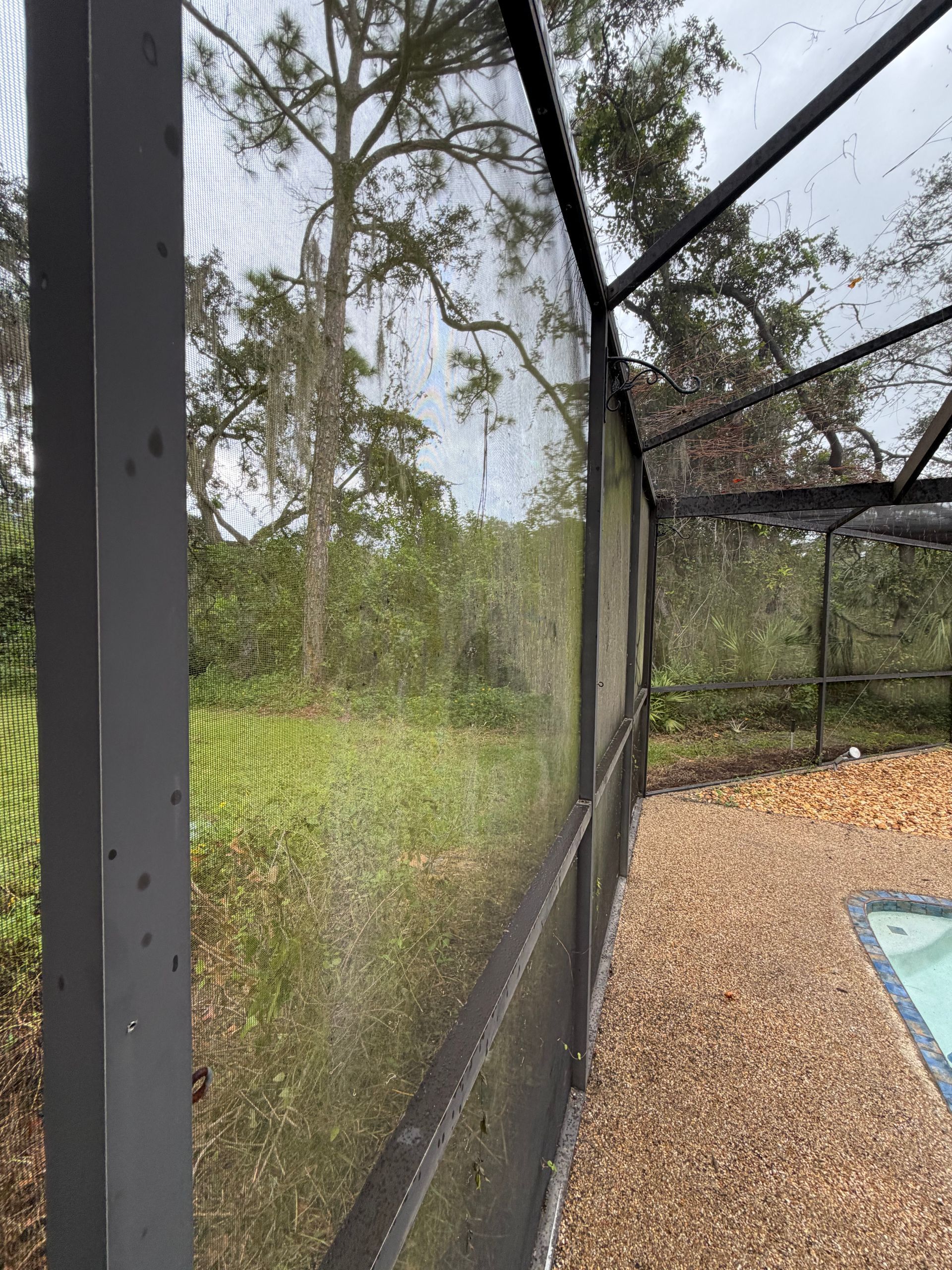
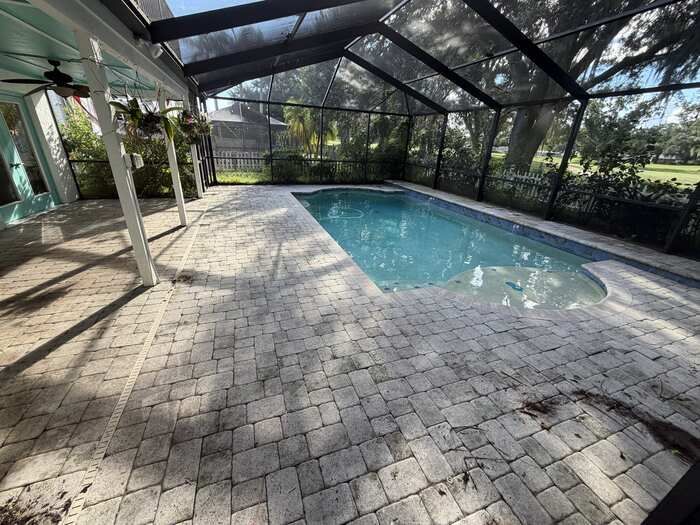
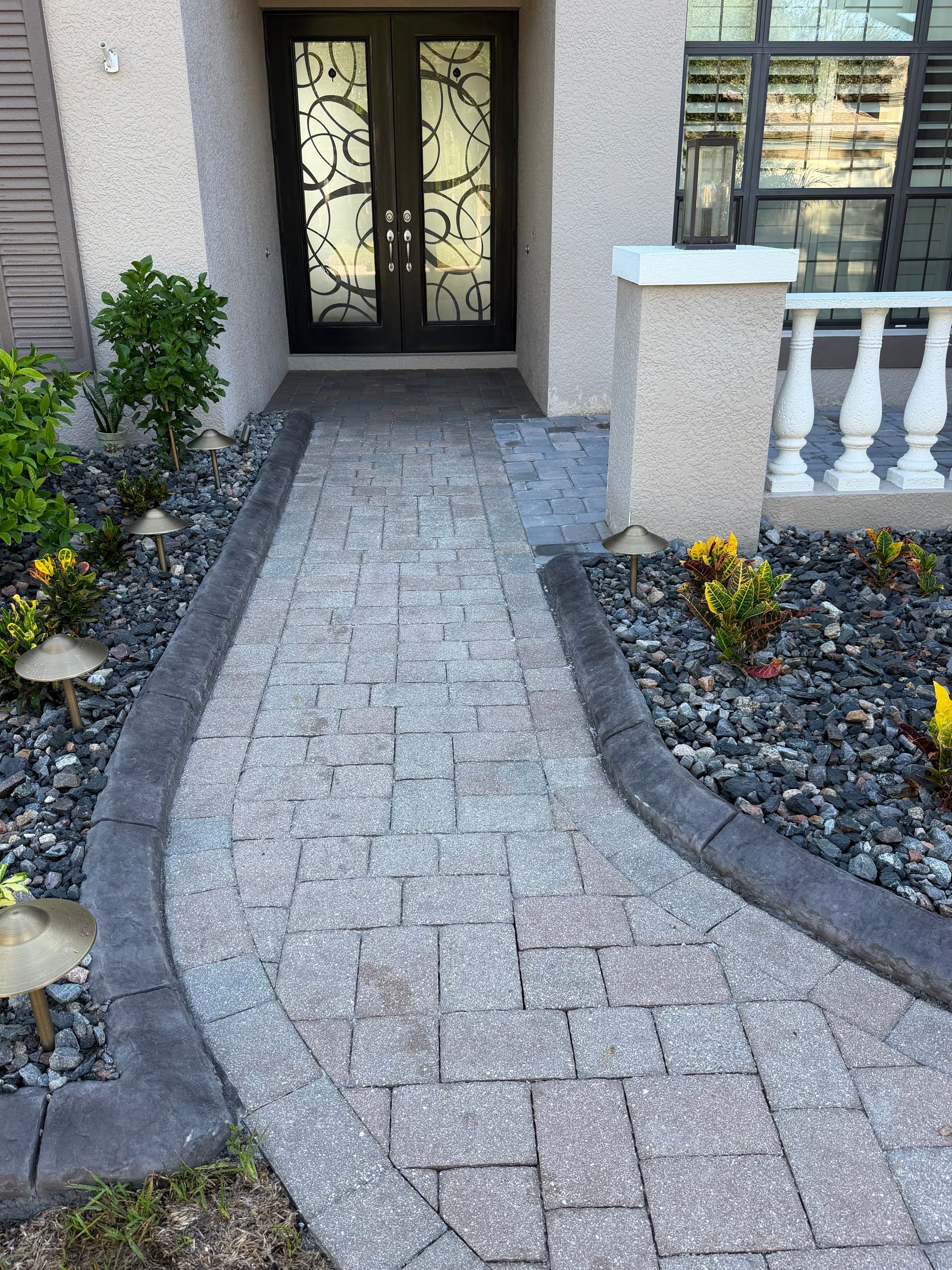
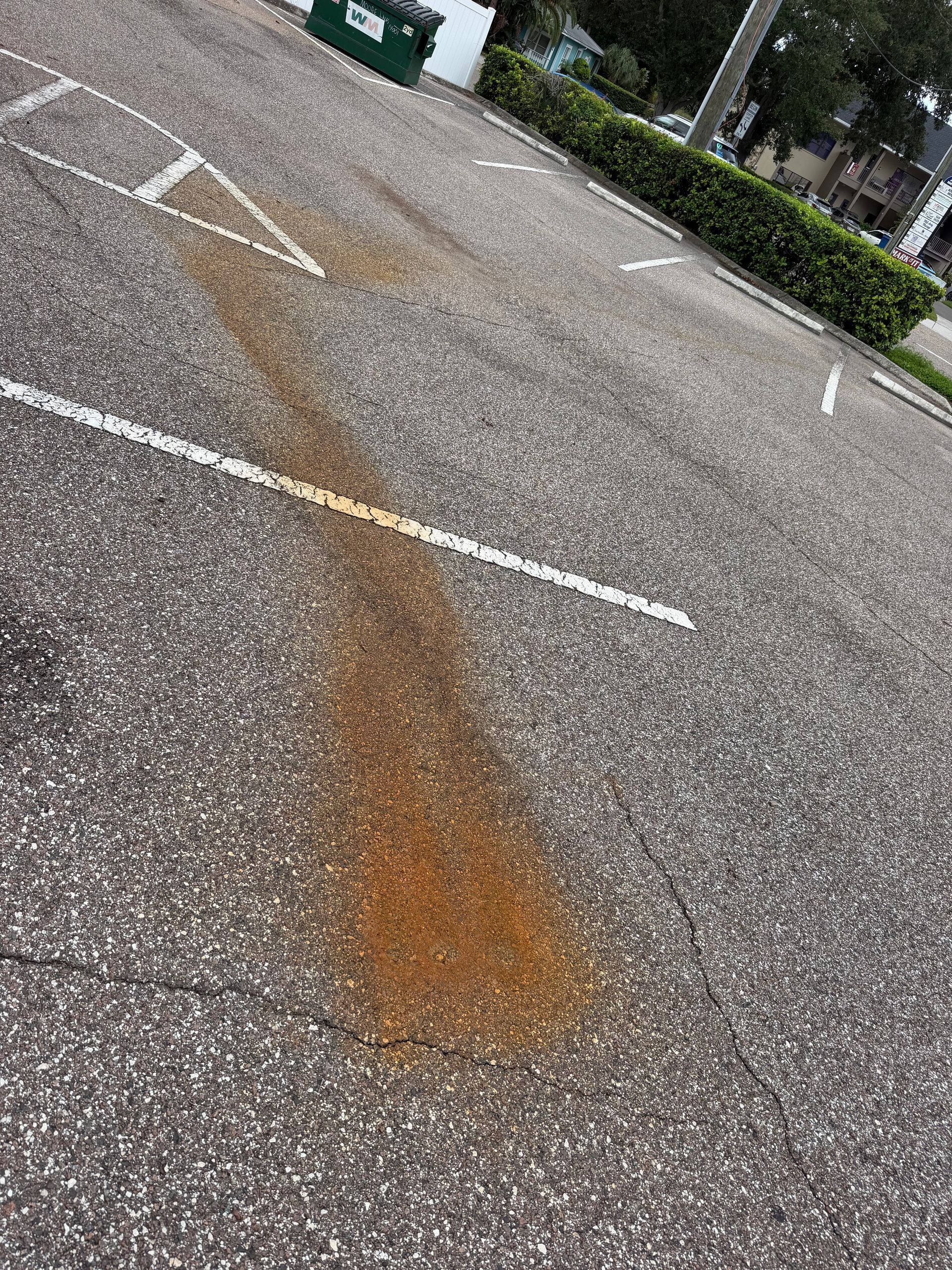
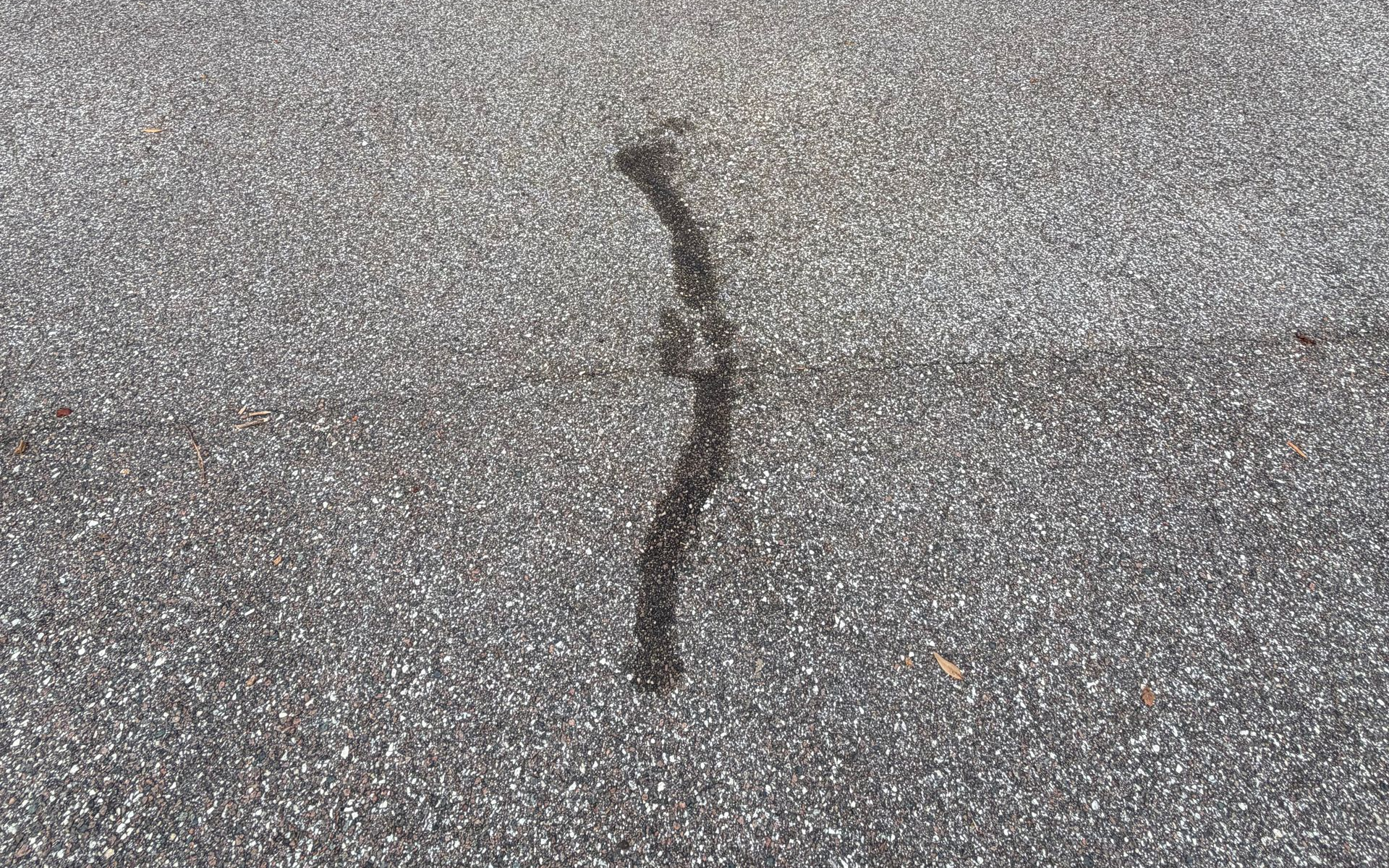
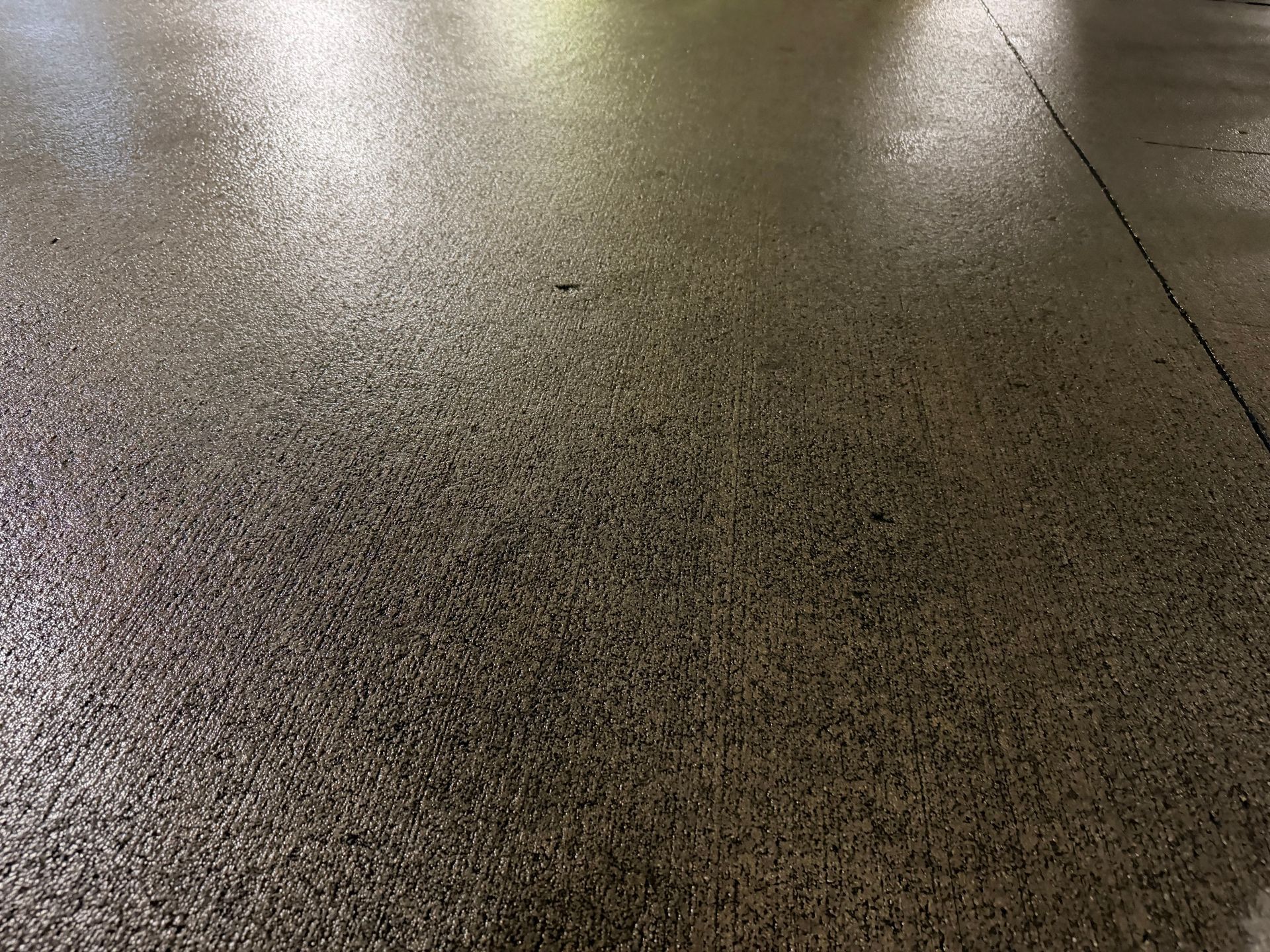
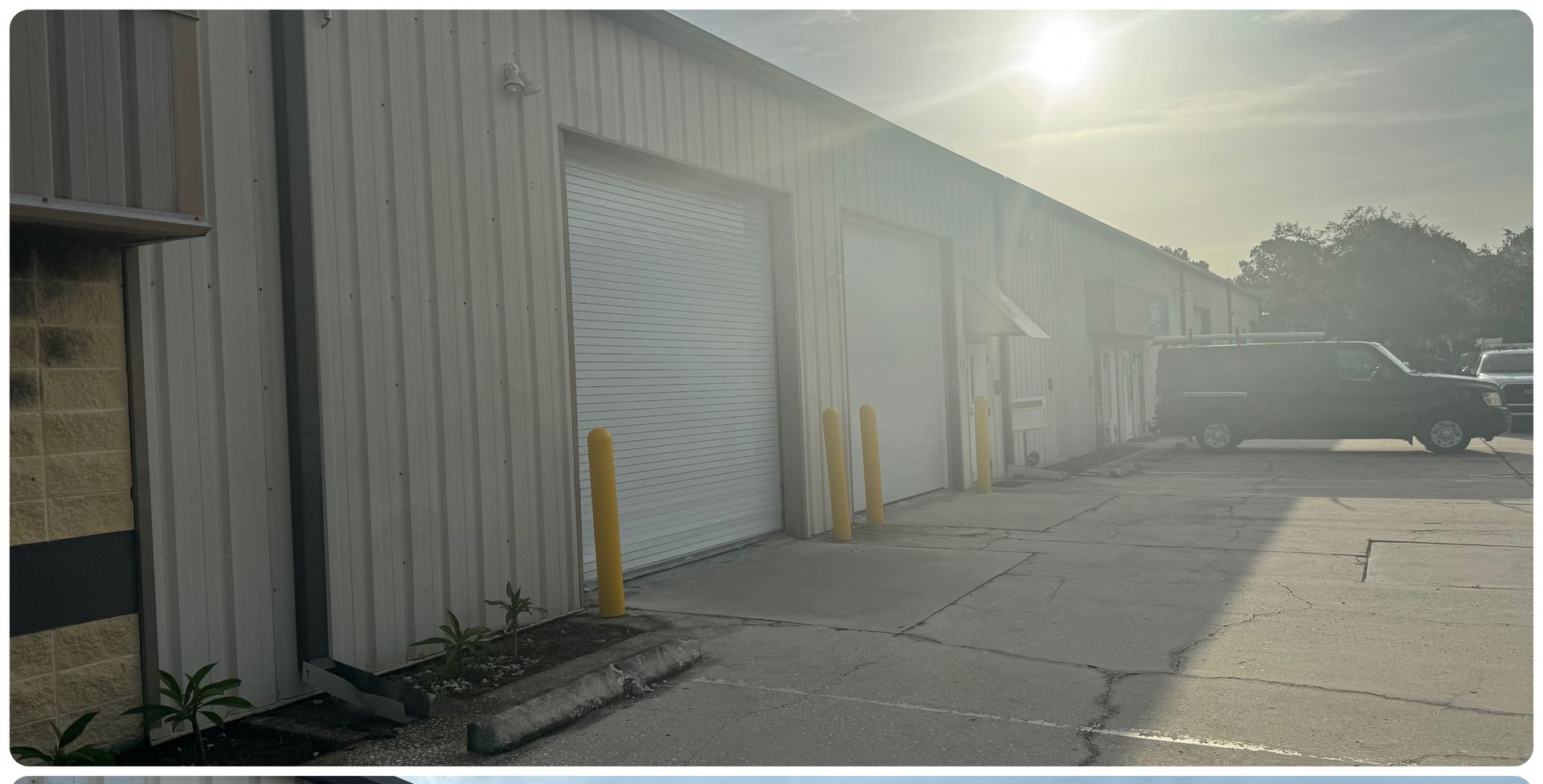
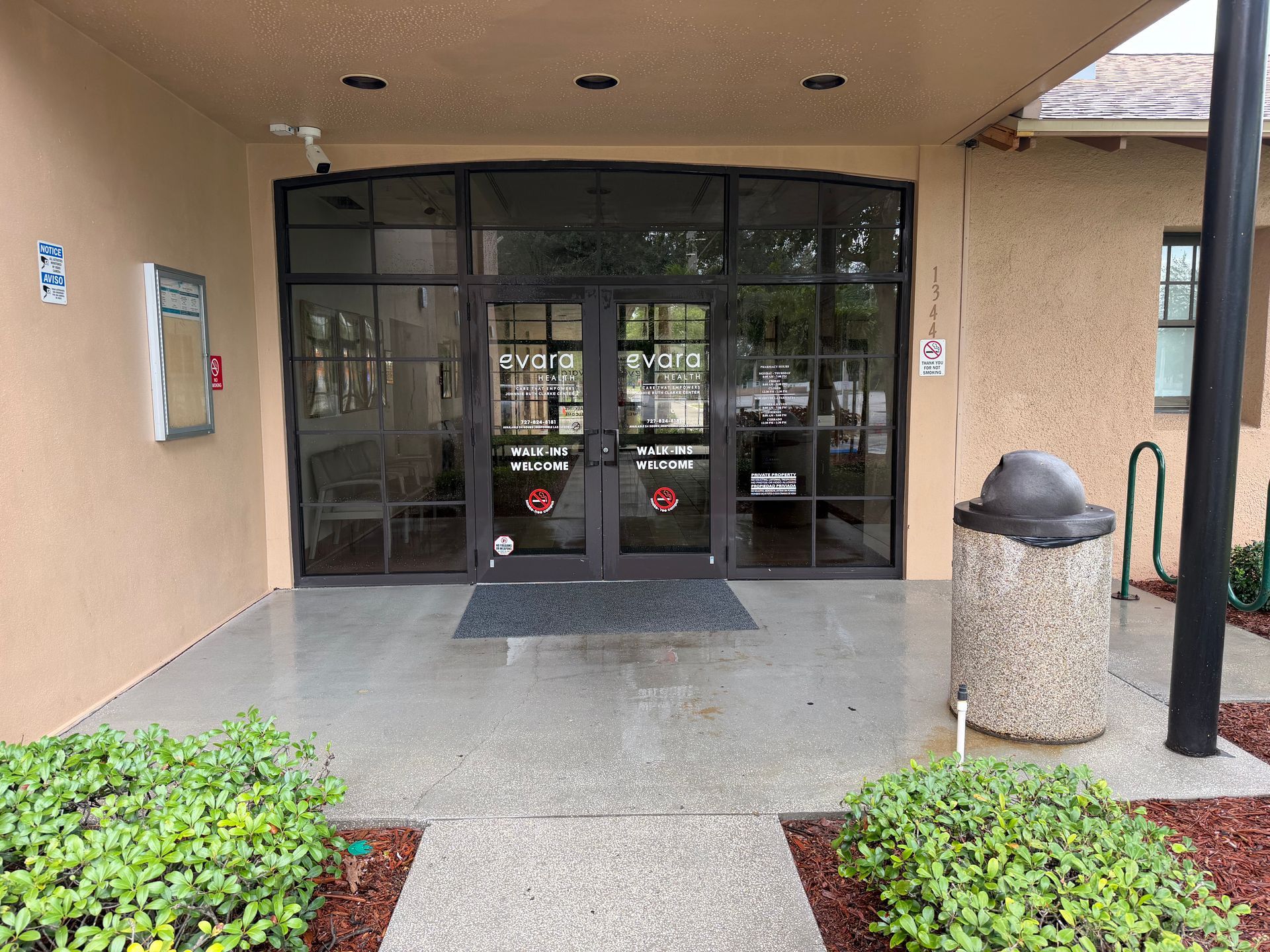
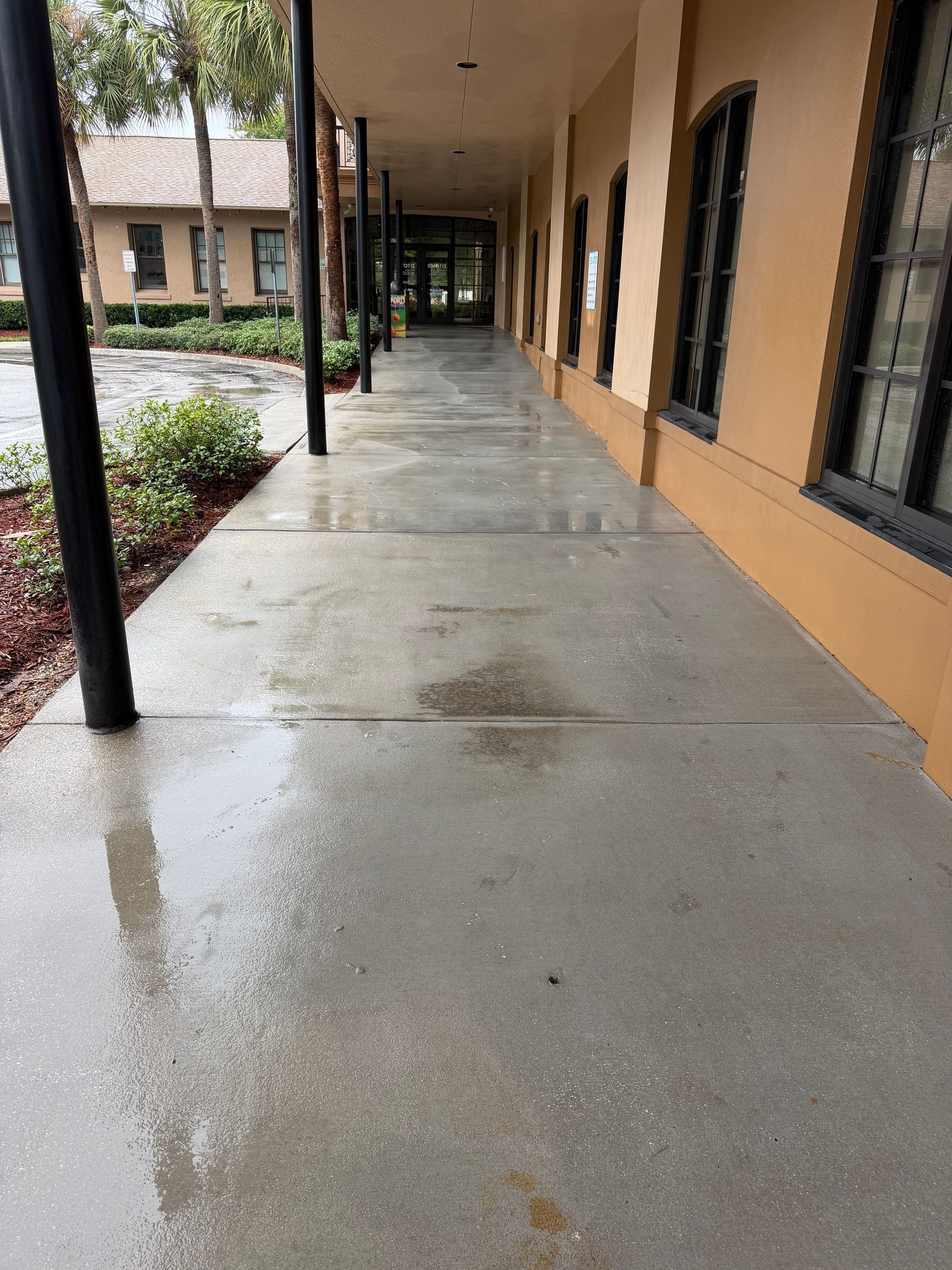
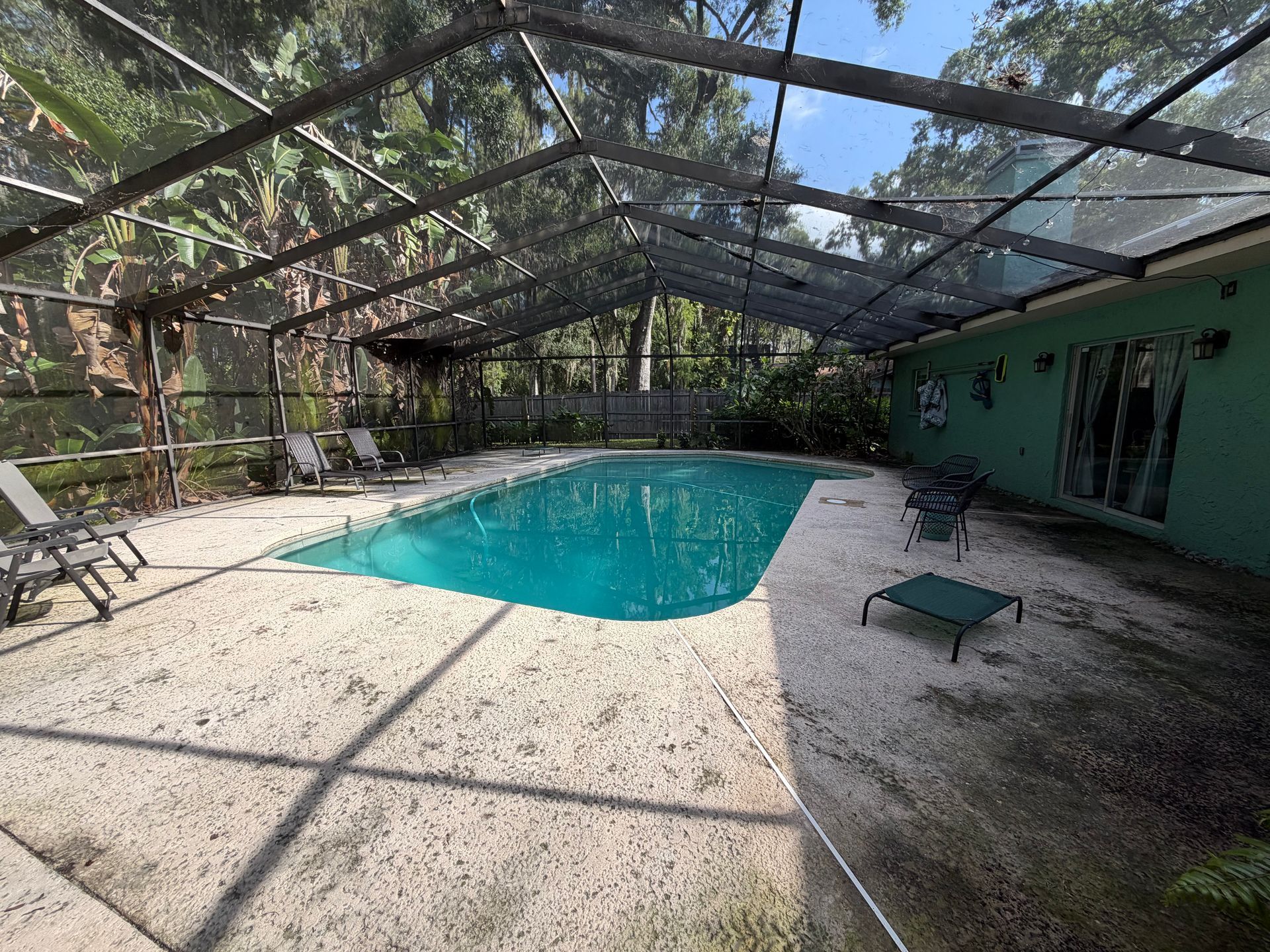
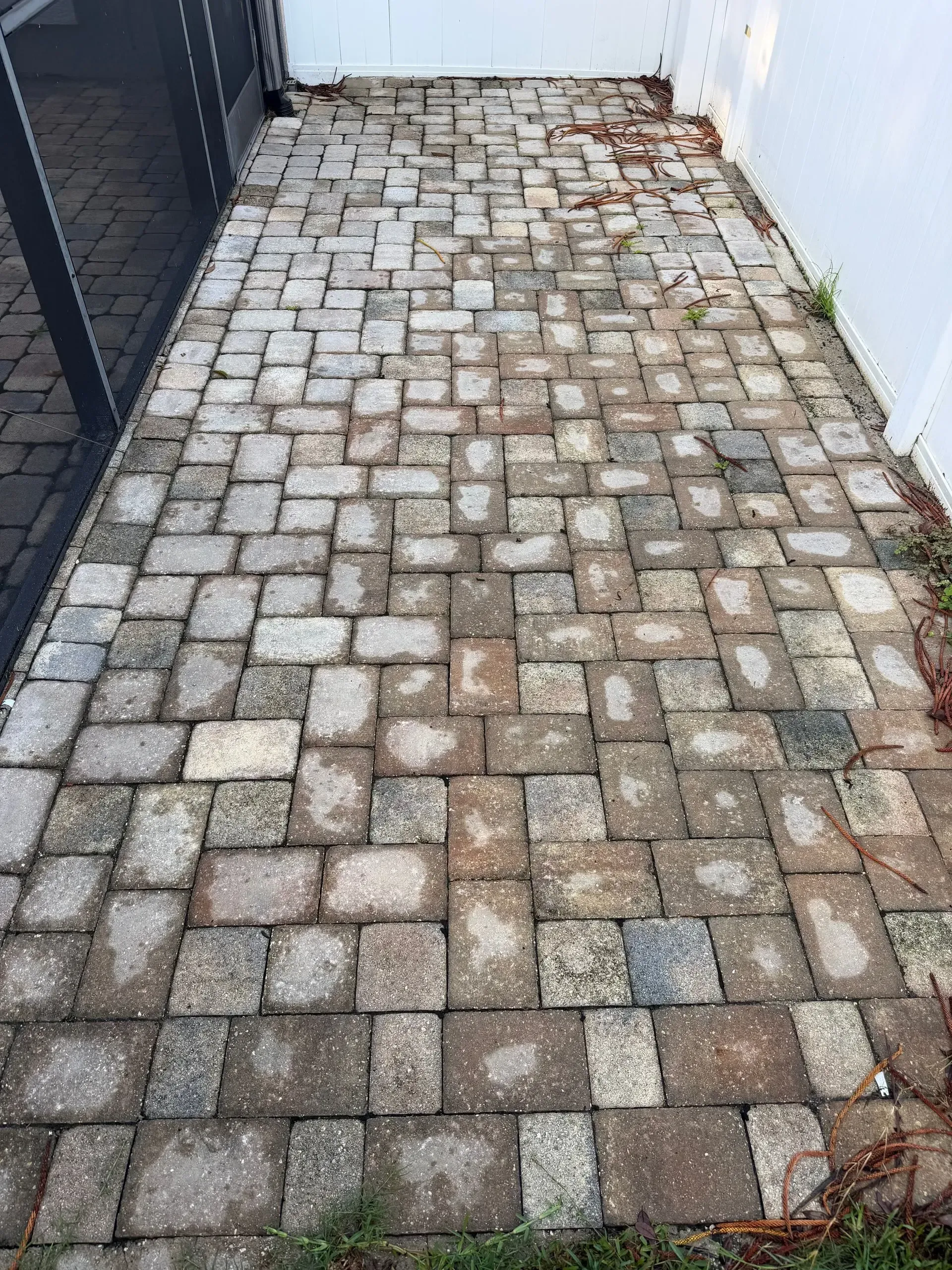
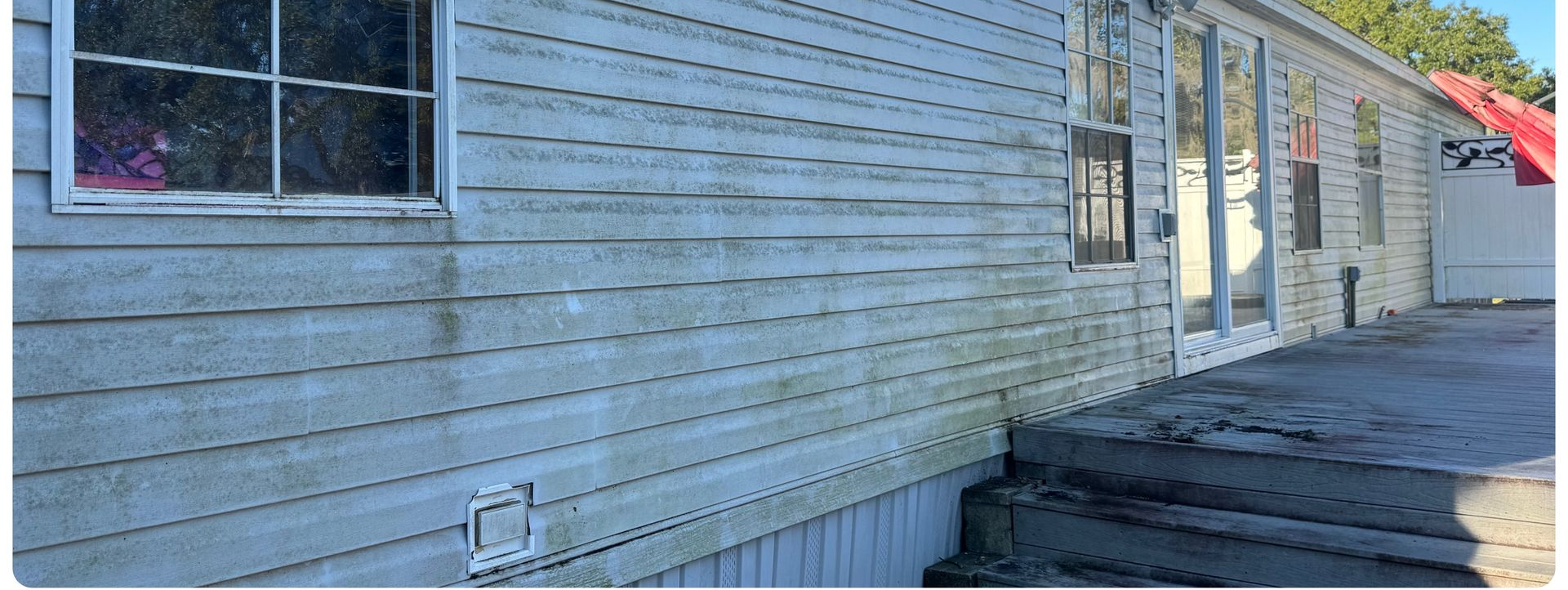
SurfaceMethodWhyTile or shingle roofSoft wash onlyPressure cracks tile and strips shingle granules. The streaking is organic.Painted or stuccoed wallsSoft washPressure scars texture and drives water behind the finish.Vinyl sidingSoft washPressure forces water behind panels; it also won't fix oxidation.Soffit and fasciaSoft washPressure pushes water into the attic through soffit vents.Screen enclosure / pool cageSoft washPressure tears mesh and bends frame. The growth is organic.Wood deck or fenceSoft wash, low pressure rinsePressure furs and gouges wood grain.Concrete driveway, sidewalk, patioPressure washDurable, and the buildup is mechanical. Surface cleaner for evenness.Pavers (cleaning)Pressure wash, controlledYes — but at a managed PSI and with sand replacement after.Pavers (sealed, maintenance)Soft washPressure hazes and strips the sealer.Travertine and natural stoneSoft wash, pH-matchedSoft stone etches. Acid chemistry ruins it permanently.Pool deckDepends on materialConcrete: pressure. Travertine or sealed pavers: soft wash.Rust and oil stainsNeither — targeted chemistryPressure doesn't remove rust. It needs oxalic treatment.Commercial concrete, drive-thrus, dumpster padsPressure wash, hot waterGrease and tire marks are mechanical and need heat. See commercial concrete cleaning.
[PHOTO: side-by-side of a soft-washed stucco wall and a pressure-washed concrete driveway on the same property — Westchase]
How do I know if what's on my house is alive?
Three quick tests you can run yourself in about a minute:
- Color. Green, black streaky, or gray-green patchy is biological. Orange or brown fan shapes are rust. Dark gray even grime on concrete is mechanical dirt.
- Pattern. Growth follows moisture — it concentrates on the north side, under eaves, below gutter joints, and in shade. Mechanical dirt is roughly even.
- The wipe test. Rub a dry spot with your thumb. Mechanical dirt comes off on your thumb. Biological growth stains and doesn't lift.
If it's alive, pressure is the wrong tool no matter how satisfying it looks in the moment.
The hybrid reality of a real Florida house
Almost every job on a Tampa Bay property is both. A typical estate visit looks like this:
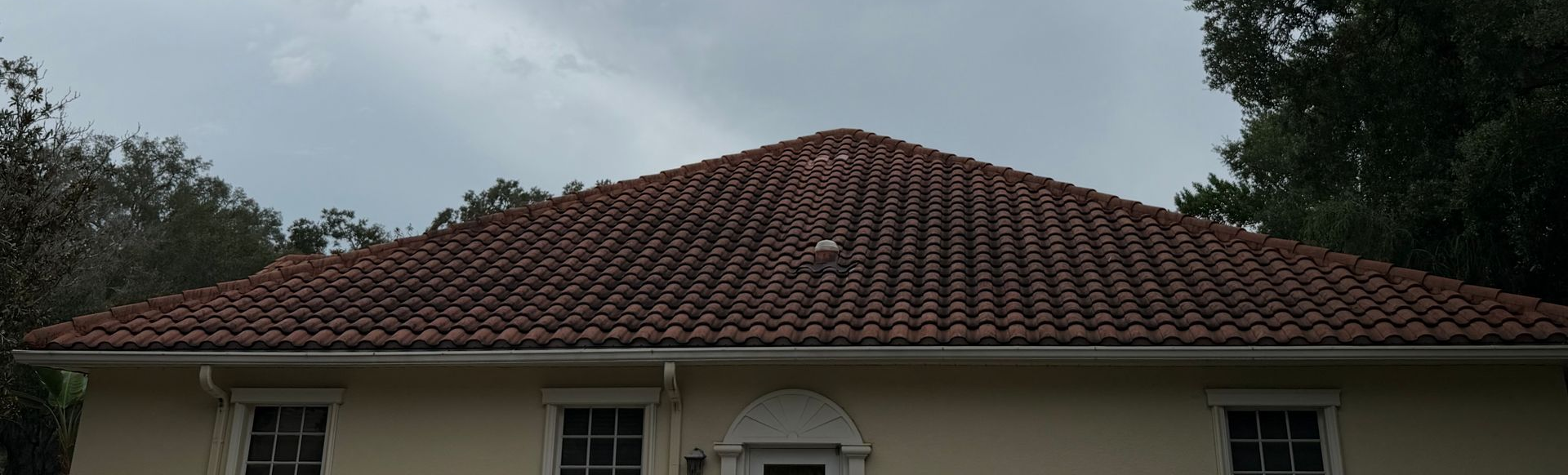
- Soft wash the roof — no pressure, no foot traffic
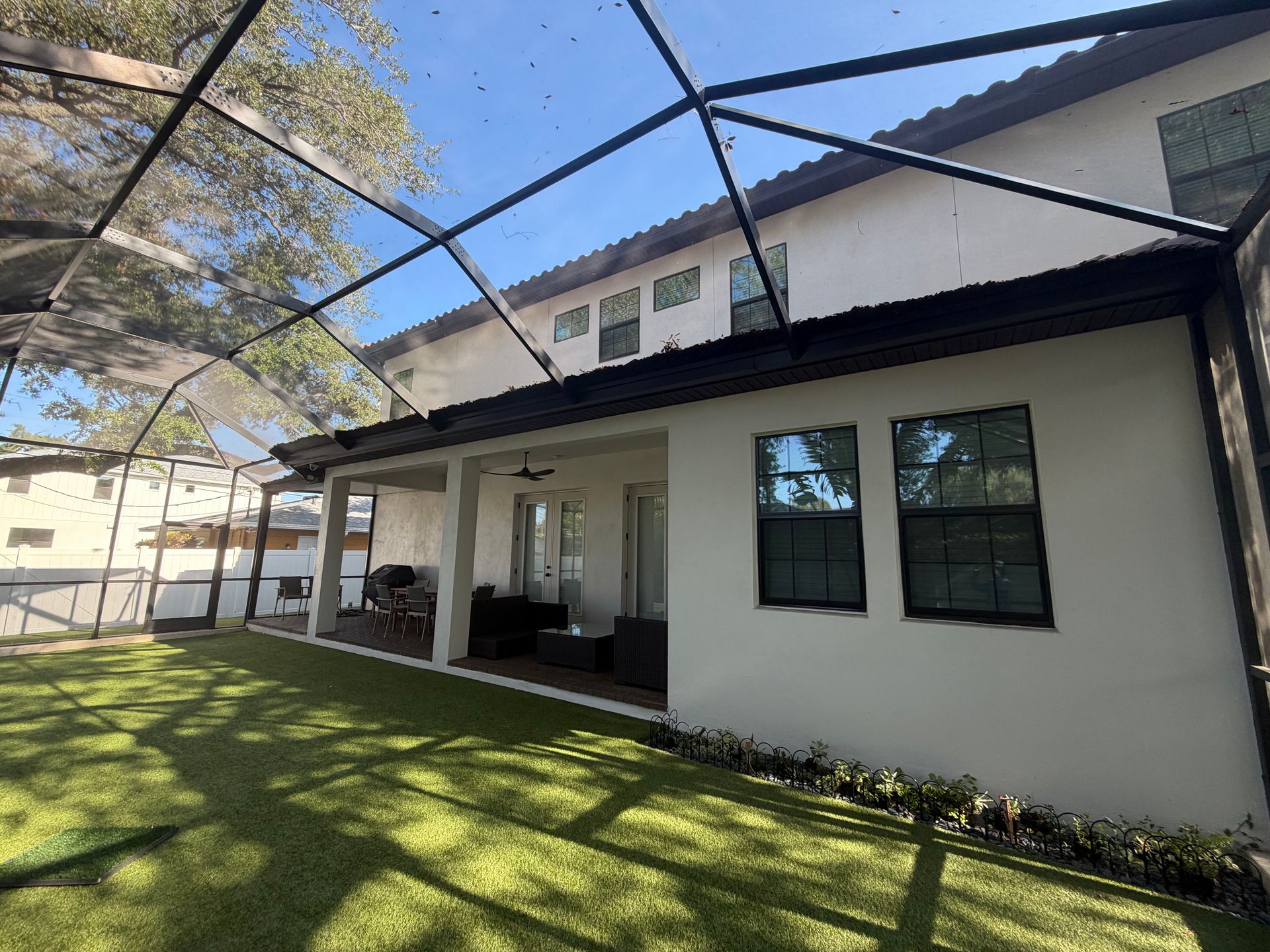
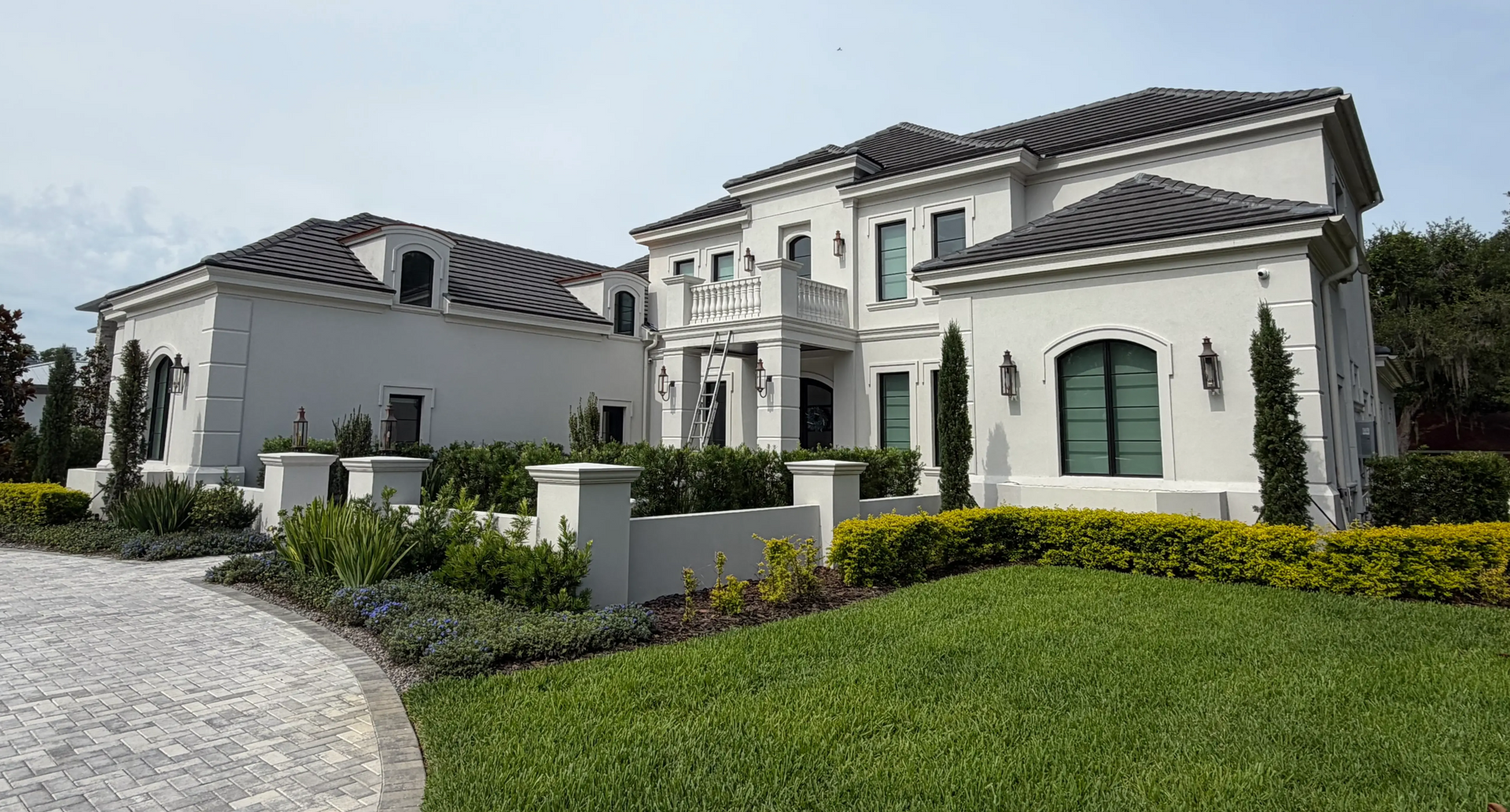
- Soft wash the house exterior, soffit and fascia
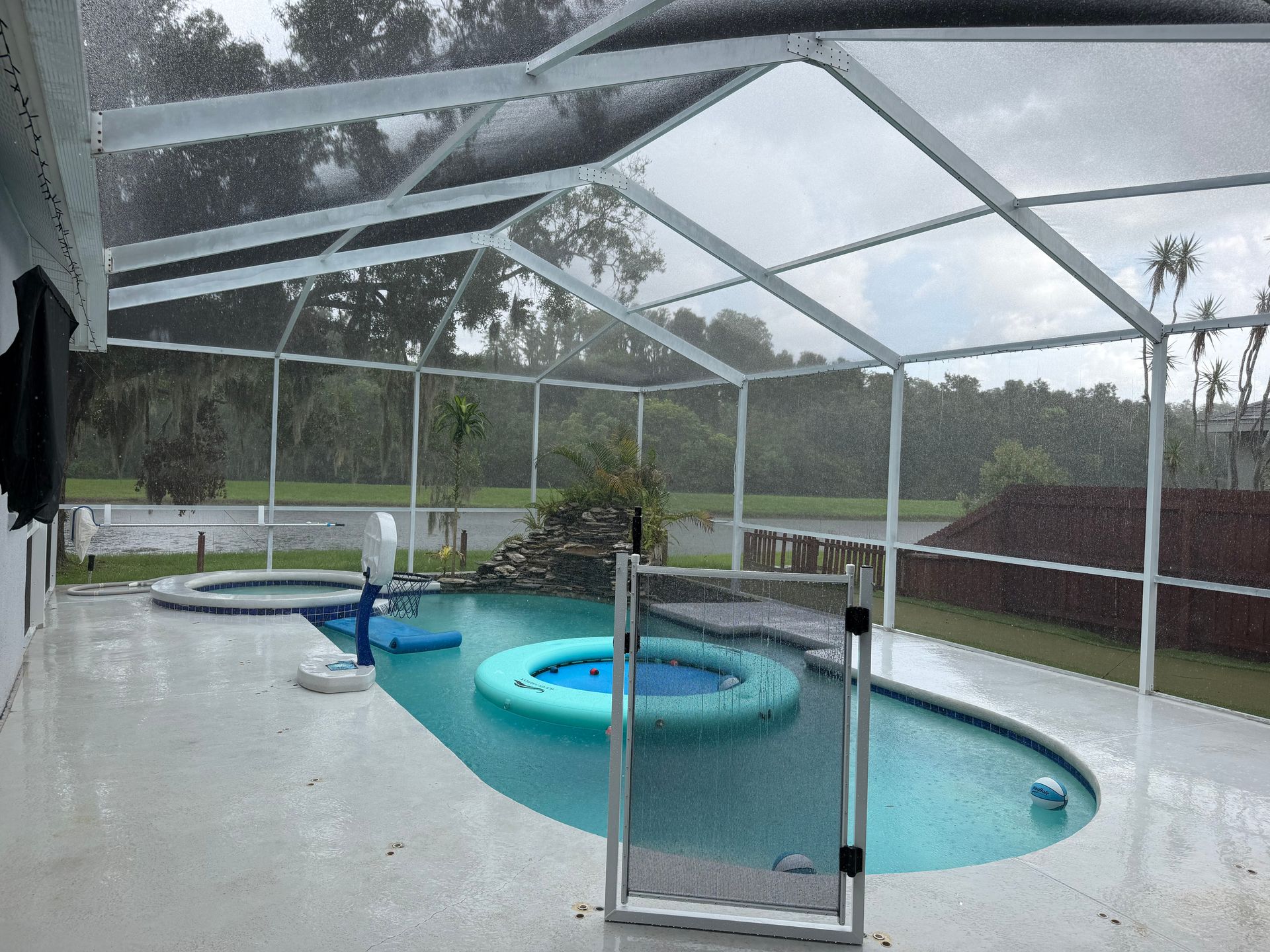
- Soft wash the screen cage and lanai framing
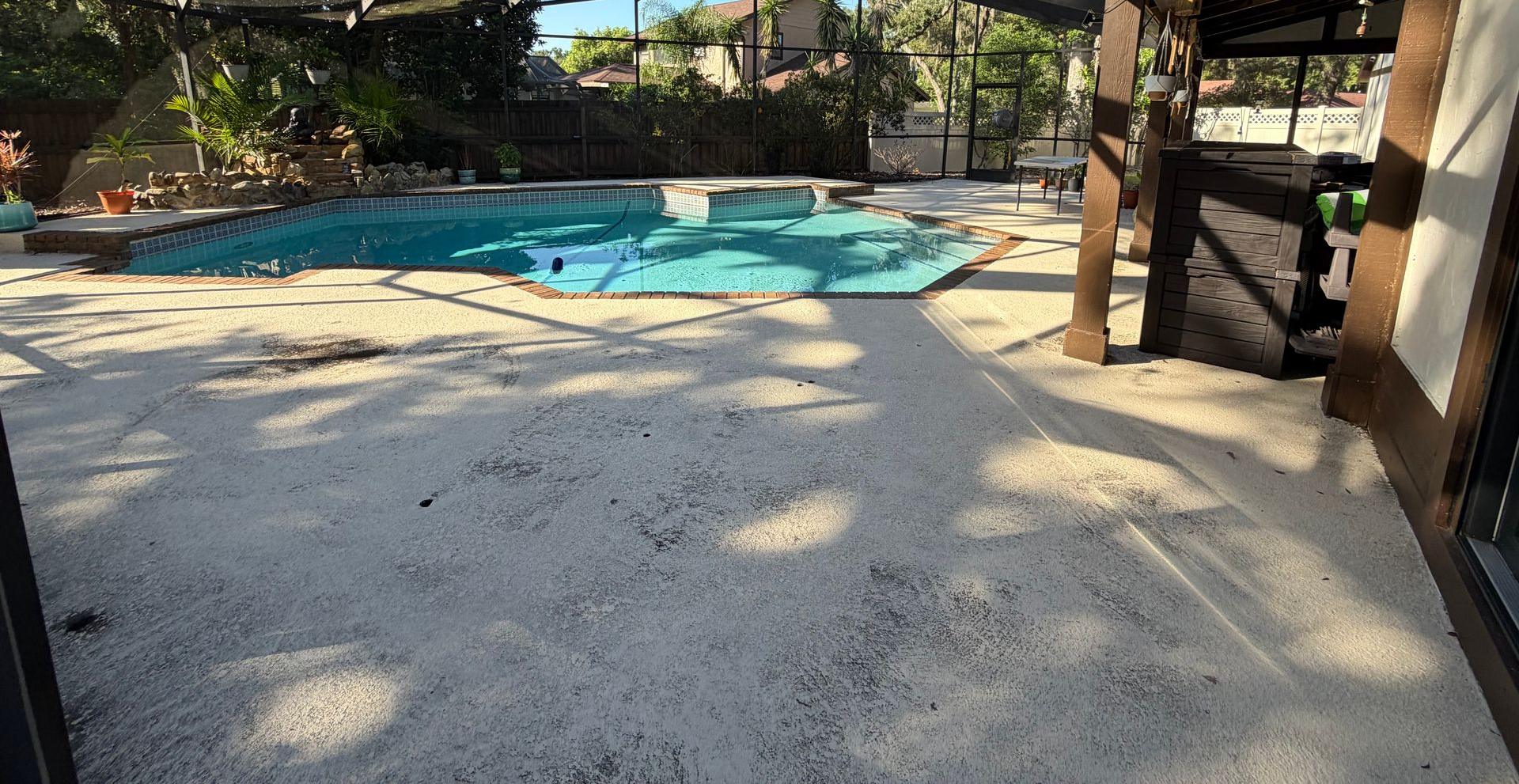
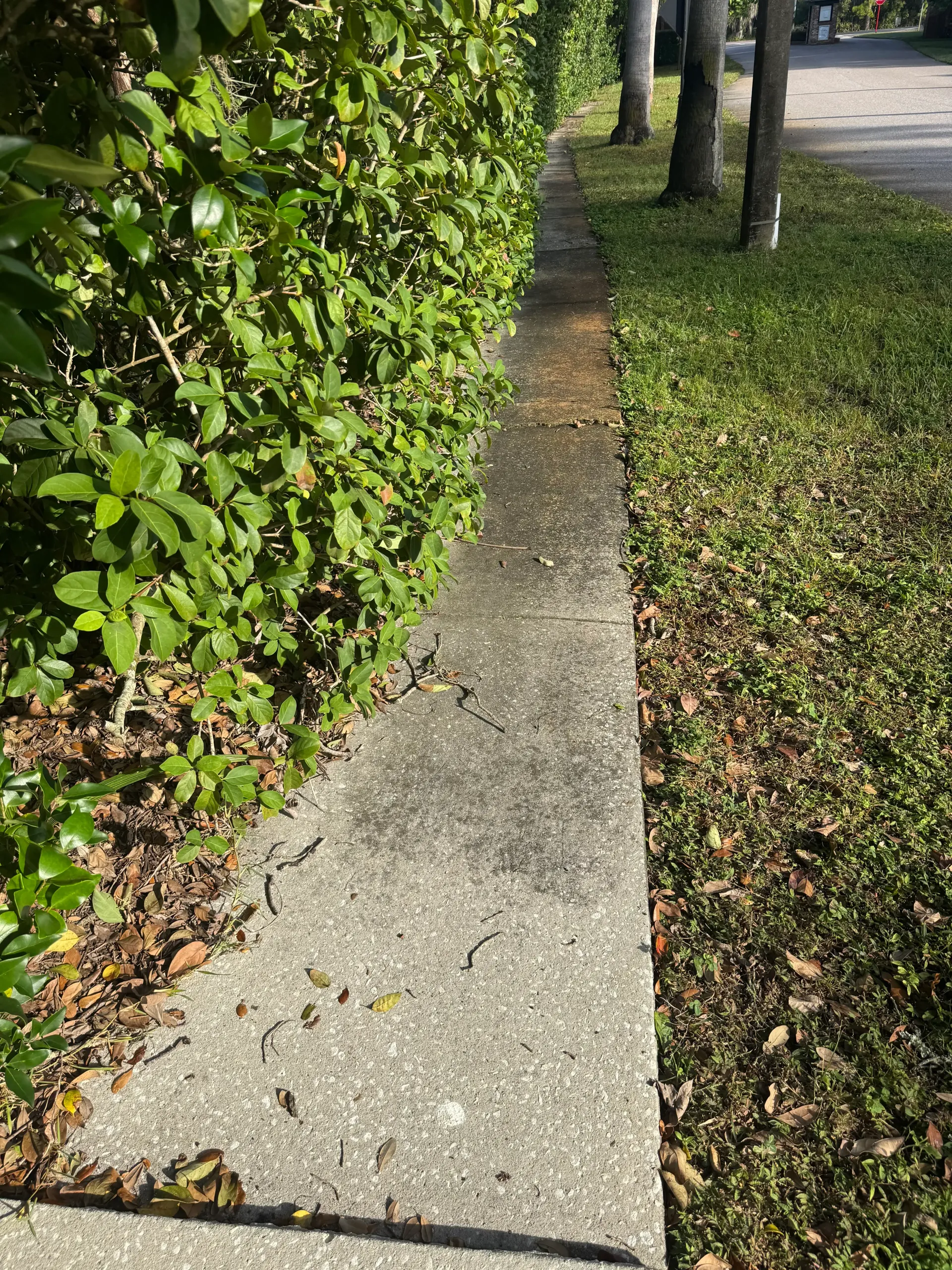
- Pressure wash the driveway, walkways and concrete pool deck
- Targeted chemistry on rust fans and oil drips
- Soft wash any sealed paver surfaces
- Rinse glass last
That's two completely different equipment setups, two chemistry programs and two pressure ranges on one house — which is the honest reason this is harder to DIY than it looks. It isn't a skill problem. It's that one machine and one mix can't do the whole property, and figuring out where the line falls has a real cost of being wrong.
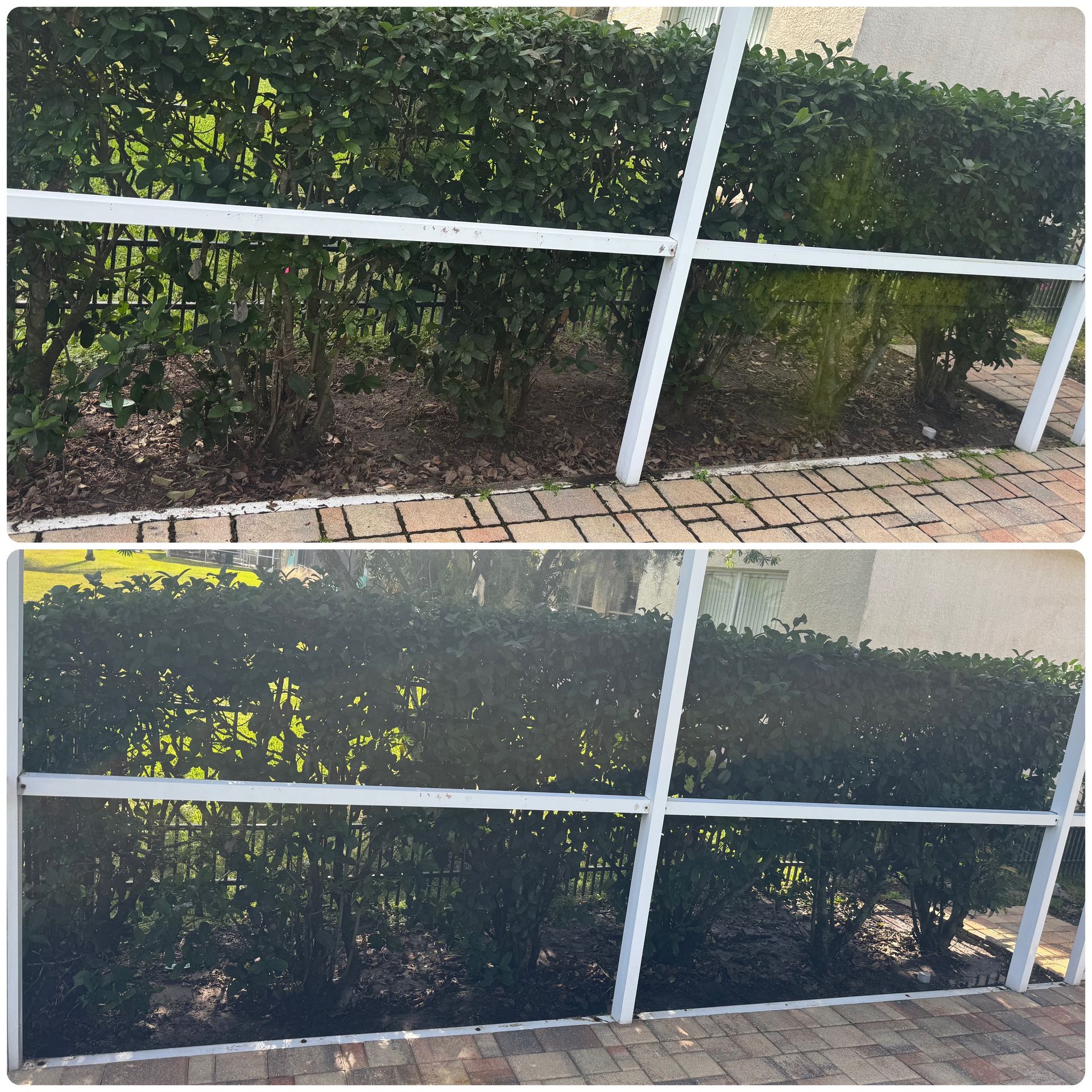
[PHOTO: before/after of soft washing a shaded north elevation with heavy green growth — Carrollwood Village]
The mistake we get called in to fix most
Pressure on stucco. Somebody rented a machine, ran a 15-degree tip across a wall, and now there are clean arcs burned into the texture. The texture is gone — it doesn't grow back, and a soft wash afterward won't hide it. Repair means patching and repainting that elevation.
Second most common: pressure on a sealed paver driveway, which hazes the sealer unevenly. The fix is a full strip and re-seal.
Both are entirely avoidable with the right method on the right surface, which is the whole point of knowing the difference.
Let us tell you what your property needs
We'll walk it, tell you which surfaces are getting soft washed and which are getting pressure washed, and why — before we quote anything. Details on our soft washing, house washing and roof cleaning pages.
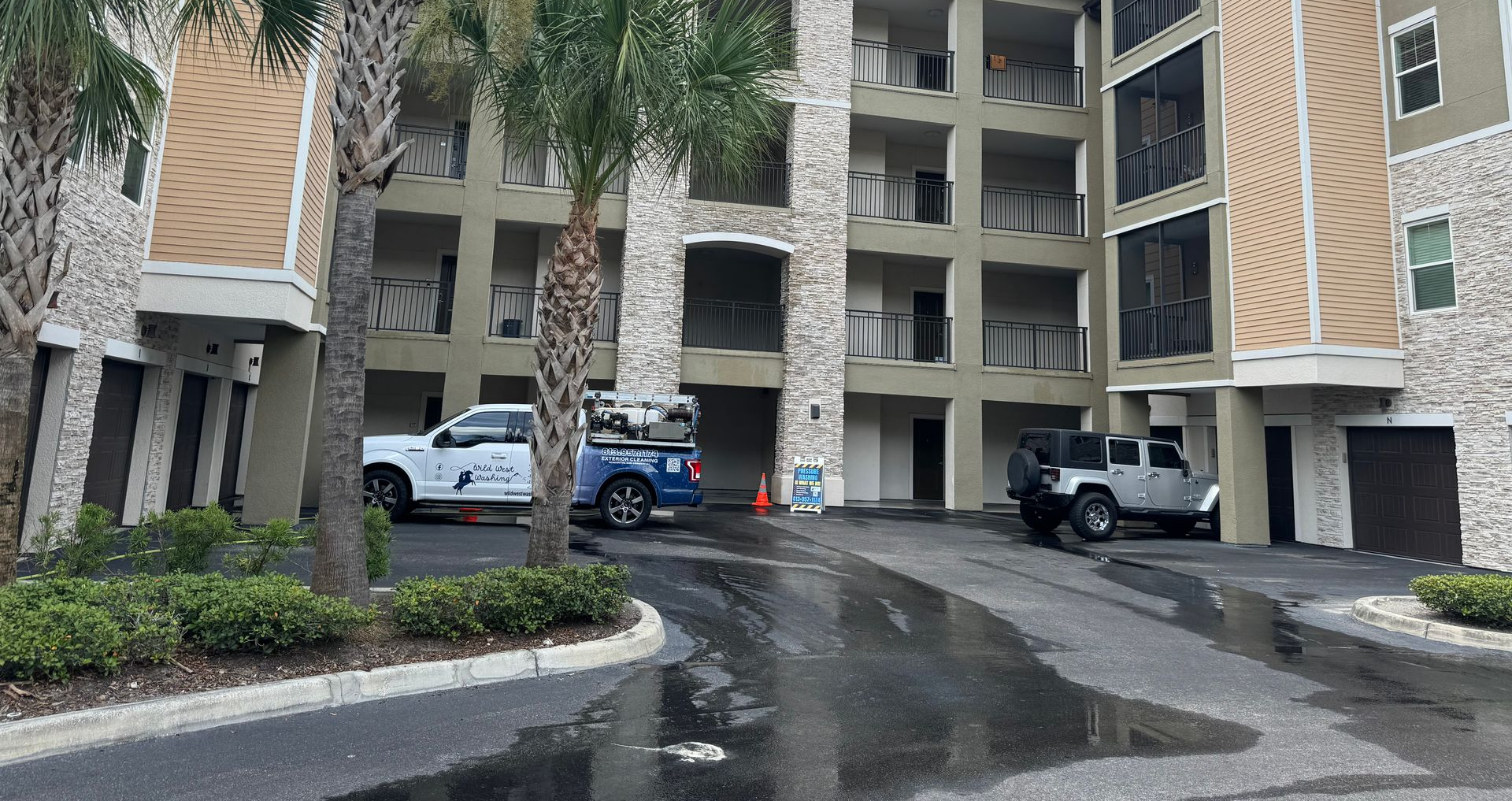
Wild West Washing — veteran-owned, serving Hillsborough, Pasco and Pinellas counties. Free quote at 813-957-1174.