Stop Using the Wrong Chemical on Natural Stone
Travertine is calcium carbonate. So is chalk, and so is marble. Which means the acidic cleaners sold for concrete driveways — and a surprising number of the "stone-safe" products on the shelf at big-box stores — will etch a travertine pool deck on contact, leaving dull patches that no amount of subsequent cleaning brings back. Travertine pool deck cleaning in Tampa is a different job than cleaning a concrete or paver deck, and the difference is entirely in the chemistry.
If you have a travertine, shellstone or marble deck around your pool, this is the one surface on your property where the wrong bottle does permanent damage in about ninety seconds.
What's actually growing on a travertine deck?
Three things, and they respond differently:
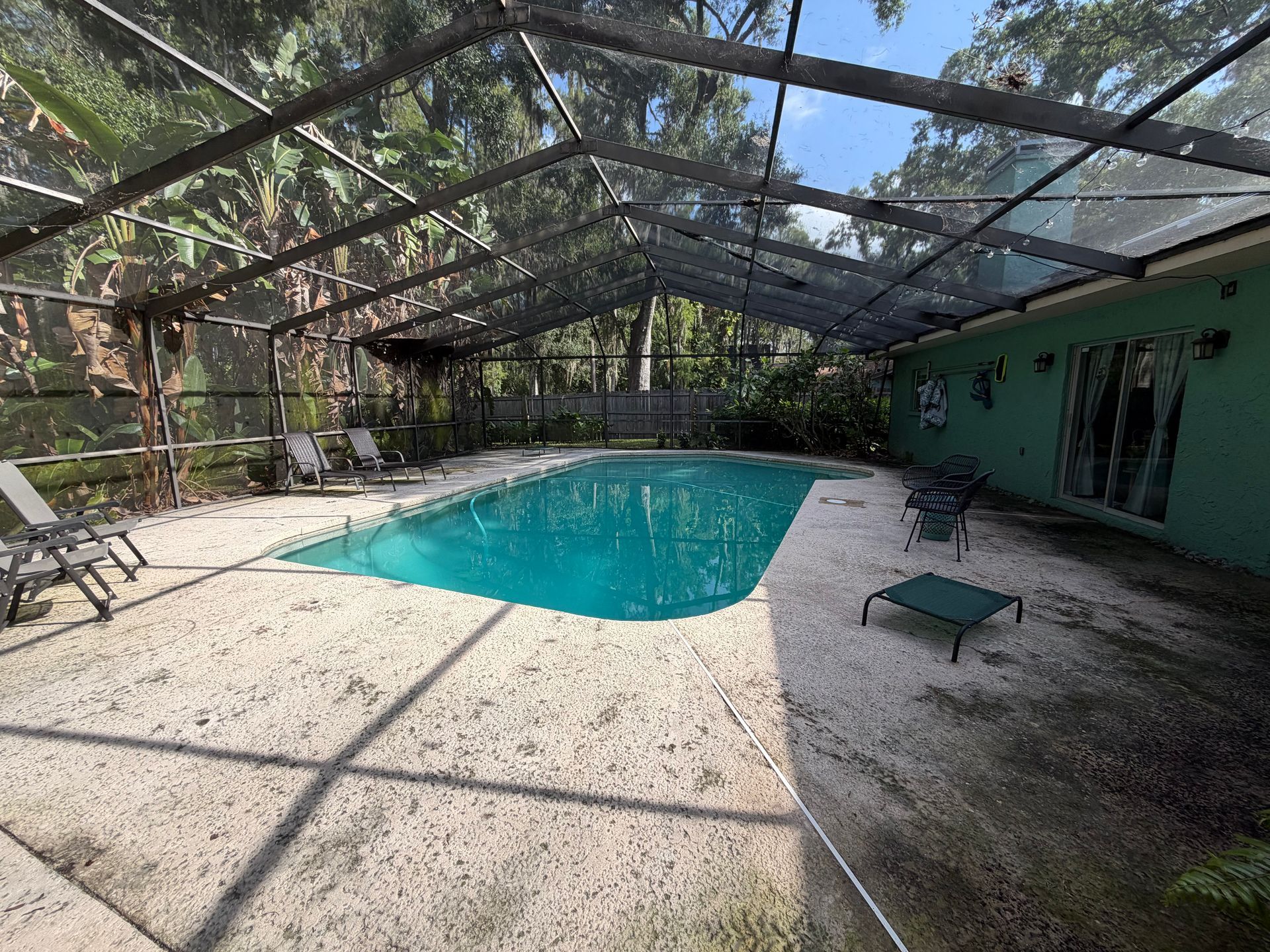
- Algae and mildew in the pores and the natural pitting. Travertine is porous by nature — those voids are the whole look — and in Tampa humidity they hold moisture and organic matter year round. This is the green-gray film in the shade under the cage.
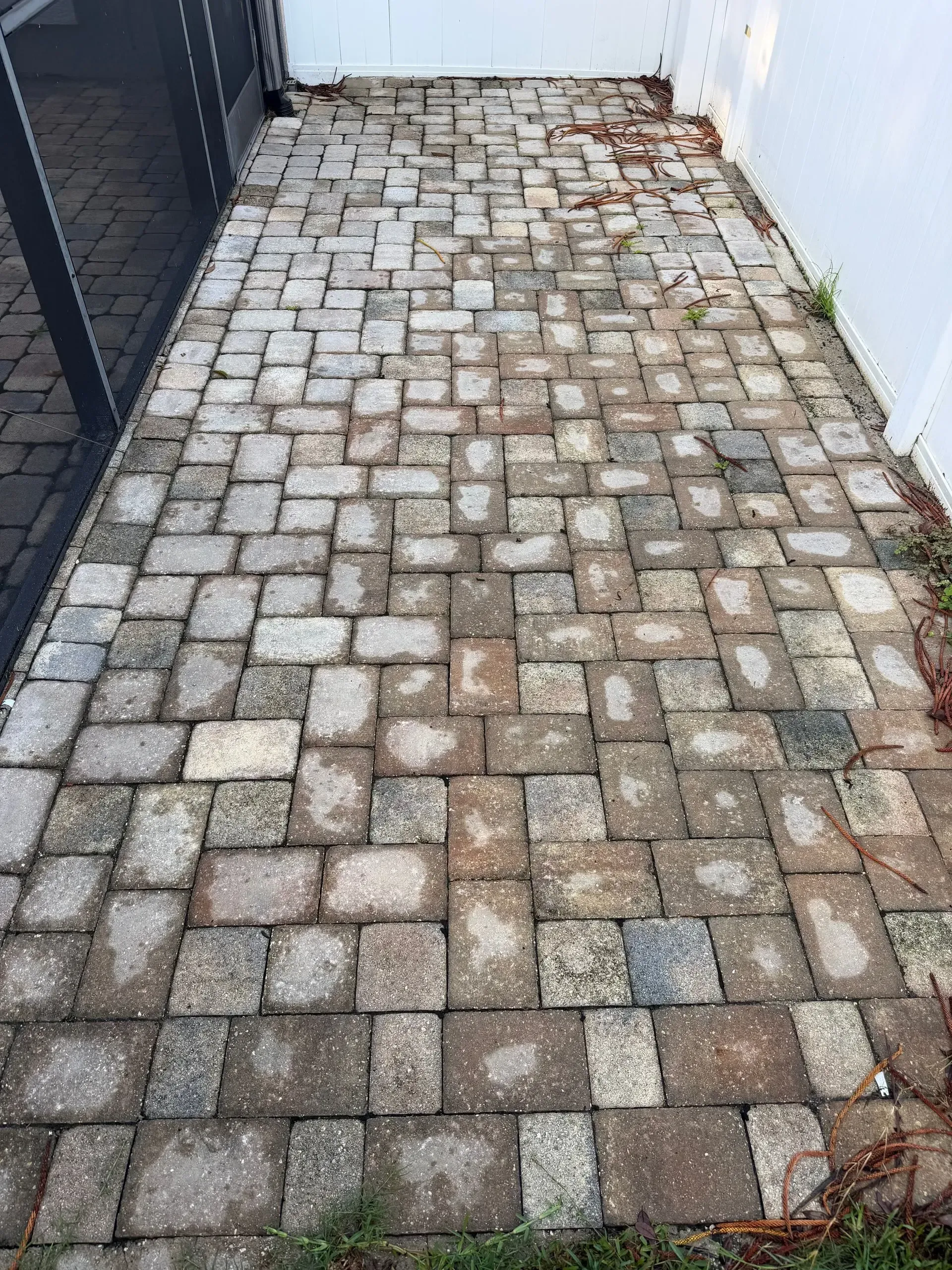
- Efflorescence, the white chalky bloom that migrates up through the stone from the setting bed. It looks like haze or a dried spill and it is mineral, not biological, so no amount of sanitizing touches it.
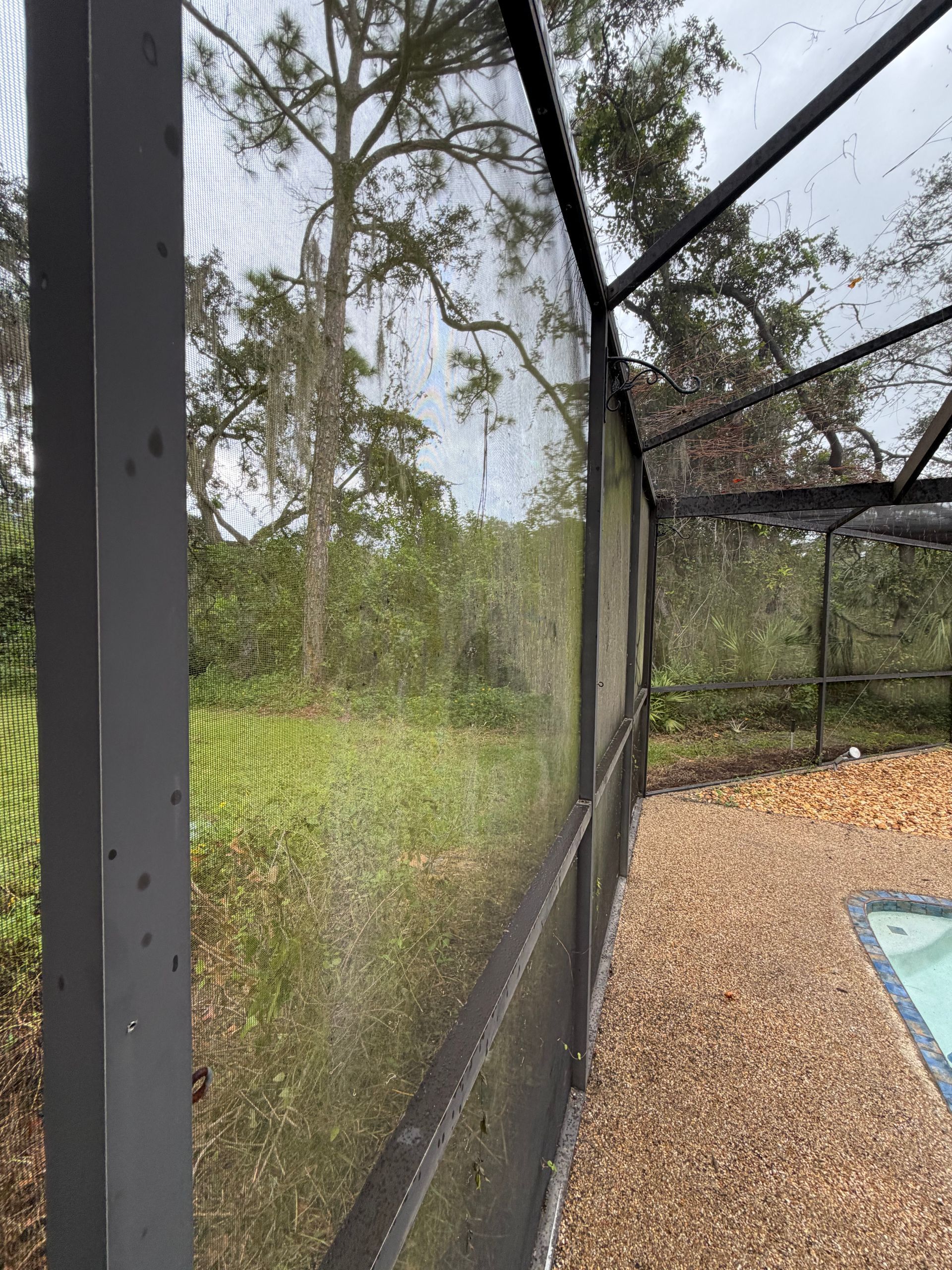
- Organic staining from oak tannin, leaf litter, mulch splash and — around a screened cage — whatever sits on the screen and drips.
Most homeowners try to hit all three with one product. That's where it goes sideways.
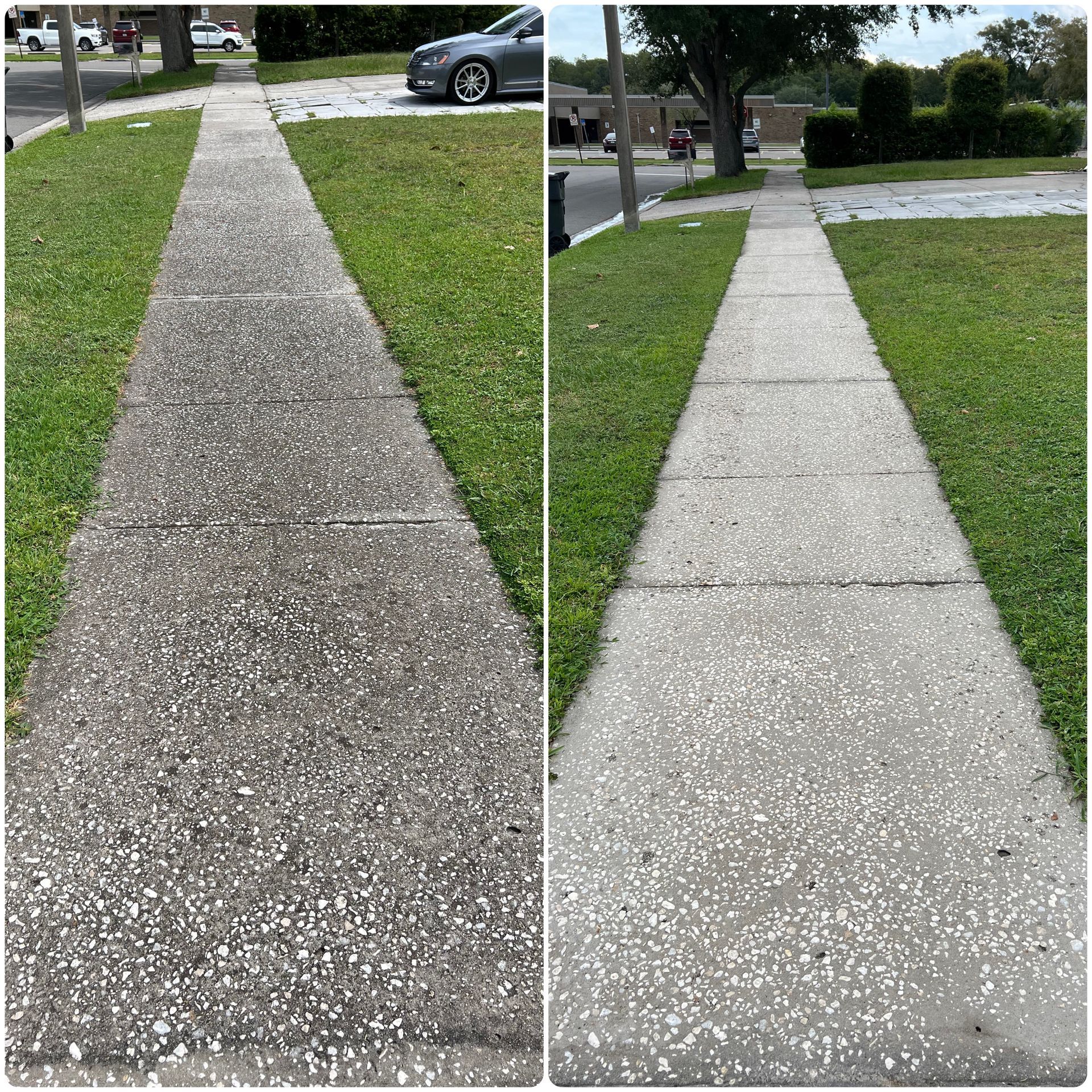
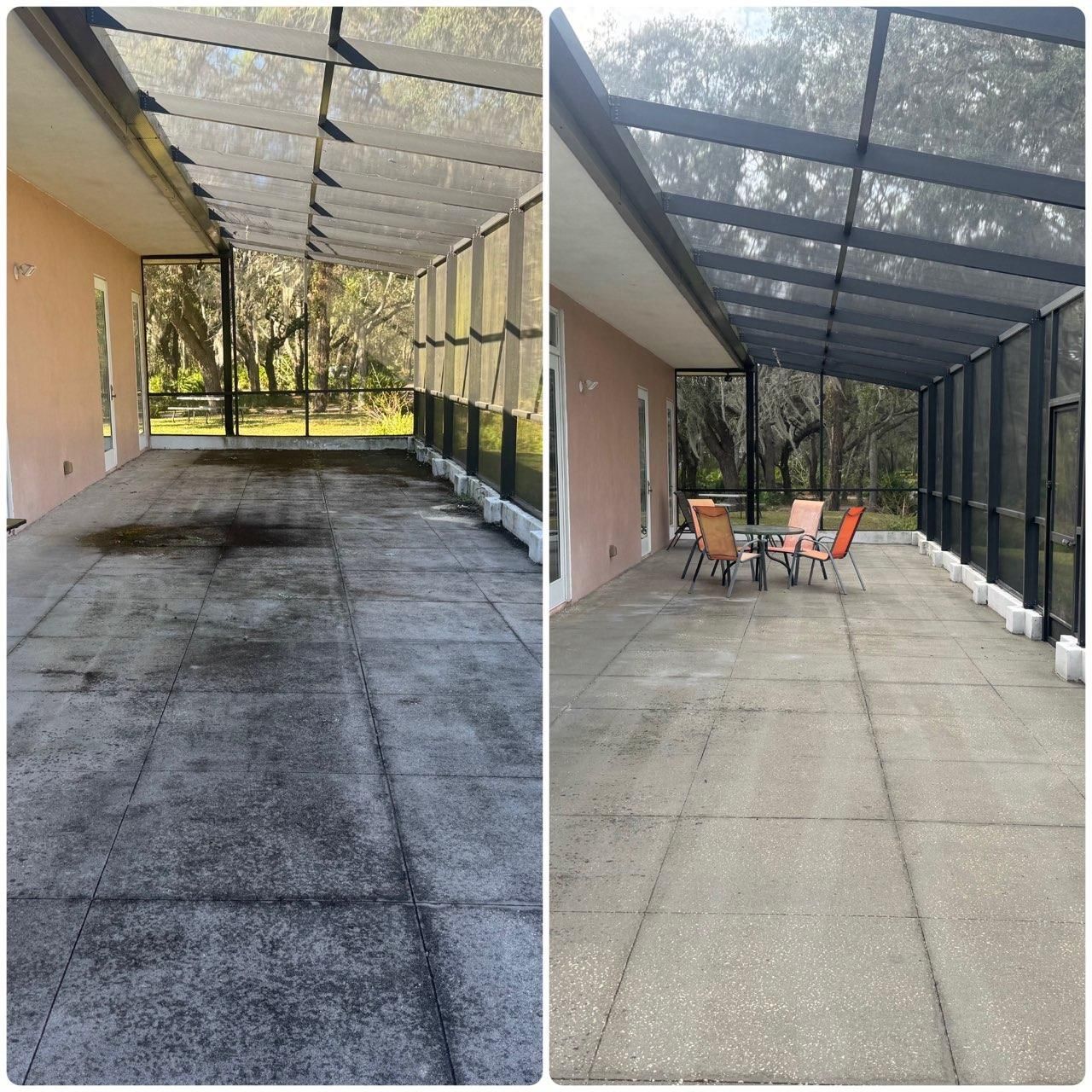
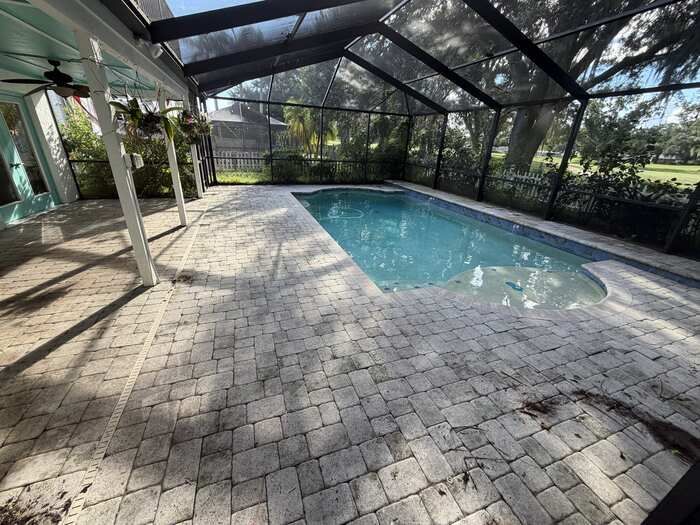
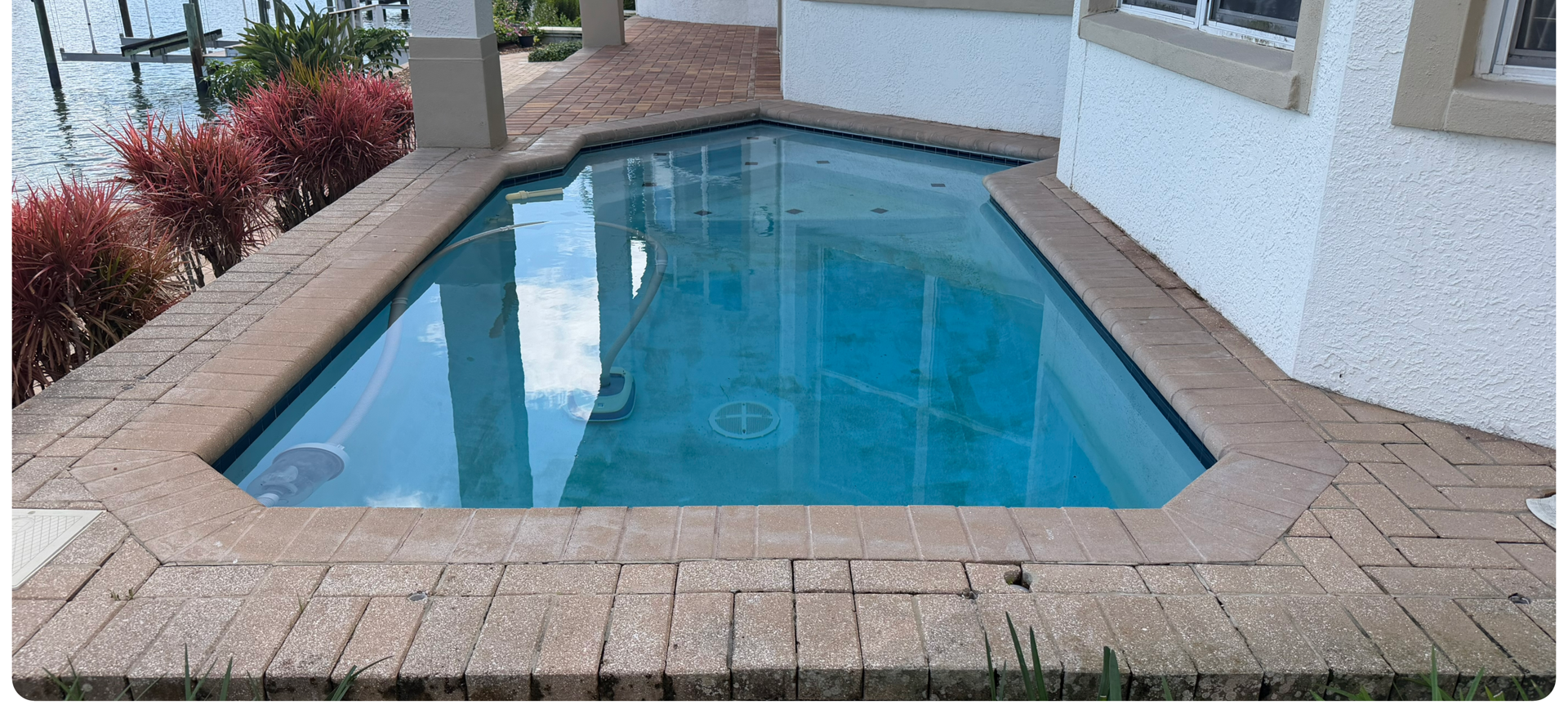
[PHOTO: travertine deck with heavy algae in the shaded section under a pool cage — before]
Why can't you just pressure wash it?
You can, and people do, and then two years later the surface reads sandy and the honed finish is gone.
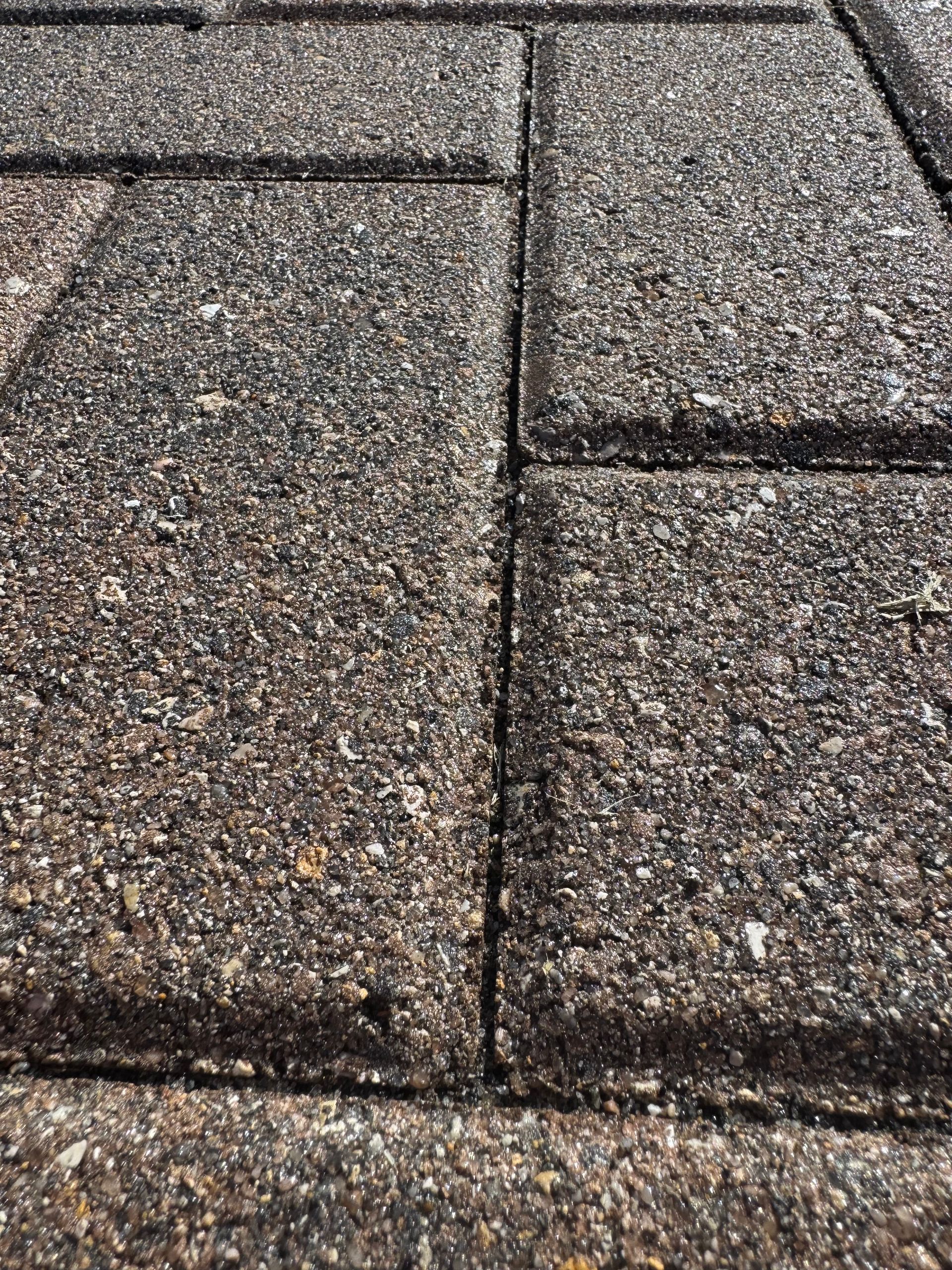
Travertine is a soft stone. High pressure blows out the pore structure, rounds the edges of every pit, and on a filled travertine it strips the factory fill right out of the holes — which then collect water and dirt faster than they did before. On a paver deck, aggressive pressure costs you joint sand. On travertine, it costs you the stone itself.
What works is low pressure plus dwell time. A pH-appropriate cleaning solution, given enough time to break the biological film down, followed by a gentle rinse and a surface-cleaner pass at a pressure that would barely lift dirt off a driveway. Slow is the technique.
How is a travertine pool deck cleaned properly?
- Test a hidden section. Behind the equipment pad or under a planter. Travertine varies enormously by quarry and fill.
- Protect the pool and the plants. Pre-wet the beds, bag what's adjacent, and control runoff away from the water. Solution in a pool is a chemistry problem you'll pay a pool tech to fix.
- Apply a sodium-hypochlorite-based soft wash at the right dilution — enough to kill algae in the pores, not enough to bleach adjacent surfaces. No acid. No muriatic. No "rust remover" anywhere near the stone.
- Let it dwell, re-wetting so nothing dries on the surface in the sun.
- Low-pressure surface clean to lift the broken-down film evenly, then a full rinse.
- Address efflorescence separately if present, with a product formulated for it — and know that heavy efflorescence usually means moisture is moving through the setting bed, which is a drainage conversation, not a cleaning one.
- Re-sand the joints if it's a travertine paver deck rather than a mortar-set slab.
How often does a stone deck need this in Tampa Bay?
Annually for most, every 18 months for a deck in full sun with good airflow, and twice a year for the genuinely difficult ones: a deck that sits under a screened cage in heavy oak shade, a north-facing deck that never dries, or a deck fed by a sprinkler head that mists it every morning. That last one is worth walking out and checking — an irrigation head pointed at a stone deck will keep a permanent damp zone alive no matter how well it was cleaned.
Sealing is optional on travertine and it's a real decision, not an upsell. A penetrating sealer slows staining and makes the annual clean easier. A topical sealer changes the look and can trap moisture in a deck that already has efflorescence. On a Tampa pool deck, penetrating is almost always the right answer if you seal at all.
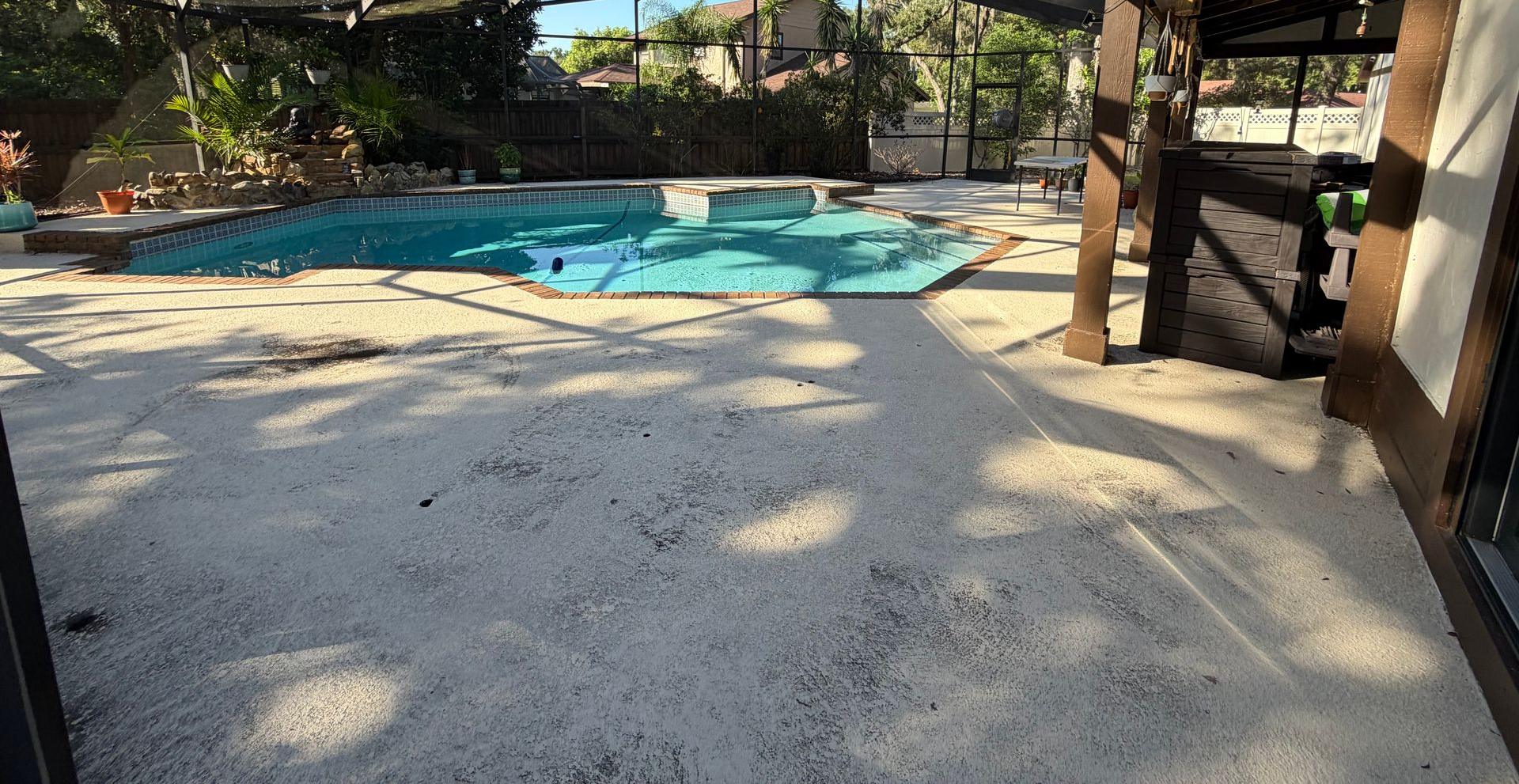
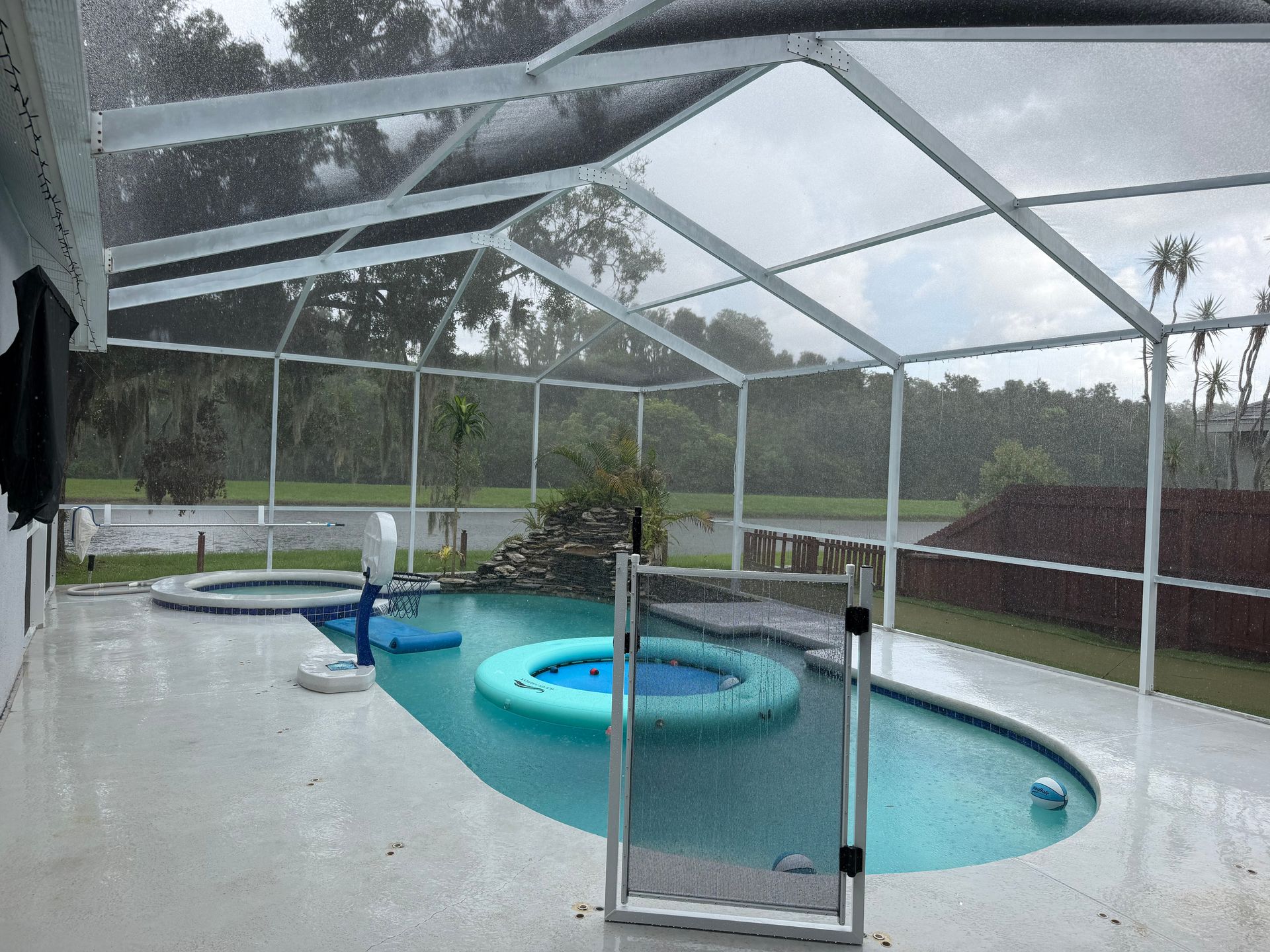
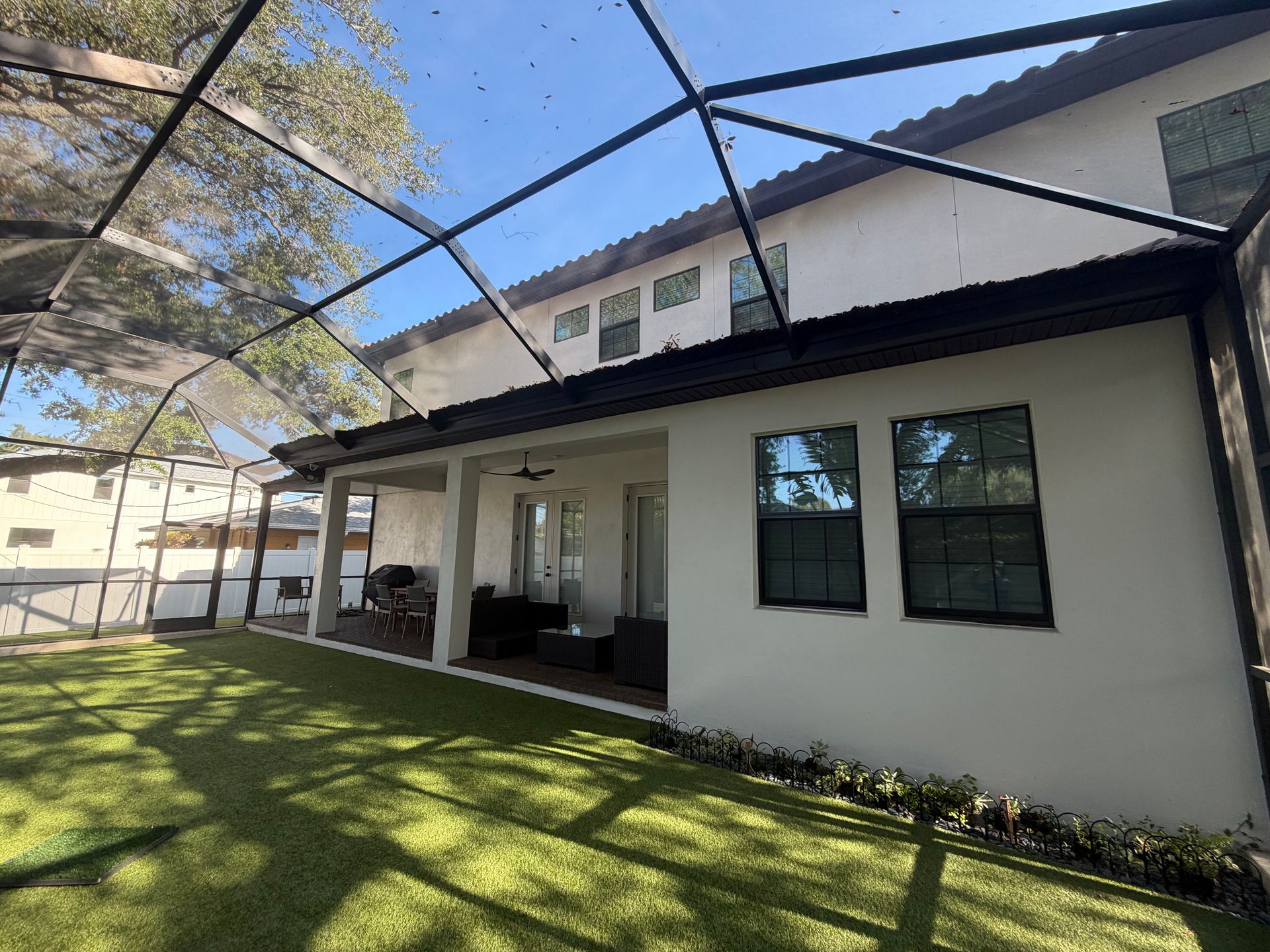
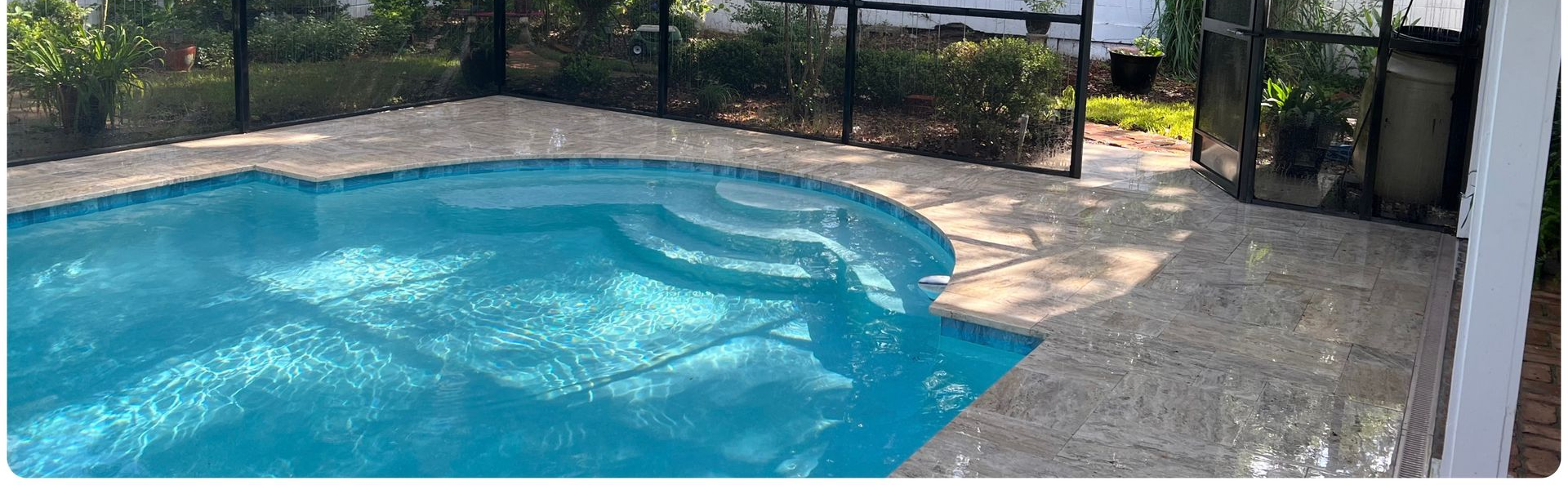
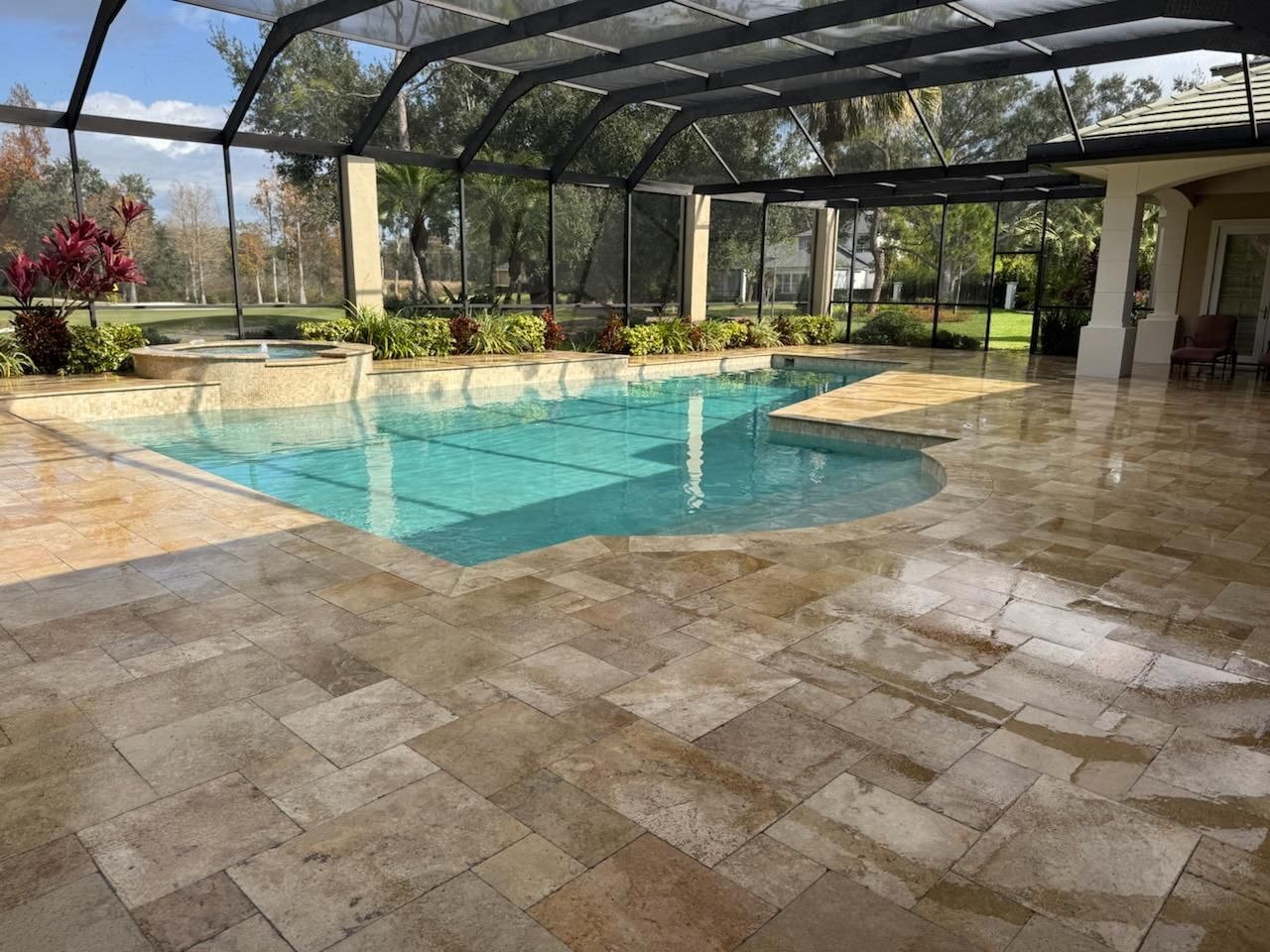
[PHOTO: after shot, same deck, full width with the cage and pool in frame — Cheval or Avila]
The honest version
This is a fussy surface and it punishes speed. The crews that damage travertine aren't lazy — they're usually running a concrete playbook on a stone that doesn't tolerate it, because on a paver deck that playbook works fine. Knowing the difference is most of the job.
We clean travertine, shellstone, marble, paver and concrete decks across Hillsborough, Pasco and Pinellas, and we mix for the material. Wild West Washing is a veteran-owned Tampa outfit, and we'd rather spend ten minutes testing a corner than ten years apologizing for a dull patch.
Free quote at 813-957-1174. See our pool deck cleaning in Tampa Bay and pool cage cleaning, or what we do for homes in Cheval.