What Tile Roof Cleaning in Tampa Actually Requires
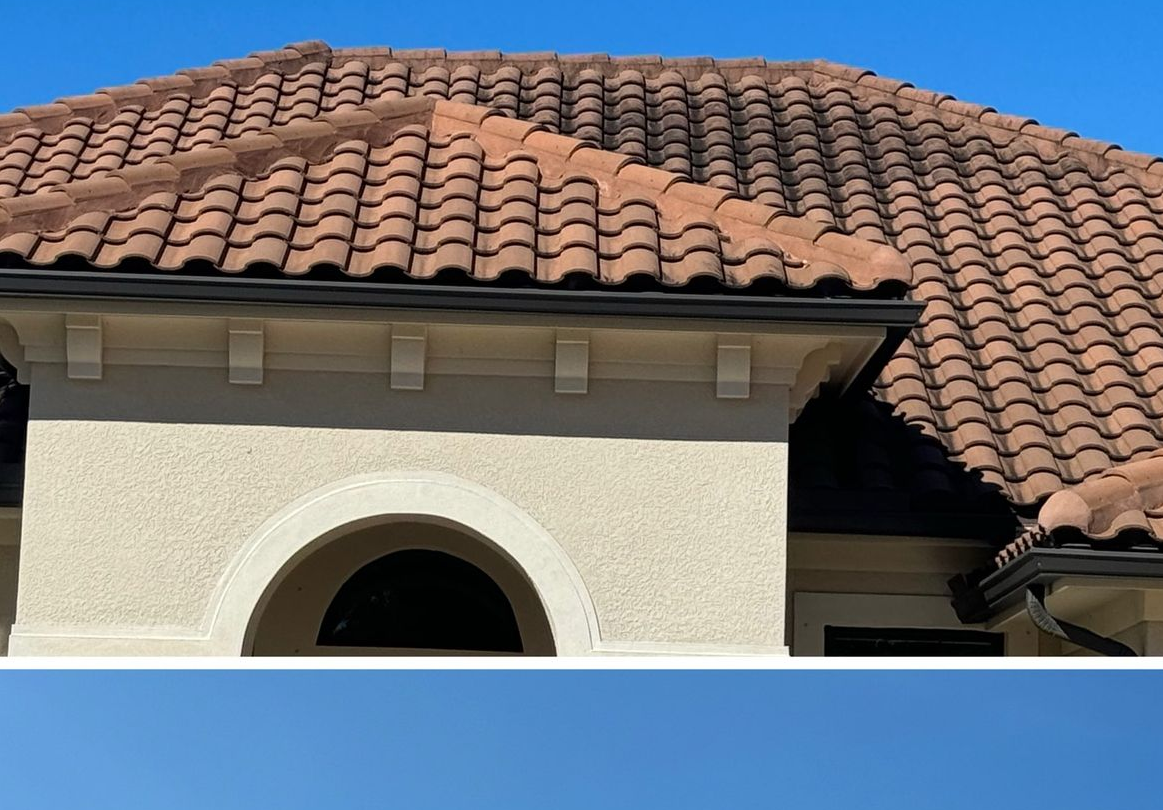
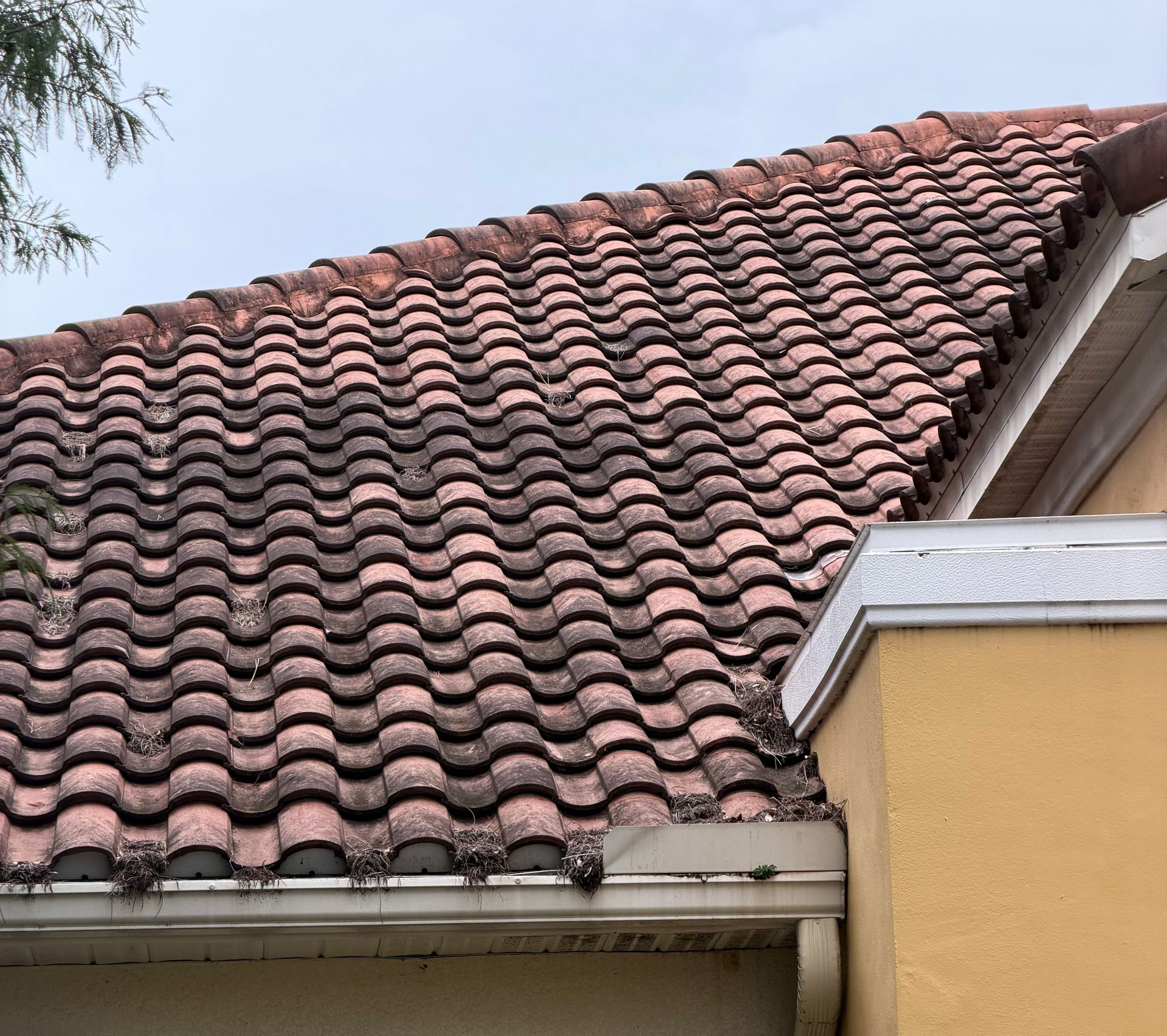
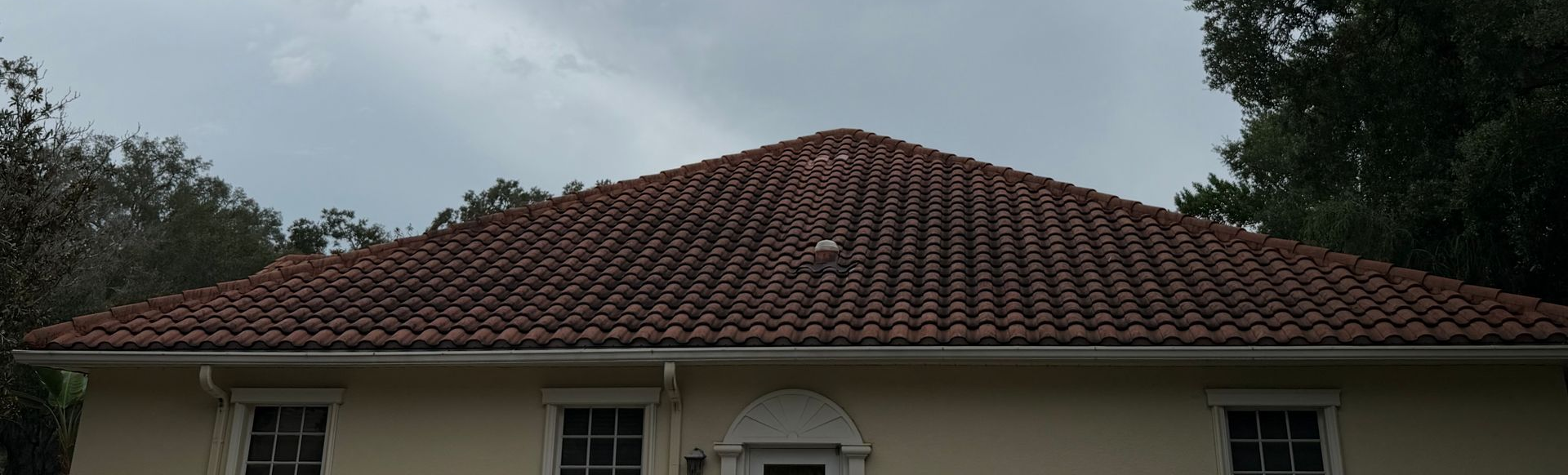
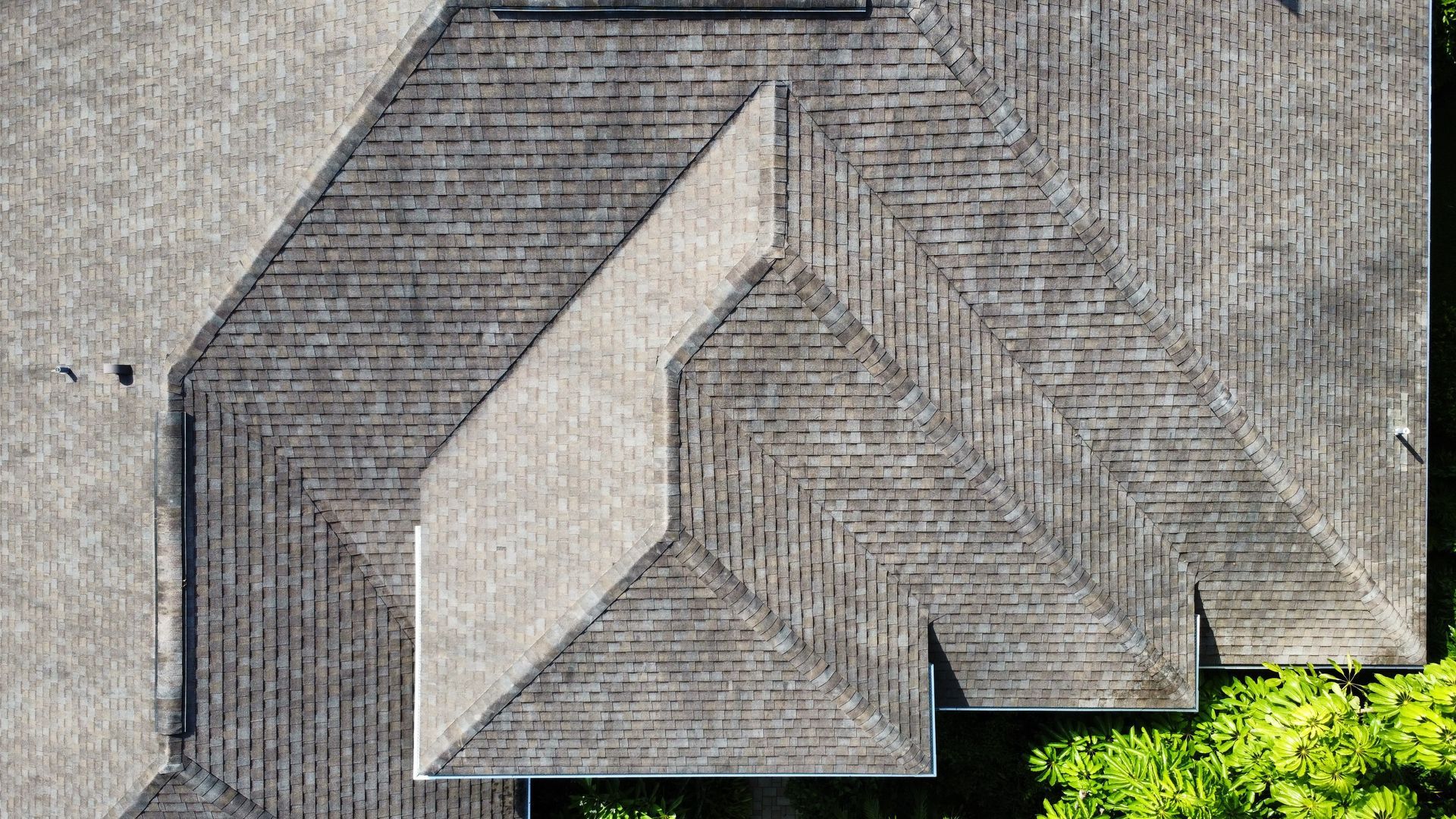
Tile roof cleaning in Tampa is done with chemistry and zero pressure, from ladders and lifts rather than by walking the field of the roof. The black streaking on your barrel tile is a cyanobacteria called Gloeocapsa magma, it is alive, and the only thing that removes it permanently is a treatment that kills the organism. Pressure knocks the color off the top of it and leaves the roots behind — along with cracked tile and blown-out mortar.
That distinction is the whole ballgame on a tile roof, and it's why tile is a completely different job from shingle.
Why tile roofs streak in the first place
Clay and concrete tile are porous. They hold moisture in the pores and in the shadowed underside of every barrel, and Tampa Bay delivers humidity, afternoon rain and warm nights roughly nine months a year. That's a perfect culture medium.
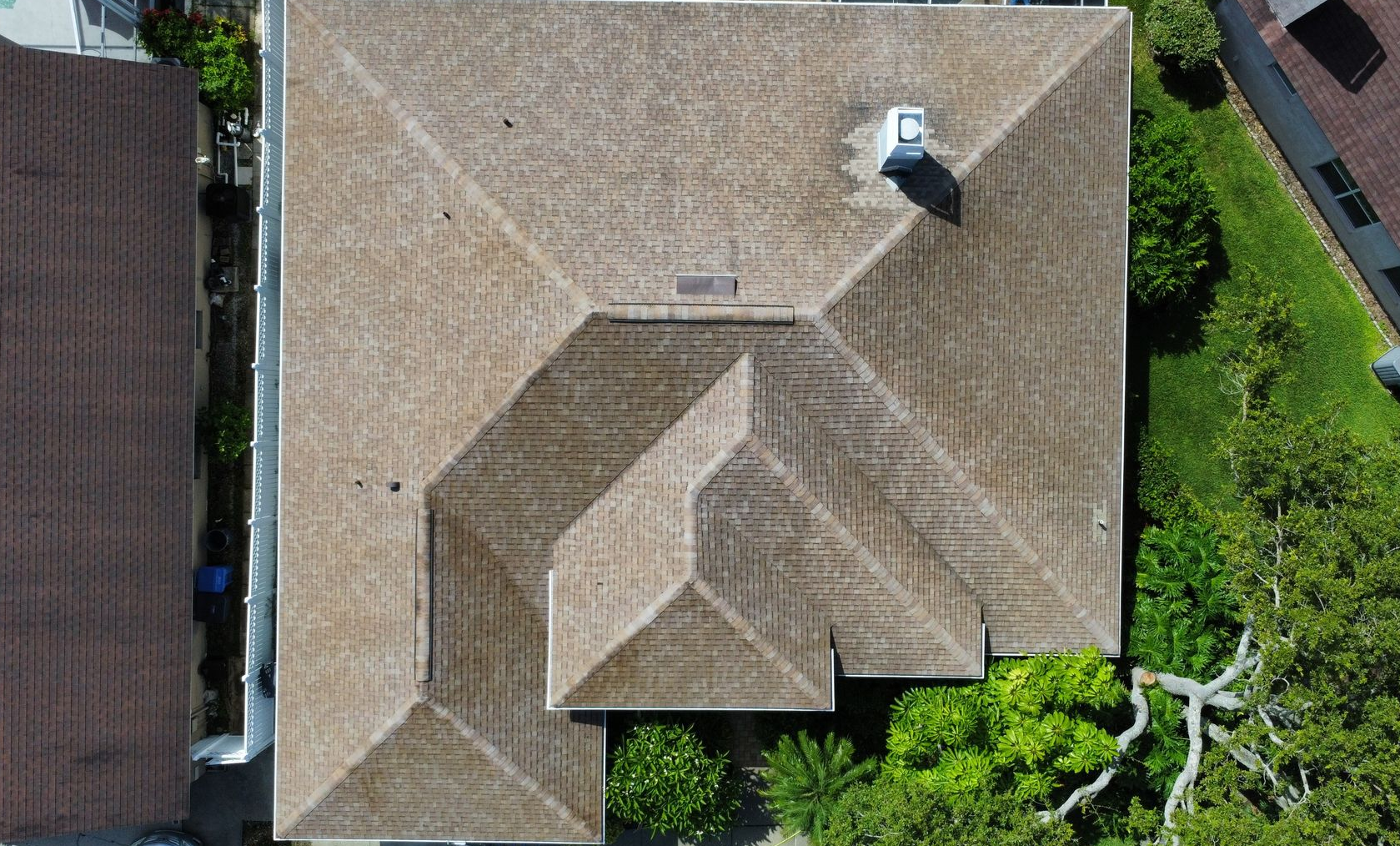
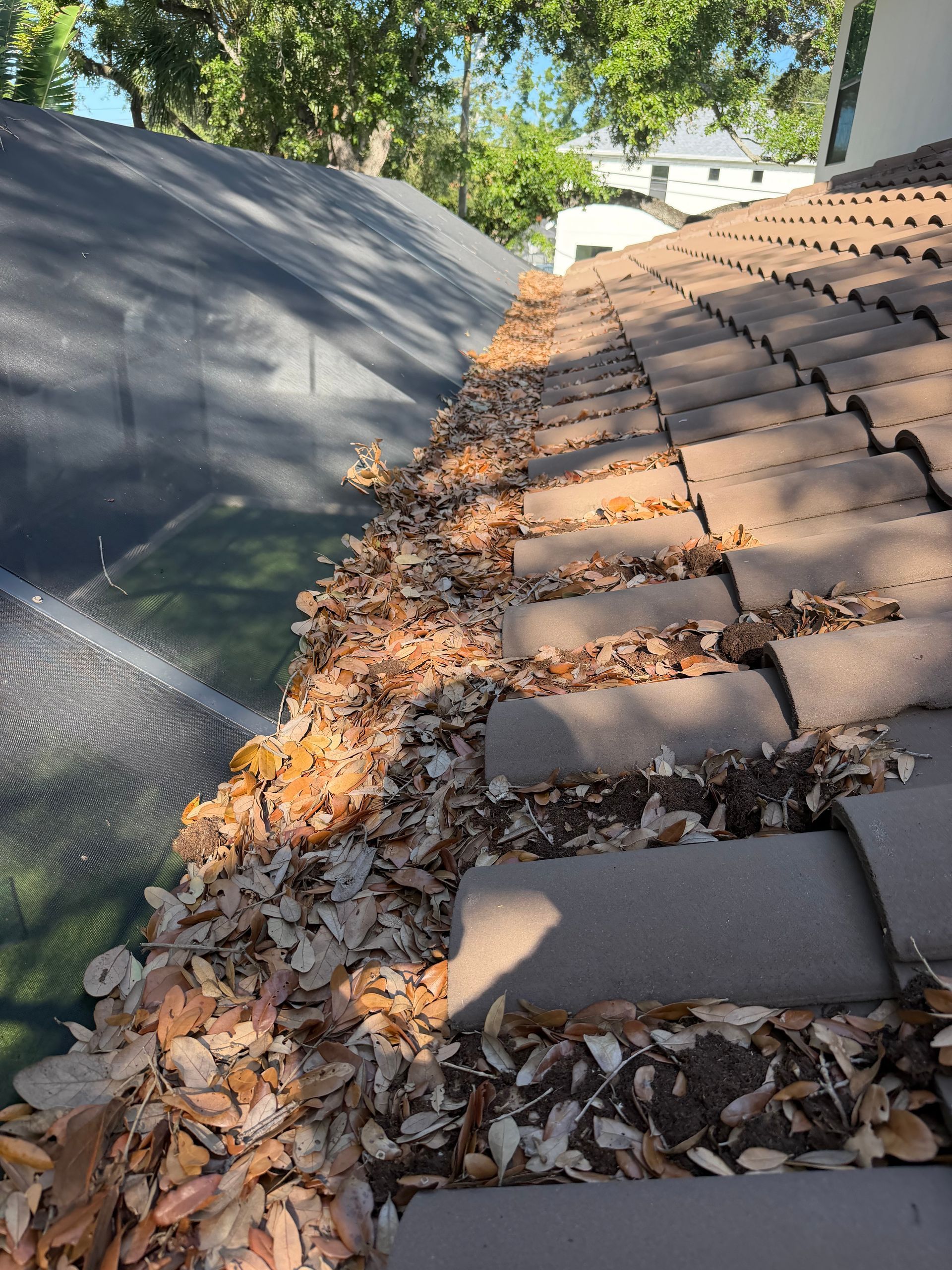
The streaking pattern is not random either. It runs downhill from the ridge because the organism spreads with every rain event, feeding on limestone filler in the tile and on the organic debris — oak leaves, pine needles, pollen — that collects in the pans. Live oak canopy makes it dramatically worse, which is why the streaking on a Avila or Carrollwood Village roof under mature oaks is usually two or three years ahead of the same roof in an open subdivision.
North-facing slopes go first. They dry slowest.
[PHOTO: close-up of Gloeocapsa magma streaking on barrel tile, north slope — Avila]
Does a dirty tile roof actually damage the tile?
The tile itself is tough. The real costs are elsewhere:
- Heat gain. A black-streaked roof absorbs noticeably more solar heat than a clean one, and that load goes through the attic into your cooling bill.
- Moisture retention. Biological growth holds water against the tile and in the mortar. Mortar is the weak point on a tile roof, and constantly damp mortar deteriorates.
- Debris damming. Growth traps organic matter in the pans and valleys, which holds water where the underlayment was never designed to sit wet.
- Underlayment life. The underlayment is what actually keeps water out of your house. Anything that keeps the assembly damp shortens it.
So no, the streaks are not just cosmetic — but they're also not an emergency. They're a maintenance item with a clear interval.
How often should a tile roof be cleaned in Florida?
Every 18 to 36 months for most Tampa Bay homes. The variables that move you toward the short end of that range:
- Mature tree canopy over any part of the roof
- North or east-facing primary slopes
- Within a few miles of the bay or Gulf, where humidity never breaks
- A roof that has already been streaked once — colonized tile re-establishes faster
- Shade from a two-story neighbor or your own second story
Open, sunny, no canopy, inland? You can comfortably run toward three years. We cover the maintenance math in more detail in our piece on the benefits of having your roof soft washed annually.
Why nobody should be walking your tile roof
This is worth being blunt about, because it's the single most expensive mistake in this trade.
Concrete and clay tile are strong in compression at the right contact points and brittle everywhere else. A 200-pound person stepping in the wrong third of a barrel tile cracks it. Twenty wrong steps and you have twenty cracked tiles, most of which won't leak today and all of which will leak eventually. Worse, cracked tile often doesn't look cracked from the ground — the homeowner finds out two years later when a ceiling stains.
Our crews clean tile from ladders, from lifts, and from the limited structural paths a tile roof actually offers, using equipment with the reach to do it that way. If a contractor's plan is to walk your field tile with a pressure wand, that is the moment to stop the conversation.
The process, step by step
- Inspect and document. Photograph existing cracked or slipped tile before anyone touches it, so there's no argument later about what was already broken.
- Protect the landscape. Pre-wet and tarp beds, shrubs and anything downstream of the runoff. Plant protection on a roof job is not optional.
- Clear the debris. Valleys, pans and behind-tile accumulation come out by hand and with low-volume flushing.
- Apply the treatment. A measured sodium hypochlorite blend with surfactant, applied at low pressure and given dwell time to kill the organism — not to blast it.
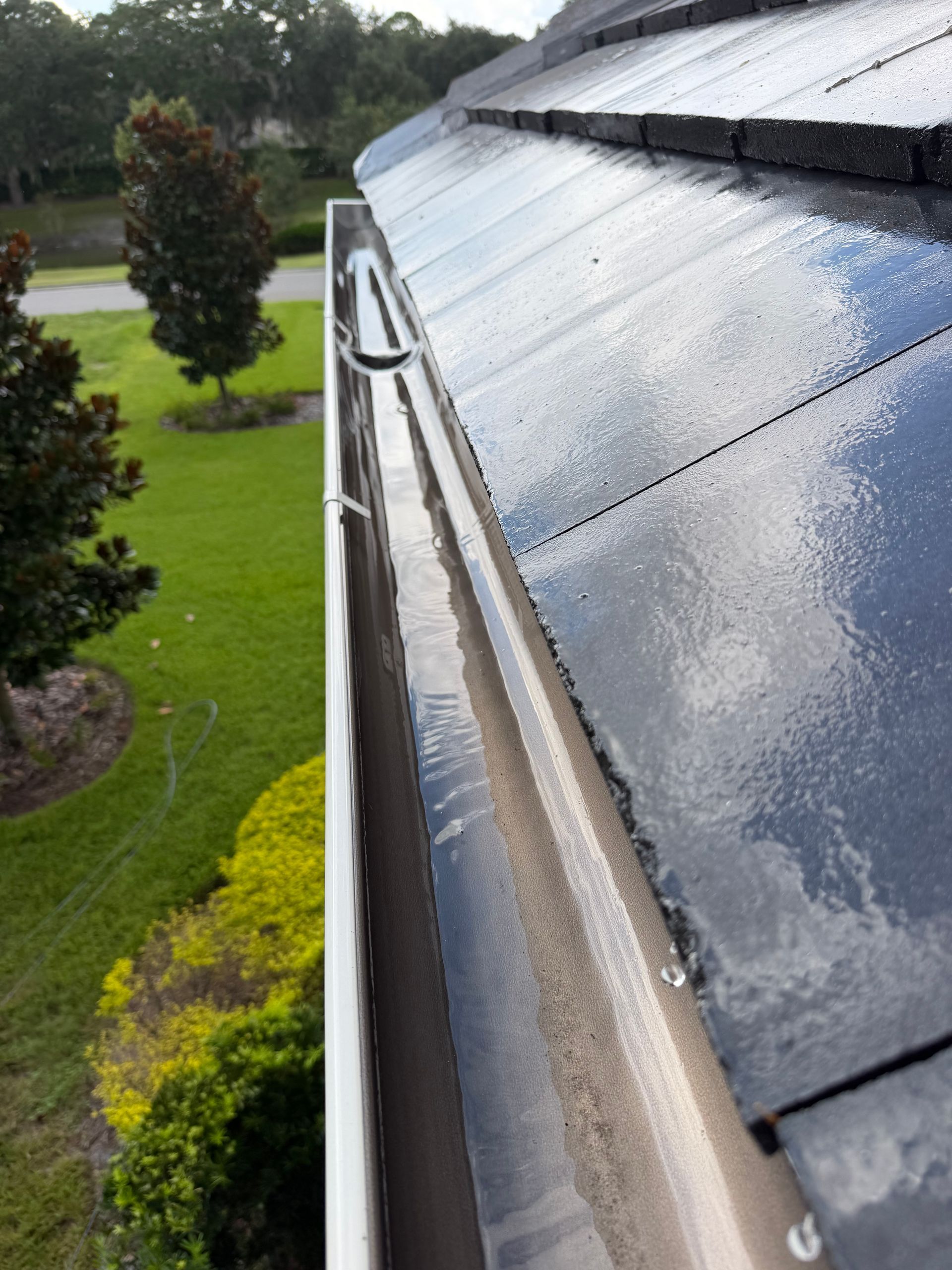
- Controlled rinse. Low pressure, managed runoff, gutters flushed afterward.
- Final walk and photos. Confirm coverage, confirm nothing broke, confirm the plants are fine.
Expect the streaks to continue fading for several days after we leave. That's the treatment still working, not an incomplete job.
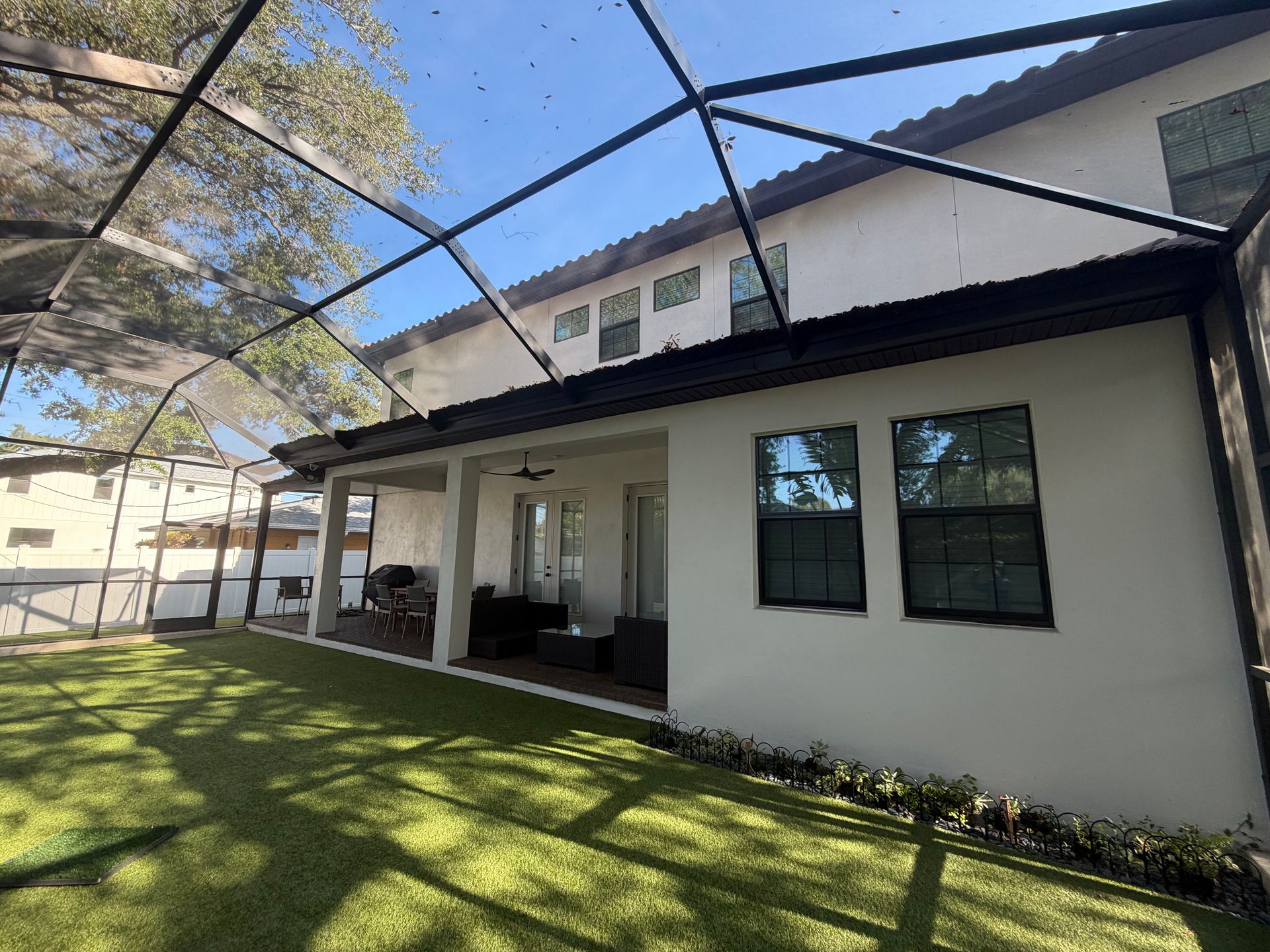
[PHOTO: before/after of a barrel tile roof, full elevation — Avila or Cheval]
Tile, metal and shingle are not the same job
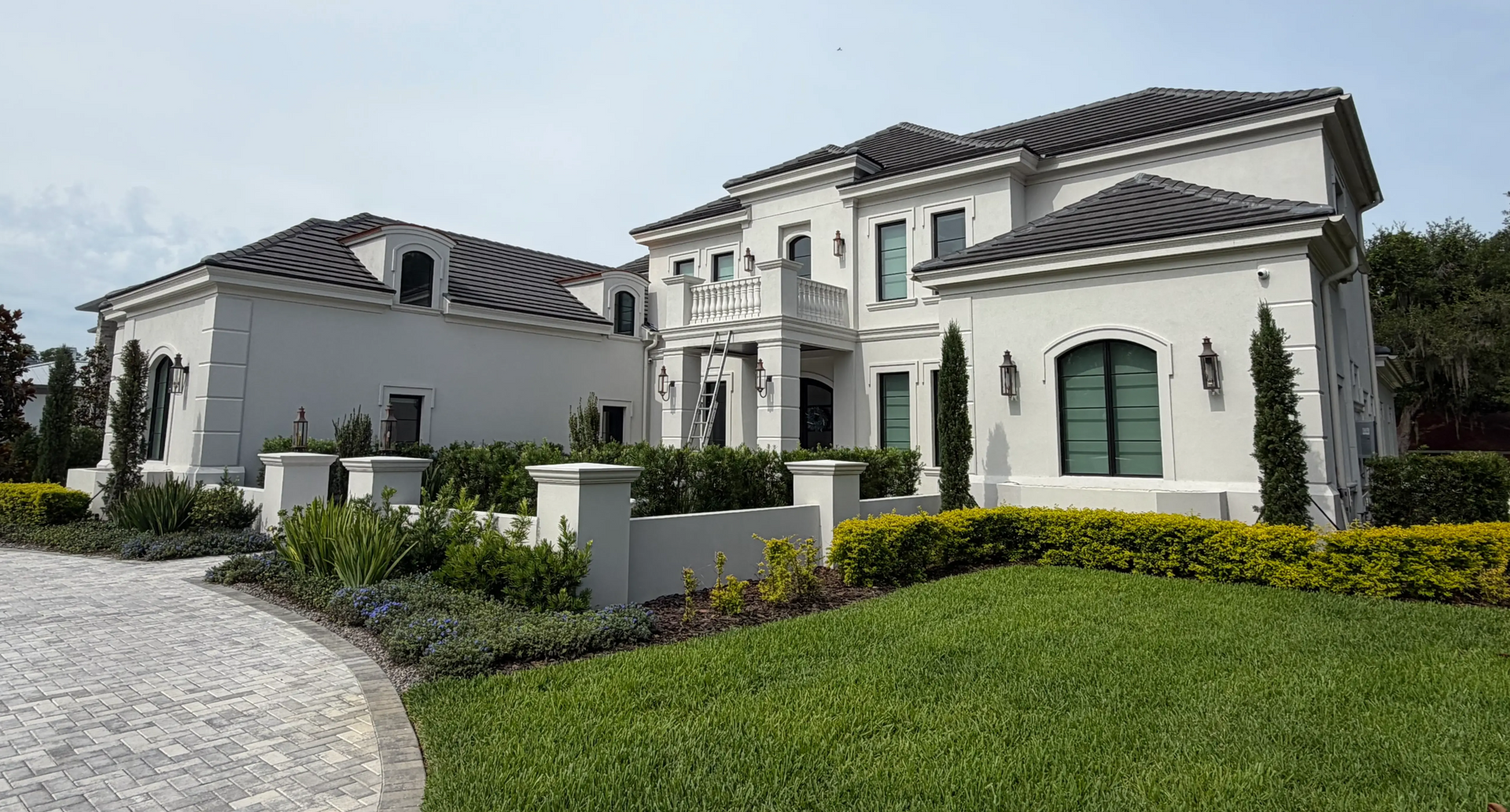
If you're comparing quotes, make sure everyone is quoting the same process. Shingle roofs tolerate foot traffic and a different chemistry concentration. Metal roofs need attention to fastener and coating compatibility. Tile needs reach equipment and a no-pressure, no-traffic approach. Our roof cleaning and soft washing work is specified per roof type, and in the luxury-tile neighborhoods — see our Avila pressure washing, roof cleaning and paver sealing page — tile is most of what we touch.
Get a straight assessment of your roof
Send us the address and we'll tell you what we see. If your roof doesn't need cleaning yet, we'll say that too.
Wild West Washing is veteran-owned and serves Hillsborough, Pasco and Pinellas counties. Call 813-957-1174 for a free quote on tile roof cleaning.