What Carriers Actually Look For
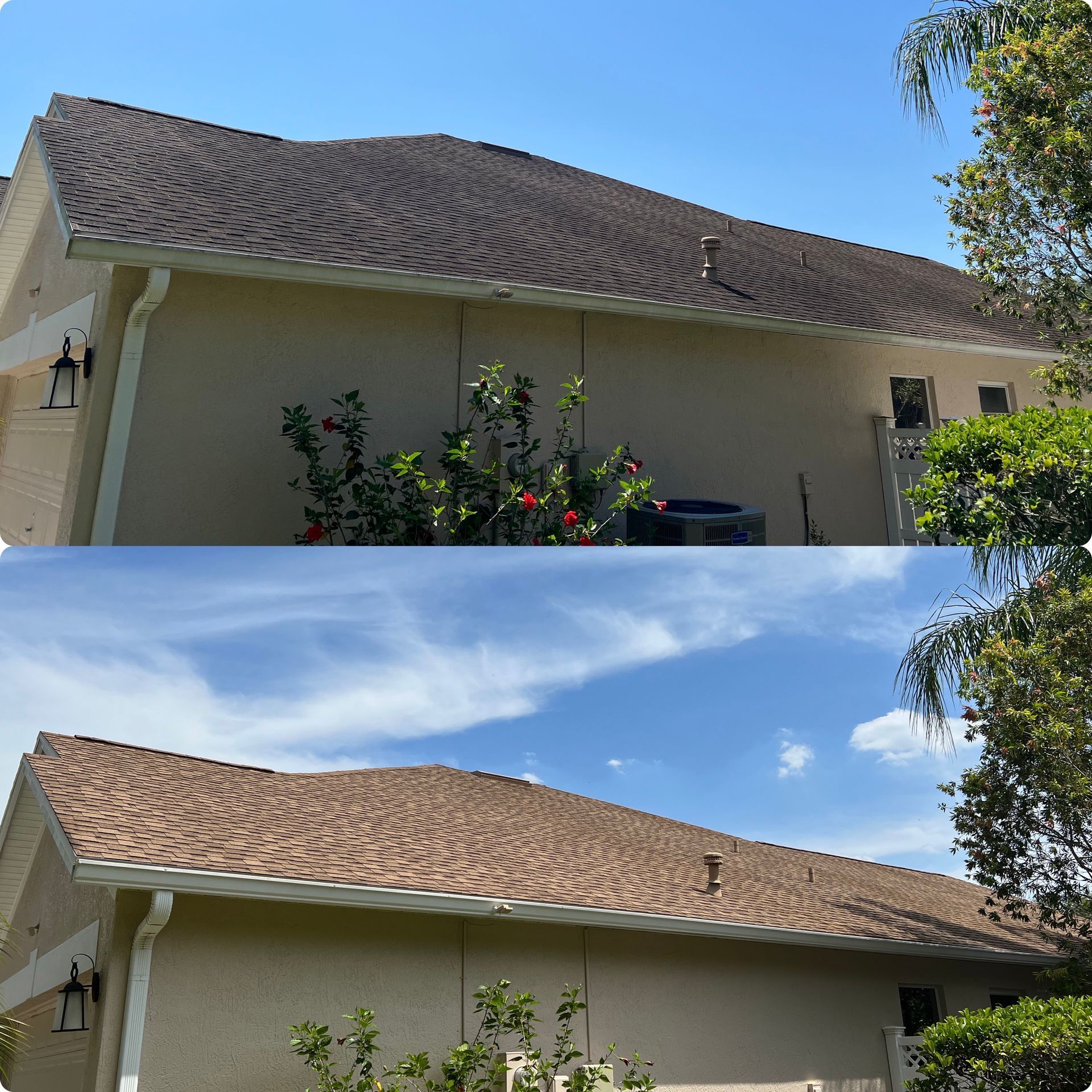
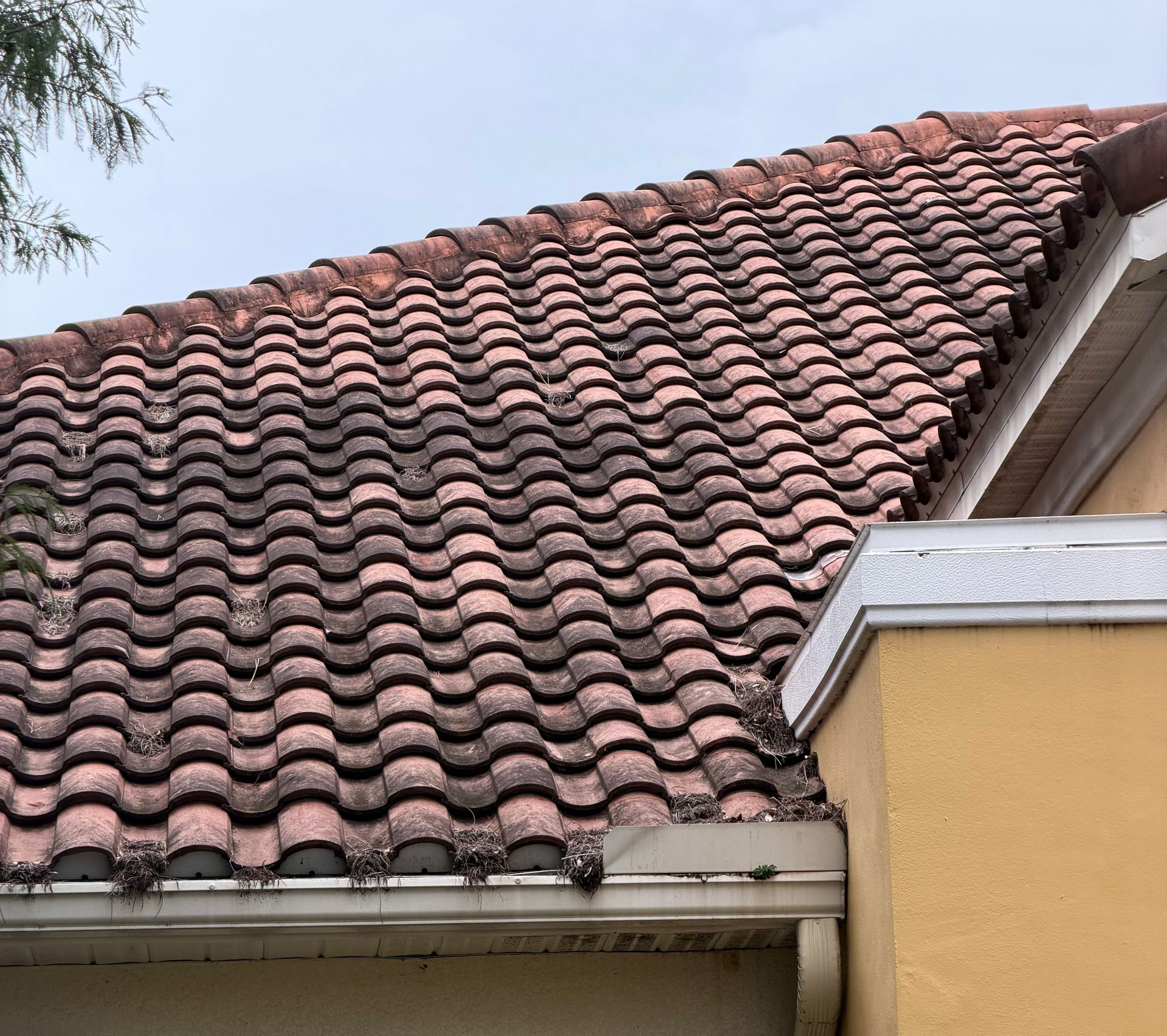
An inspector standing in your driveway with a camera is not evaluating whether your roof leaks. He is photographing whether it looks maintained. In Florida, roof condition drives renewal decisions more than almost anything else on a home, and organic growth — the black streaking, the green film, the lichen clusters on north-facing tile — is one of the most commonly photographed findings on a four-point or wind mitigation report. Getting roof cleaning done before an insurance inspection in Tampa is one of the cheapest things you can do to keep a file clean.
That's not a scare tactic. It's just how the process works. An inspector has twenty minutes, a camera, and a form. What he can see goes on the form.
[PHOTO: drone shot of a barrel tile roof, half cleaned, half streaked — Avila or Cheval]
Why does algae end up on an insurance report?
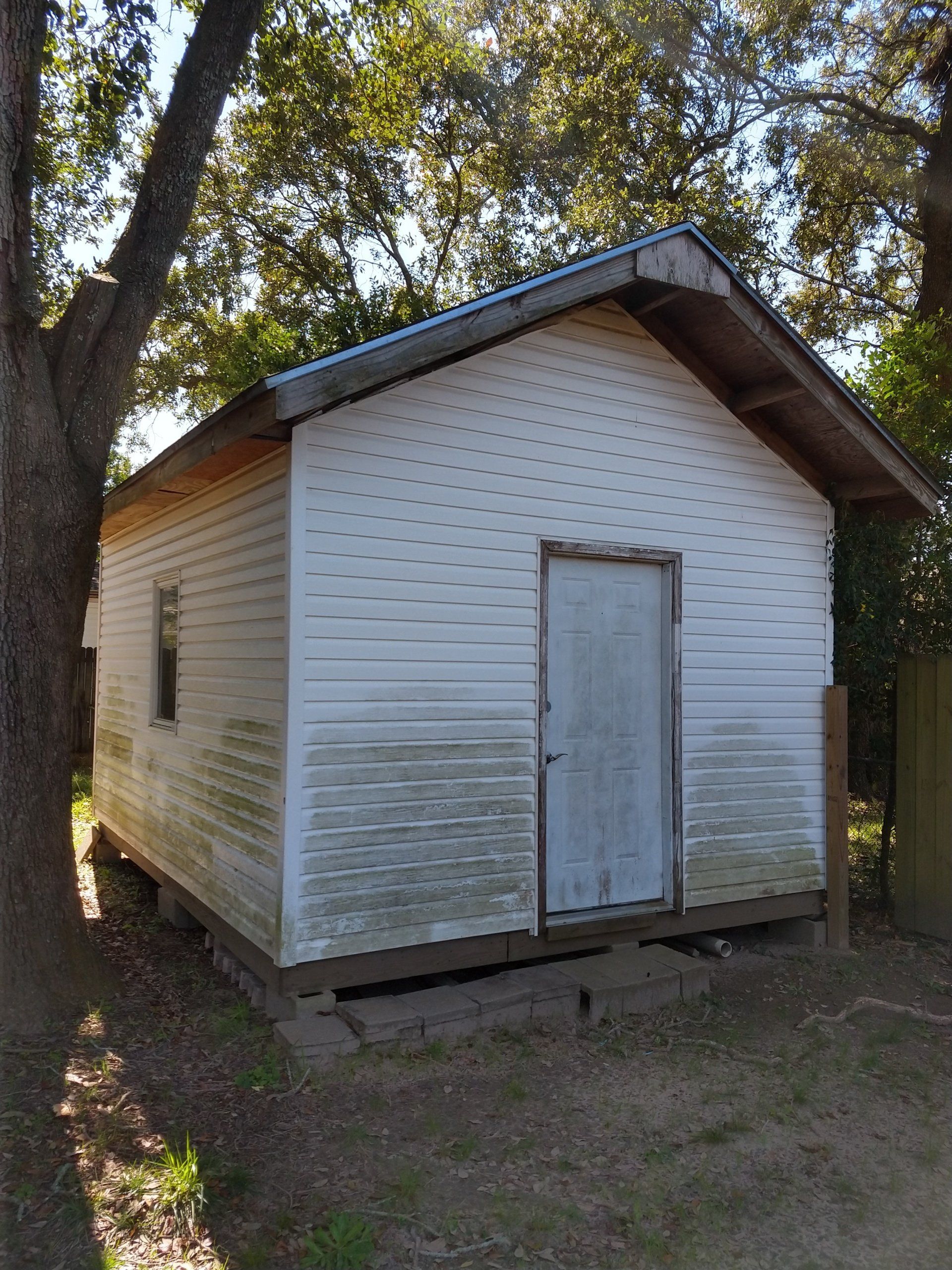
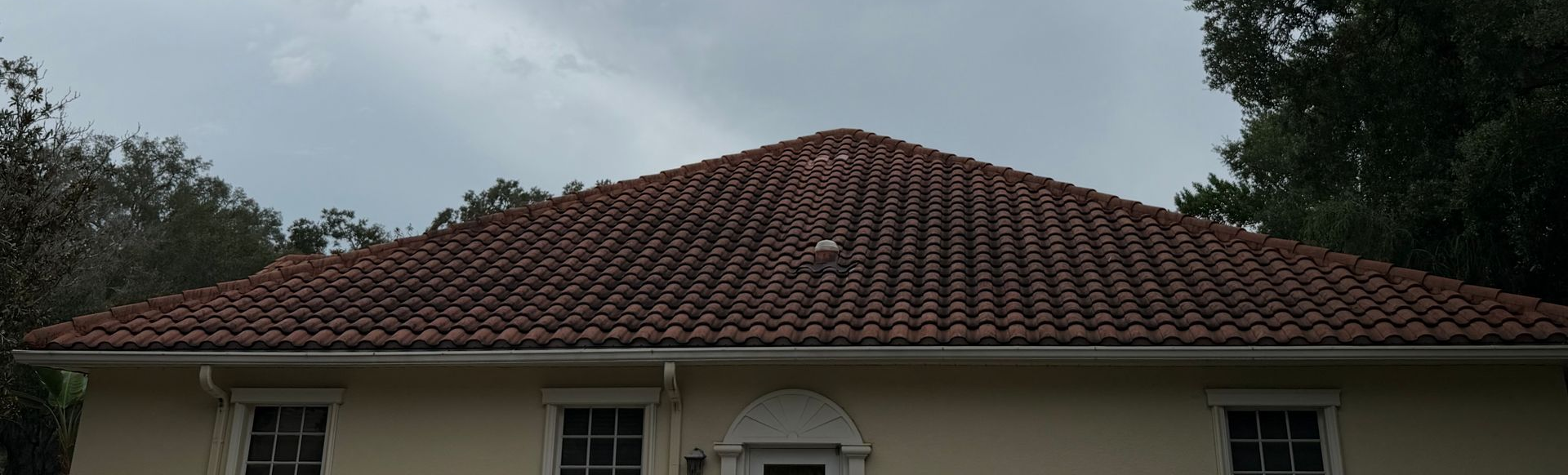
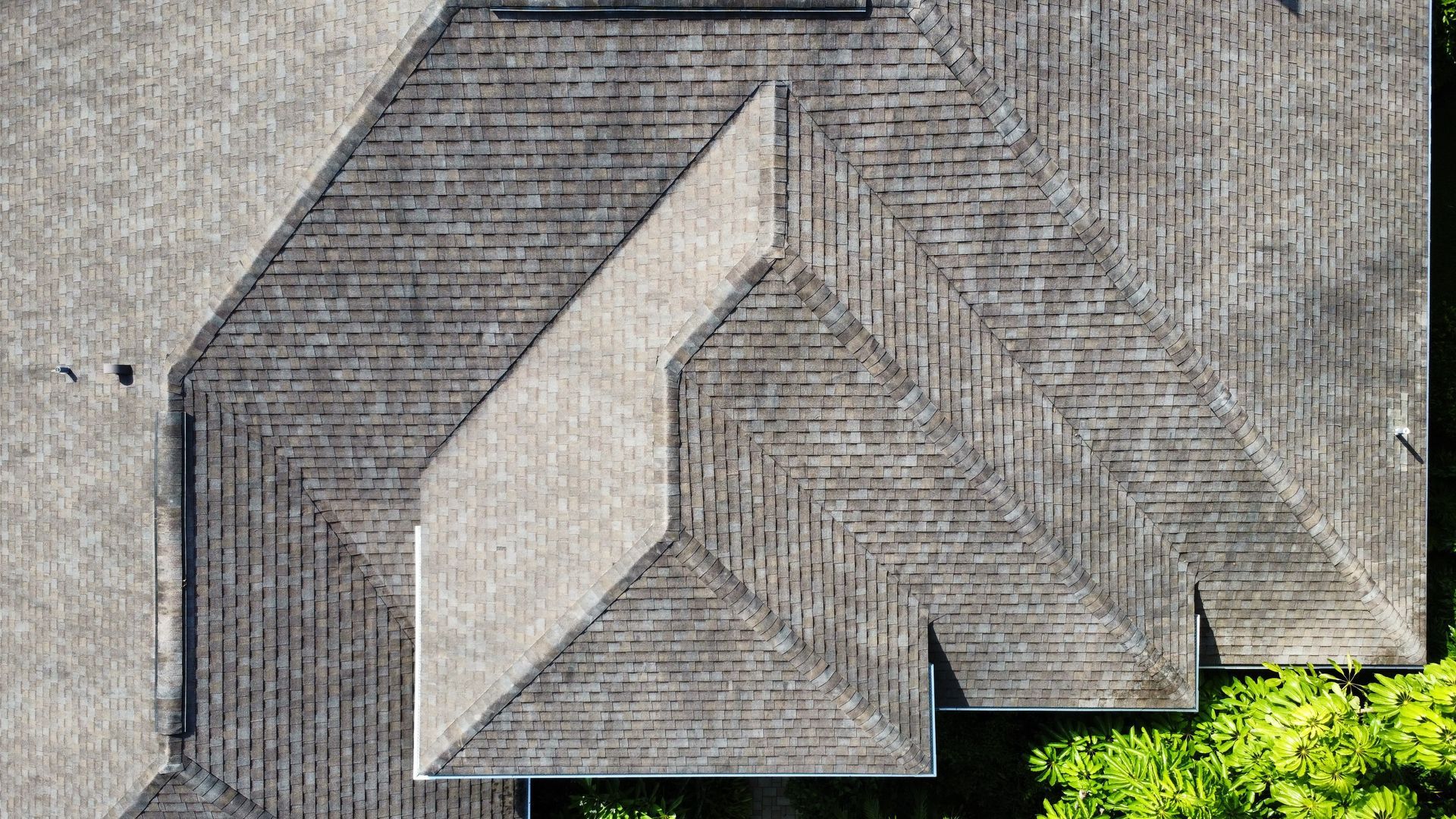
Because it reads as deferred maintenance. The black streaking on Tampa Bay roofs is a cyanobacteria — Gloeocapsa magma — that feeds on the limestone filler in shingles and holds moisture against tile and mortar. An inspector isn't running a lab test on it. He sees dark staining and biological growth across a roof plane, and it gets noted as condition. Pair that with debris in the valleys and a few clogged gutters and the narrative of the report changes from "well maintained" to "needs attention."
Insurers price and renew on risk narratives. A clean roof tells a short, boring story. Boring is what you want.
What do inspectors typically photograph on a roof?
From what we see on homes across Hillsborough, Pasco and Pinellas, the recurring items are:
- Organic growth — black streaks, green algae film, lichen, moss in tile laps.
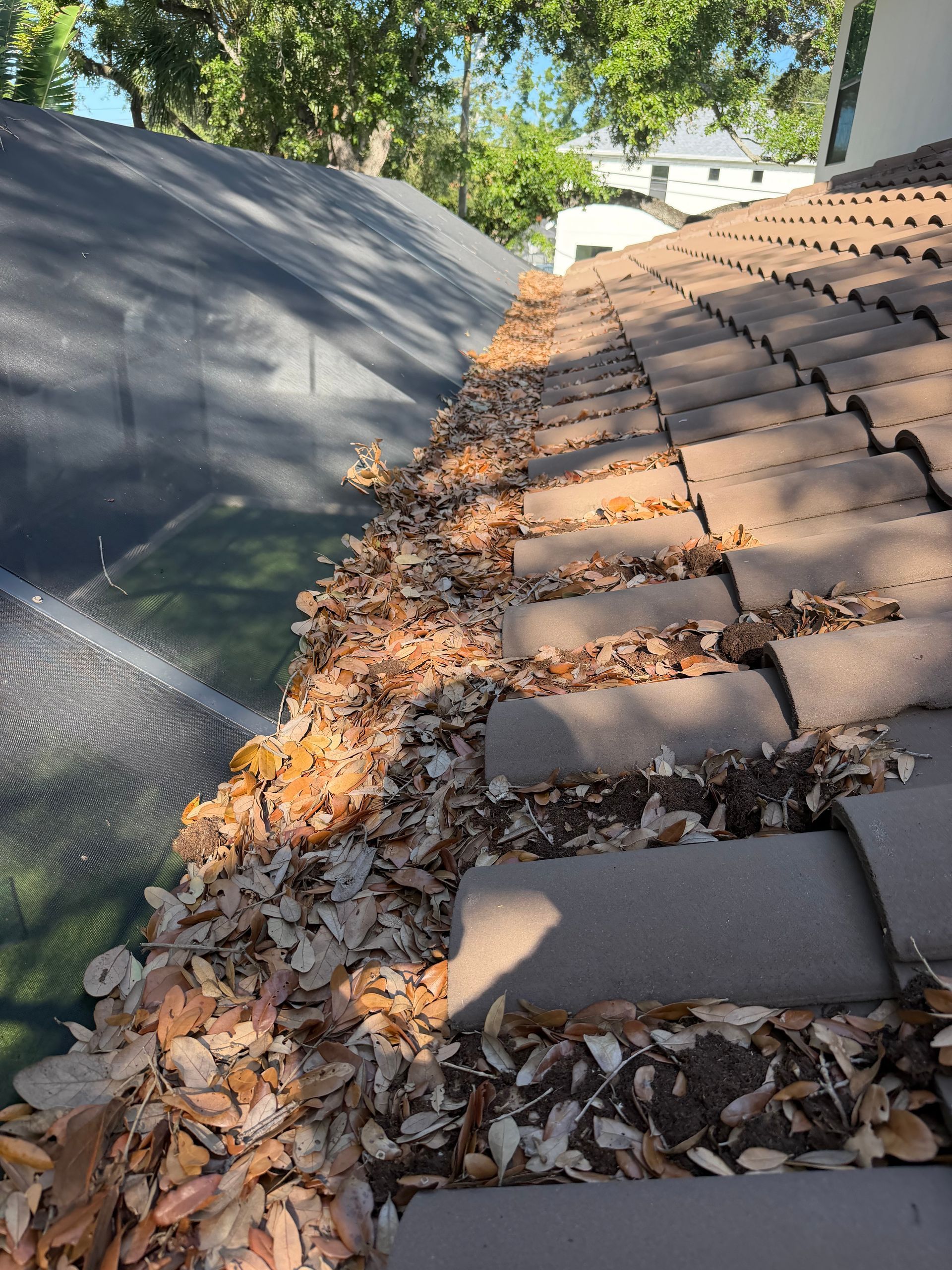
- Debris load — oak leaves and needles packed in valleys and behind chimneys.
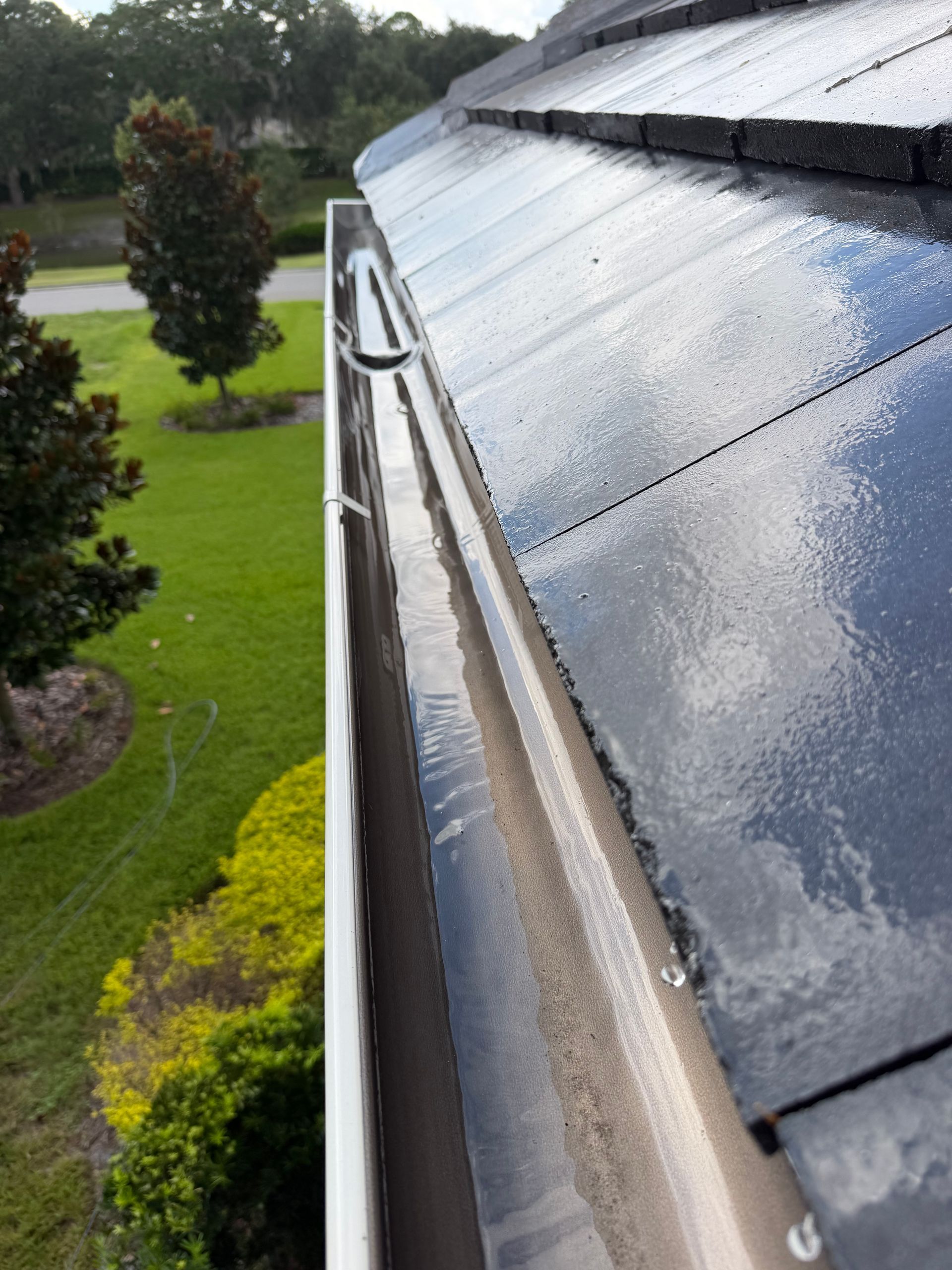
- Gutter condition — overflowing or plant-growing gutters, plus the staining they leave down the fascia.
- Visible damage — cracked or slipped tiles, lifted shingles, exposed underlayment.
- Mortar and ridge condition — crumbling or missing ridge mortar on barrel tile.
Cleaning fixes the first three outright, and it exposes the last two so you can address them on your own timeline rather than under a 30-day notice. That second part matters more than people expect. We routinely find two cracked tiles under a decade of buildup — a two-hundred-dollar fix when you find it in October, a very different conversation when an adjuster finds it for you.
How is a roof cleaned without voiding anything?
Low pressure. That's the whole answer, and it's non-negotiable on tile and shingle alike.
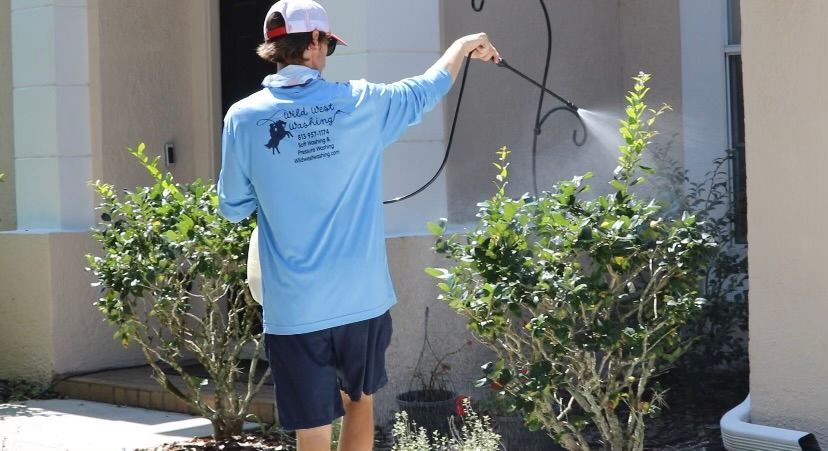
Professional roof cleaning in Florida is a soft wash: a surfactant-carried cleaning solution applied at roughly garden-hose pressure, allowed to dwell, then rinsed. The chemistry kills the organism at the root so it doesn't shadow back in eight weeks. Pressure does not. Anyone putting a pressure wand on a barrel tile roof is stripping the glaze off your tile and driving water under the laps, and on shingles they're blasting granules into your gutters — the same granules that are the shingle's UV protection. Manufacturers are explicit about this, and so are we.
[PHOTO: soft wash application on a tile roof, low-pressure fan pattern, crew member on a ladder]
Here's what a proper job looks like end to end:
- Bag and pre-wet every plant bed, then keep them wet through the whole application.
- Divert or plug downspouts so runoff is controlled instead of dumping into the landscape.
- Apply the solution from the ridge down at low pressure, in overlapping passes.
- Let it dwell — this is where the work actually happens, not in the rinse.
- Rinse gently, then flush gutters and the surrounding hardscape.
- Walk the roof after: note cracked tile, lifted shingles, failed ridge mortar, so you have a list.
When should this be done relative to the inspection?
Two to four weeks out is the sweet spot. That gives you time to handle anything the cleaning uncovers, and it gives any faint residual shadowing — normal on heavily lichened tile — time to fade completely with a couple of rain cycles. Booking the week of the inspection works, but it leaves you no room.
If you're on a normal maintenance rhythm, most Tampa Bay tile roofs want a soft wash every 18 to 24 months, shingle every 24 to 36, and north-facing or heavily tree-shaded planes on the short end of that range. Homes in the older oak canopy neighborhoods — the estates in Avila, the shaded lots along the golf corridors — foul faster than a wide-open lot in a newer community. Shade plus humidity is the whole recipe.
The part nobody tells you
This job is genuinely harder than it looks from the ground. It's steep tile, it's a chemical mix that has to be strong enough to kill growth and gentle enough to leave your landscaping alive, and it's done from a ladder in Florida heat. There is no shame at all in not wanting to be up there. Most of the failed DIY roofs we get called to fix weren't failures of effort — they were the wrong pressure or the wrong dilution, and both are unforgiving on a tile roof.
Get ahead of it
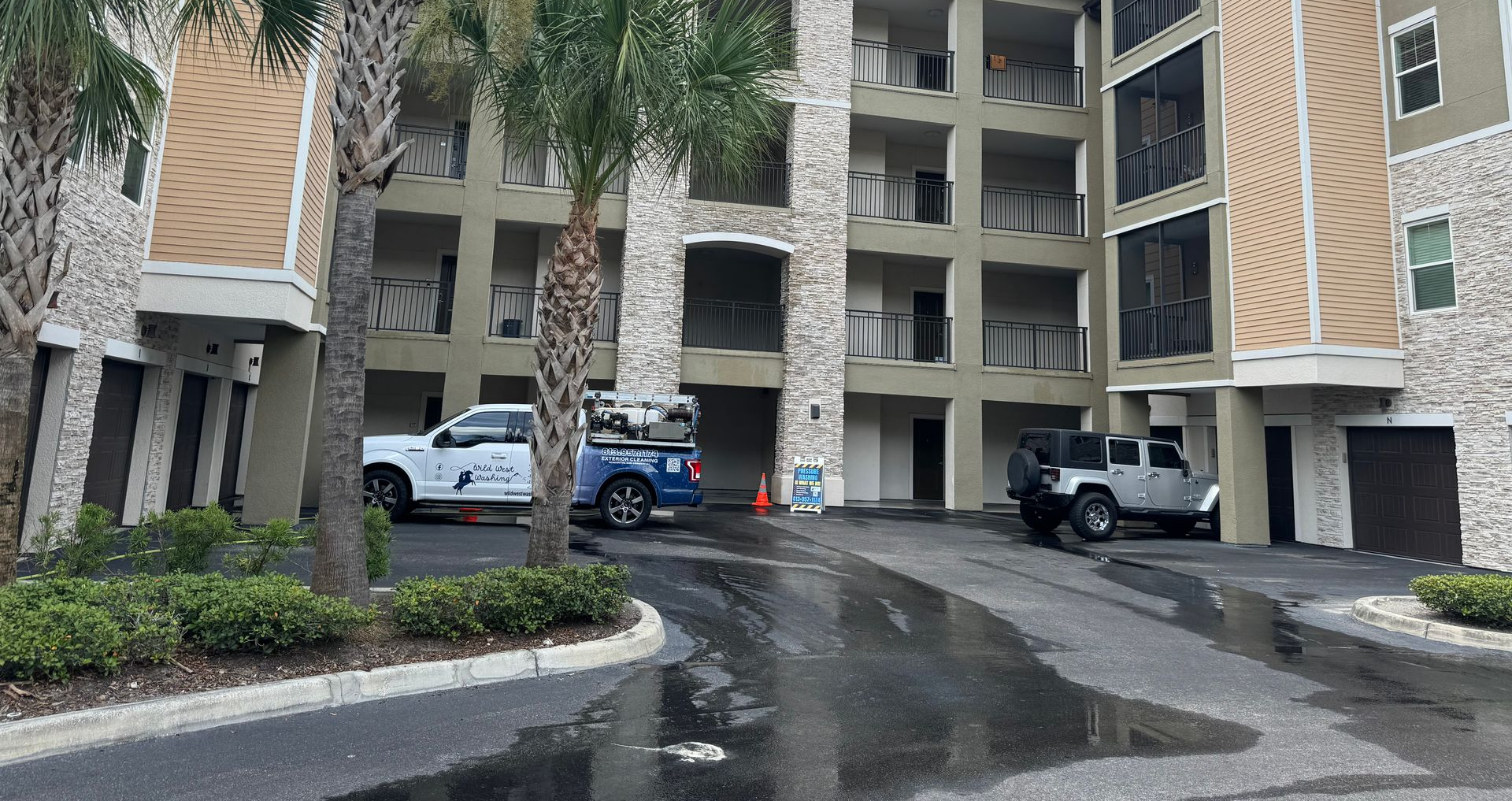
If you have an inspection or a renewal coming, let's get your roof handled before the camera comes out. Wild West Washing is a veteran-owned Tampa company, and we soft wash roofs across Hillsborough, Pasco and Pinellas the way the tile and shingle manufacturers actually specify.
Call 813-957-1174 for a free quote, or read more about our roof cleaning in Tampa and how soft washing protects the surfaces pressure would ruin.