Which One Does Your House Actually Need?
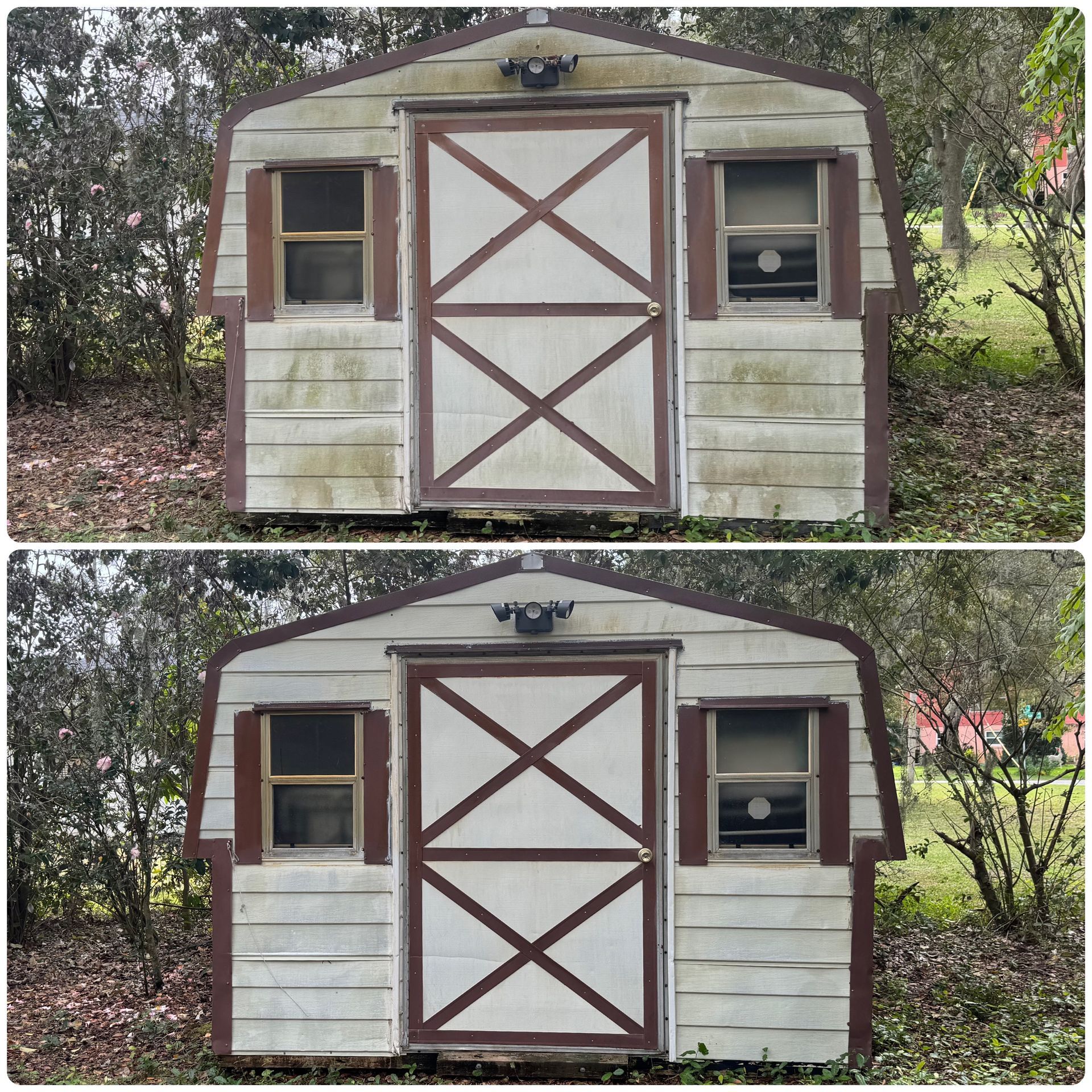
Here's the whole distinction in one sentence: pressure washing removes what's sitting on a surface, and soft washing kills what's growing in it.
That's not a marketing difference. It's the difference between mechanical force and chemistry, and picking the wrong one is how homeowners end up with a stucco wall that's clean and a stucco wall that's damaged. The soft washing vs pressure washing question in Tampa comes up constantly because our climate grows so much biological material that most of what makes a house look dirty here isn't dirt at all.
What each one actually is
Pressure washing is water at high pressure — commonly 2,500 to 4,000 PSI — doing the work mechanically. It's excellent at lifting embedded grime out of porous, hard, durable surfaces.
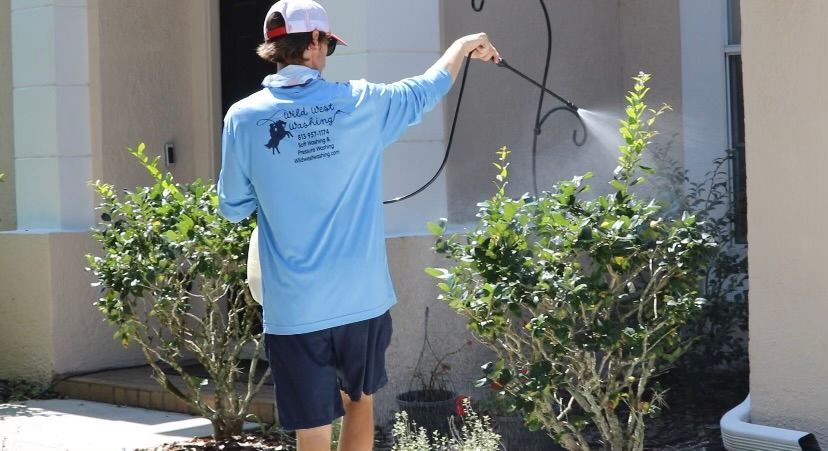
Soft washing is a cleaning solution applied at roughly garden-hose pressure, usually around 100 PSI or less. A surfactant helps it cling, it dwells for several minutes while it kills the organism, then it's rinsed. The surface is never mechanically abraded.
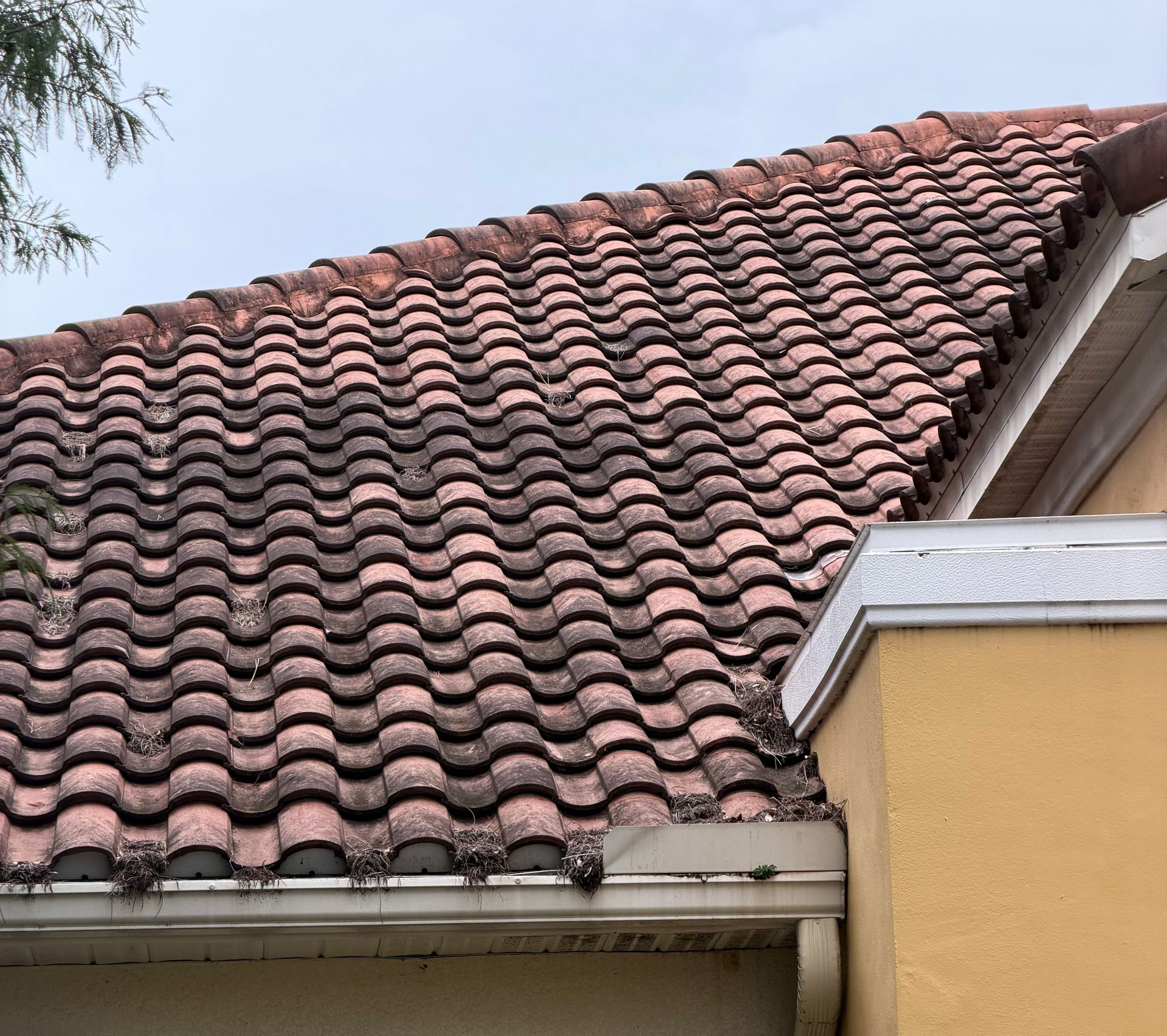
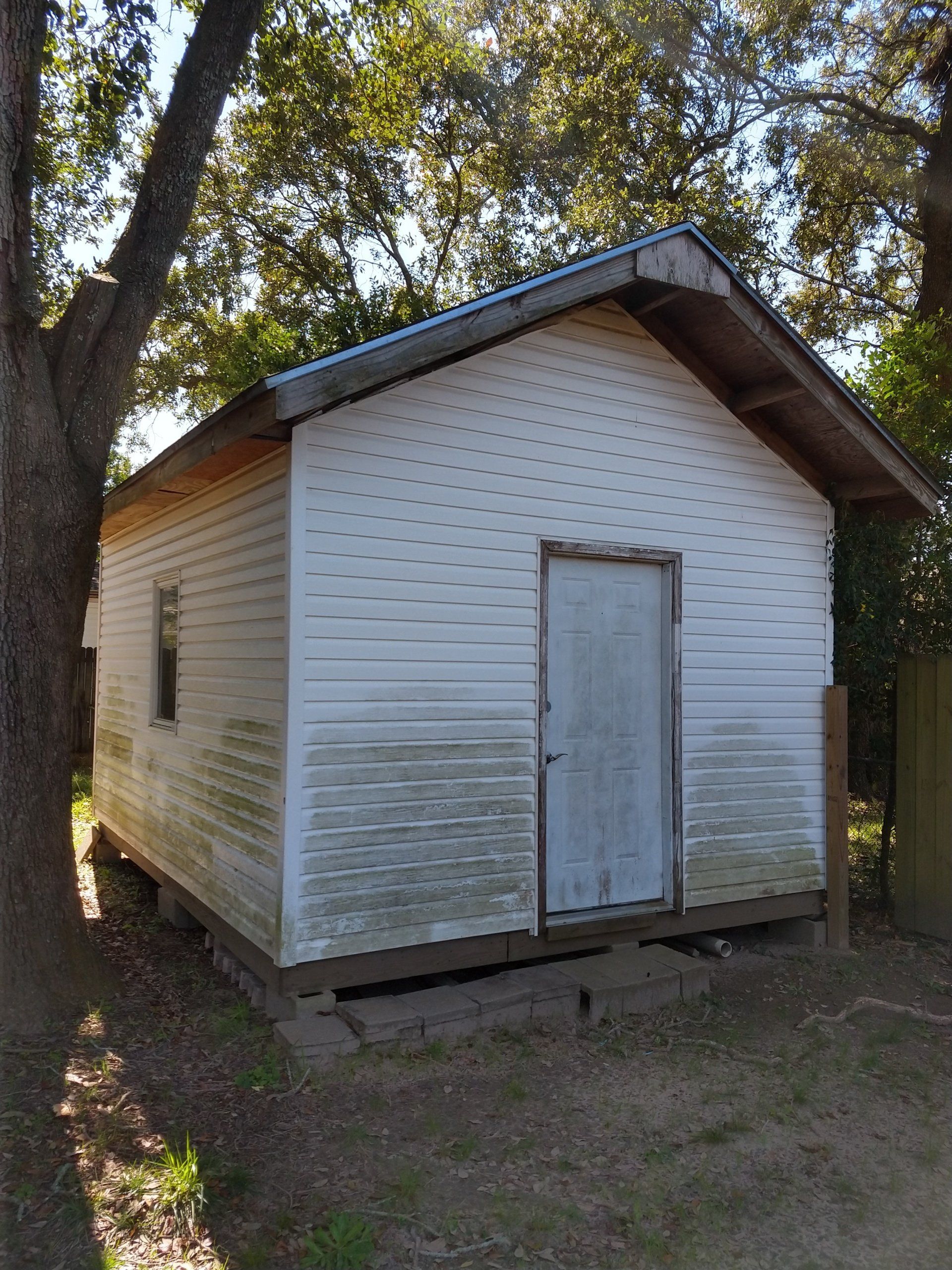
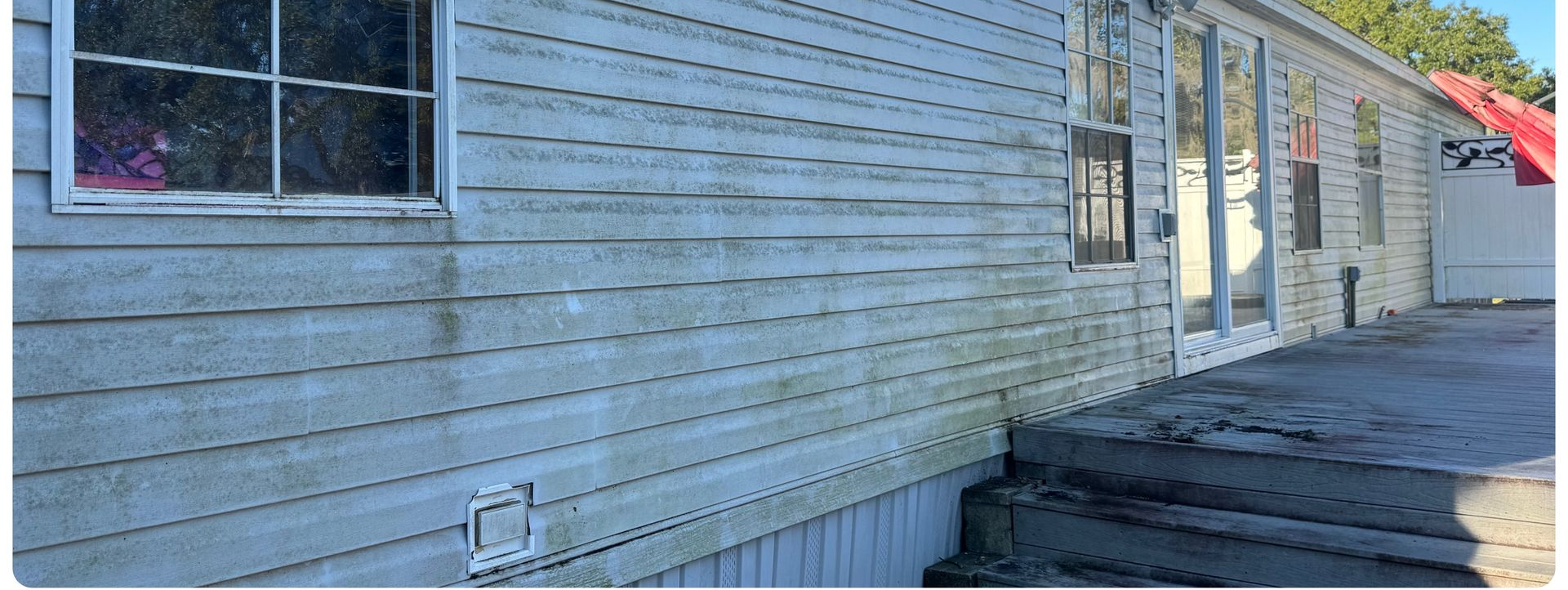
The tell is what you're looking at. Green, black or grey staining that returns in the same spots every year is biological — algae, mildew, lichen, Gloeocapsa magma. Pressure will blast the visible layer off, but the root structure survives in the pores of the material and regrows in a few months. Chemistry kills it, which is why a soft wash lasts two to four times longer on the same surface.
Which surfaces get which
Soft wash — always:
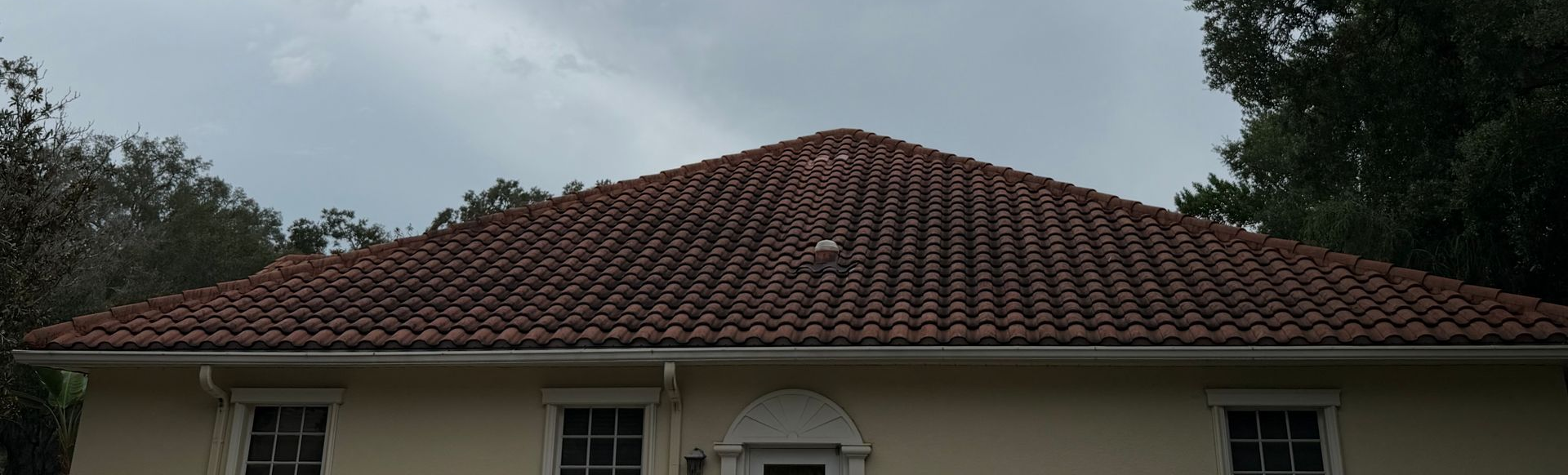
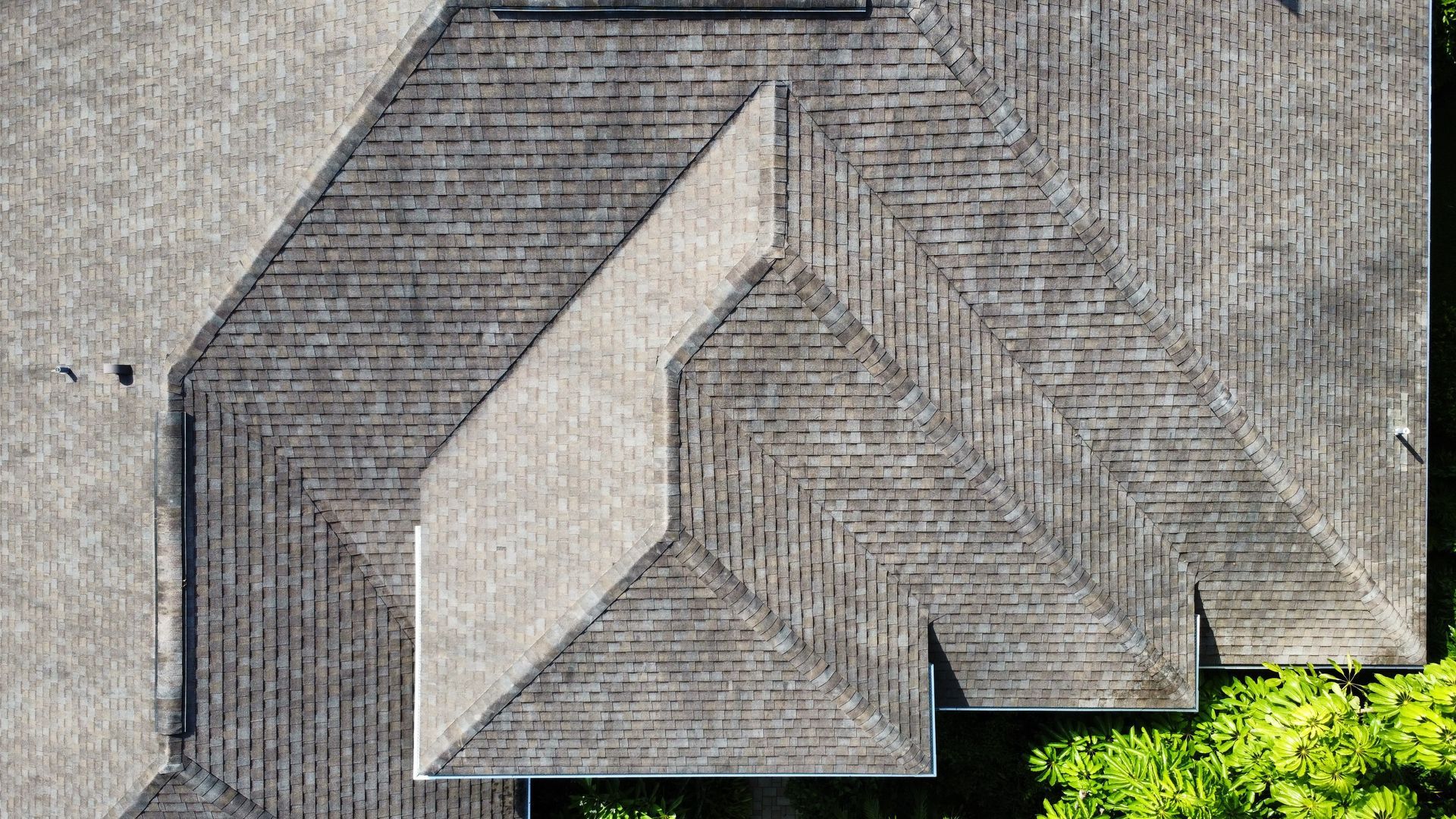
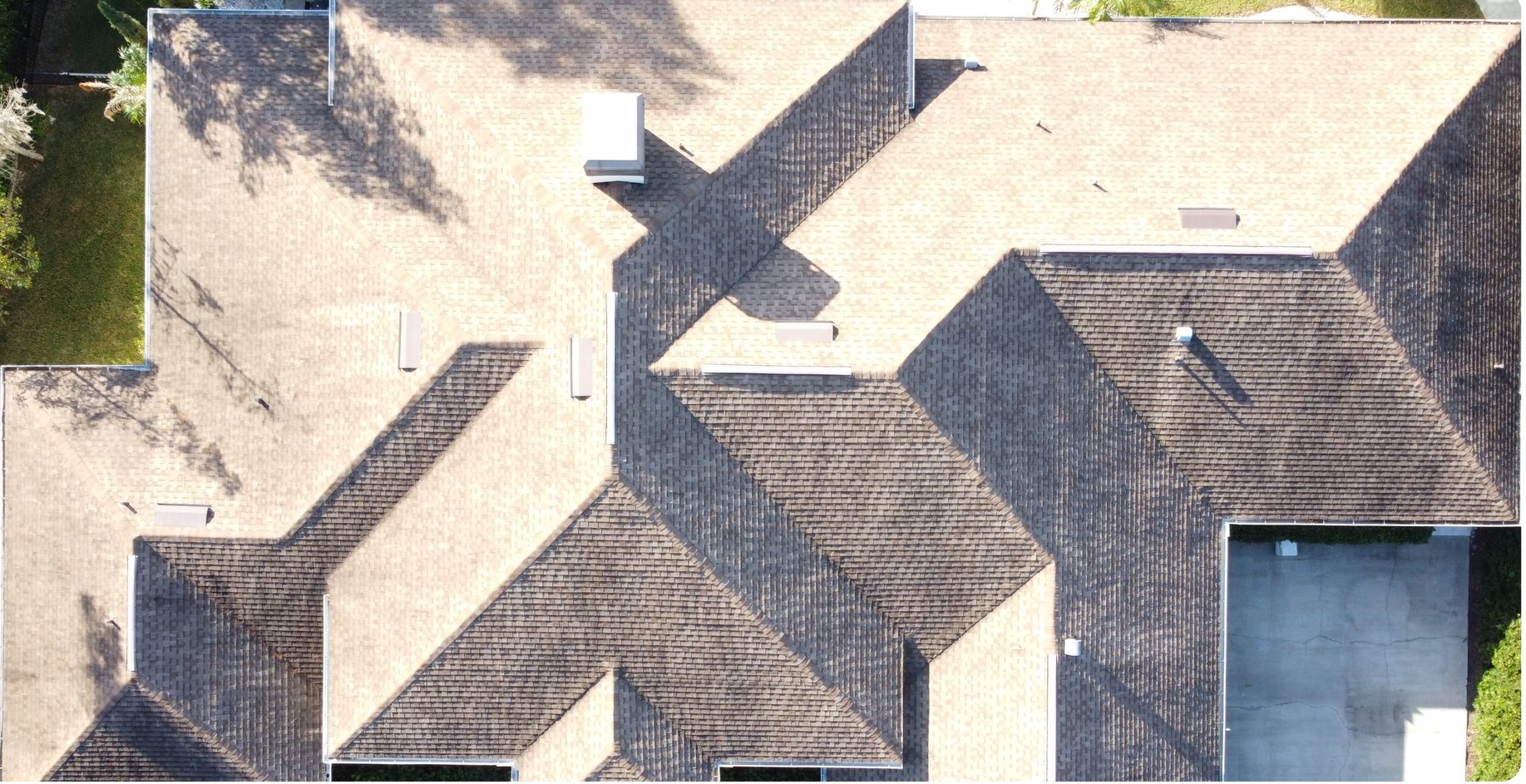
- Roofs, tile and shingle both
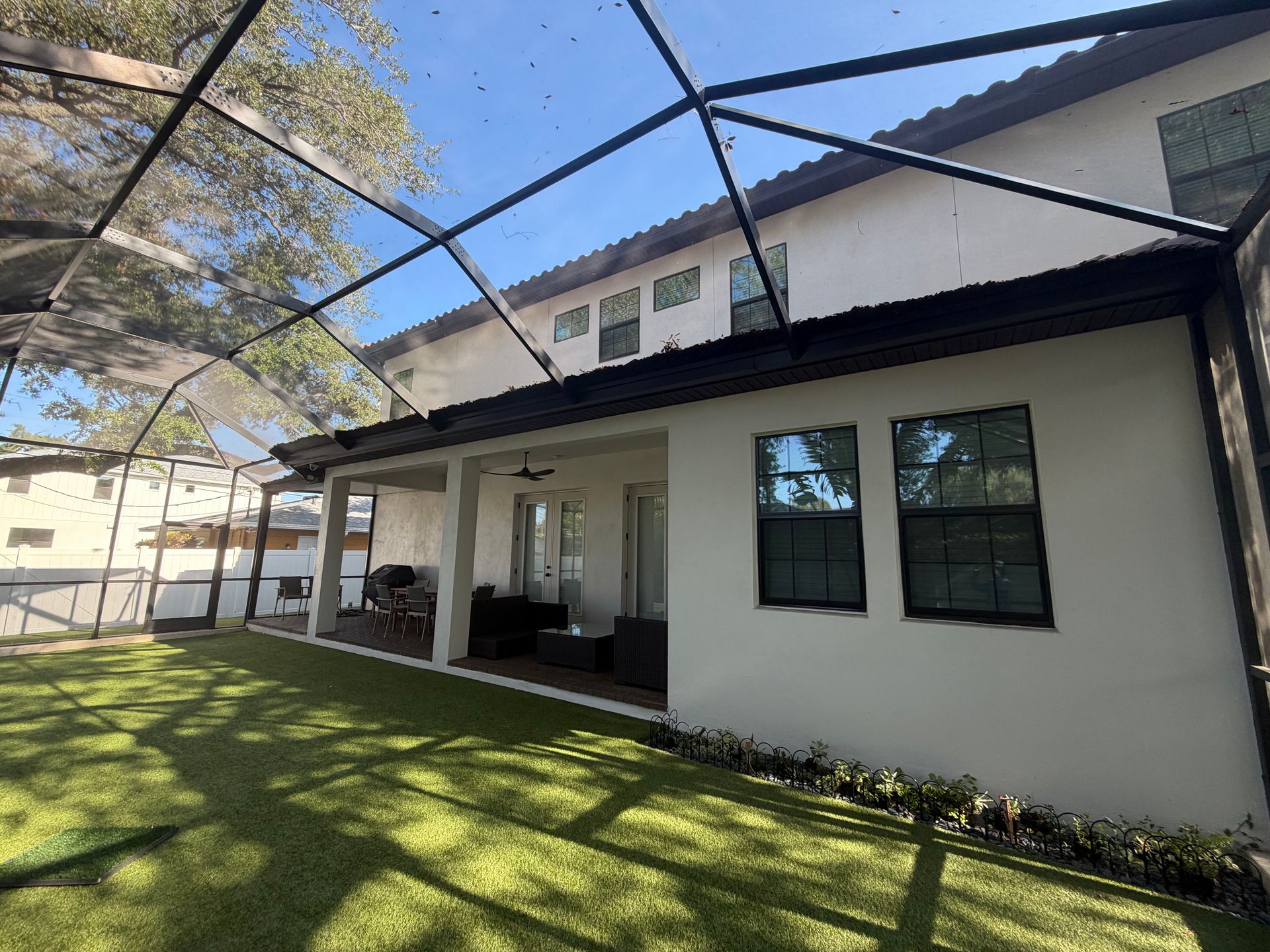
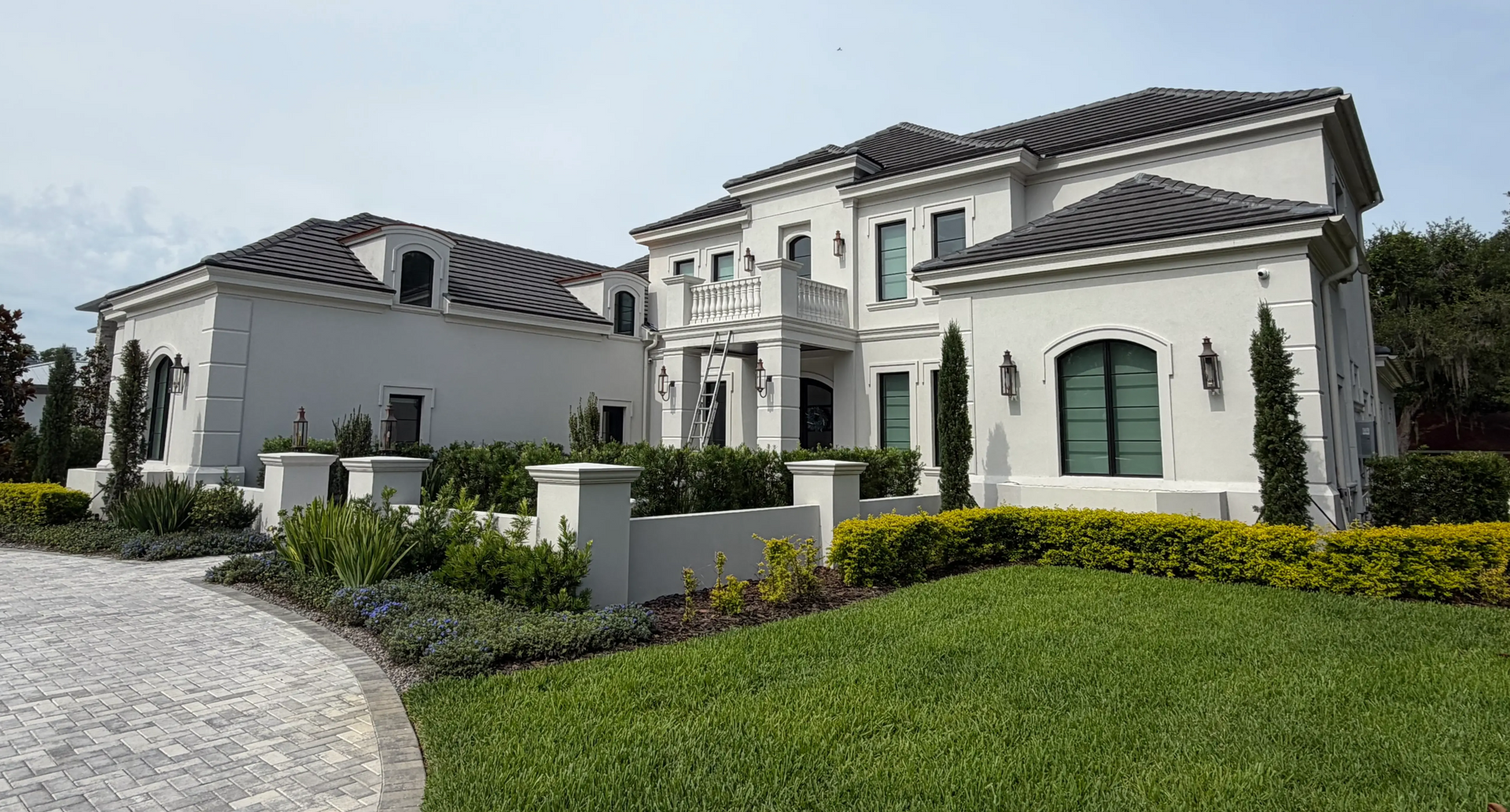
- Stucco and painted surfaces
- Vinyl and hardie siding
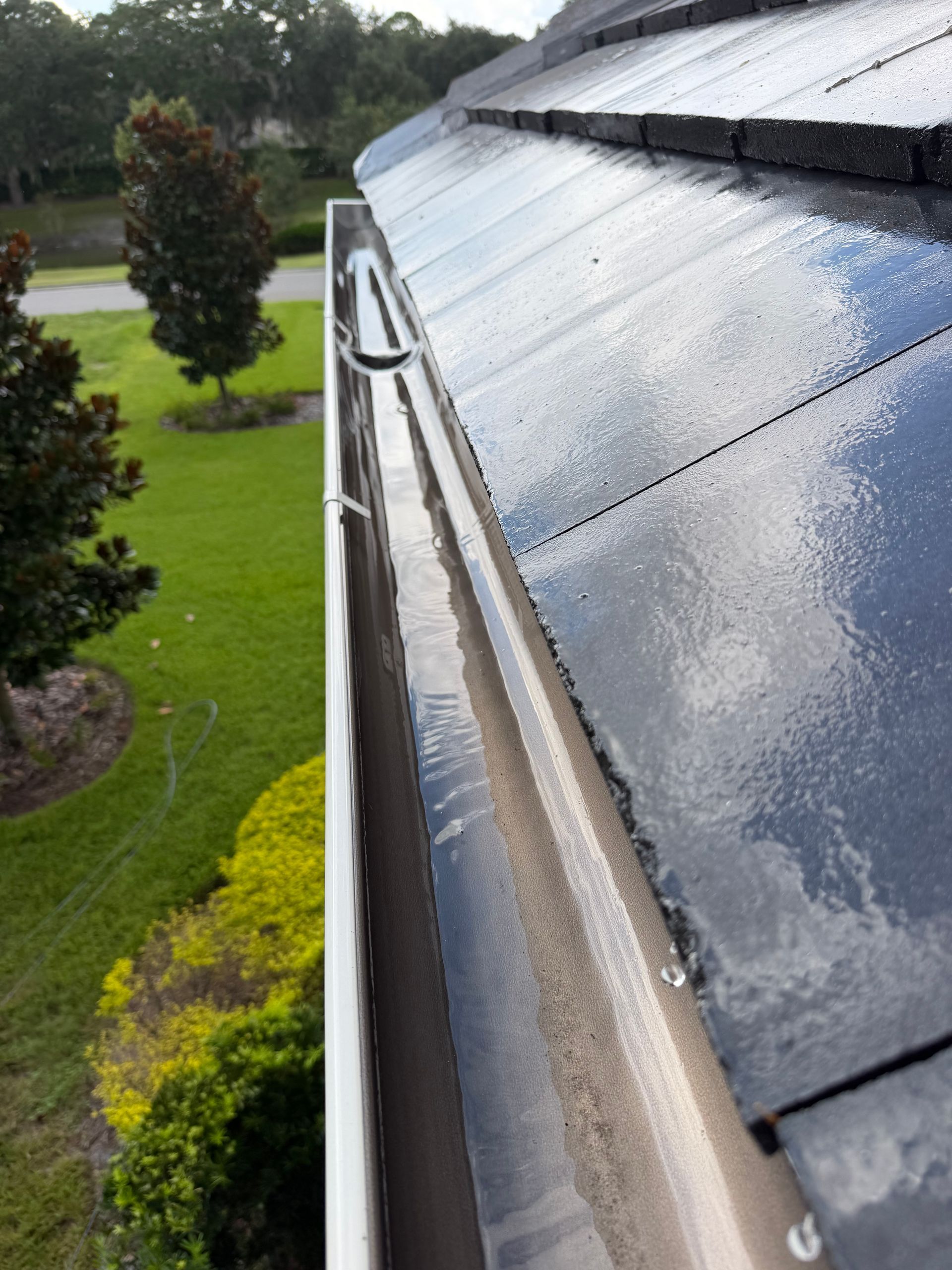
- Soffits, fascia and gutter exteriors
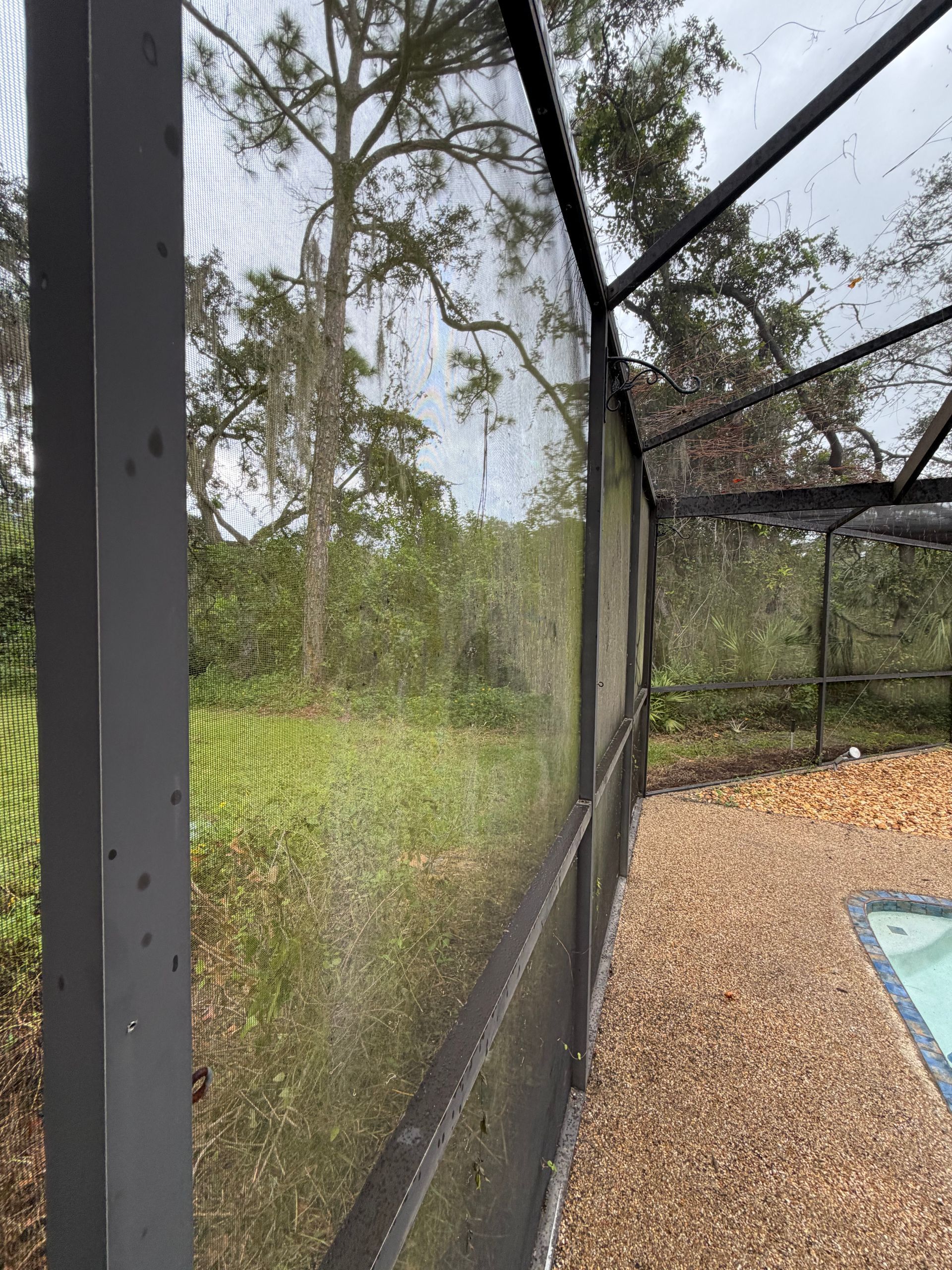
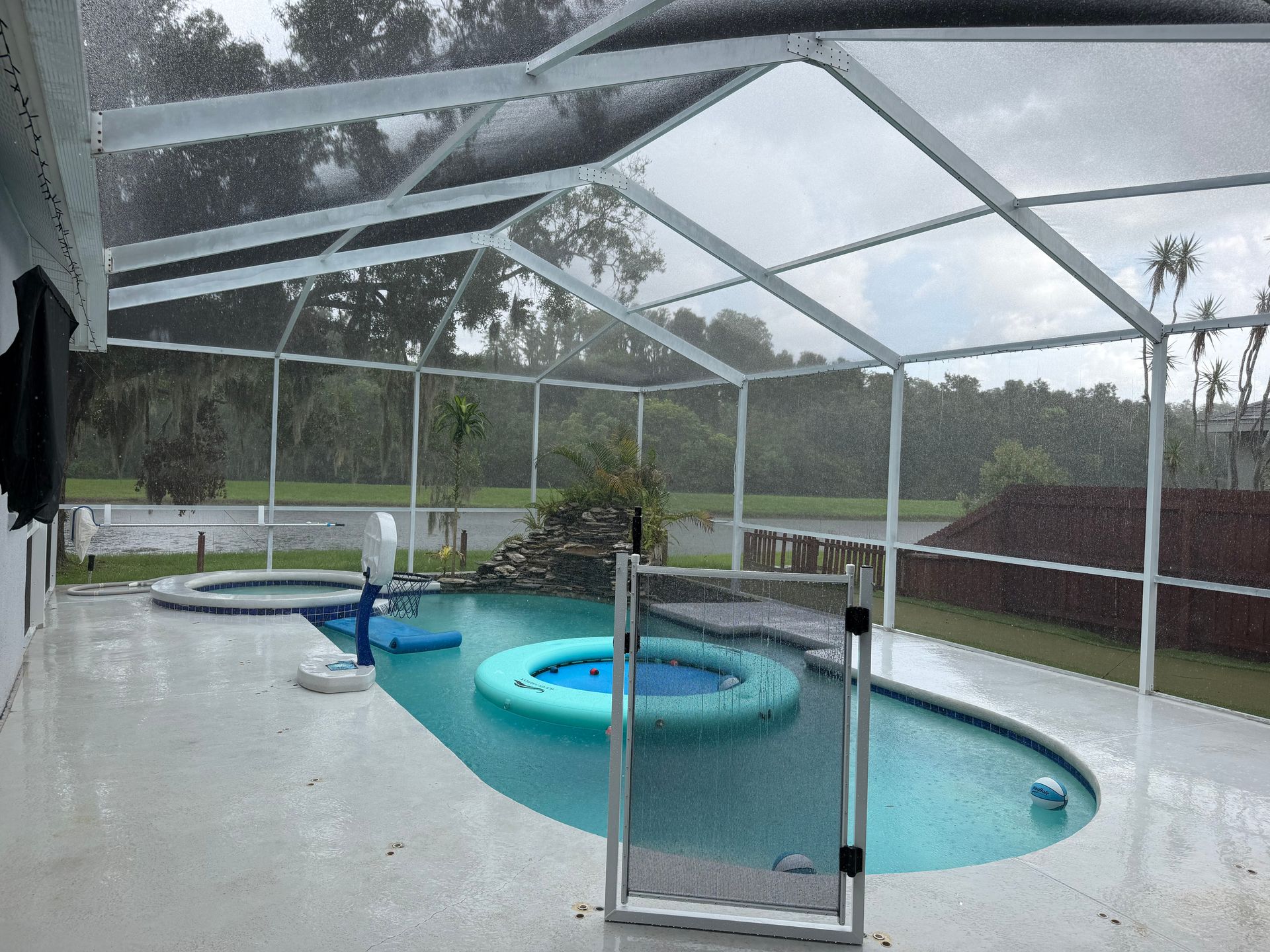
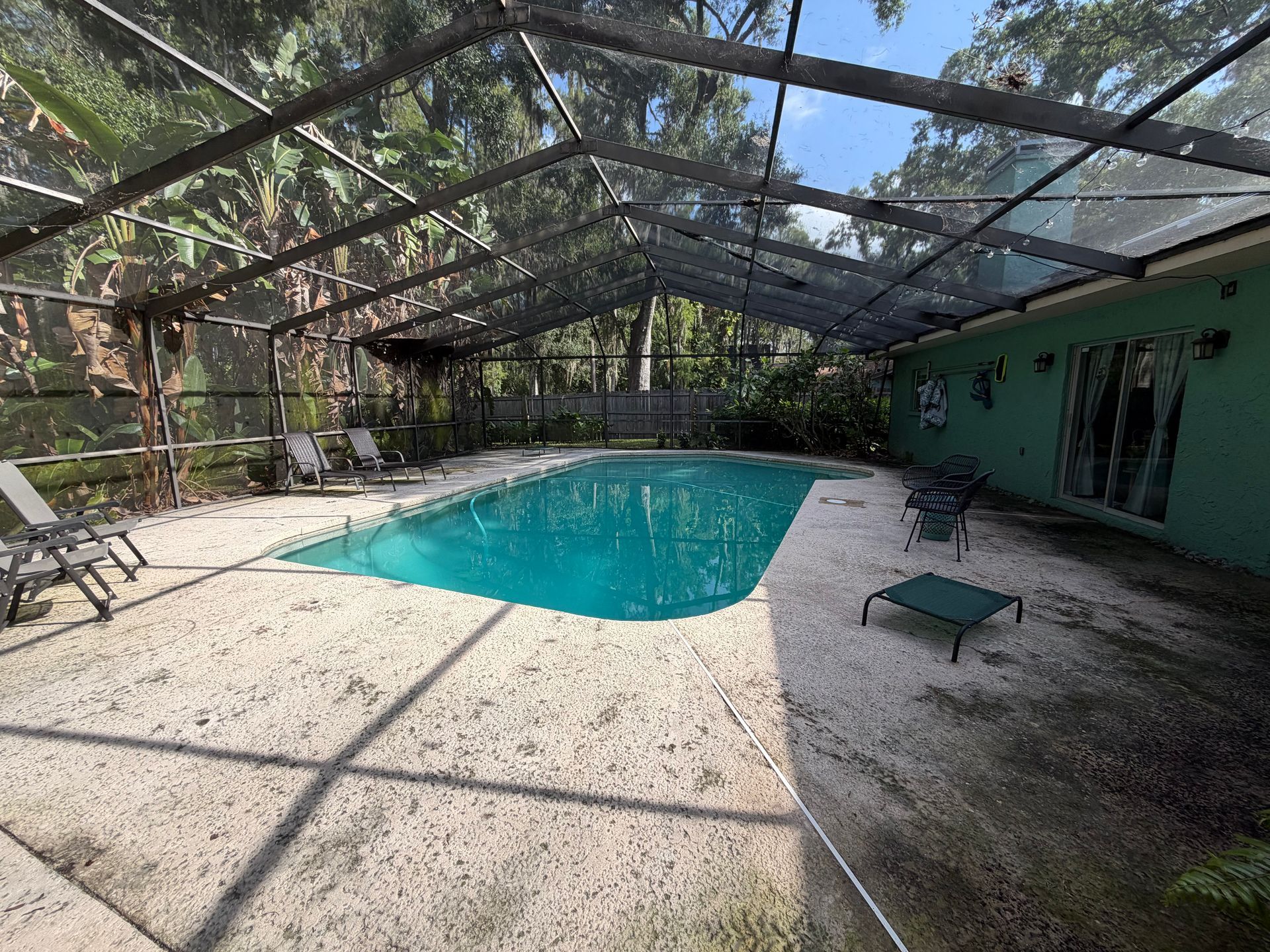
- Screen enclosures and pool cages
- Wood fencing and most decking
- Anything painted, sealed or fragile
Pressure wash — appropriate:
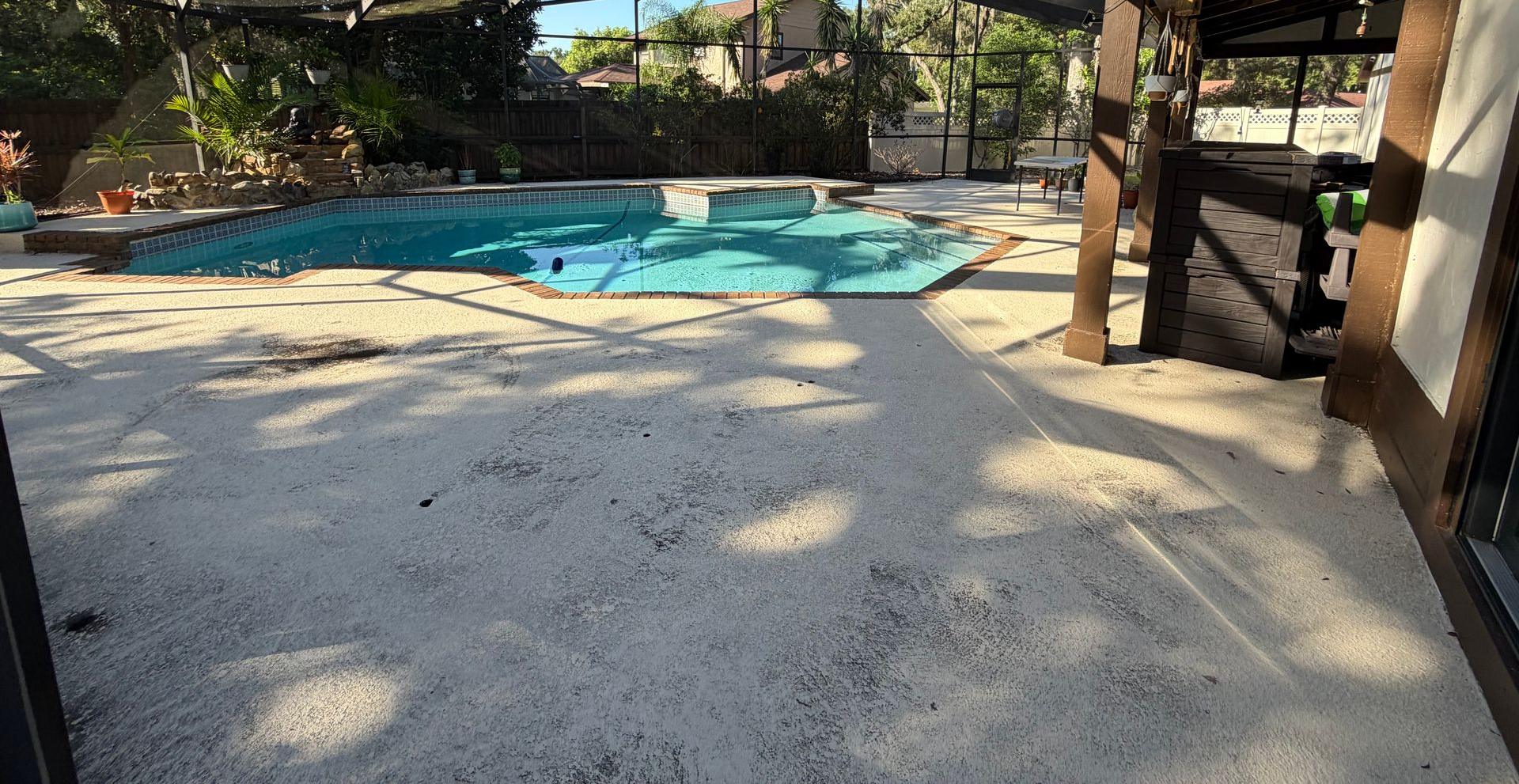
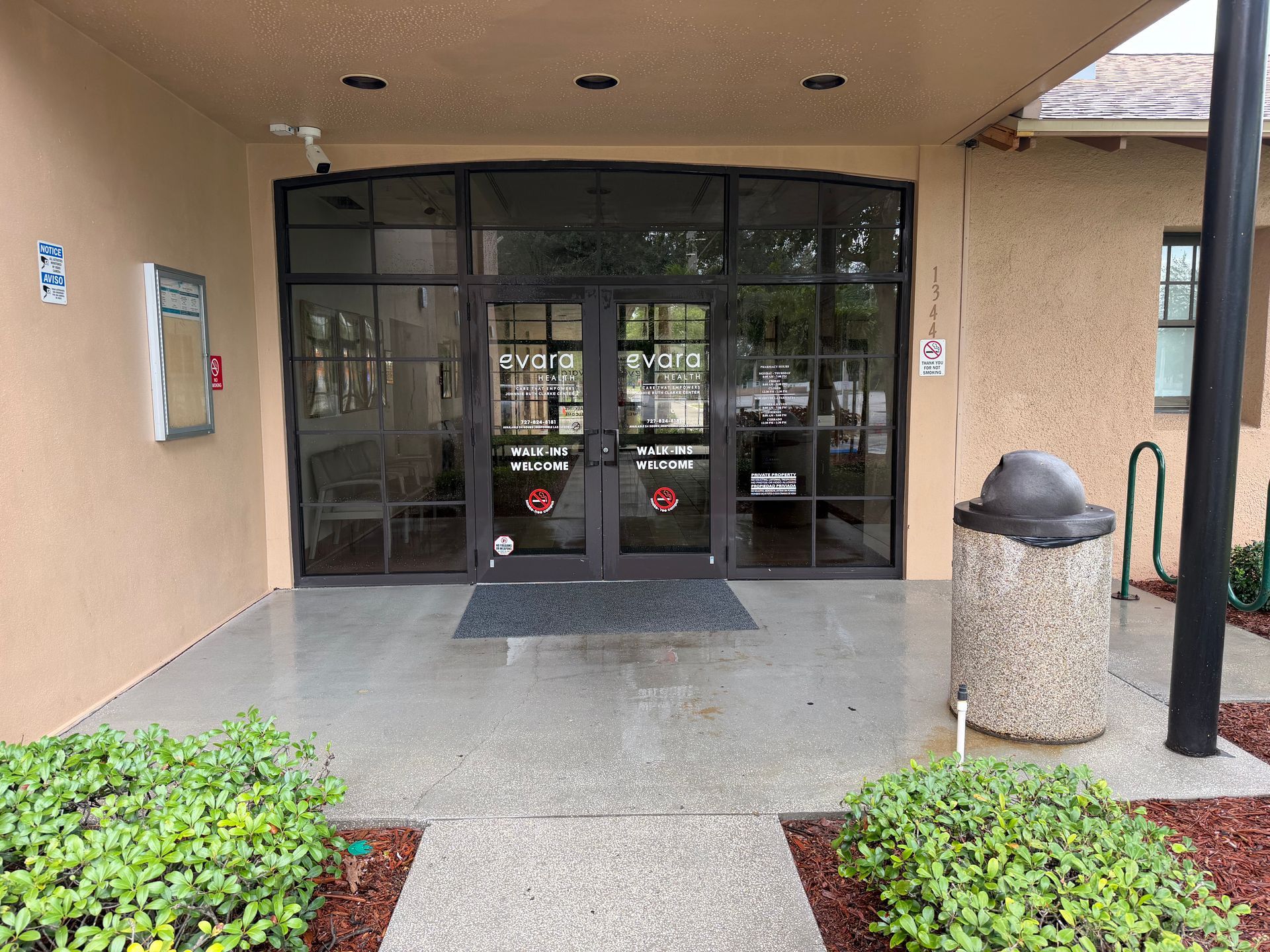
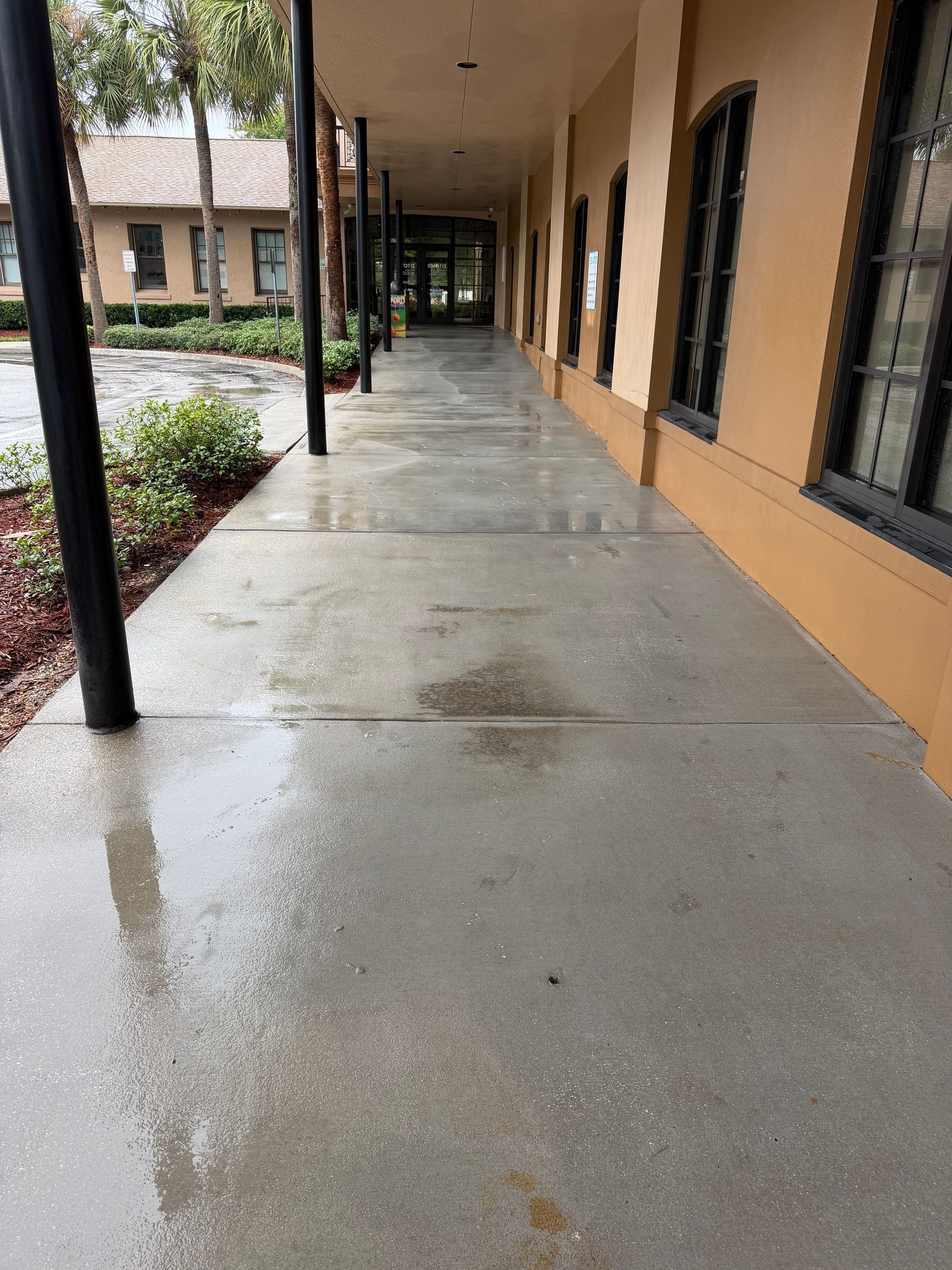
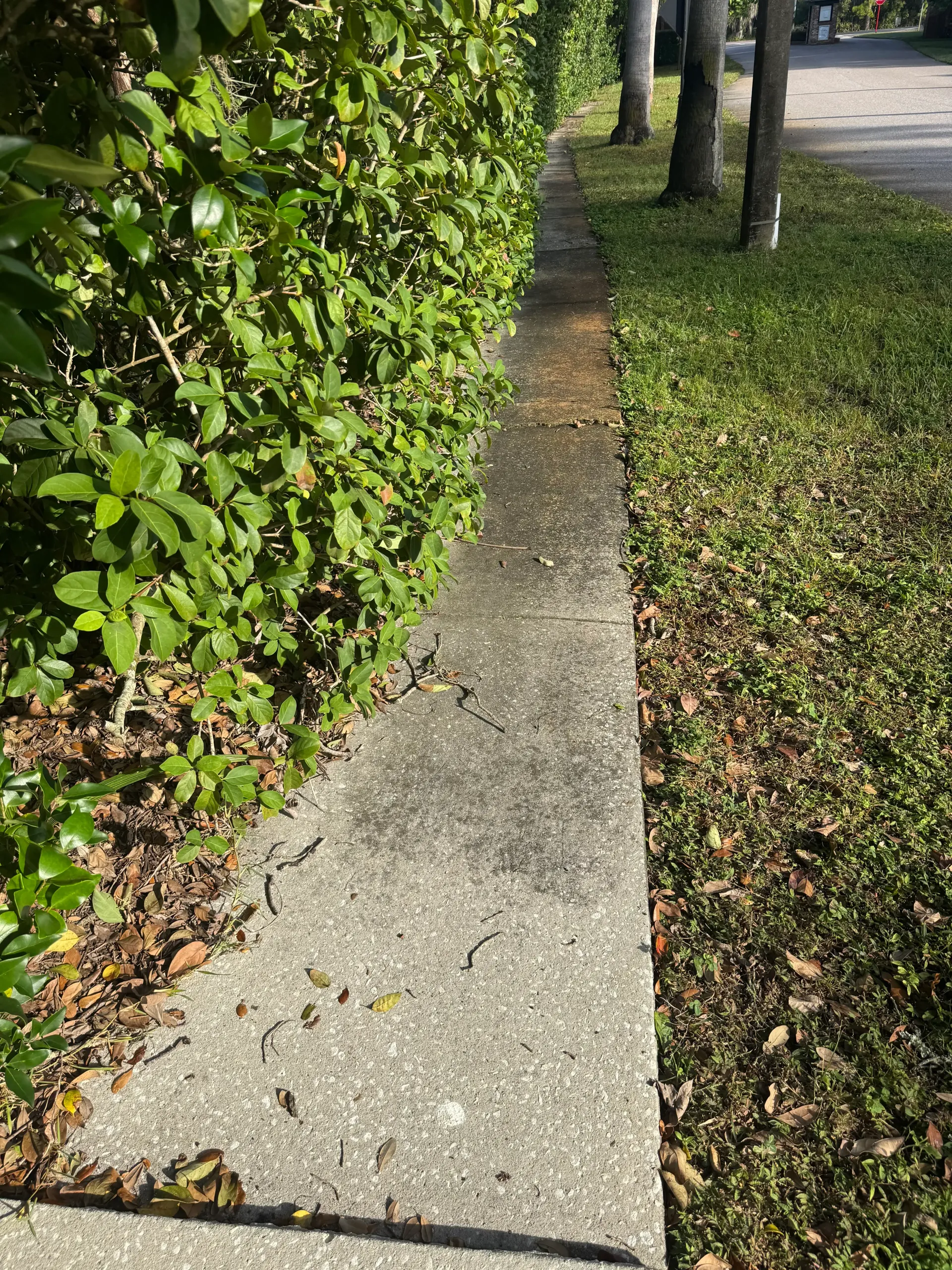
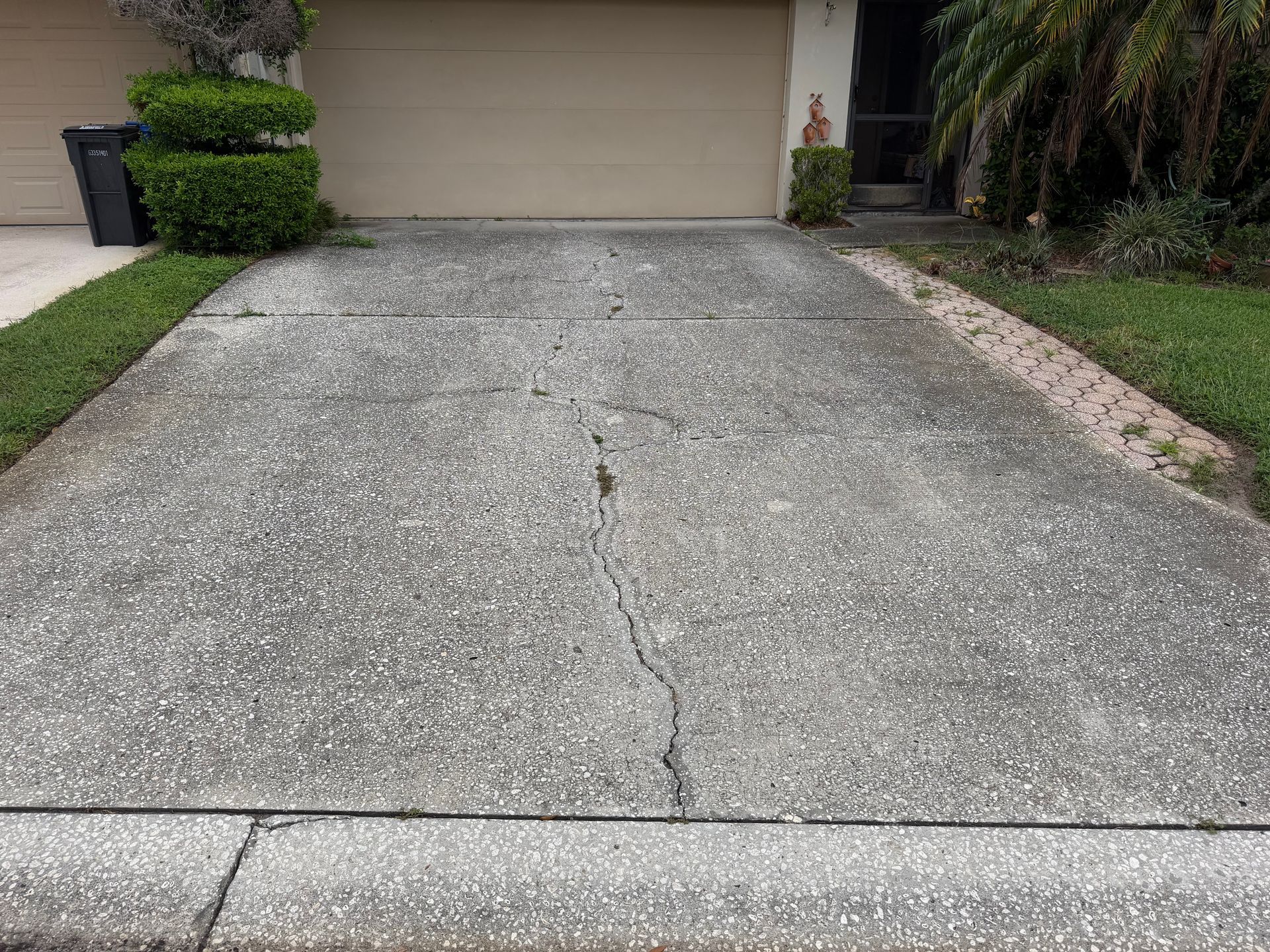
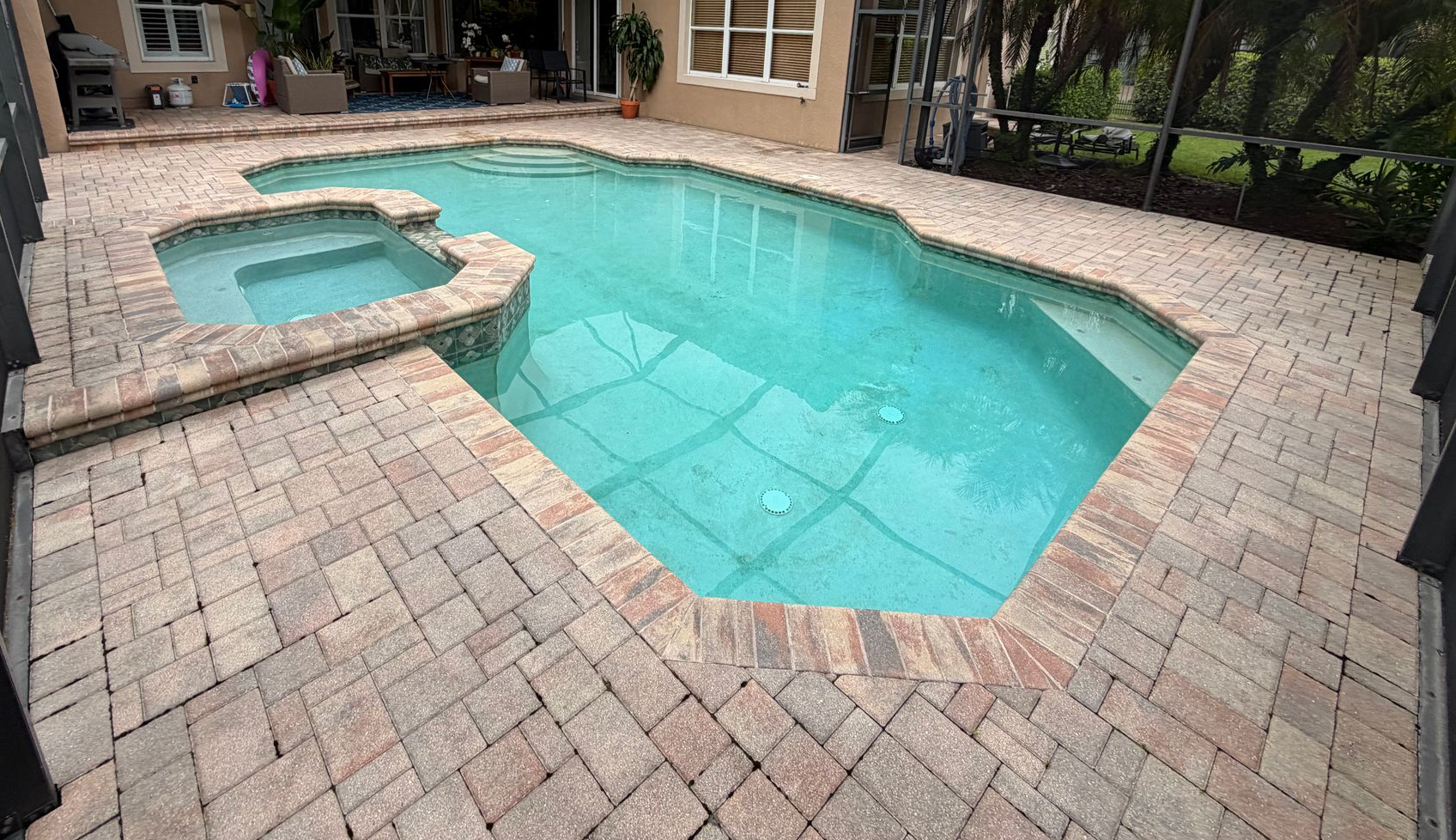
- Concrete driveways, sidewalks and pool decks
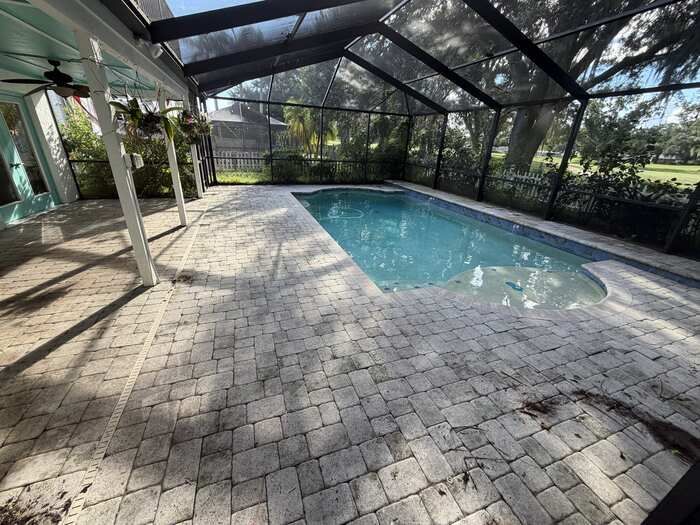
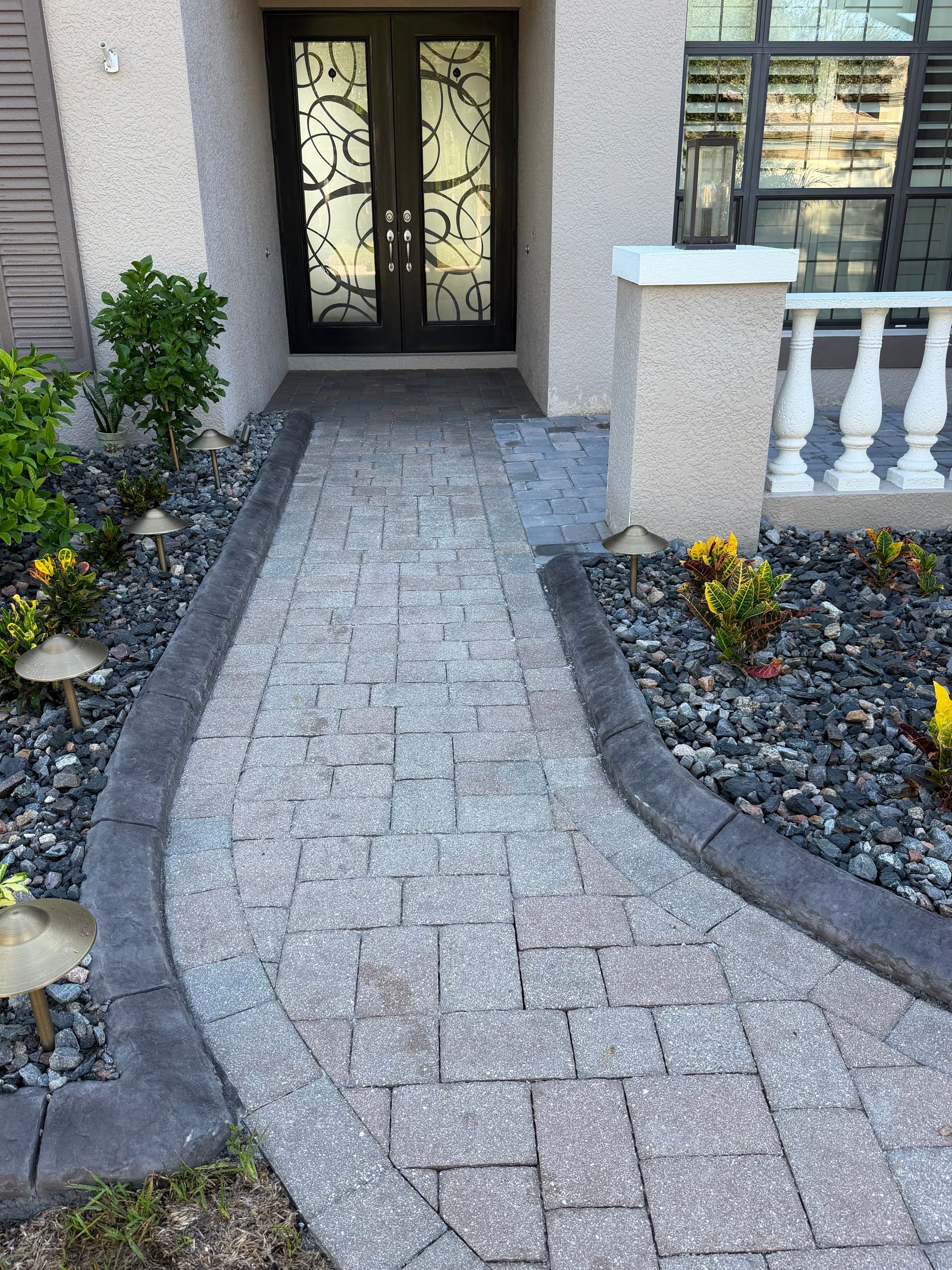
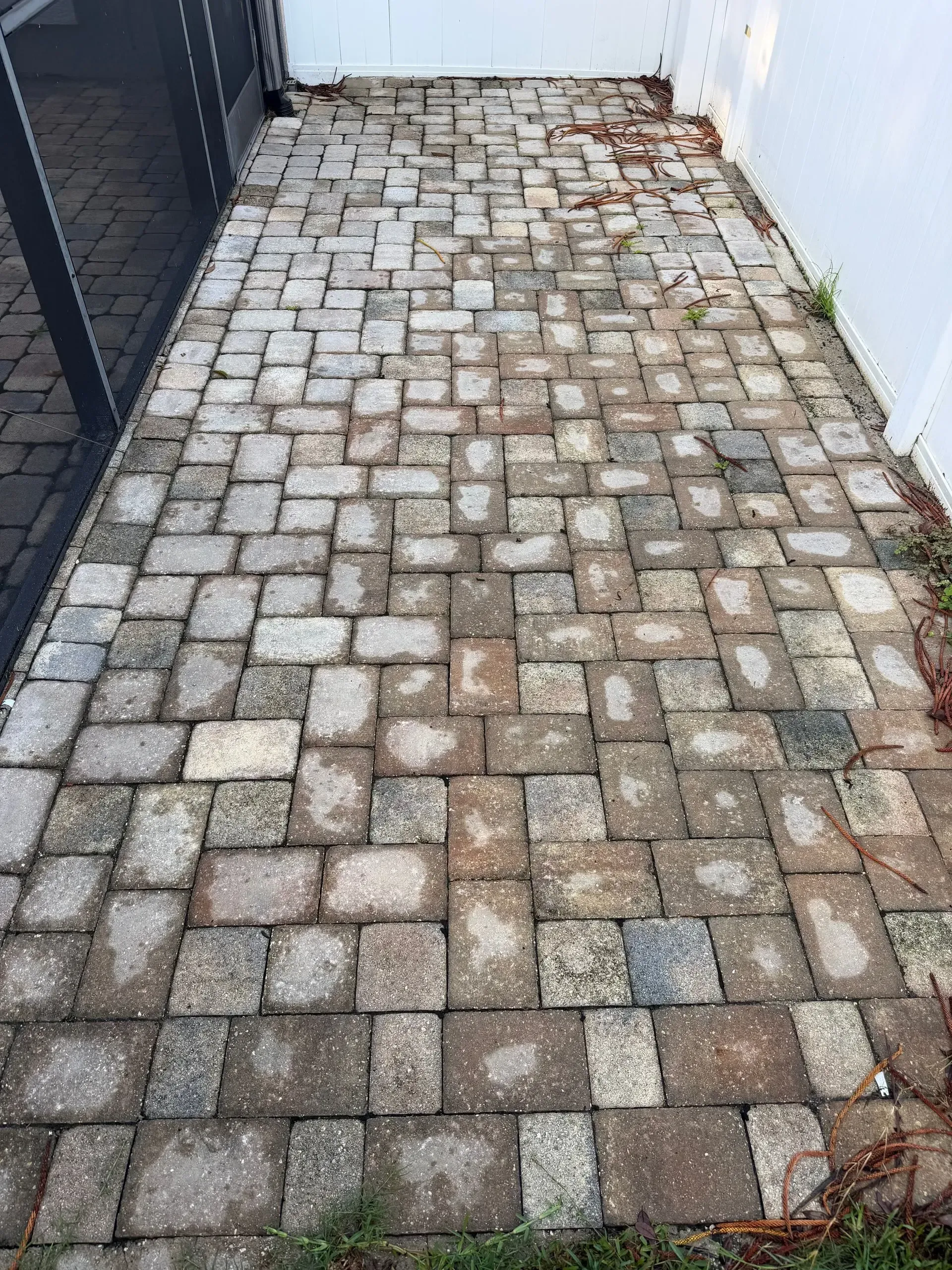
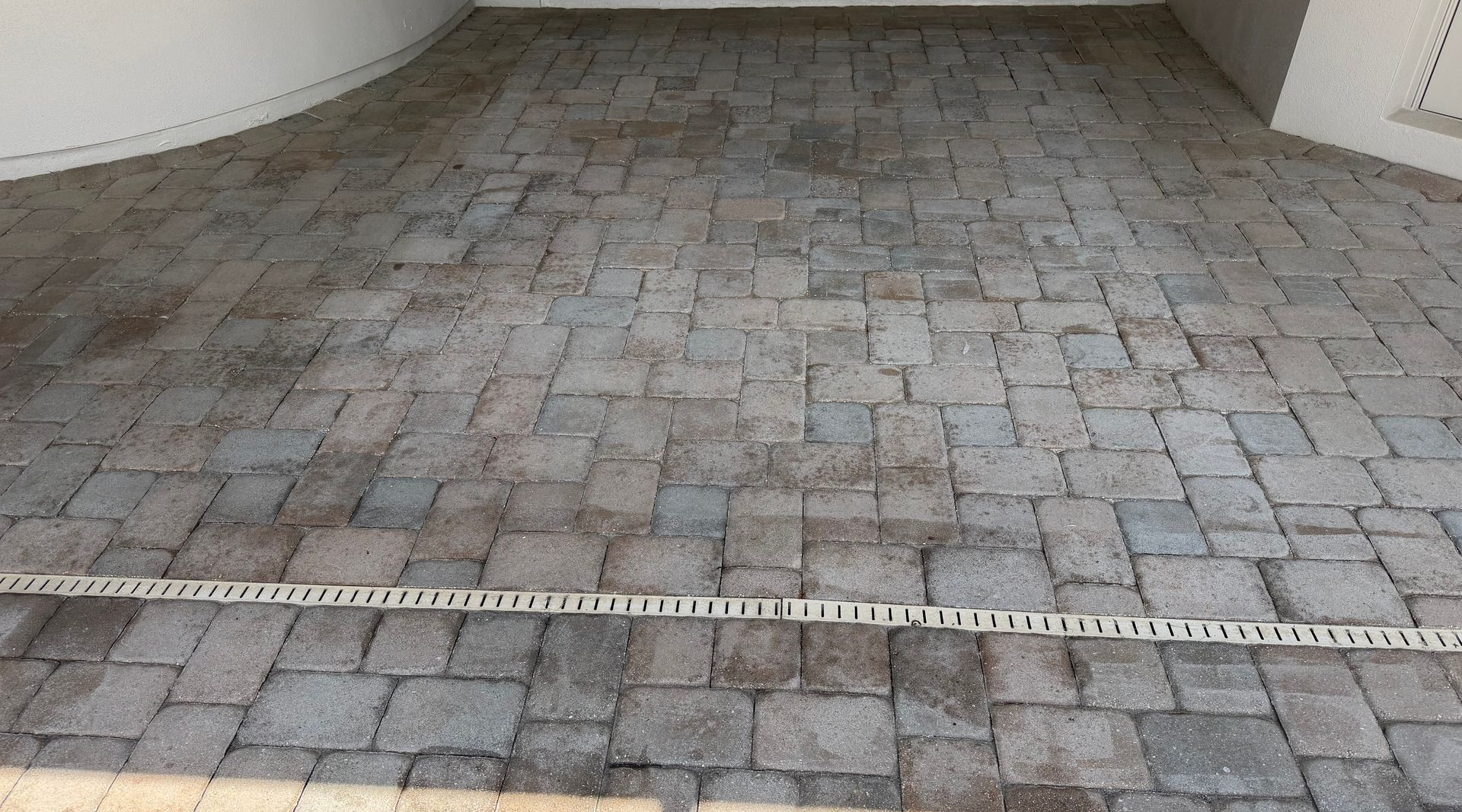
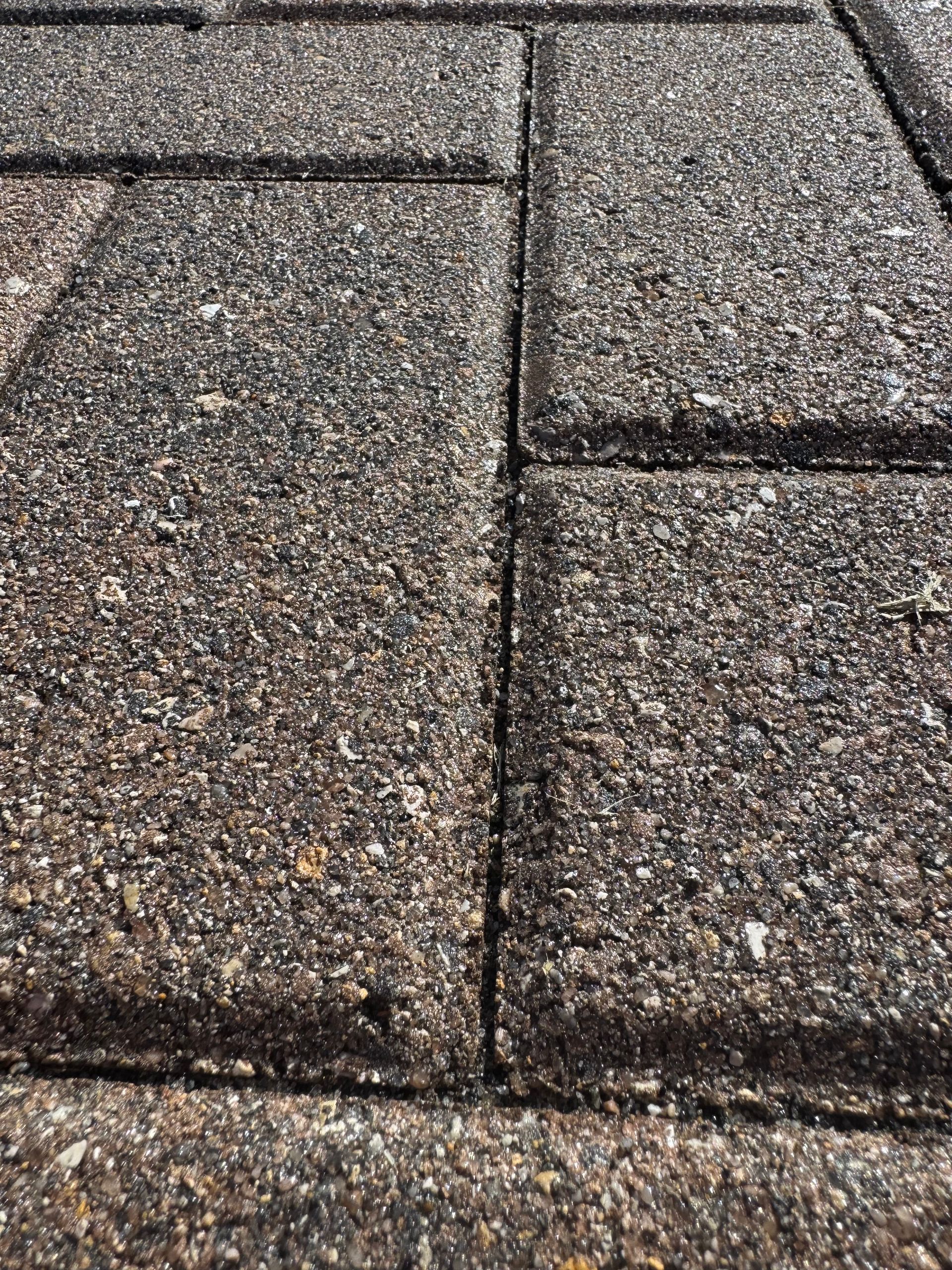
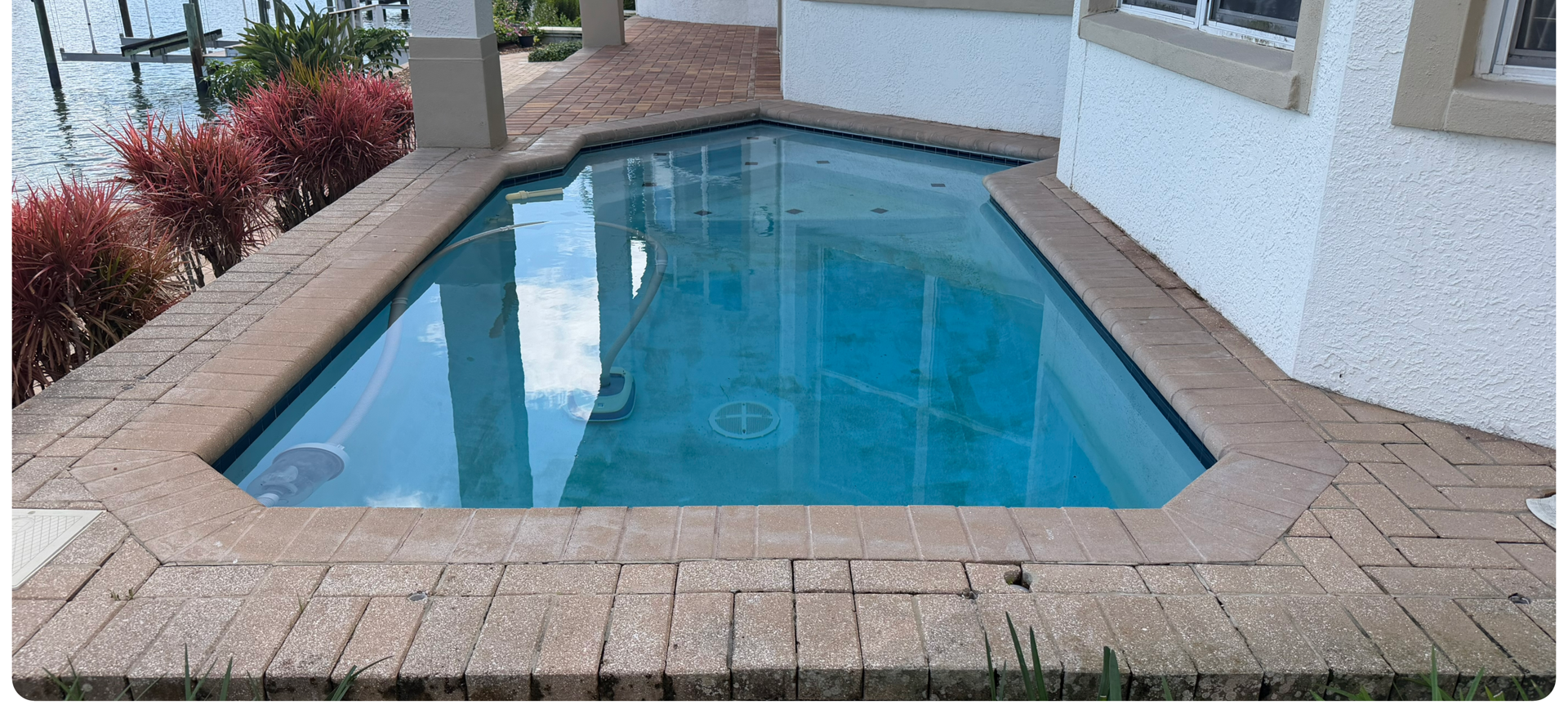
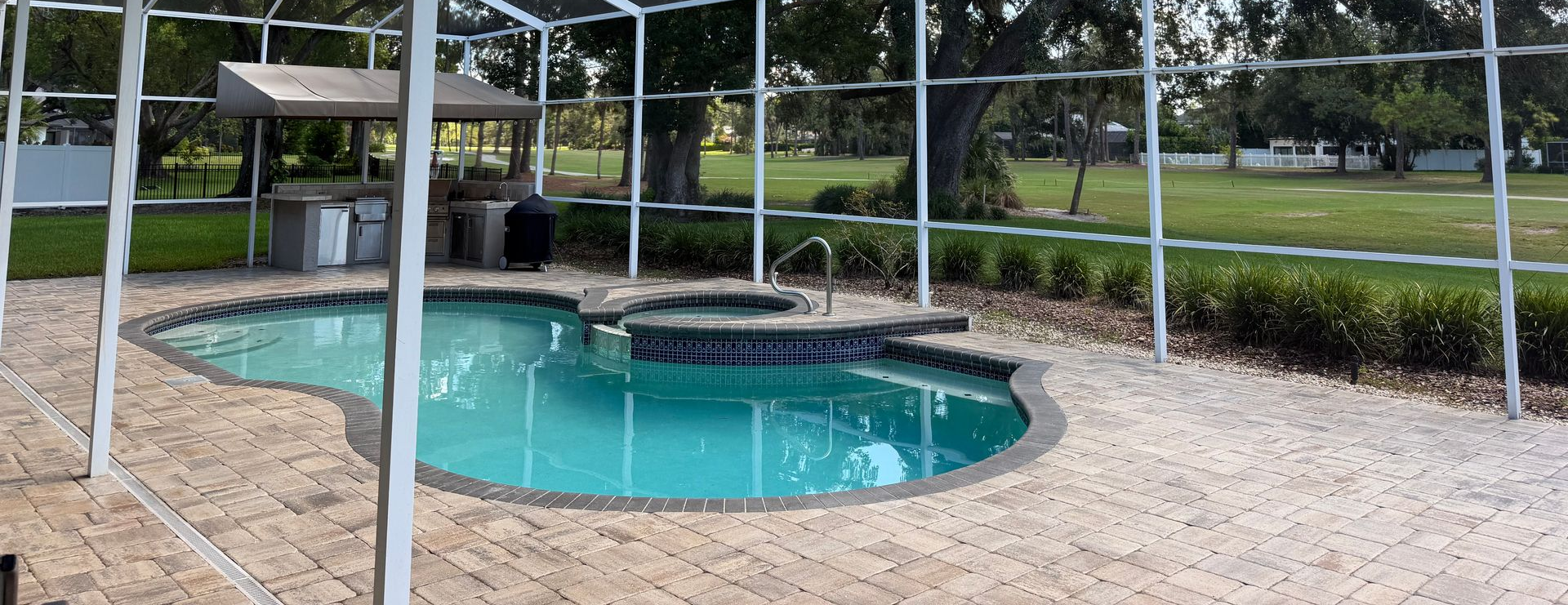
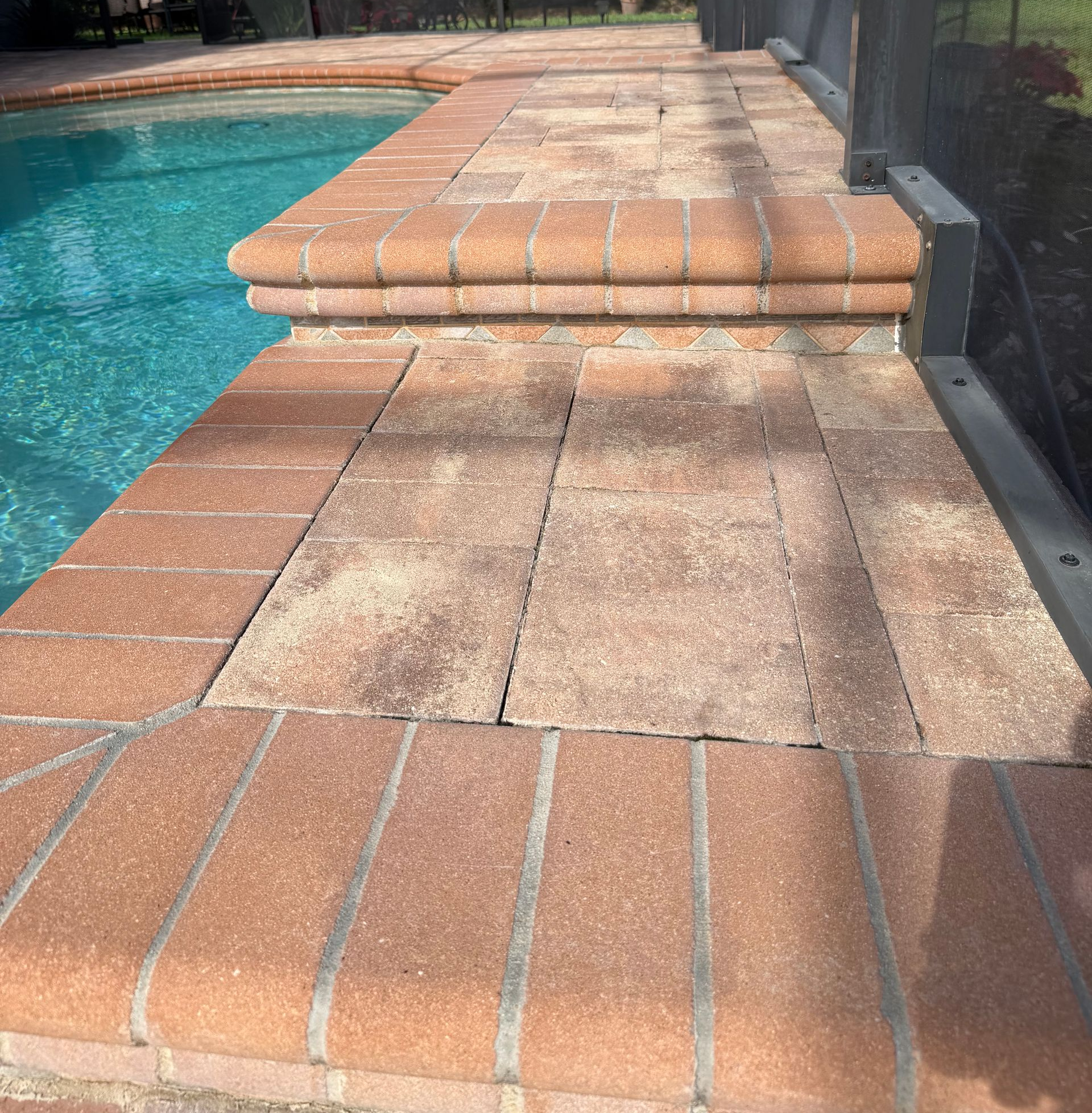
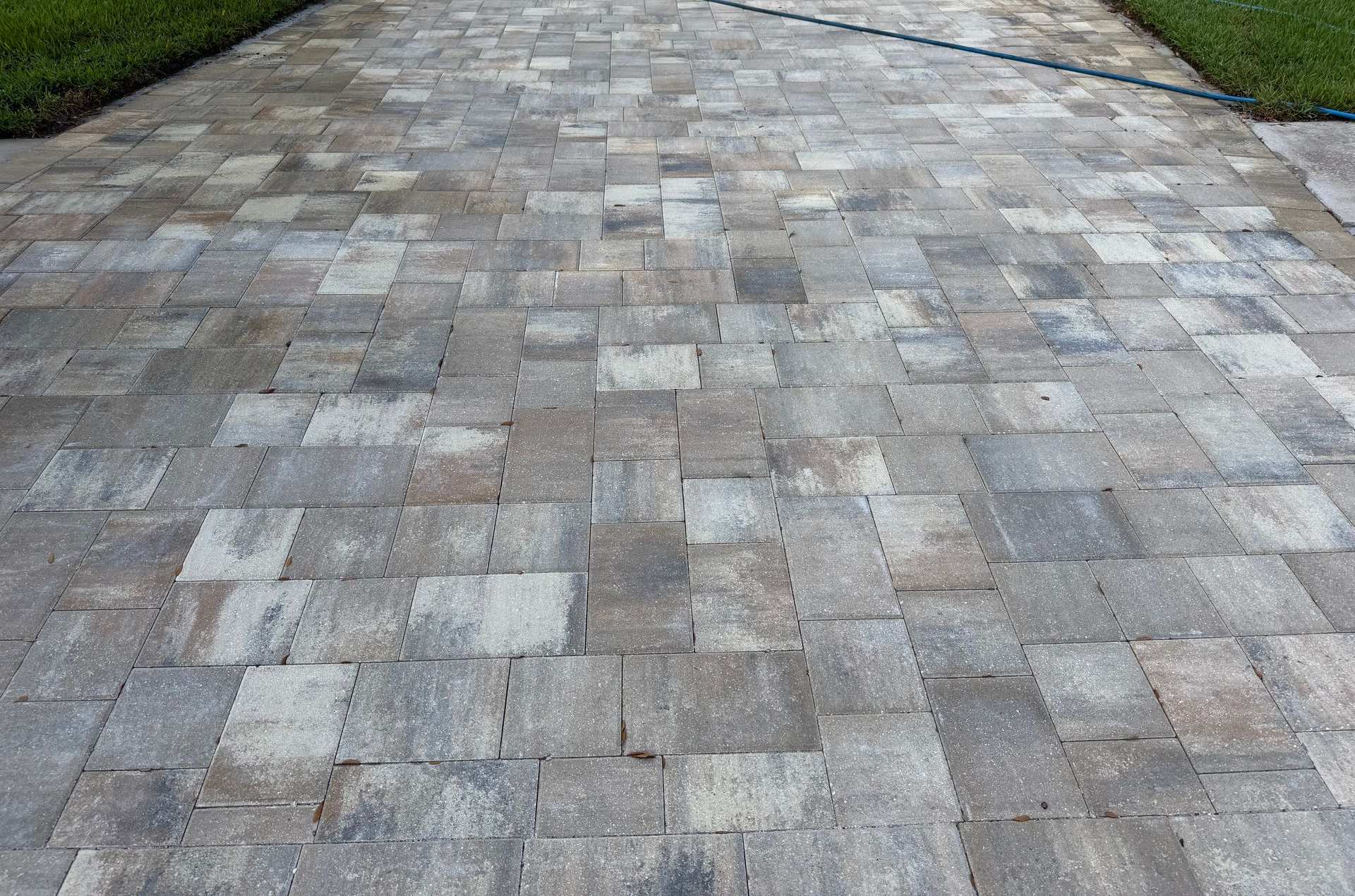
- Pavers (at a controlled pressure, with joint sand replaced after)
- Brick and stone flatwork
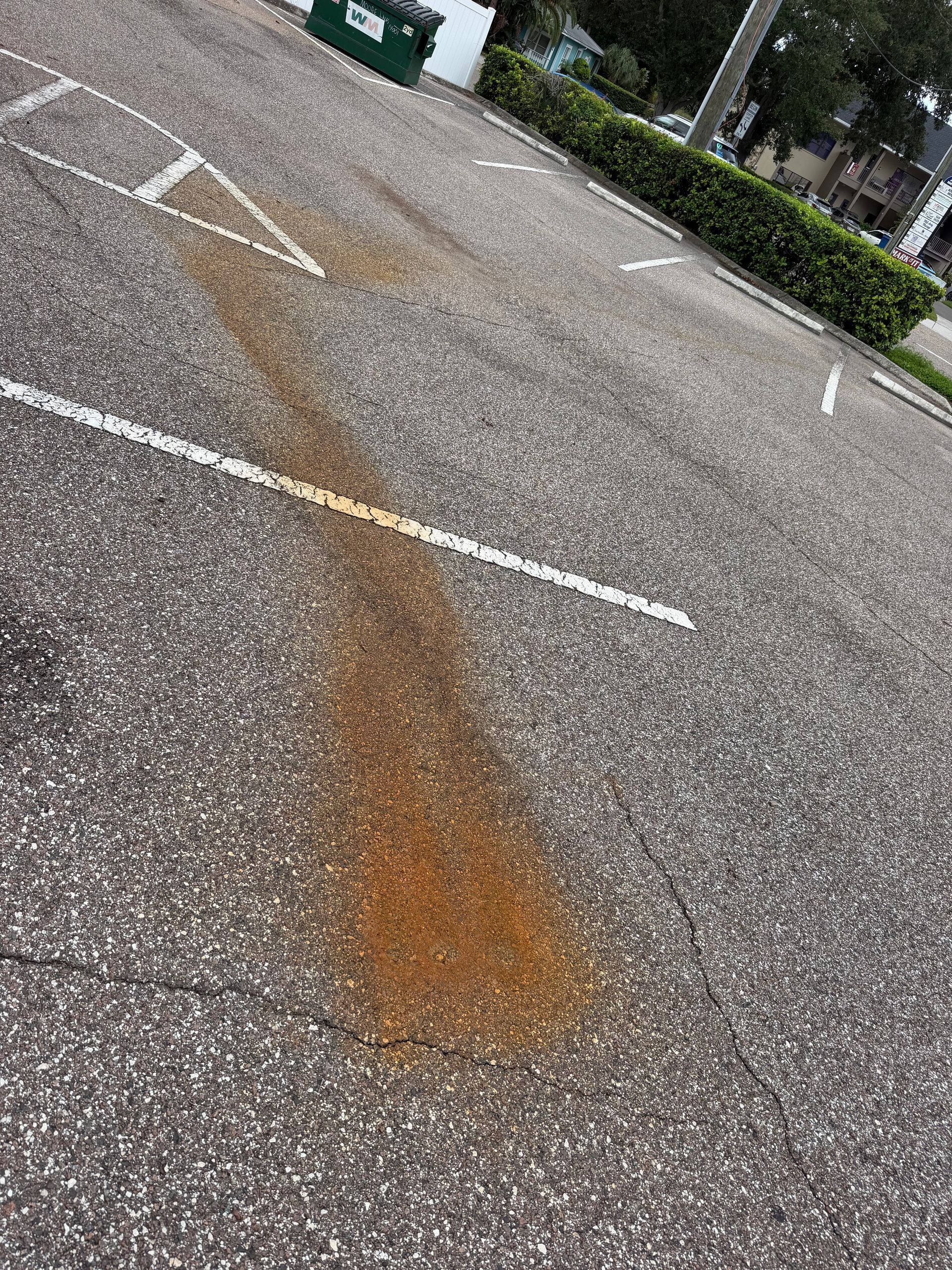
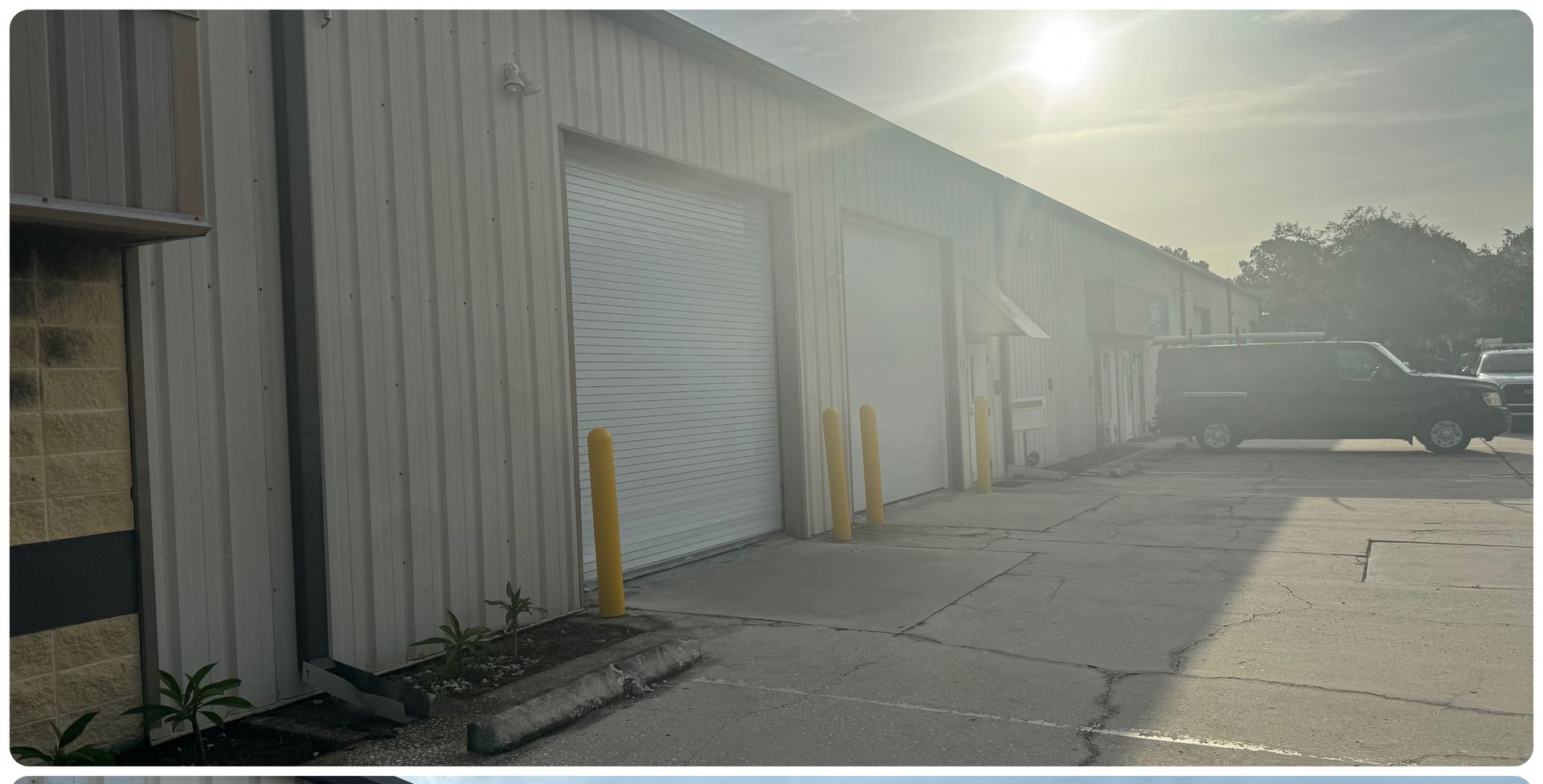
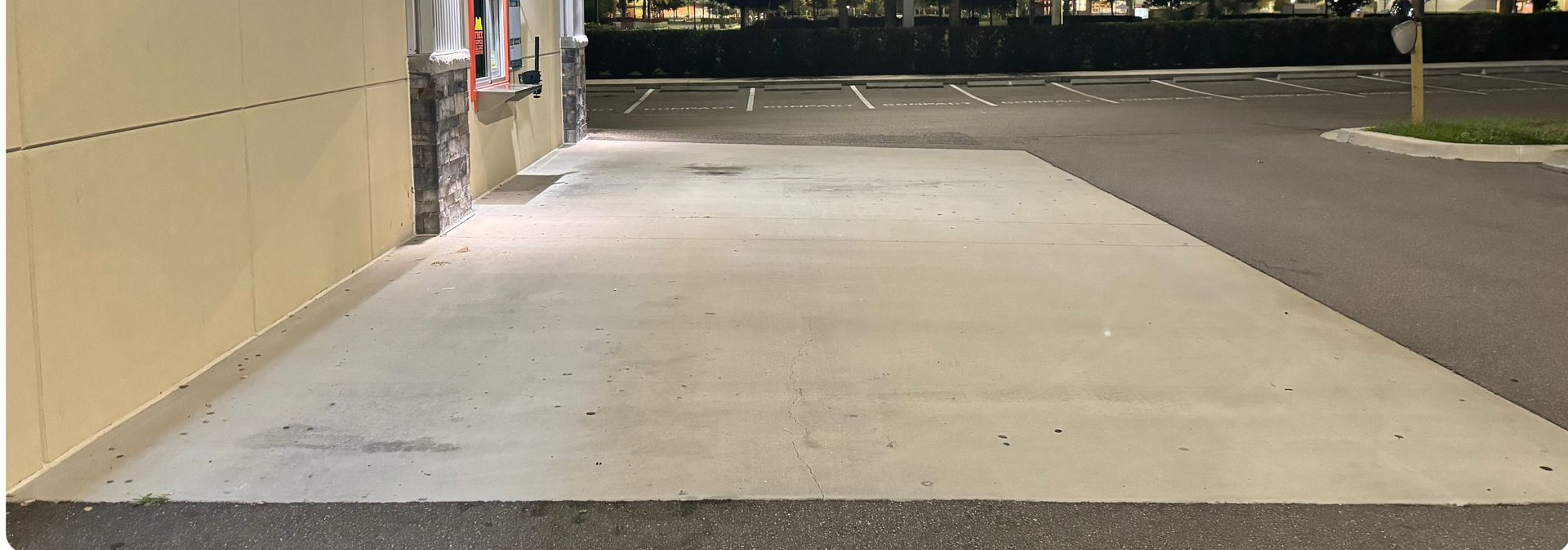
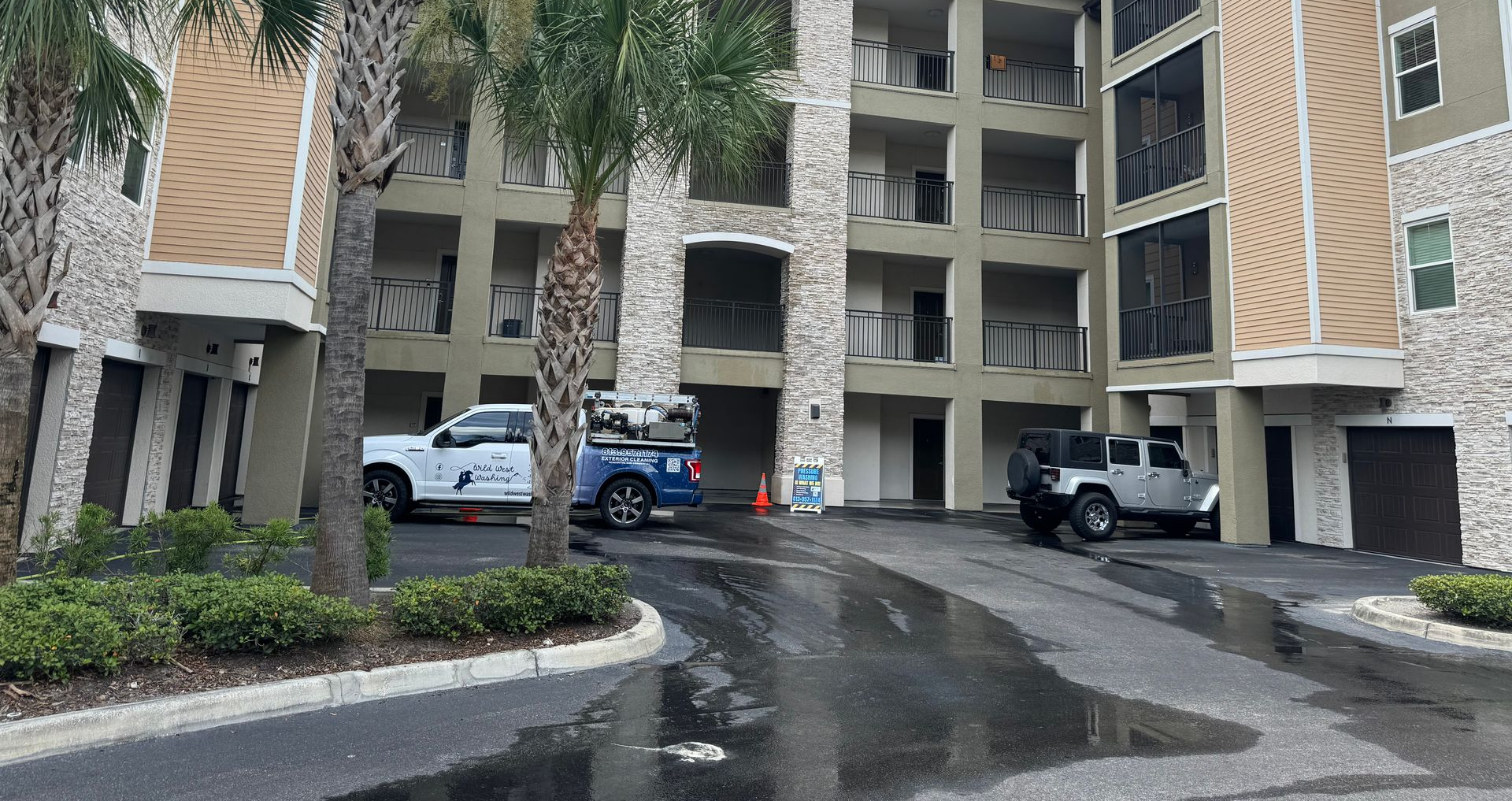
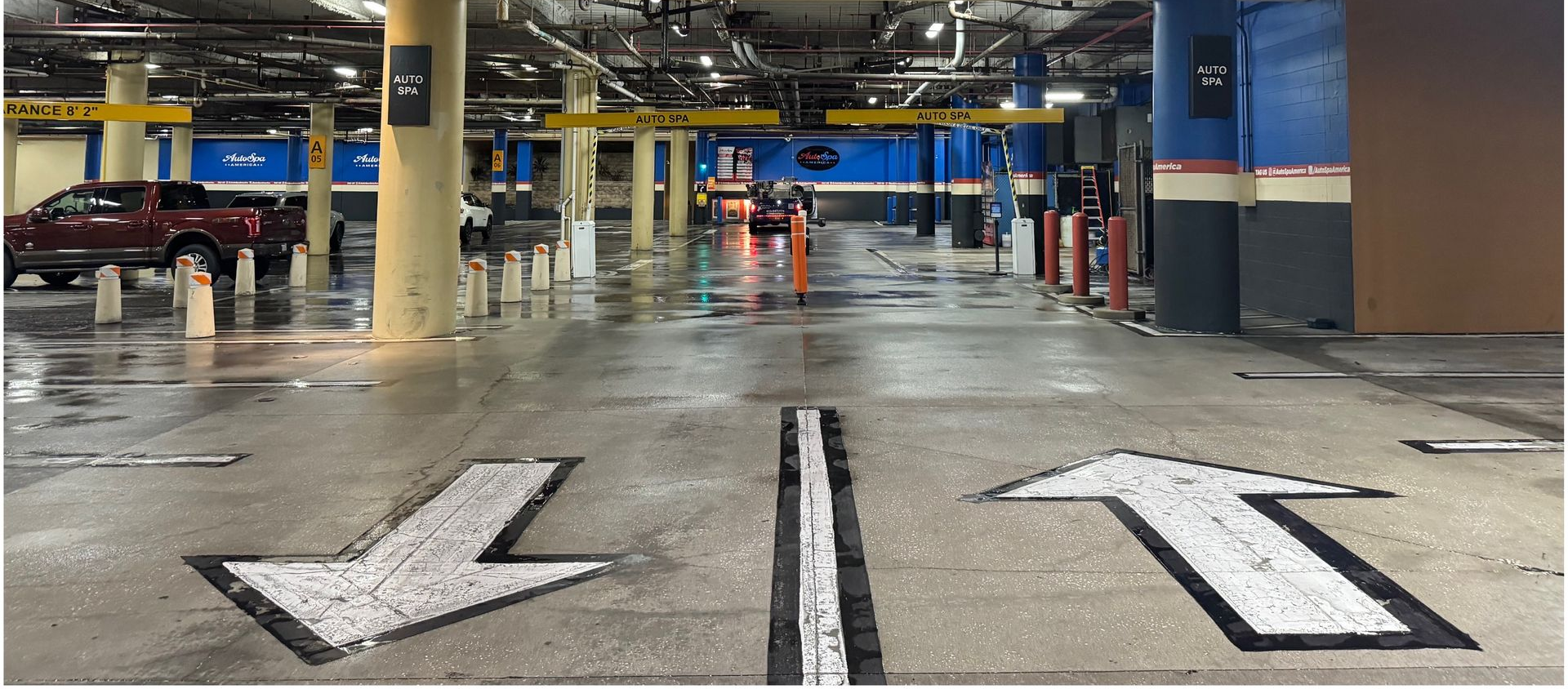
- Commercial parking lots, dumpster pads and drive lanes
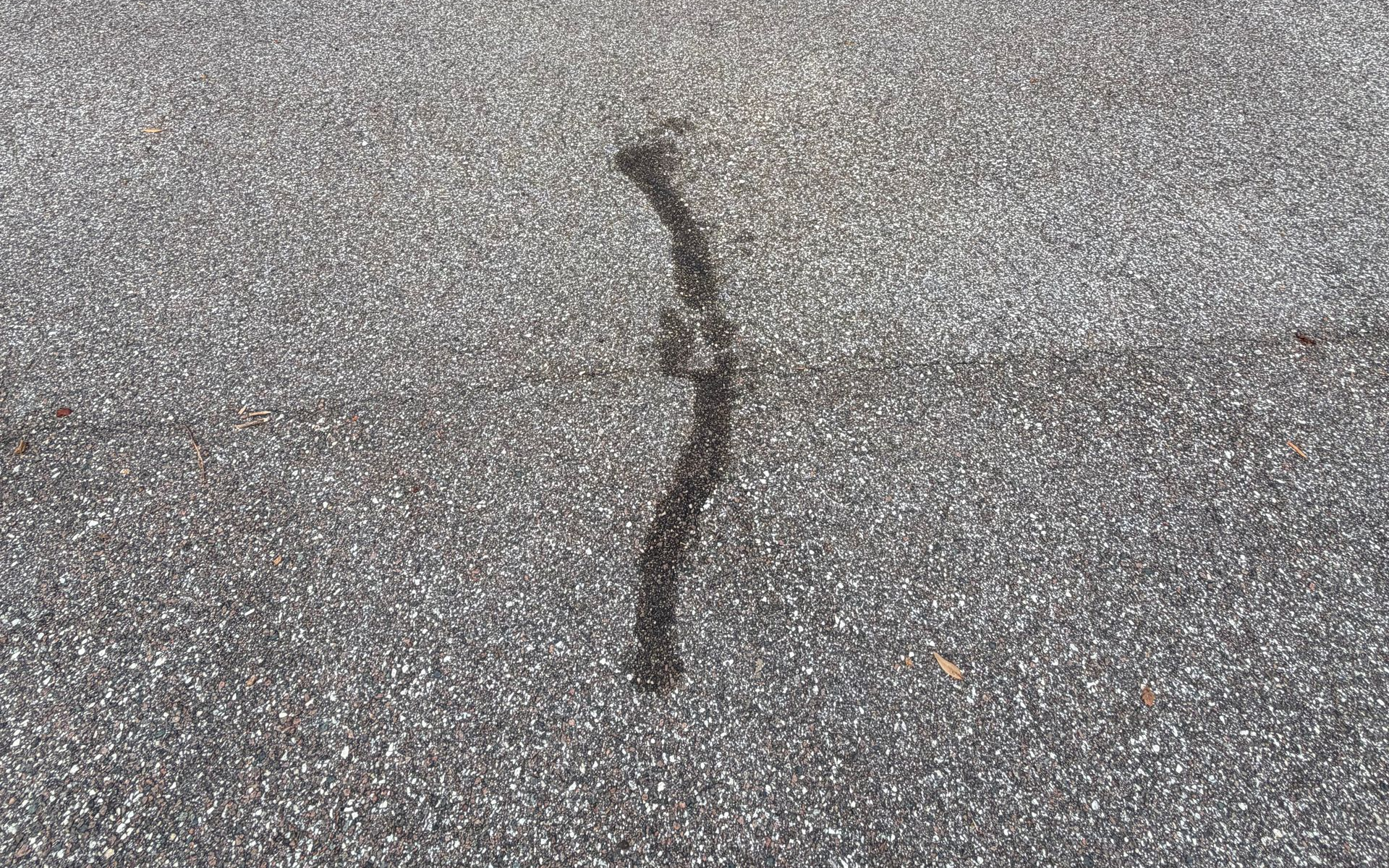
- Rust and oil stain removal, usually combined with a treatment
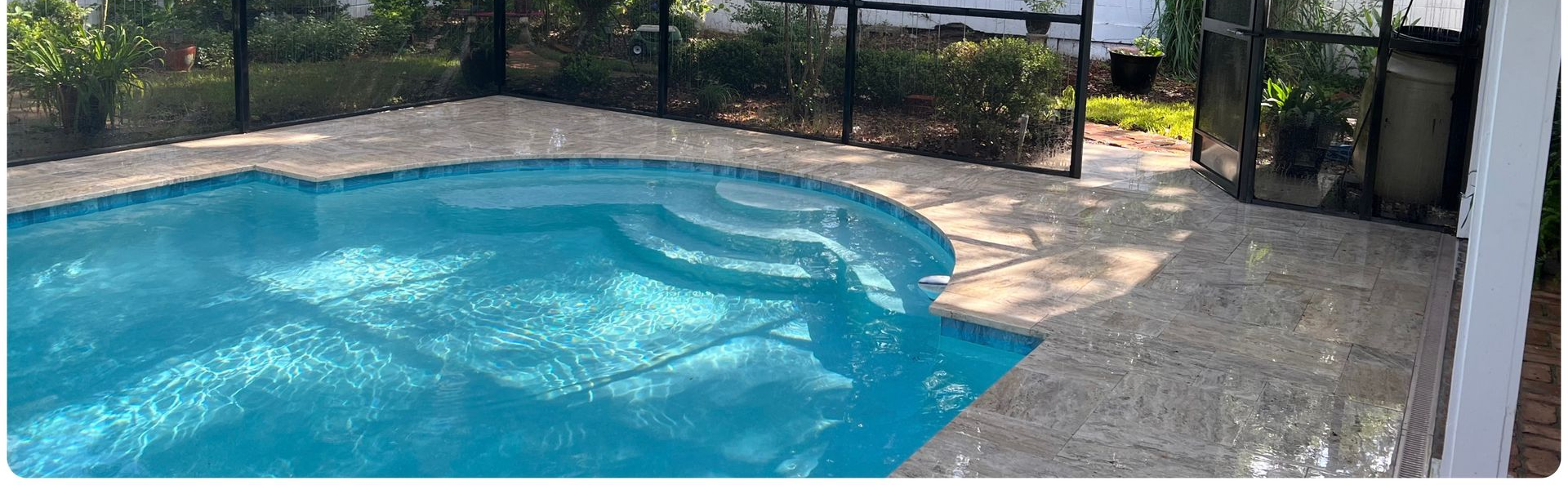
The in-between: pavers and travertine. Pavers take pressure but a careless operator etches the face and blows out the joint sand. Travertine, marble and shellstone take much less than people think.
[PHOTO: split shot — soft wash on a stucco elevation next to pressure washing on a concrete driveway]
What goes wrong when you use the wrong one
Pressure on a shingle roof strips the mineral granules that are the shingle's UV protection. They wash into the gutter and the roof ages years in an afternoon.
Pressure on stucco drives water behind the finish coat. In Tampa's humidity that moisture doesn't leave quickly, and the result can be blistering paint or a mildew problem inside the wall system rather than on it.
Pressure on a screen enclosure stretches or tears the screen and can bend the spline out of its channel. It looks fine wet and sags once it dries.
Pressure on wood raises the grain and leaves permanent wand marks — the parallel stripe pattern you see on a lot of Florida decks and fences.
Going the other way, soft washing a heavily stained concrete driveway will lighten it and won't fully clean it. Concrete is porous, tough, and full of embedded traffic grime that chemistry alone won't lift. That's a pressure job, usually with a surface cleaner attachment for an even finish rather than wand stripes.
How long does each one last in Florida?
A pressure-washed driveway in Tampa Bay typically looks good for 12 to 18 months before algae re-establishes in shaded areas. A properly soft-washed house — where the growth was killed rather than knocked down — generally holds 12 to 24 months, and a soft-washed roof goes 18 to 36.
If your house wash is only lasting six months, that's a strong signal the previous cleaning was pressure rather than chemistry.
What about heated water?
Heated-water systems have a real place — commercial grease, oil-stained drive lanes, dumpster pads. On a residential exterior in Florida they're almost never necessary. Our problem here is biological rather than greasy, and the right chemistry handles it at ambient temperature. If someone is proposing hot high-pressure water on your stucco, ask what they think it's accomplishing.
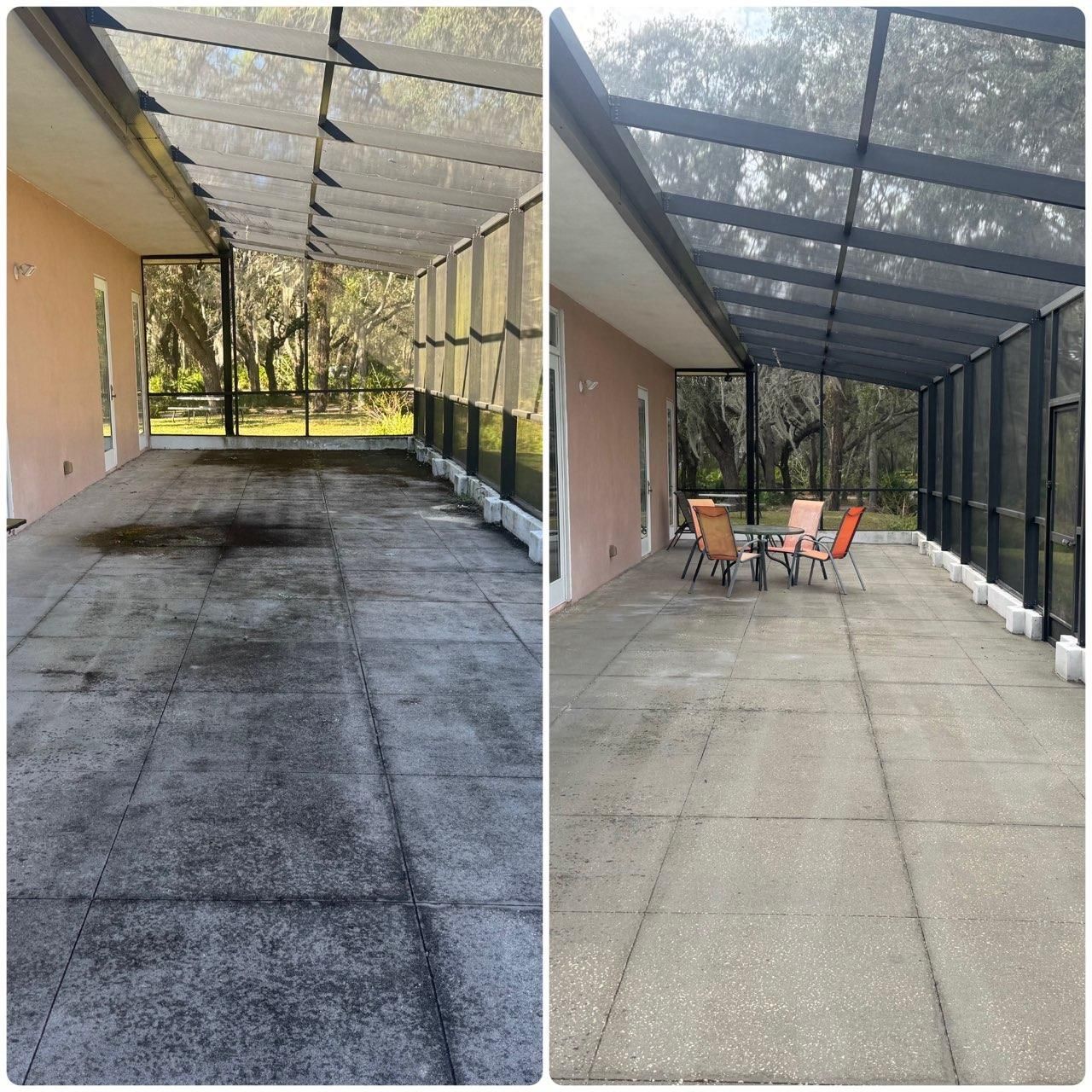
[PHOTO: before/after of a screen enclosure soft wash — Westchase or Lutz]
The realistic answer for most Tampa homes
A typical full exterior on a luxury home here is mostly soft wash with pressure used in specific places: soft wash the roof, the elevations, the soffits, the cage and the fence; pressure the driveway, the walkways, the pool deck and the entry. One visit, two methods, applied where each belongs.
If a contractor is bringing one approach to the whole house, something on that house is being cleaned wrong.
Ask us what your house needs
We'll walk the property and tell you honestly which surfaces need chemistry, which need pressure, and which are fine for another year. Our veteran-owned crew has been doing this across Hillsborough, Pasco and Pinellas long enough to know what each material can take.
Call 813-957-1174 for a free quote, or read more about soft washing, house washing and roof cleaning.