Efflorescence and Paver Cleaning in Long Lake Ranch
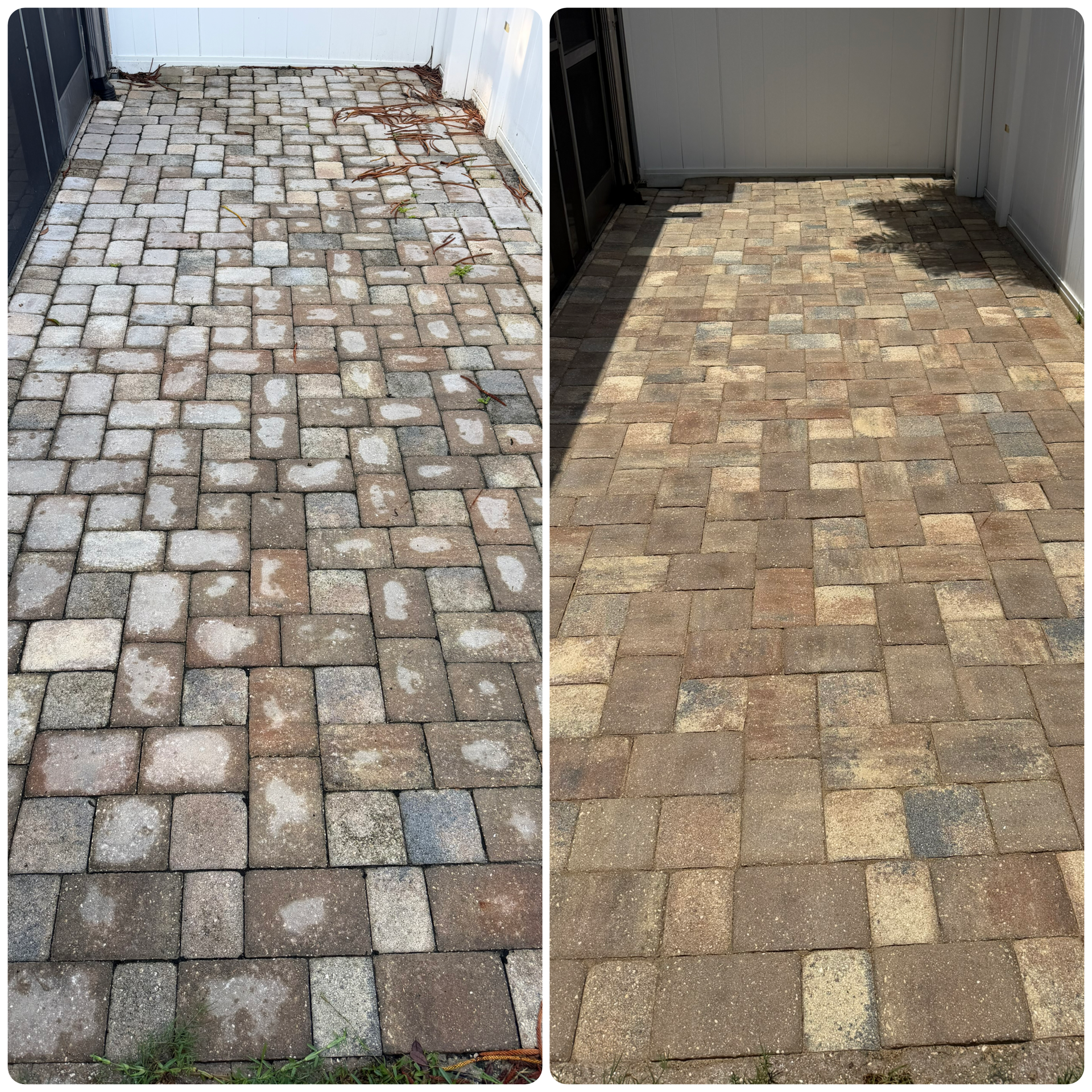
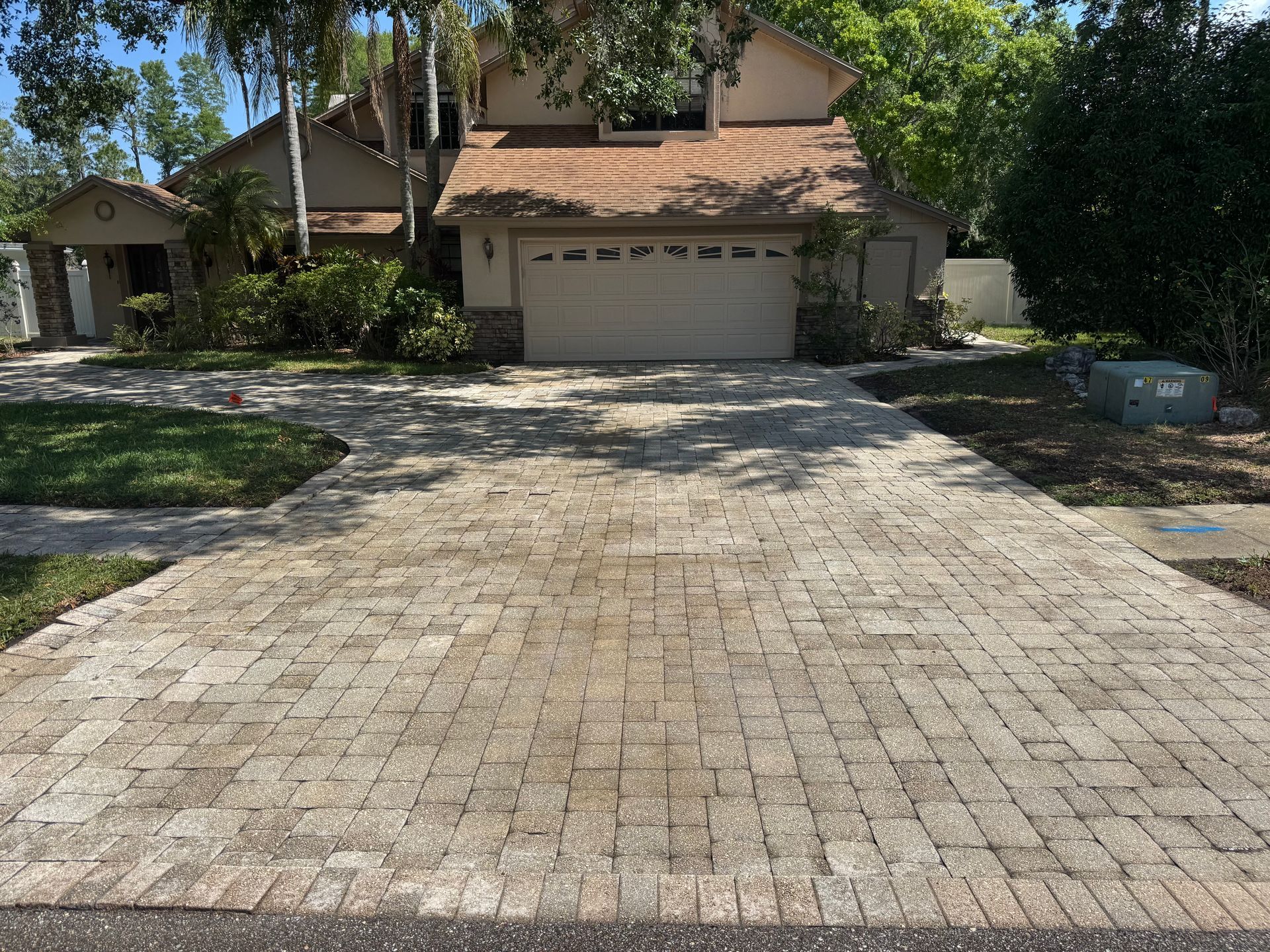
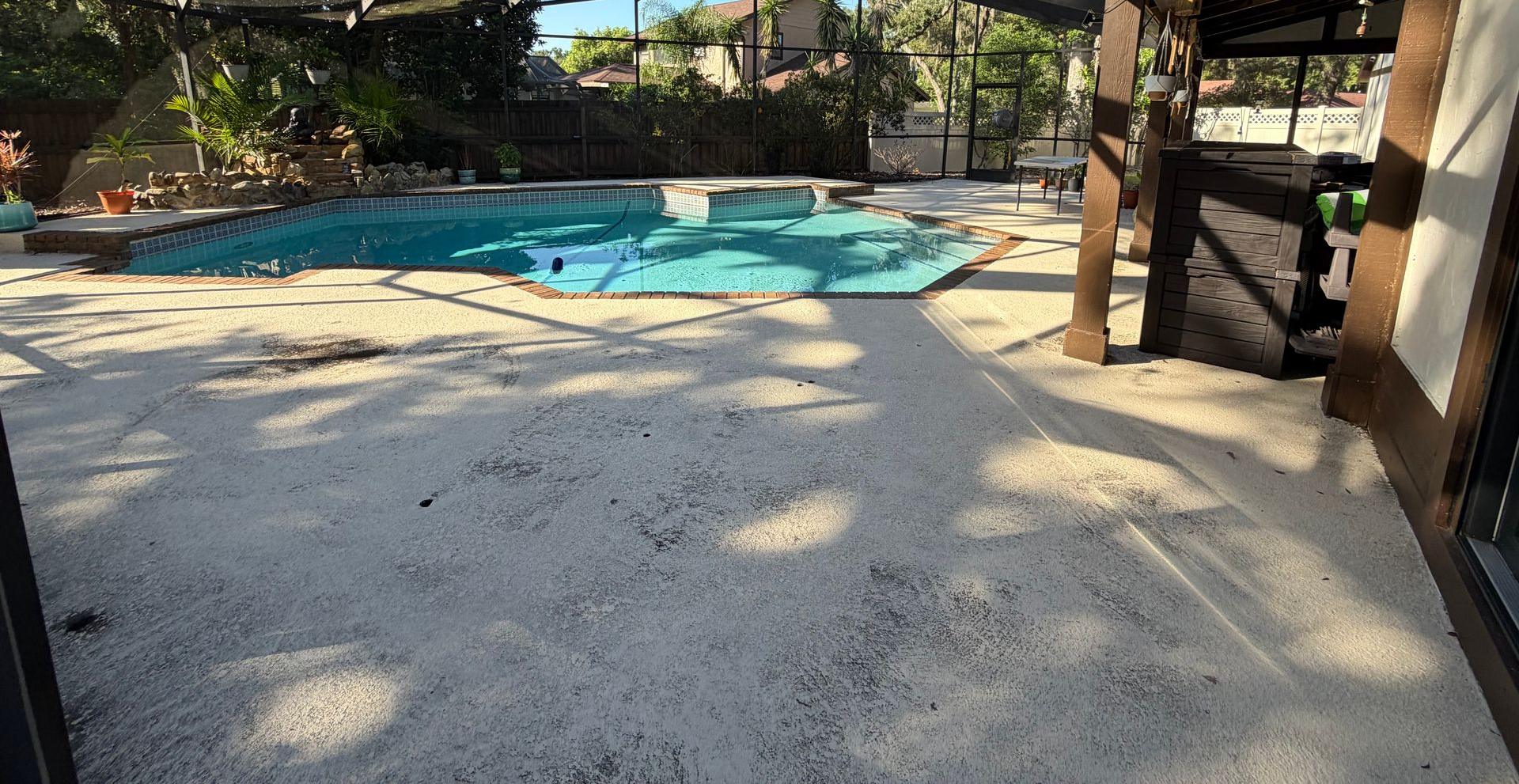
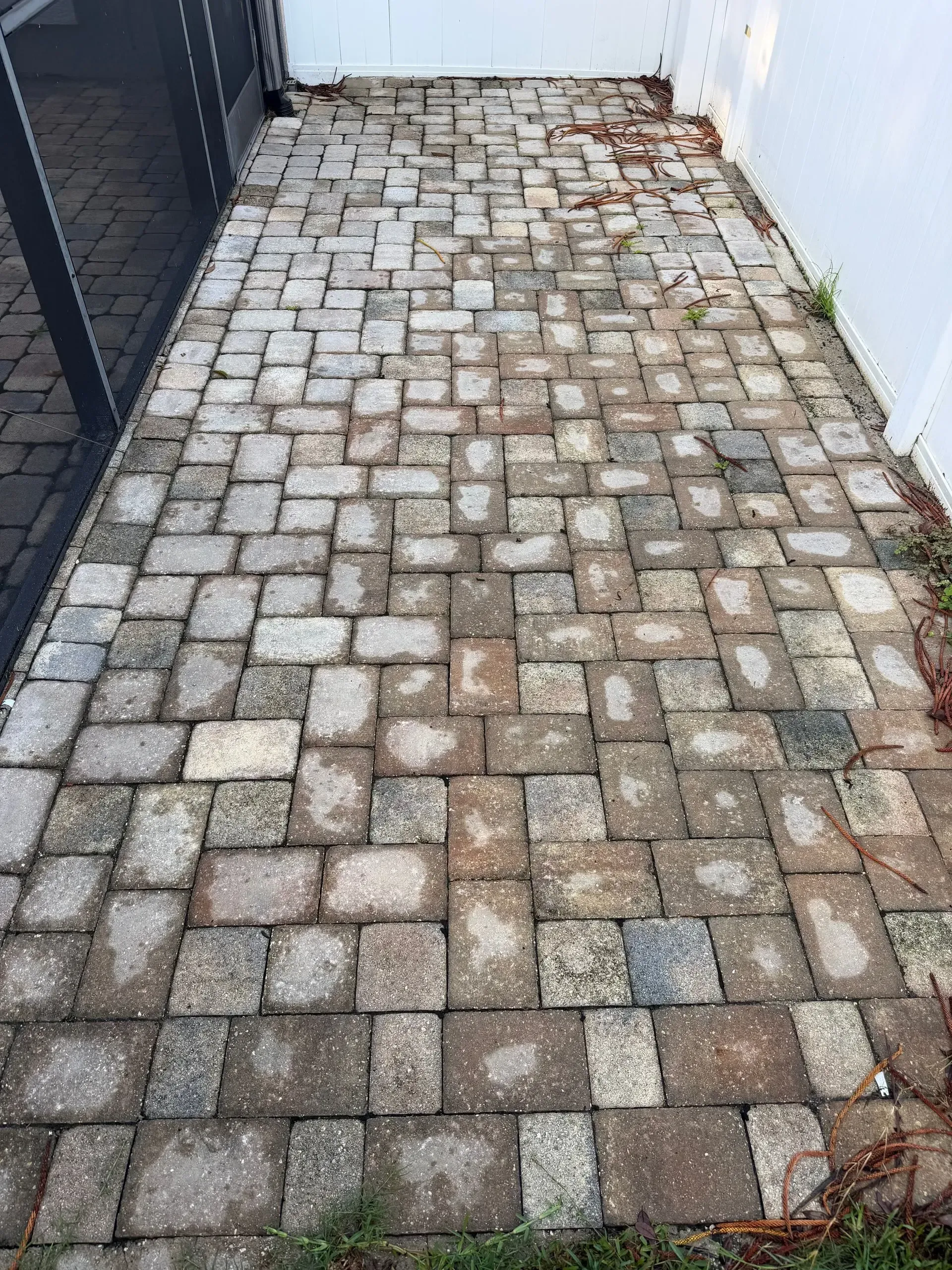
You hose off the lanai, it dries, and the white film is back. That chalky, cloudy veil on a paver patio is efflorescence — mineral salts migrating up out of the concrete and crystallizing on the surface — and it is not dirt, mildew, or a sealer you paid for going bad. Paver cleaning in Long Lake Ranch deals with this constantly, because almost every paver installed in the last decade of Pasco County construction is going to do it at some point.
The reason it's worth knowing the difference: dirt washes off, efflorescence has to be chemically dissolved, and a failed sealer has to be stripped. Three problems, three completely different days of work. Guess wrong and you spend money accomplishing nothing.
How do I know if it's efflorescence and not mold or a bad sealer?
Run these three checks:
- Wet it. Efflorescence disappears when wet and returns as the paver dries. Mold and algae stay visible wet.
- Look at the pattern. Efflorescence is blotchy and random, often heaviest in the middle of a paver face. Sealer failure follows your applicator's path — stripes, roller lines, or a uniform cloudy sheet that looks like fogged glass.
- Scratch it. A fingernail on efflorescence feels gritty, like fine powder. Clouded sealer feels smooth, because the haze is inside the film.
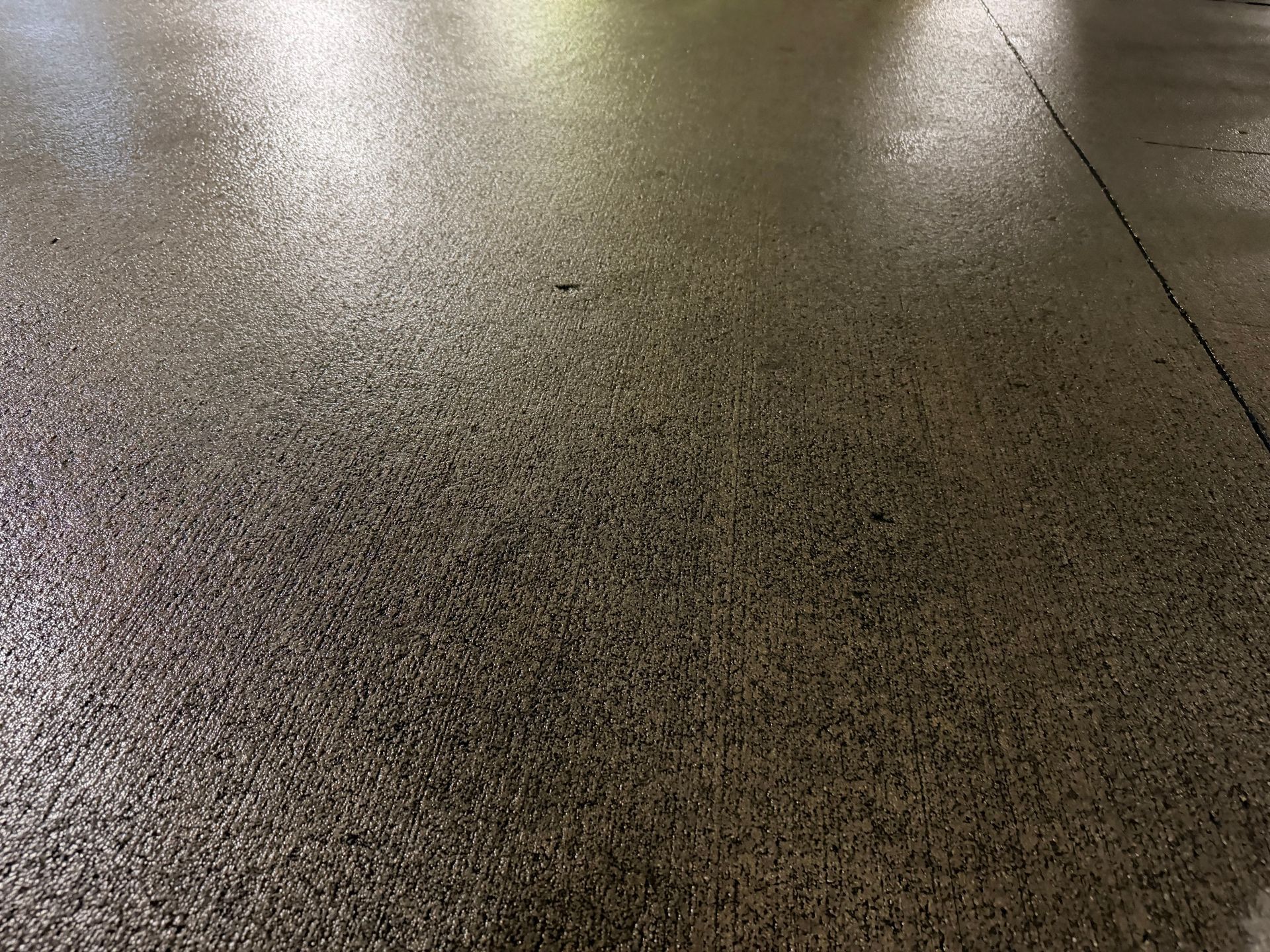
If the haze is under a glossy layer rather than on top of raw concrete, you're looking at moisture trapped beneath sealer, which is a strip-and-reseal, not a cleaning.
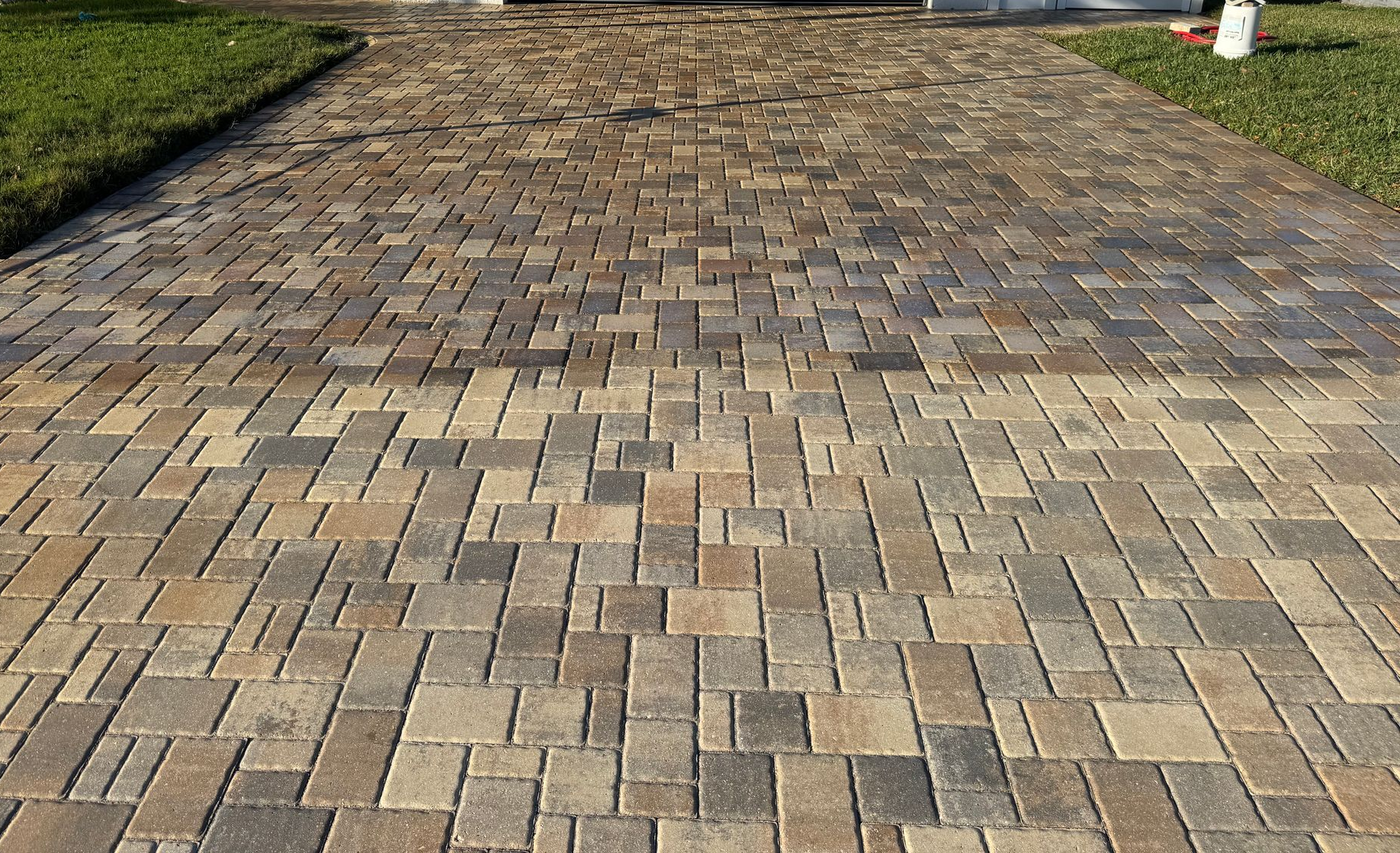
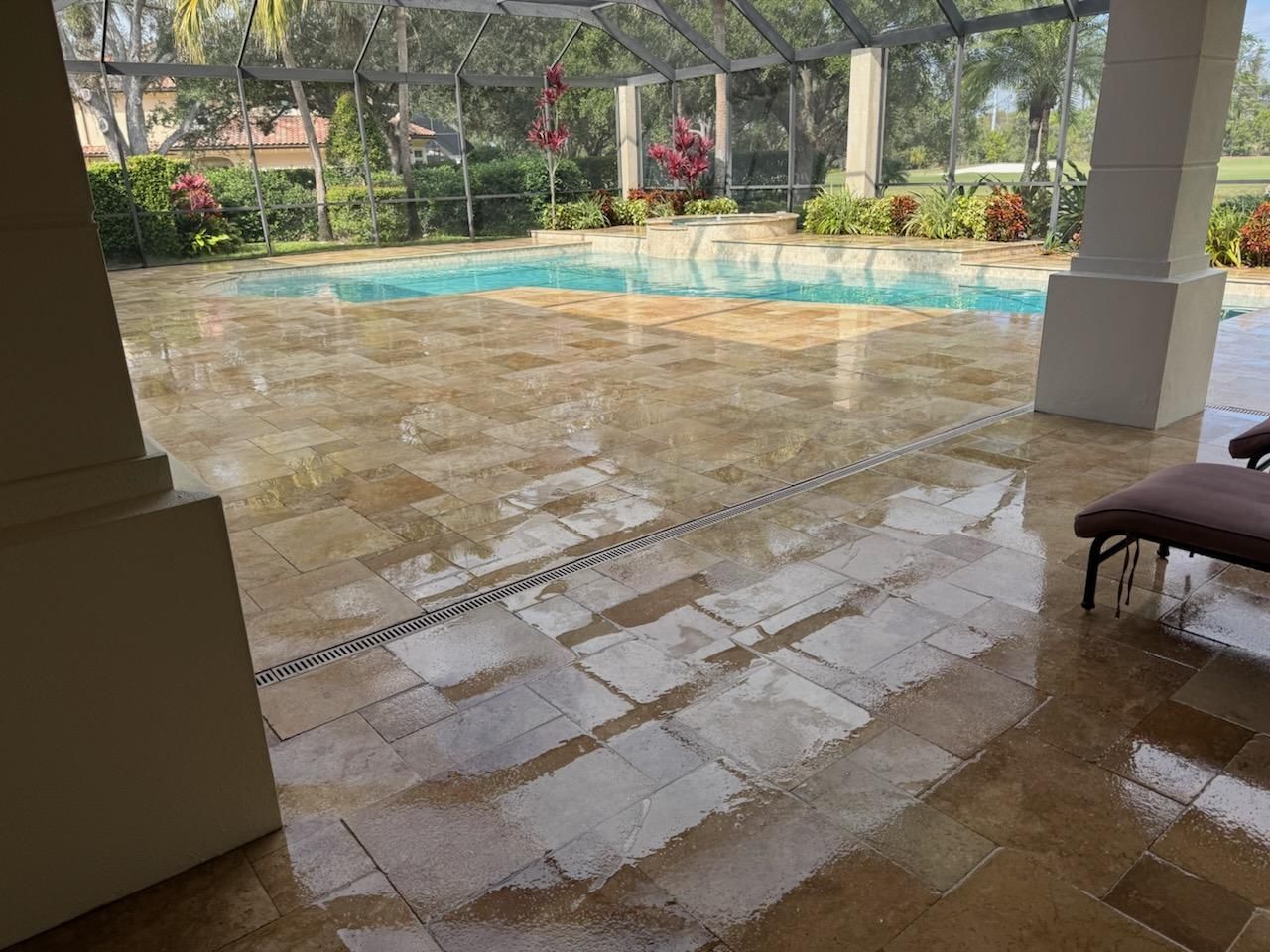
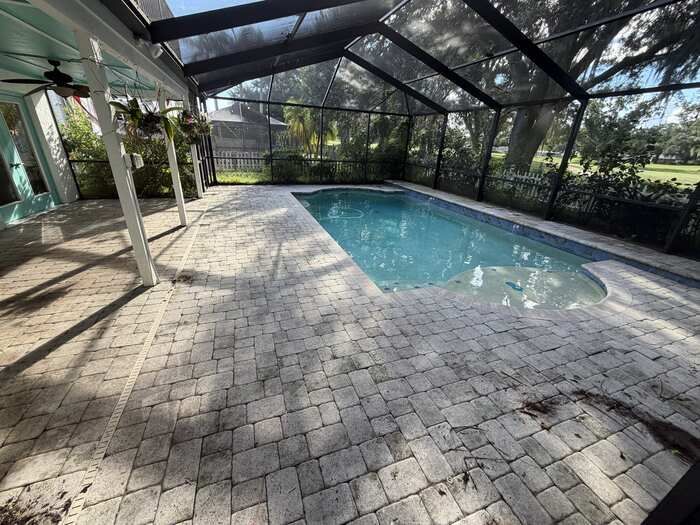
[PHOTO: paver patio half dry with white efflorescence bloom, half wet and clear — Long Lake Ranch]
What causes efflorescence on Florida pavers?
Concrete pavers are made with Portland cement, and cement contains free calcium hydroxide. Water moving up through the paver — from a high water table, irrigation, rain, or the sand base staying wet — carries those salts to the surface, where they react with air and leave calcium carbonate behind.
In Long Lake Ranch, Bexley, and Starkey Ranch the conditions are about as favorable as it gets: new-construction pavers still curing, a shallow water table, daily irrigation, and a rainy season that keeps the base saturated from June through September. That's why it hits hardest in the first one to three years after install and typically shows up strongest in the months right after the summer rains, which is to say right now.
Good news worth stating plainly: it's cosmetic. It does not weaken the paver and it tends to diminish on its own as the free salts work their way out. That process just takes a few years, and nobody wants to look at a hazy pool deck in the meantime.
How do you actually remove it?
Not with pressure. Blasting efflorescence off a paver takes the surface cream layer with it, which leaves the paver looking dull and exposed and makes the next bloom worse. The process that works:
- Identify and test. We test a small area to confirm the deposit is carbonate and to dial in the dilution.
- Dissolve, don't grind. A proprietary efflorescence remover — an acidic cleaner formulated for concrete pavers, not a hardware-store muriatic mix — chemically converts the deposit so it can be rinsed.
- Neutralize and flush. Acid left in the joints will keep working and will burn the paver. The rinse and neutralization step matters as much as the application.
- Re-sand the joints. Any serious cleaning pulls sand. Joints get refilled to the correct depth, which is what keeps the field locked and keeps weeds and ants out.
- Dry fully, then seal. 24 to 72 hours of dry-down depending on humidity. Sealing over damp pavers is how you create the other white haze — the one trapped under the film.
A word on muriatic acid from a big-box store: it will take the efflorescence off, and it will also etch the paver face, strip color, and corrode anything metal nearby. We get called to fix that outcome more often than we'd like, and it is a much bigger job than the original one.
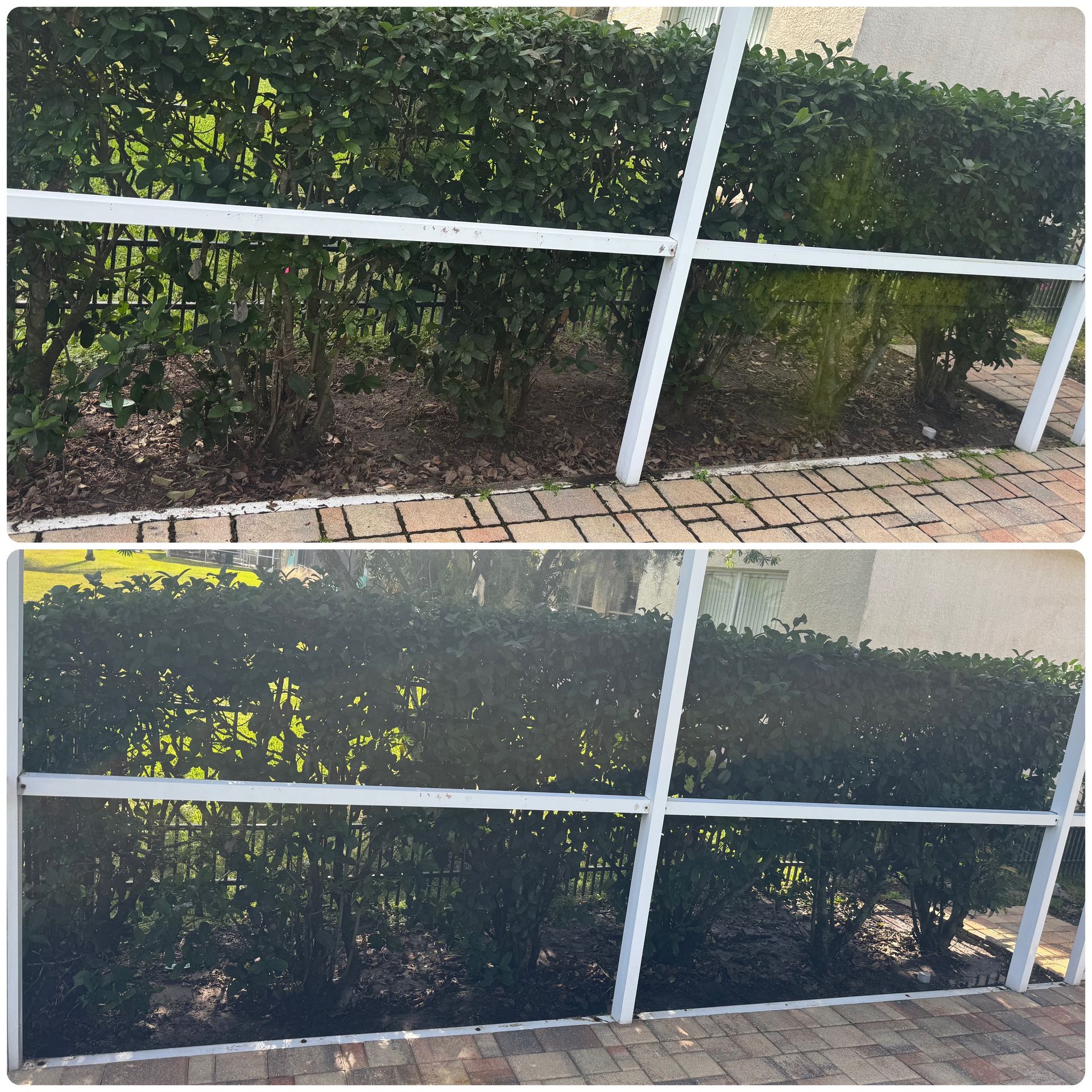
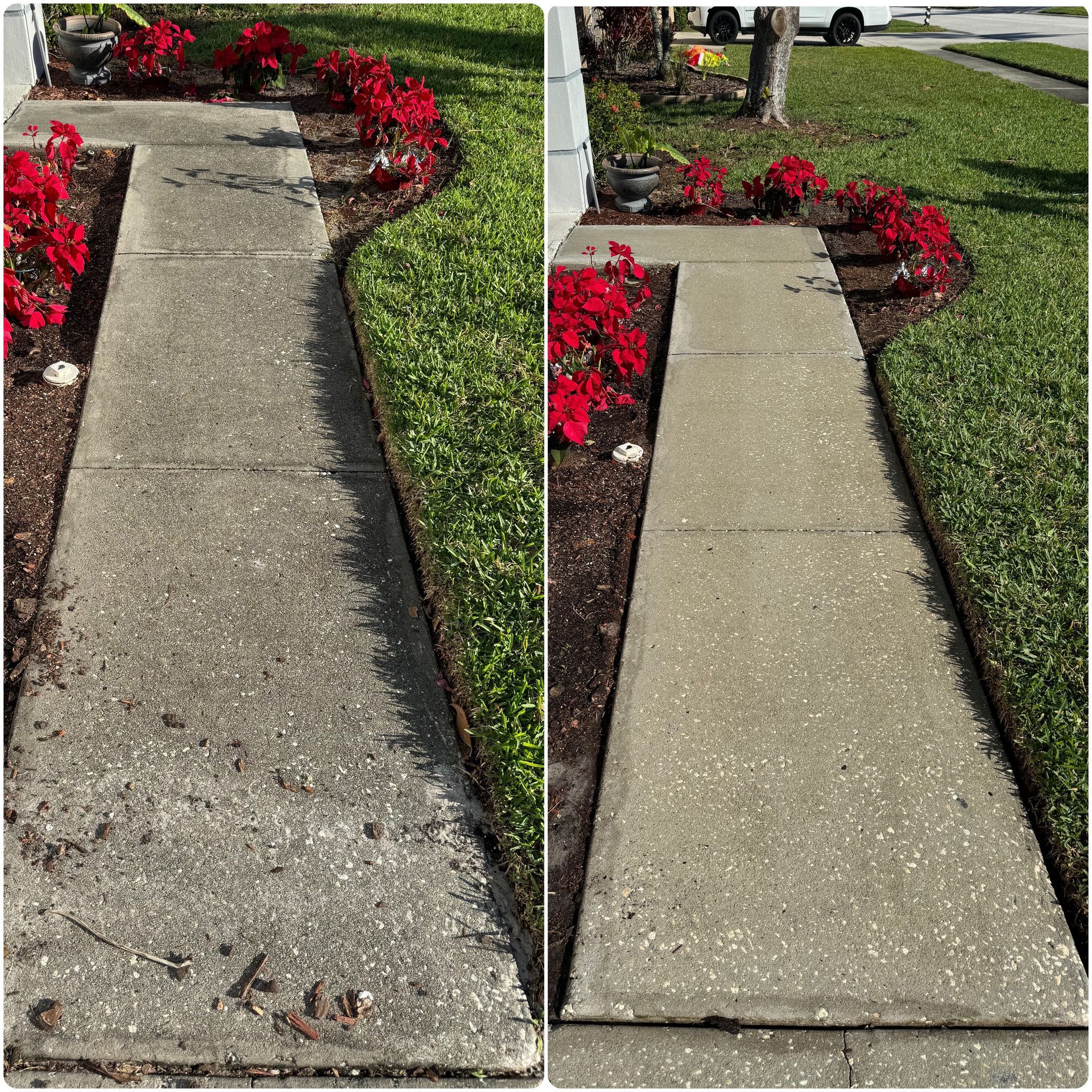
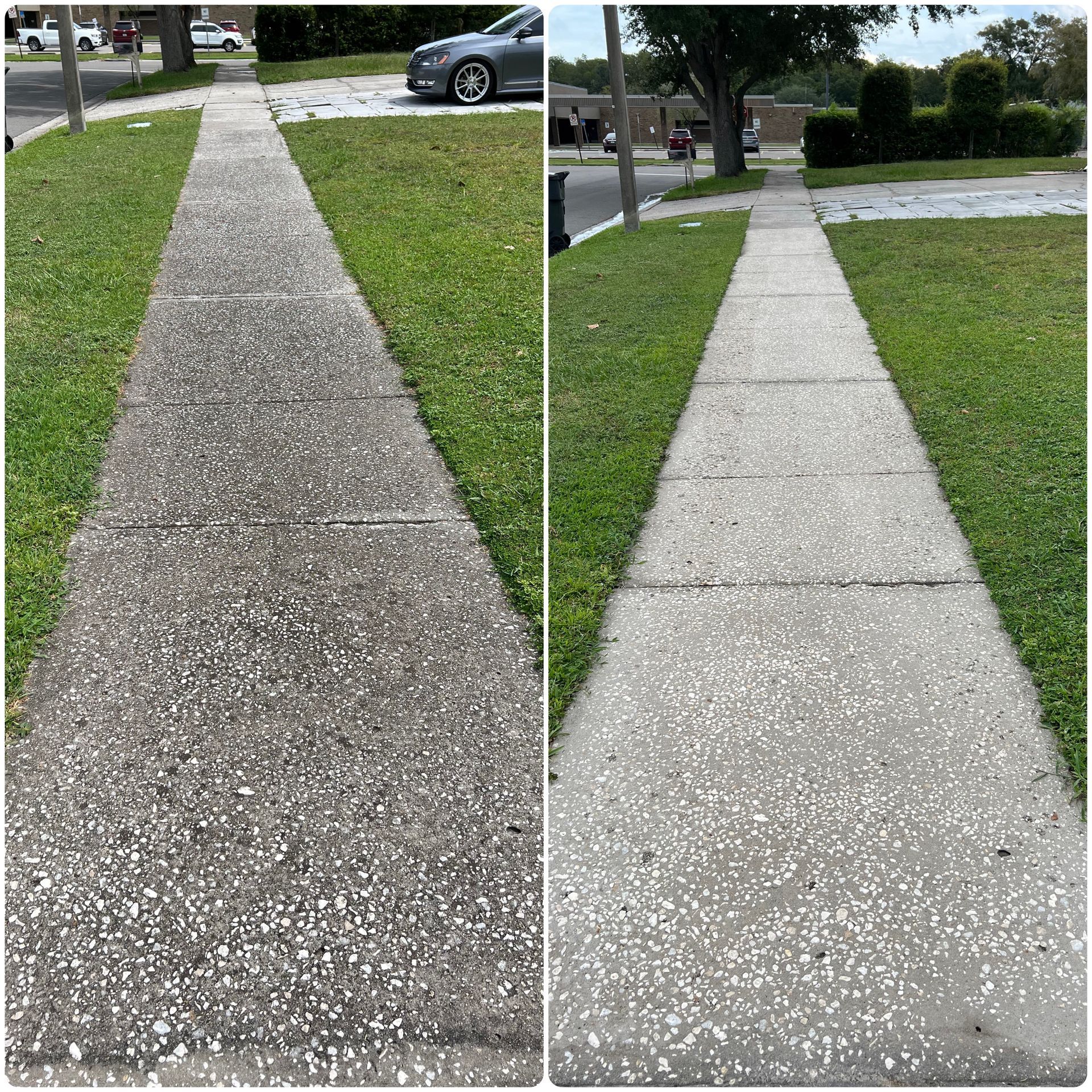
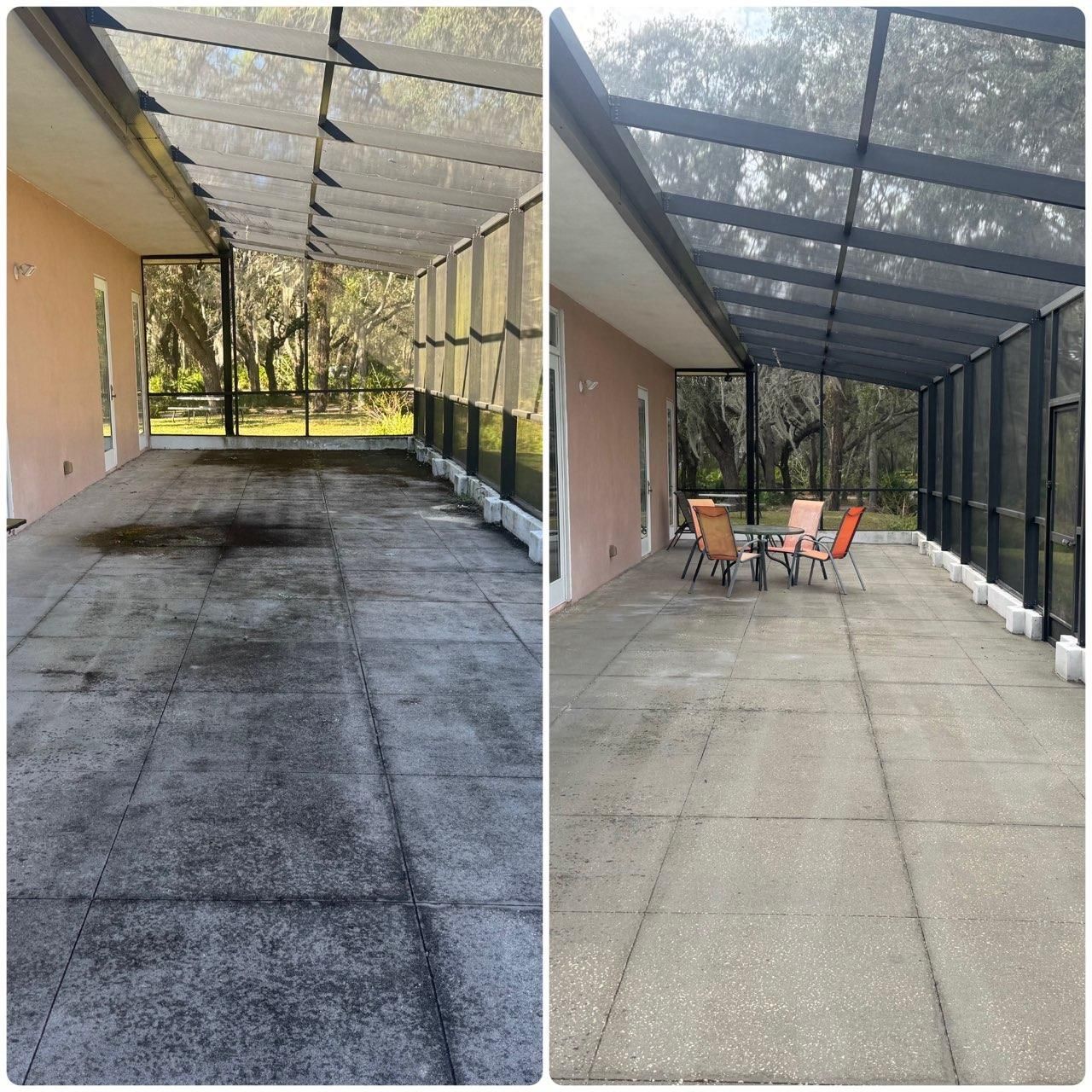
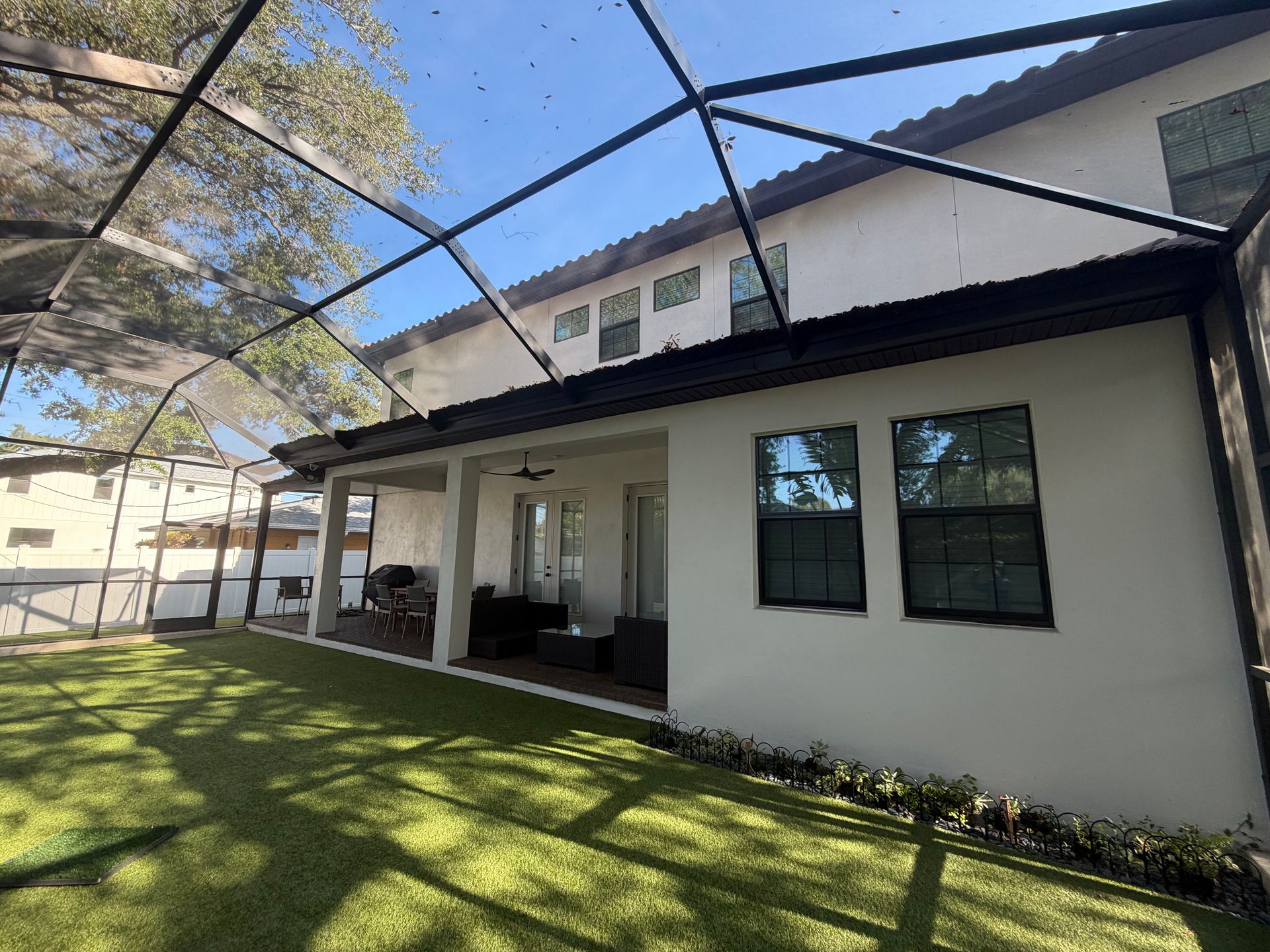
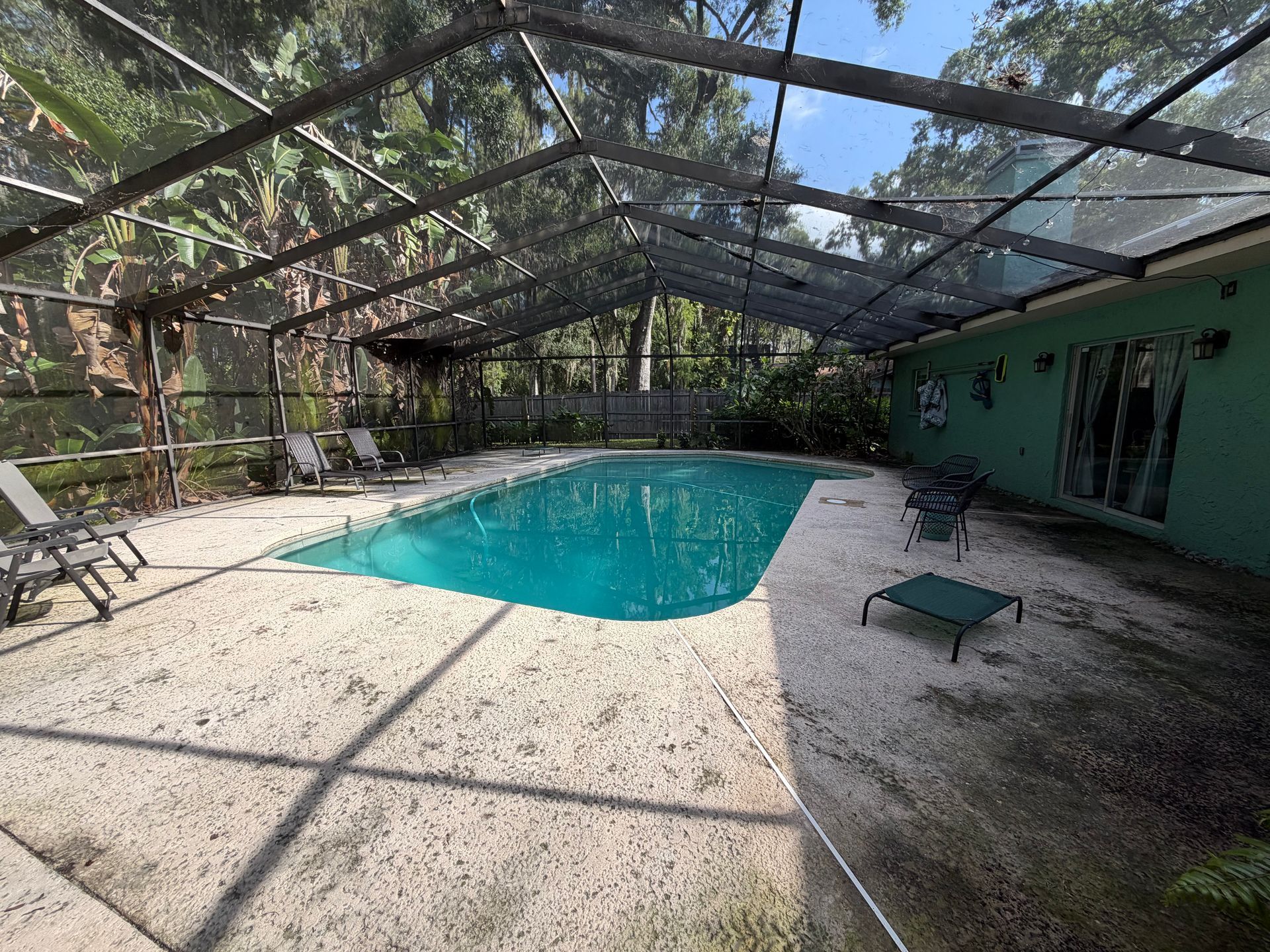
[PHOTO: before/after of efflorescence removal and re-sanded joints on a screened lanai]
Will sealing stop it from coming back?
A quality sealer reduces it significantly but doesn't make it impossible — moisture can still enter from the base below. What sealing does is keep the deposit on top of the film instead of in the pores, so the next time it shows up a routine wash takes care of it. If you're deciding what finish to use, our breakdown on choosing a paver sealer finish walks through matte versus wet-look and how each one behaves in Florida sun.
Two things we always tell clients: aim your irrigation heads away from paver surfaces, and don't seal brand-new pavers in their first 60–90 days. Let them finish their initial bloom first.
Talk to our crew
Efflorescence is one of those problems that looks like a cleaning issue and is actually a chemistry issue, which is exactly the kind of thing our veteran-owned crew enjoys sorting out. Call 813-957-1174 for a free quote — we'll tell you honestly whether you need a cleaning, a strip and reseal, or just patience. See what's included in paver cleaning and sealing in Long Lake Ranch or browse our full exterior cleaning services.