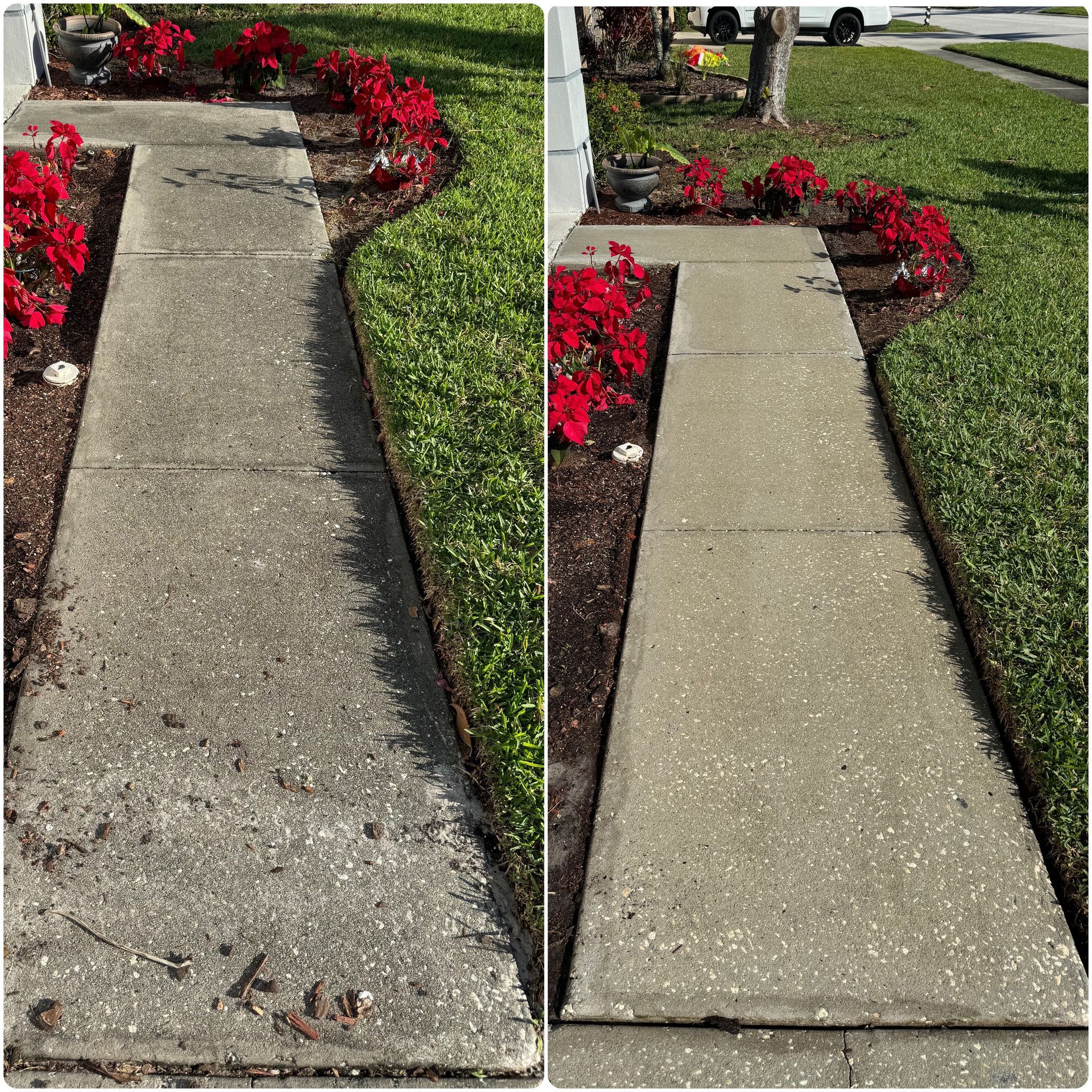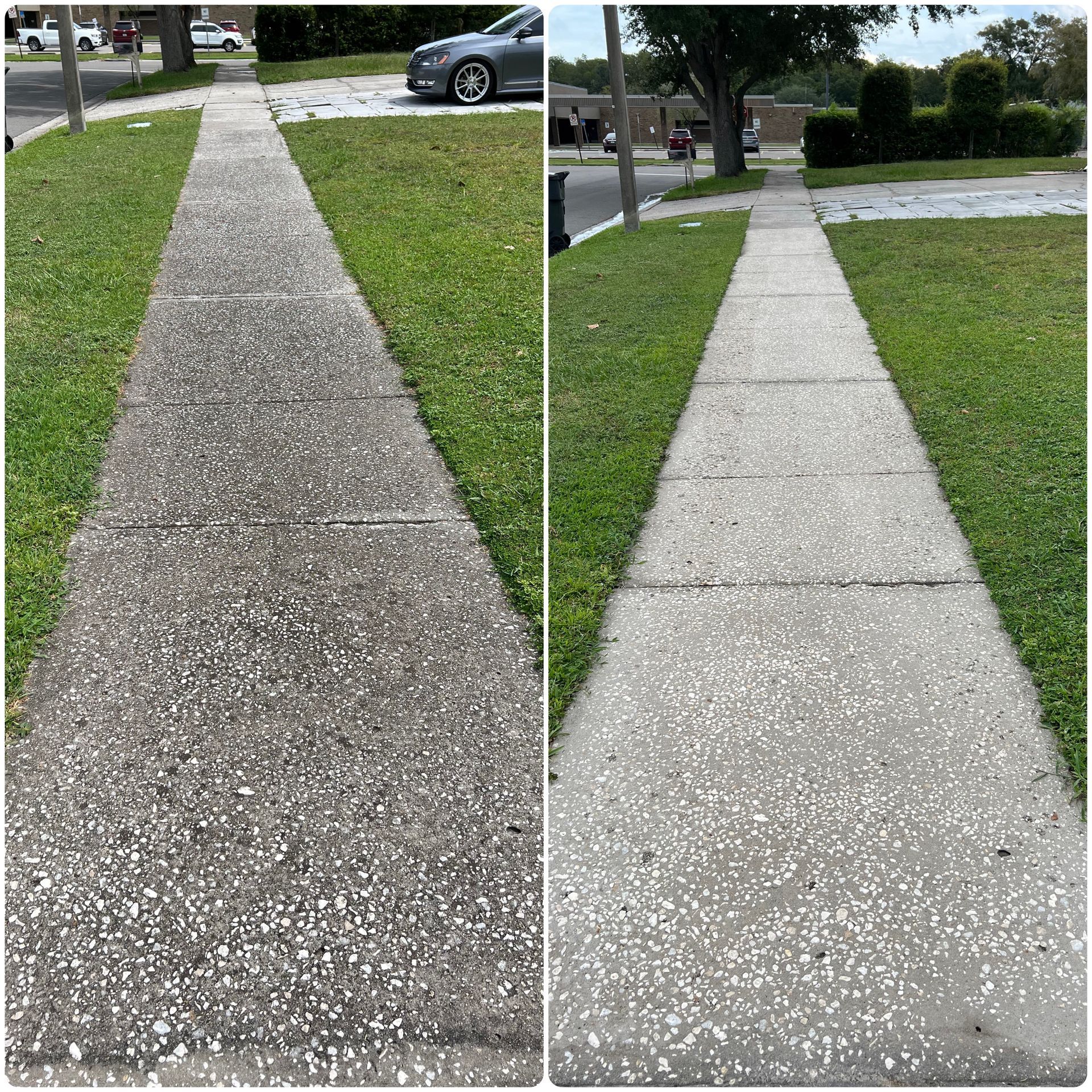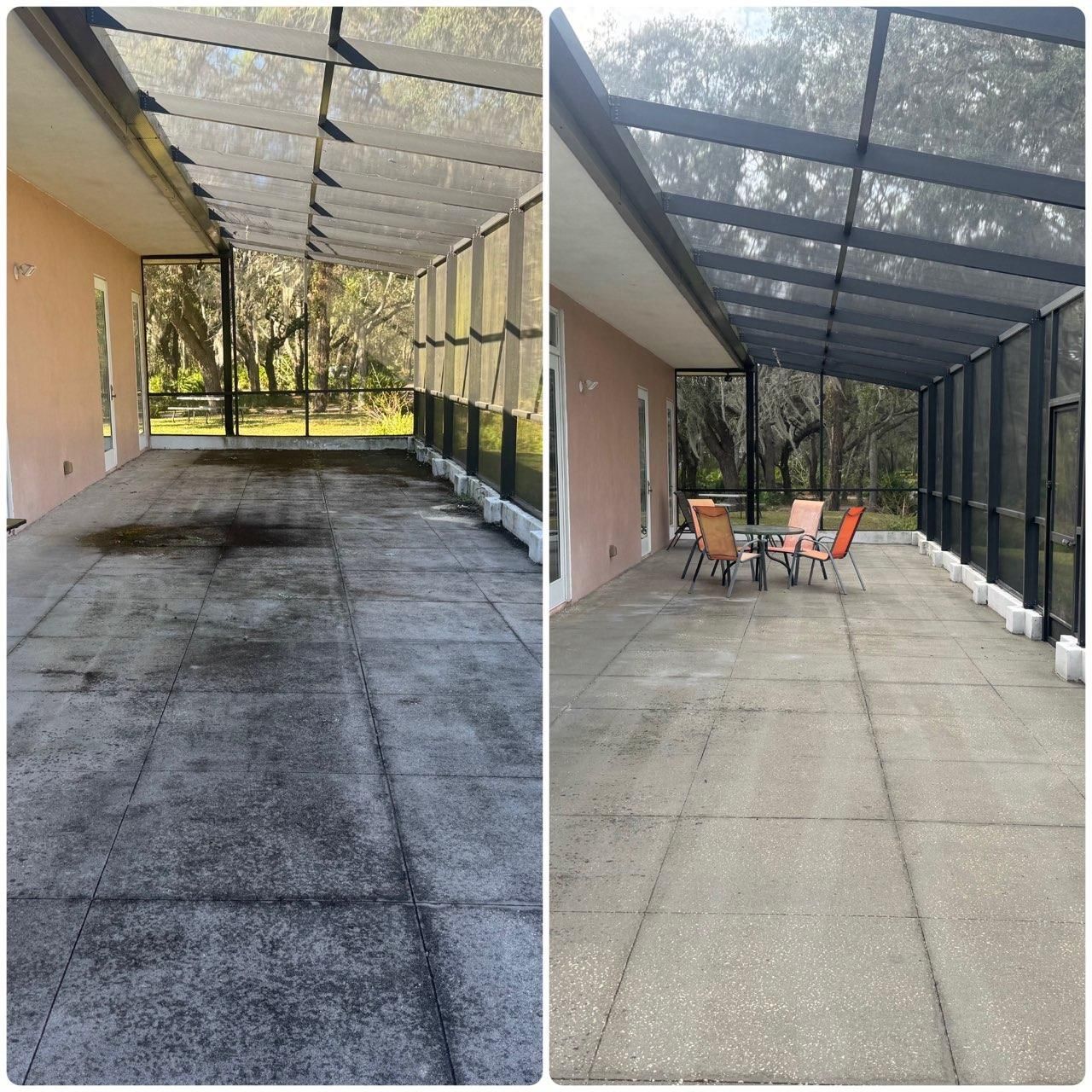
Waterfront House Washing in Culbreath Isles
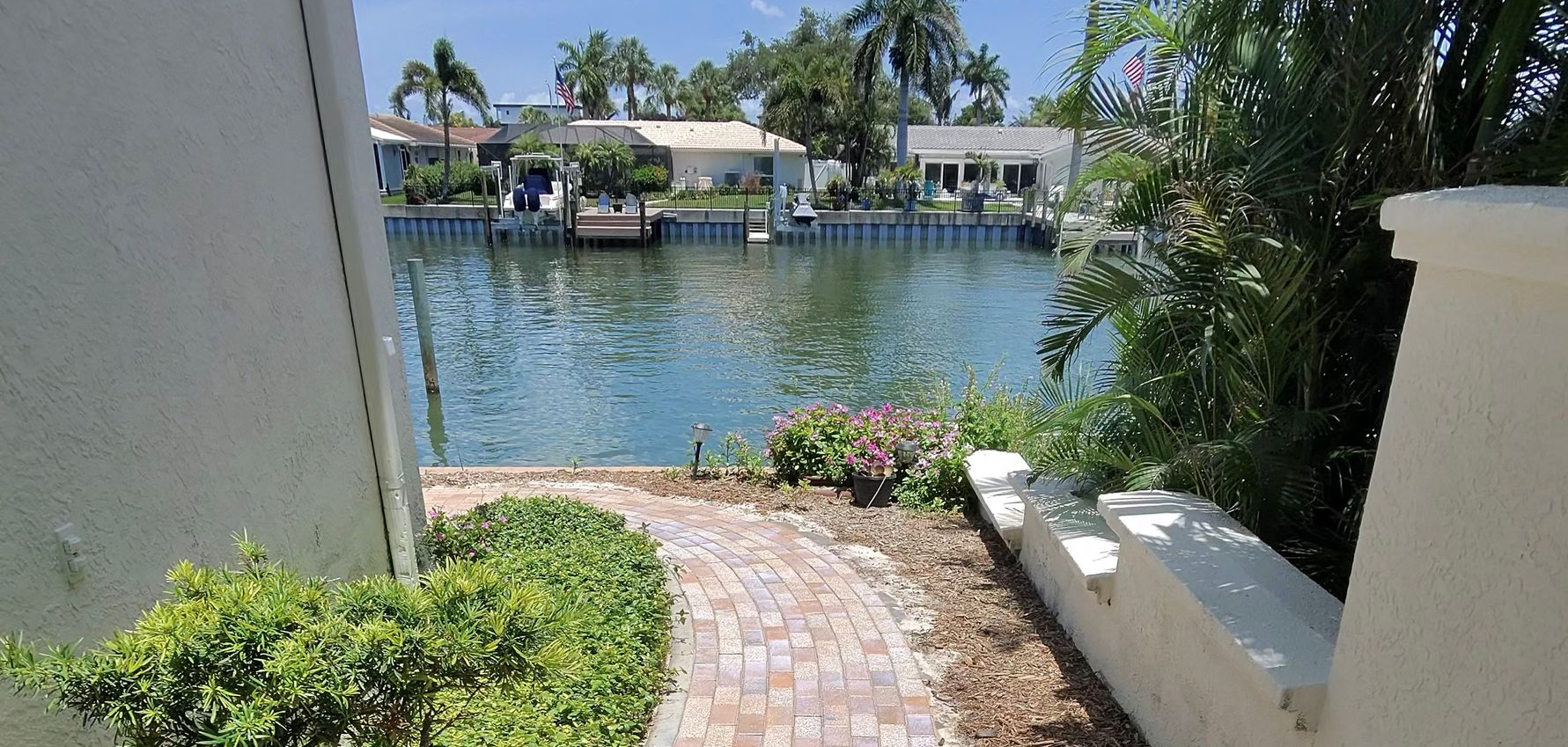
Waterfront house washing in Culbreath Isles should run on roughly a nine- to twelve-month cycle, compared with twelve to eighteen months for a comparable home two miles inland. Salt aerosol coats everything within a few blocks of the bay, it never fully dries off, and it accelerates both biological growth and metal corrosion. A bayfront home does not get dirtier than an inland one — it gets dirty differently, and faster.
Stand on a seawall on Culbreath Isles on a breezy afternoon and you can taste it. Everything facing the water is getting that, continuously, year-round.
What salt actually does to a house
Salt is hygroscopic. That's the technical property that explains almost everything about waterfront exteriors: salt pulls moisture out of the air and holds it. So a salt film on your stucco is not a dry film — it is a permanently damp film, and permanent dampness is what biological growth needs.
That cascades:
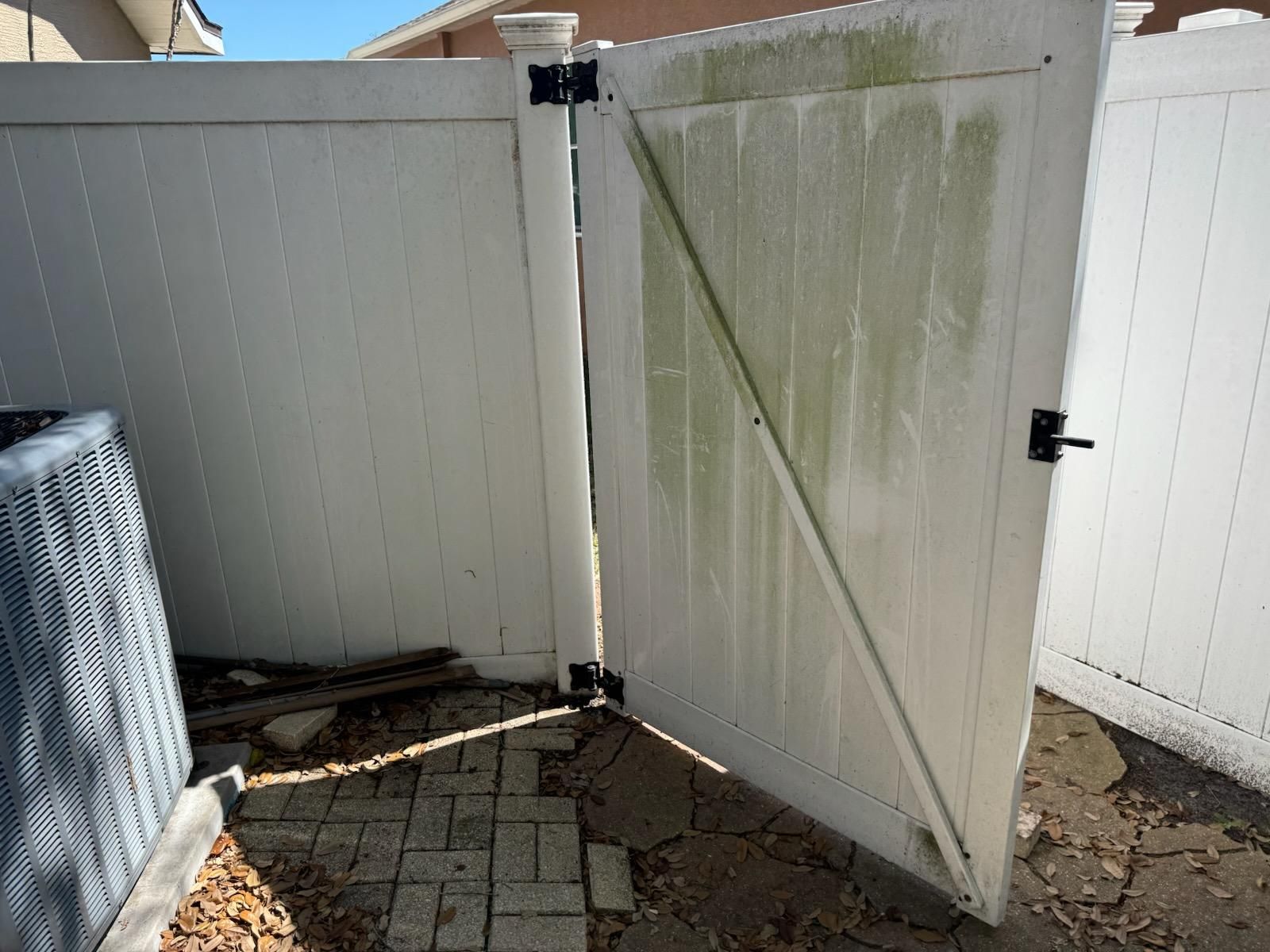
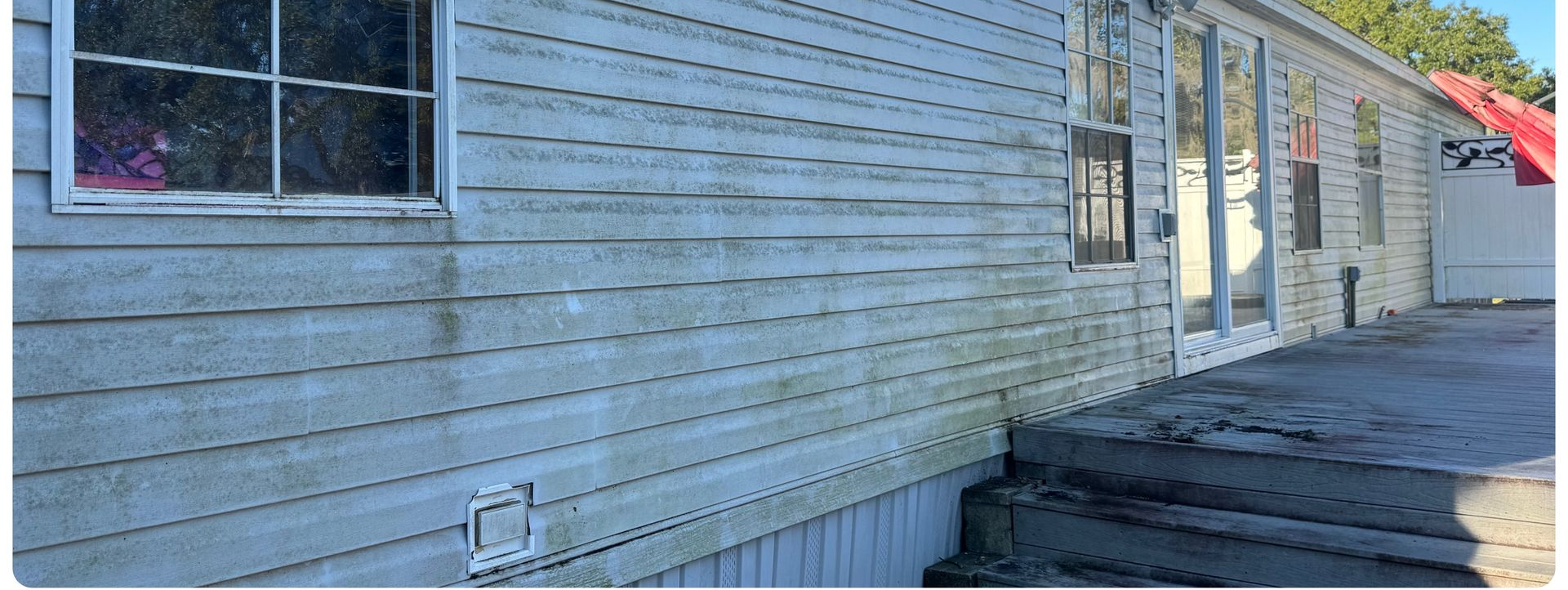
- Algae and mildew establish faster because the surface never dries out, even in the dry season.
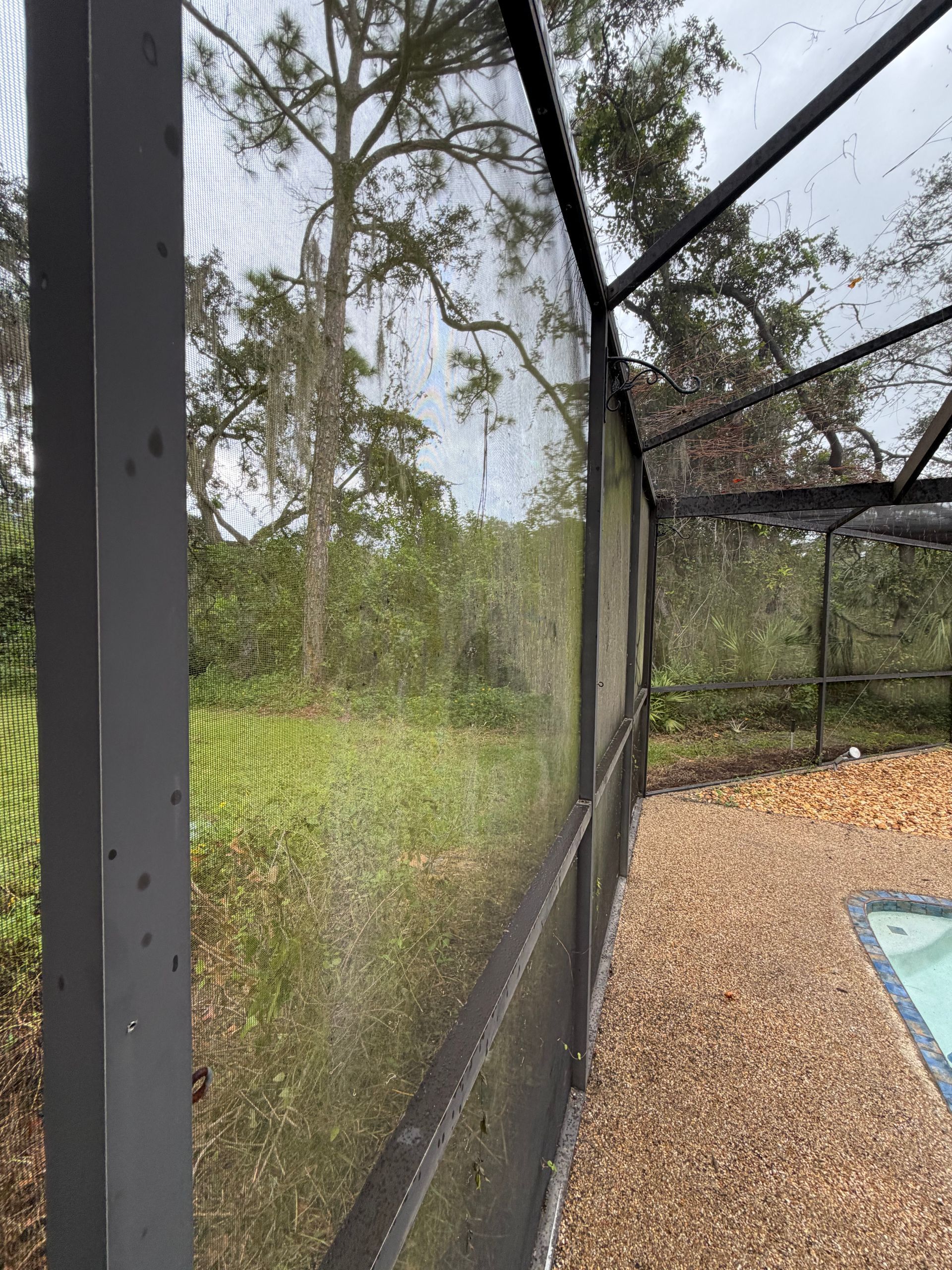
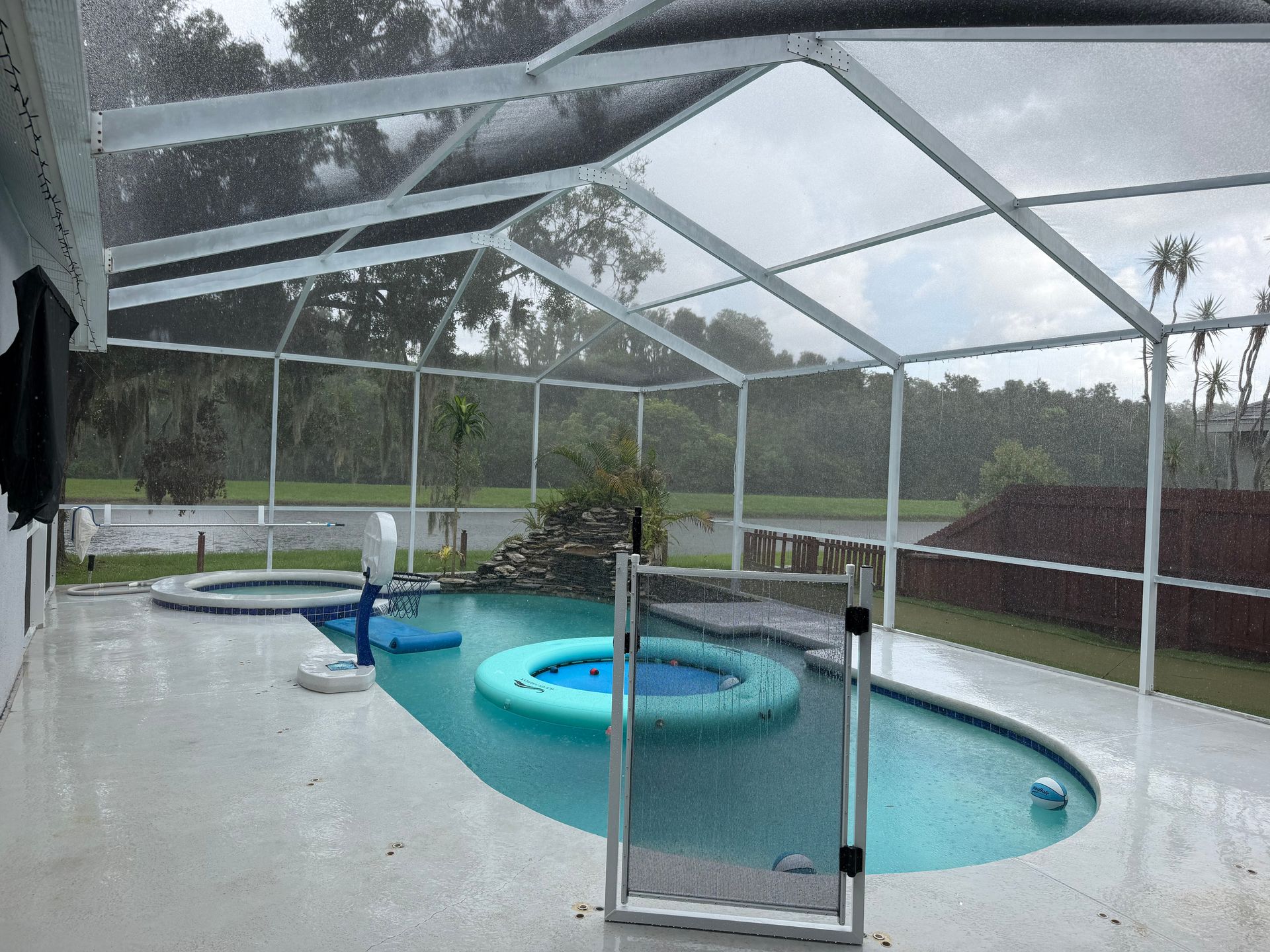
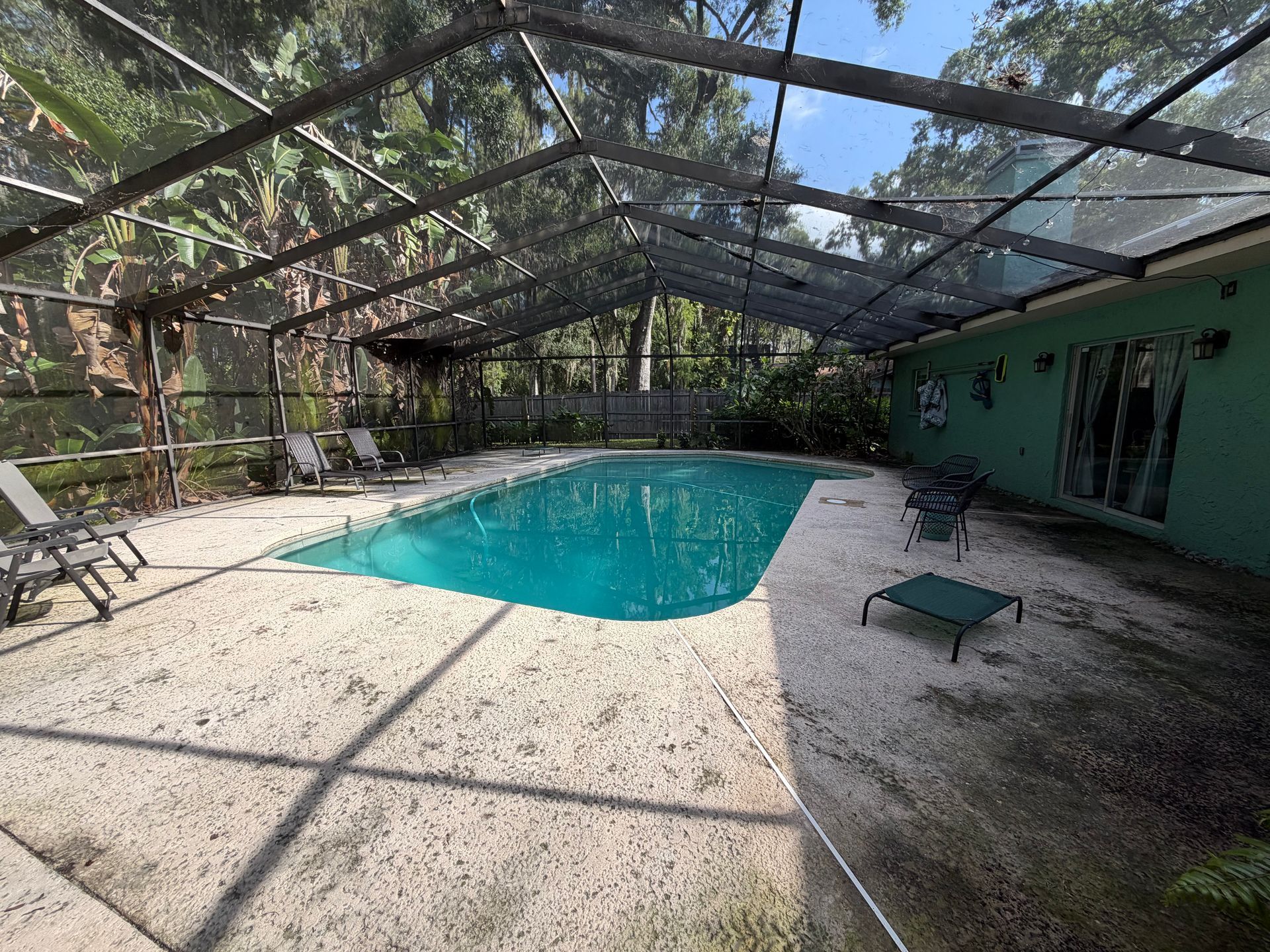
- Aluminum pits. Pool cage frames, railings, window frames and light fixture housings develop chalky white corrosion. Caught early it cleans off; left for years it etches the metal.
- Paint and sealant joints degrade faster from constant moisture cycling at the surface.
- Glass develops a haze that regular washing doesn't clear, because it's mineral deposit, not dirt.
- Hardware stains run — screws, hinges and fixtures weep rust onto stucco and pavers below them.
[PHOTO: white salt corrosion and pitting on an anodized pool cage frame — Culbreath Isles]
Which elevations go first on a bayfront home?
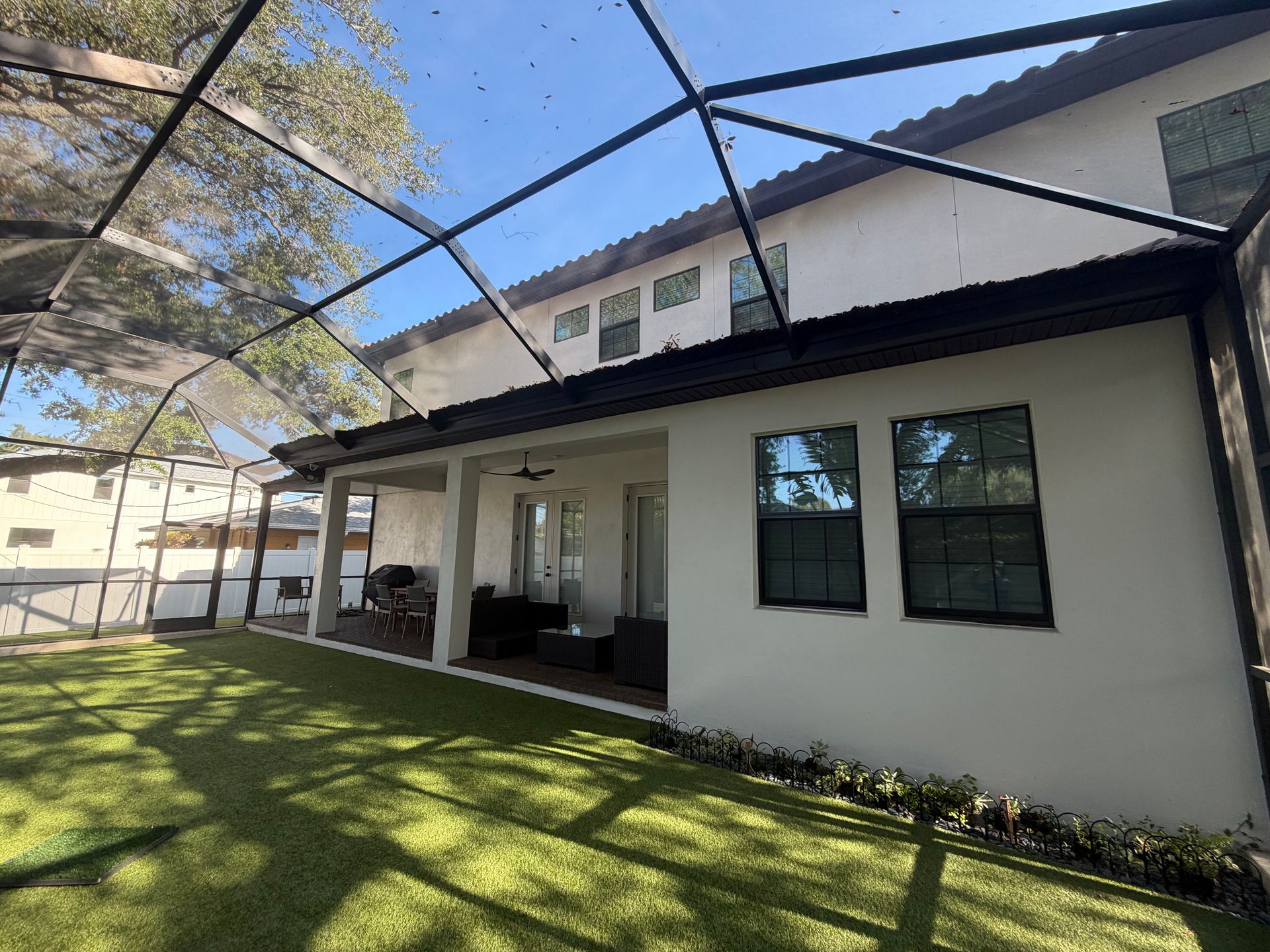
Whichever one faces open water, and it's not subtle. On a typical Culbreath Isles or Beach Park property the water-facing elevation will be visibly a year ahead of the street-facing one. The prevailing breeze does the rest — the side that catches the afternoon wind off the bay takes the heaviest load.
This is why a half-house wash is a false economy on the water. The water side needs more frequency than the street side, but washing only one leaves you with a house that reads two different colors from the dock.
How often should a waterfront home be washed?
- Water-facing elevations, cage frame and railings: every 9 to 12 months
- Full house exterior: annually
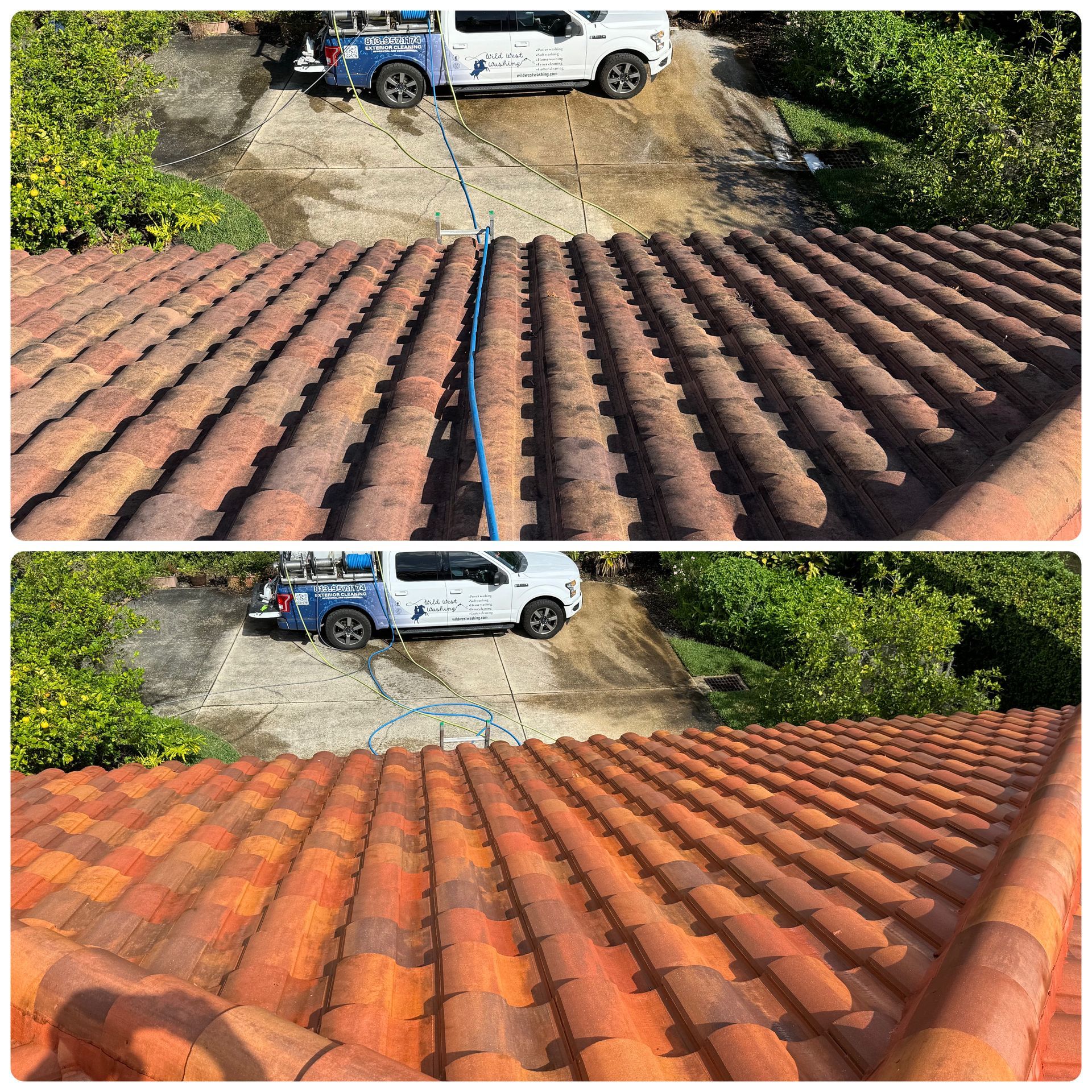
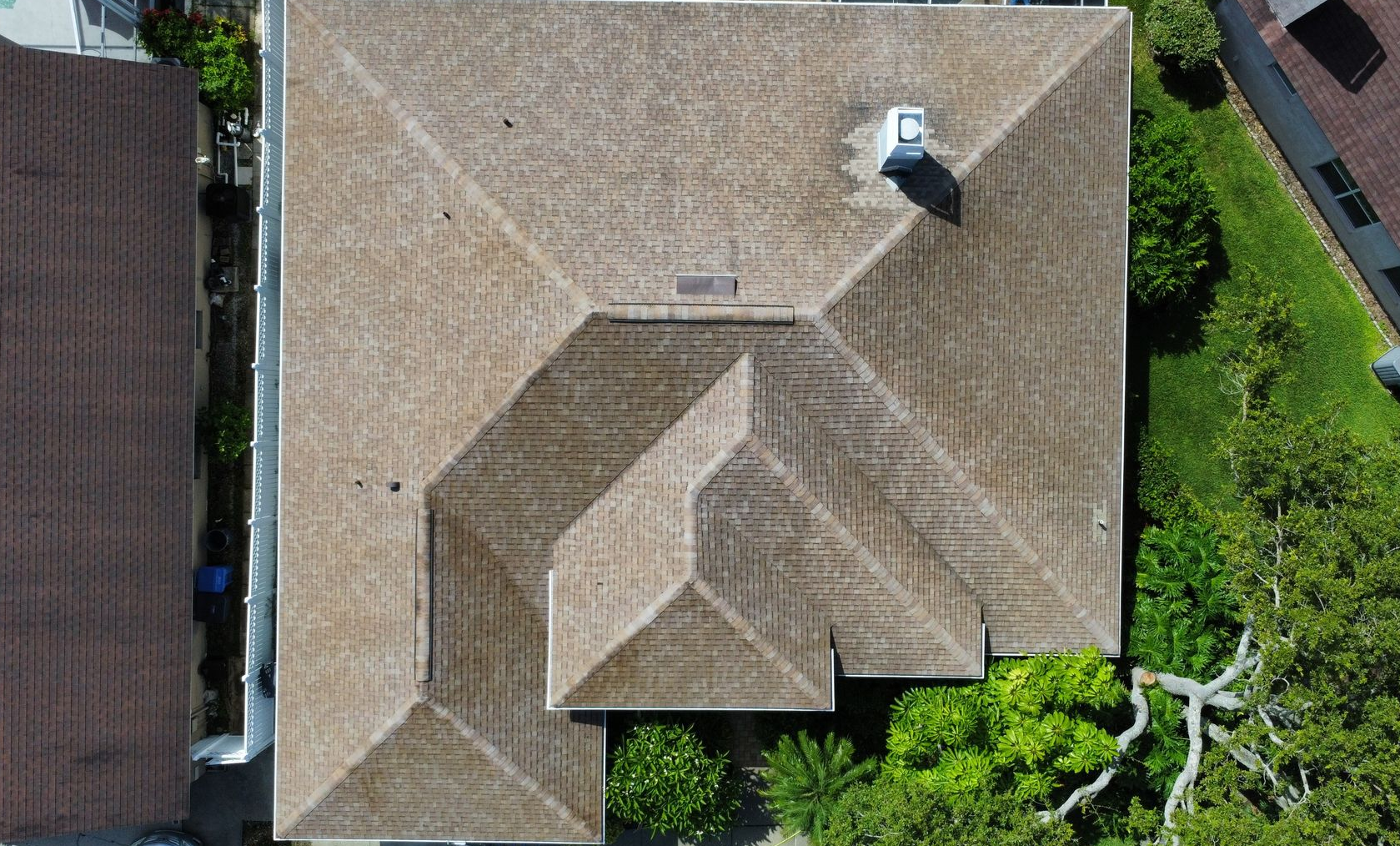
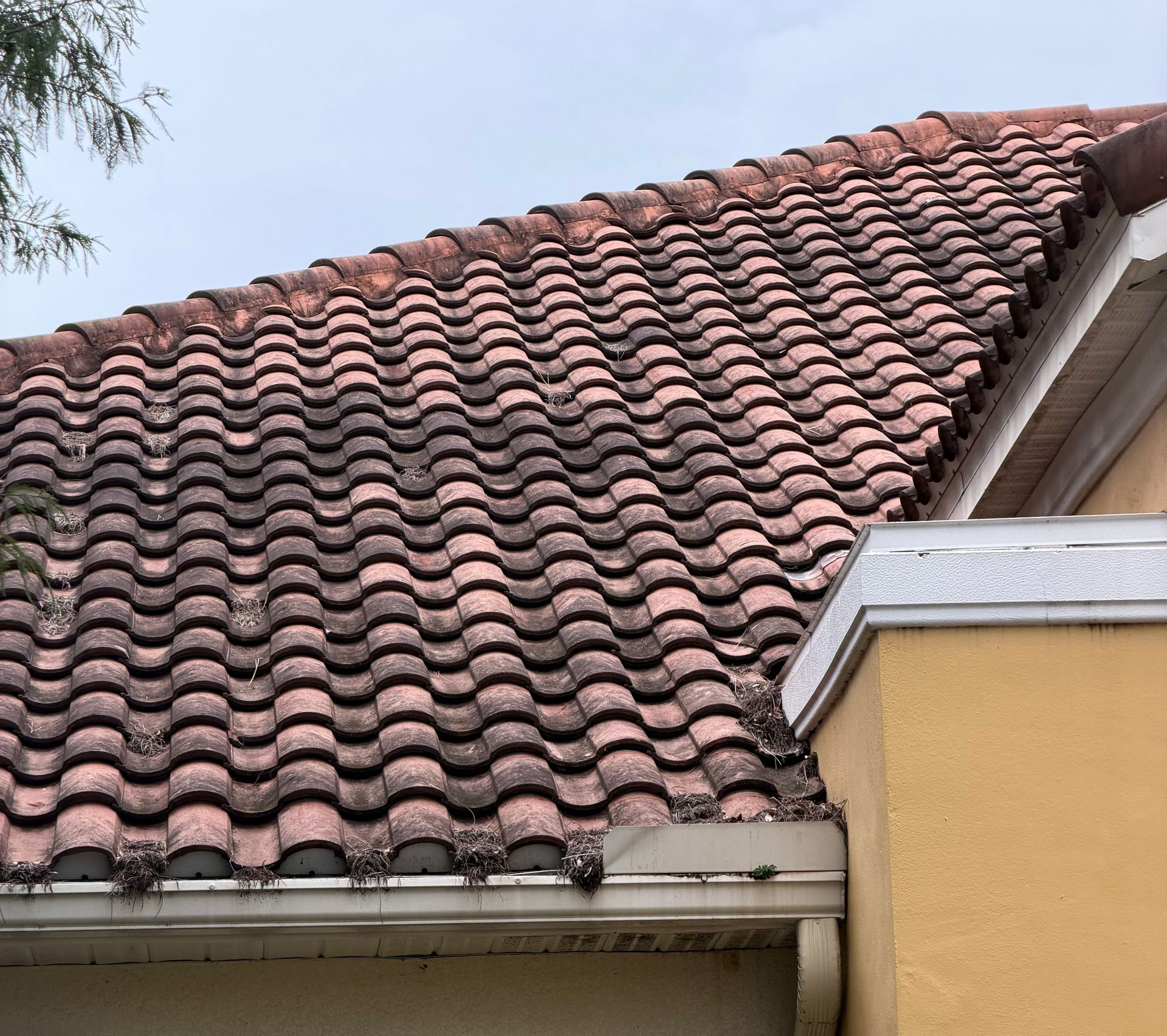
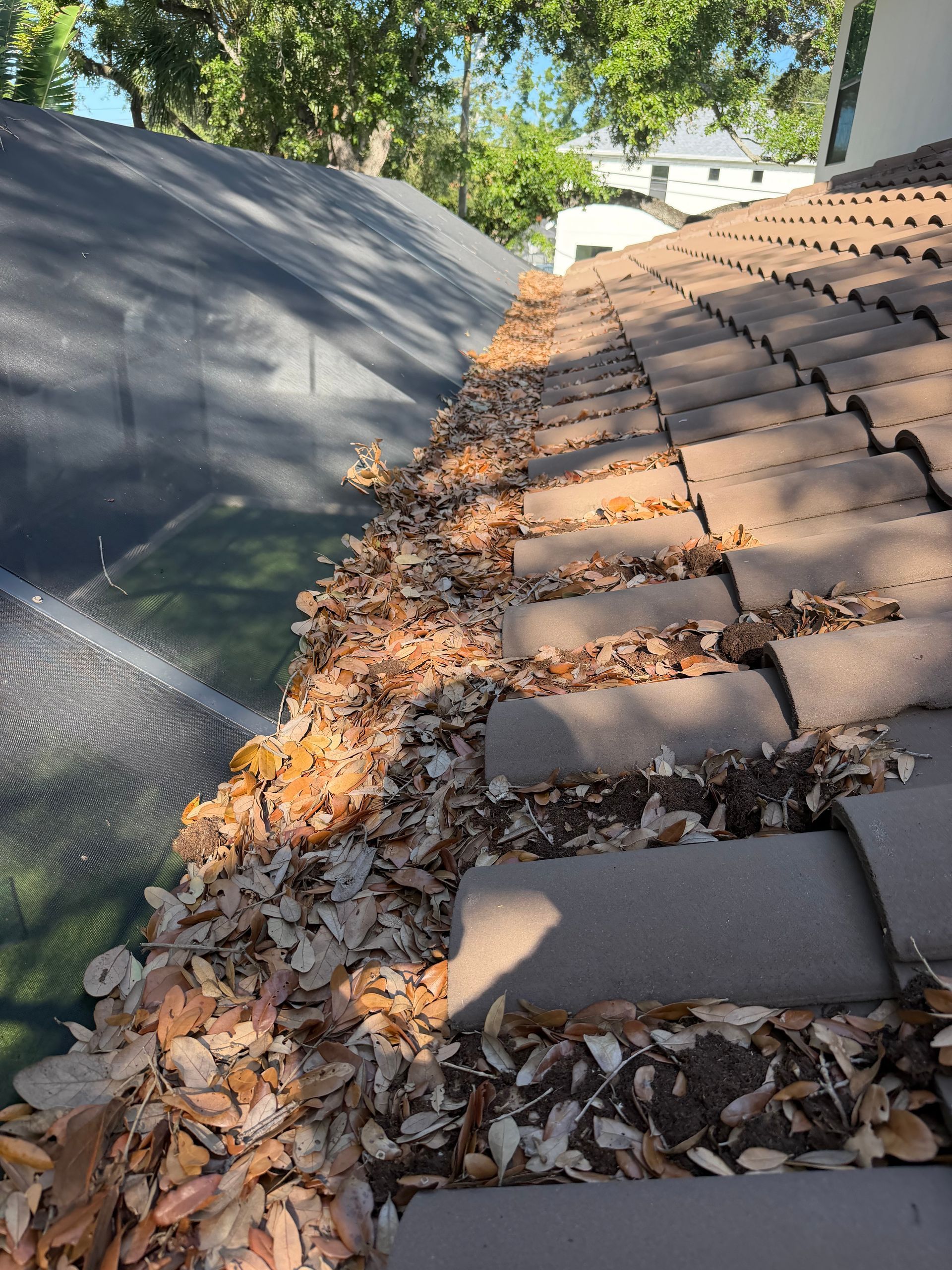
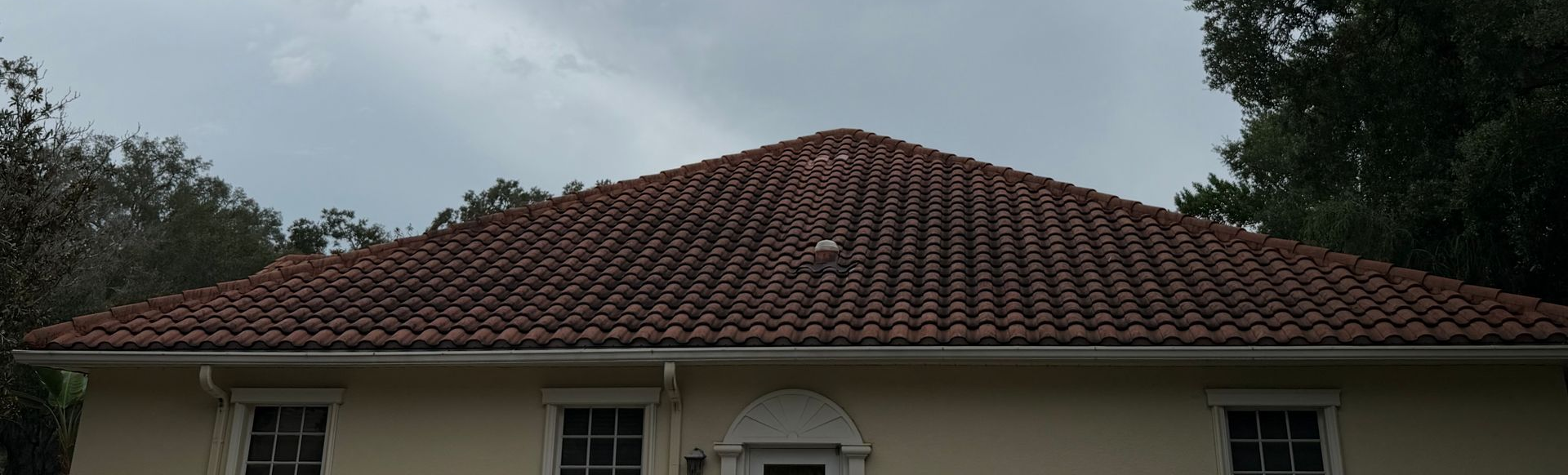
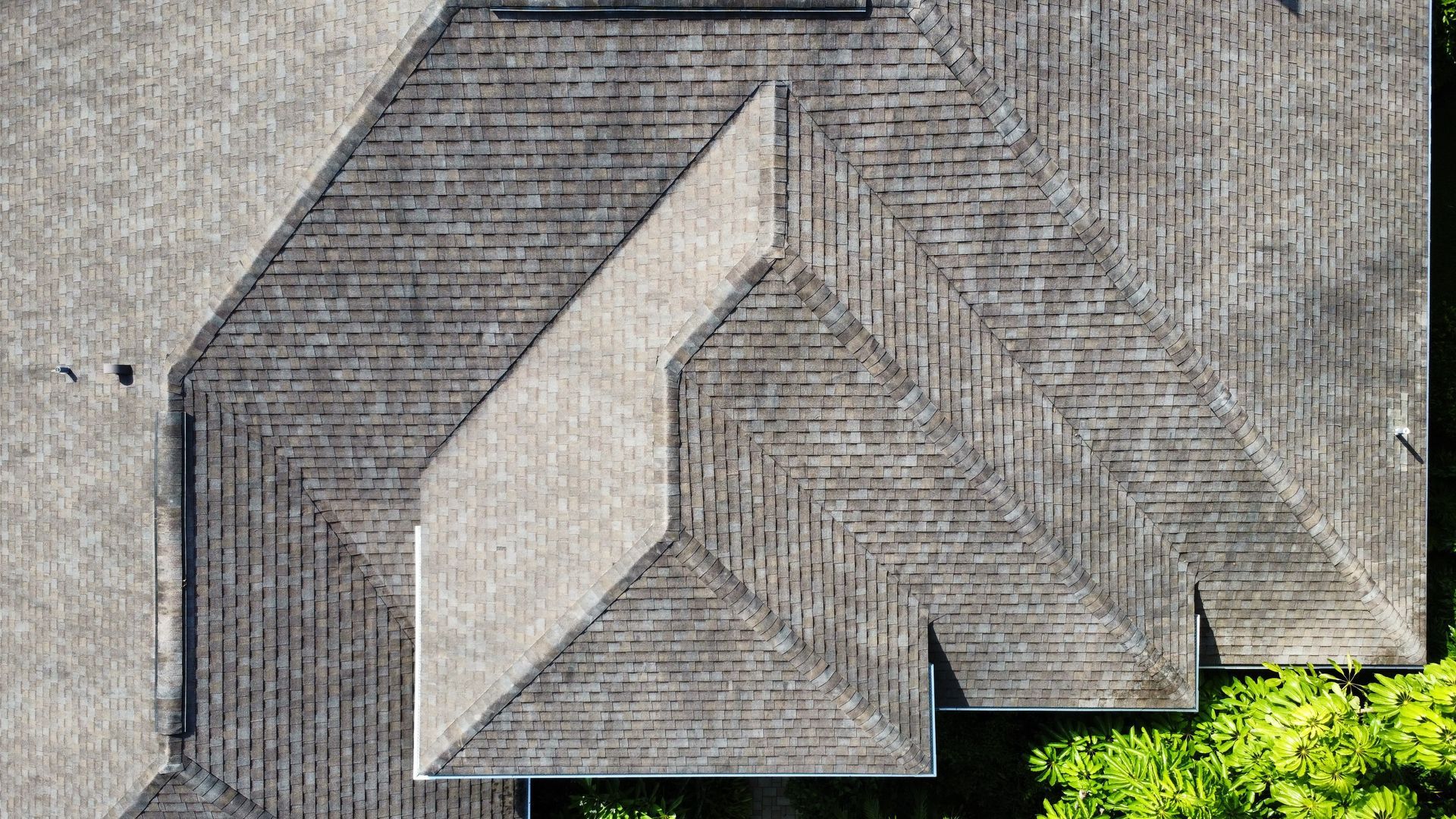
- Roof: every 18 to 24 months — faster than inland, because the humidity off the water never breaks
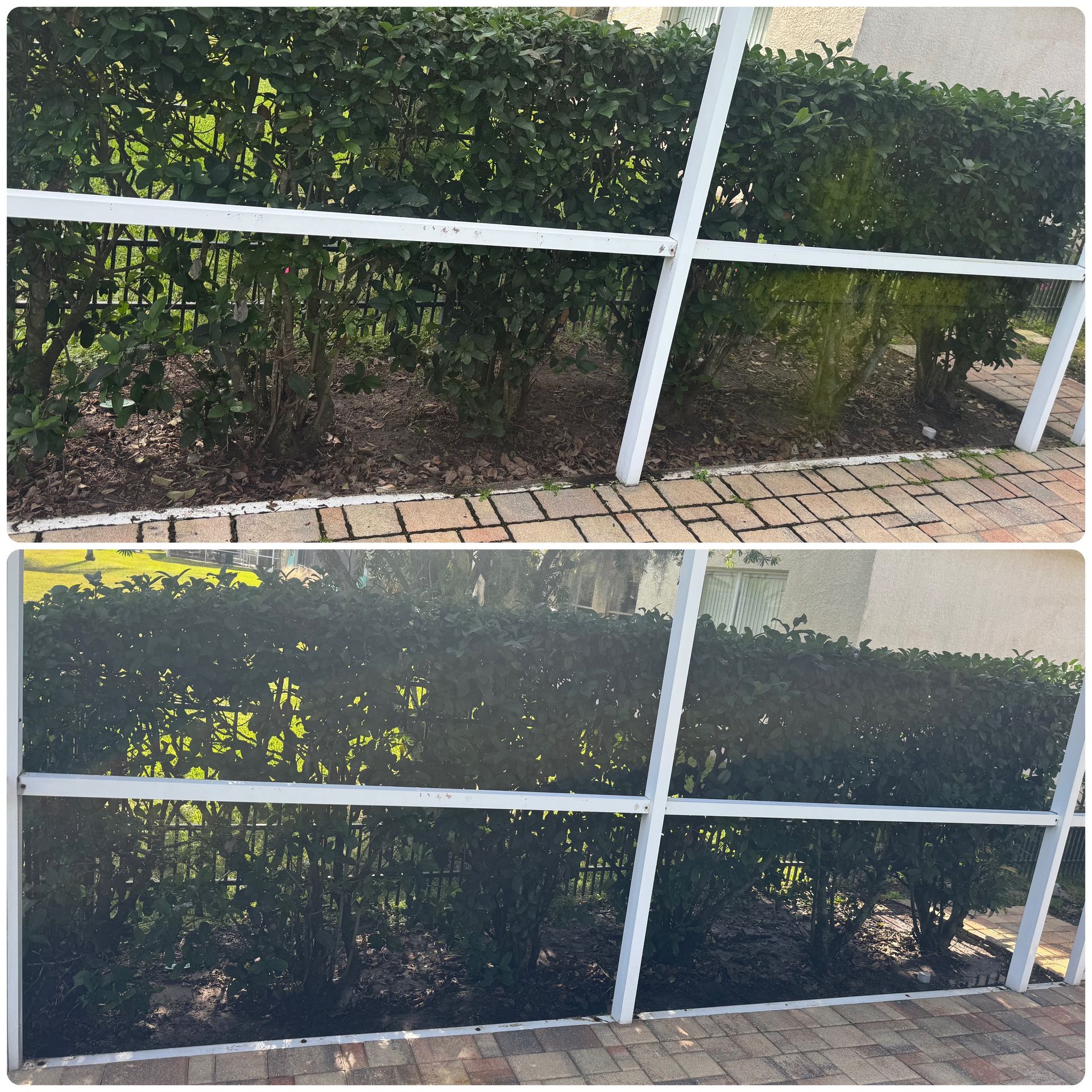
- Glass and screens: twice a year if you want them actually clear
- Seawall and dock: annually, and we cover that separately in our piece on dock and seawall cleaning in Tampa
Homes with a boat lift, a covered slip or heavy mature landscape on the water side move toward the short end of every one of those.
The right process for salt-loaded surfaces
The sequence is different from an inland house, and the difference is a dedicated rinse step most crews skip:
- Flood rinse first. Before any chemistry, the surface gets a low-pressure freshwater flood to dissolve and carry off loose salt. Applying a cleaning solution over a salt crust just makes salty cleaning solution.
- Soft wash the biological growth. Low pressure, measured chemistry, proper dwell time, elevation by elevation.
- Metal treated separately. Cage frames, railings and hardware get a pH-appropriate product — not the wall mix, which is too alkaline for anodized aluminum.
- Mineral deposit on glass gets its own treatment. It is not dirt and it does not come off with soap.
- Final freshwater rinse, top to bottom, with runoff managed away from the seawall and the water.
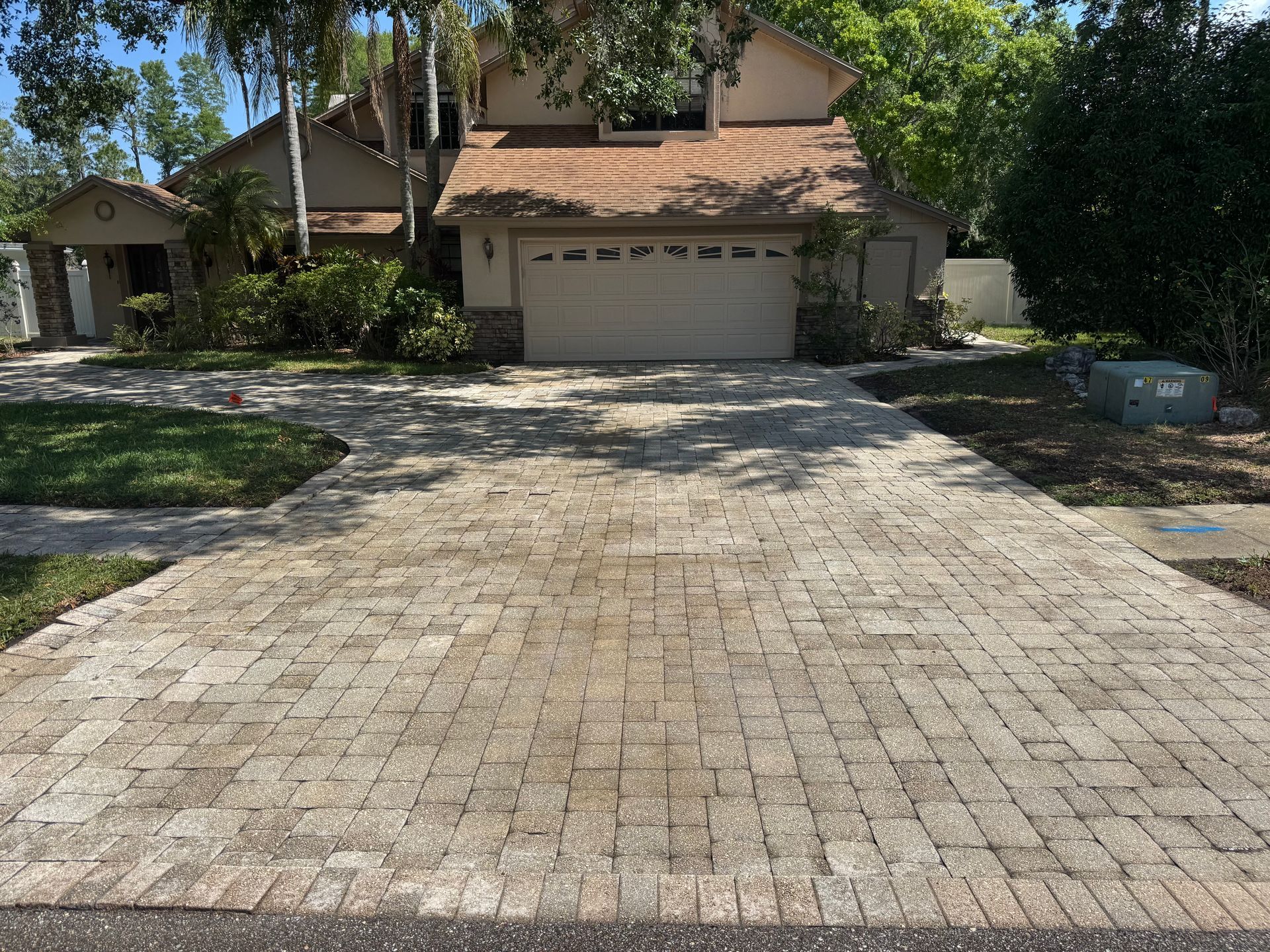
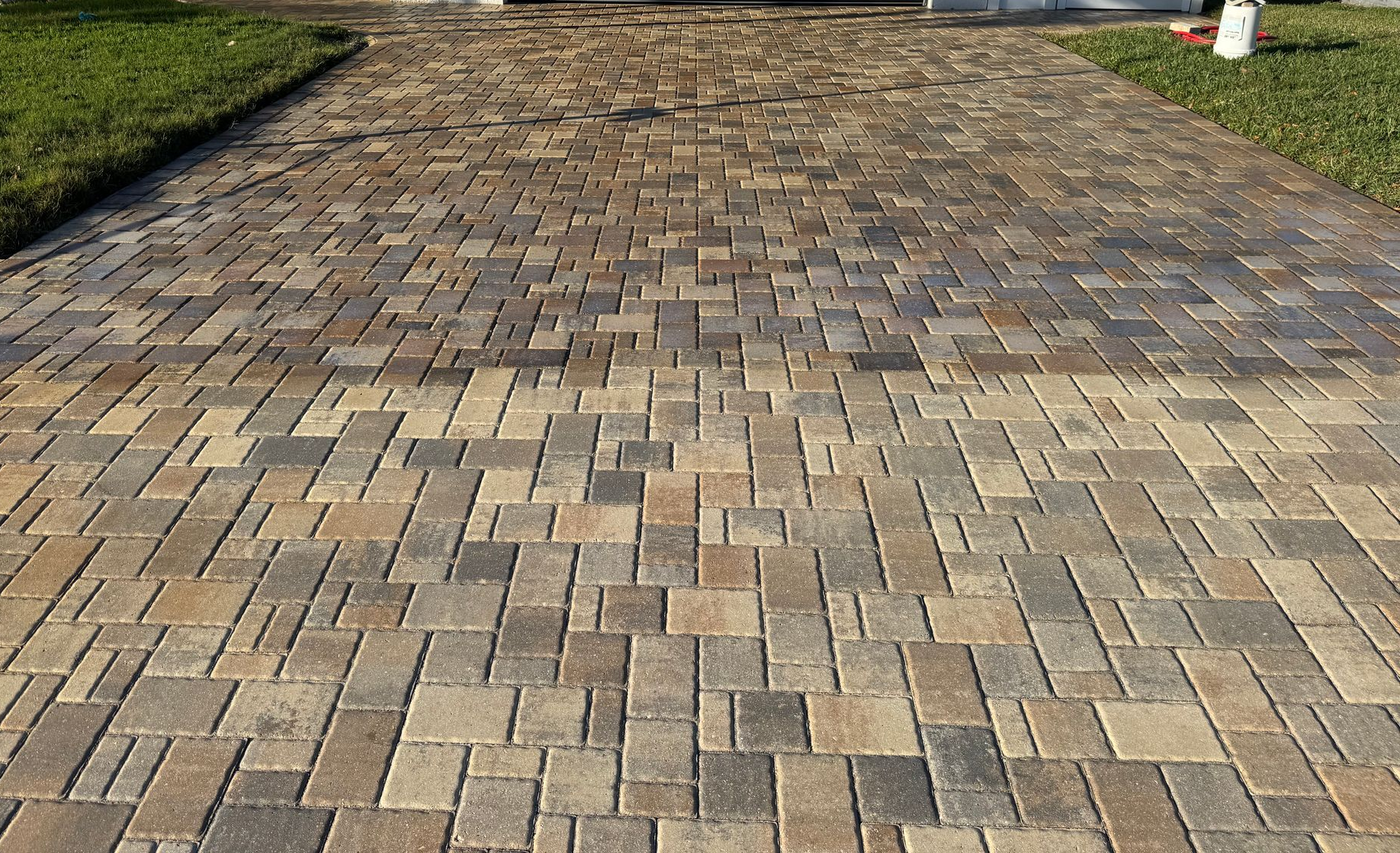
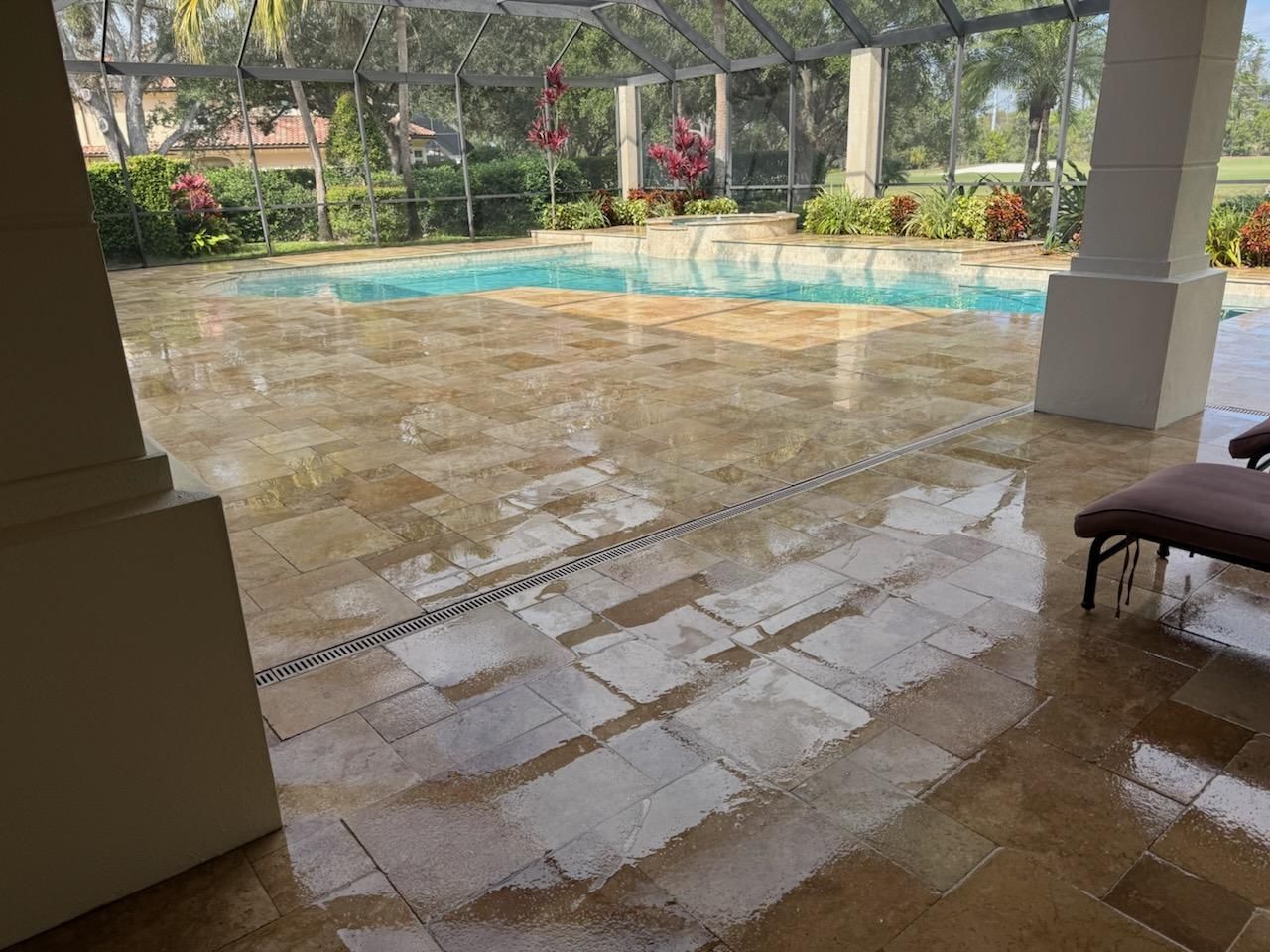
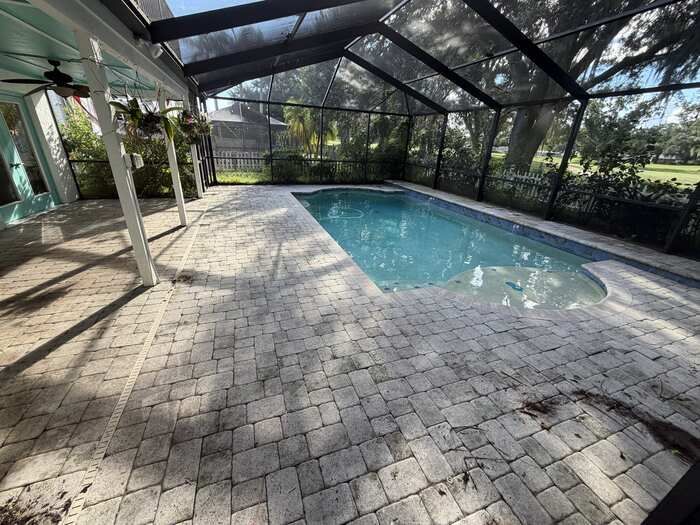
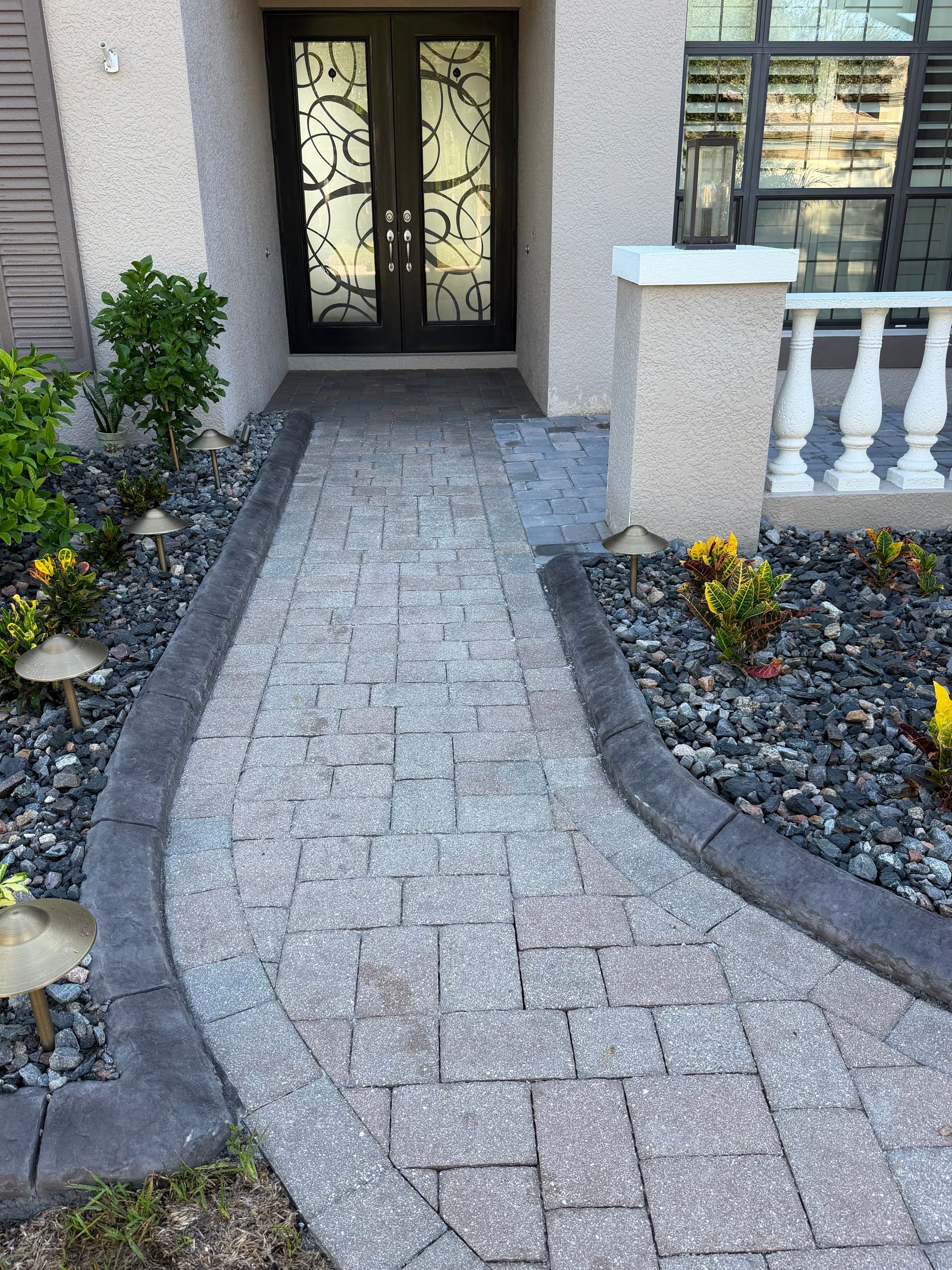
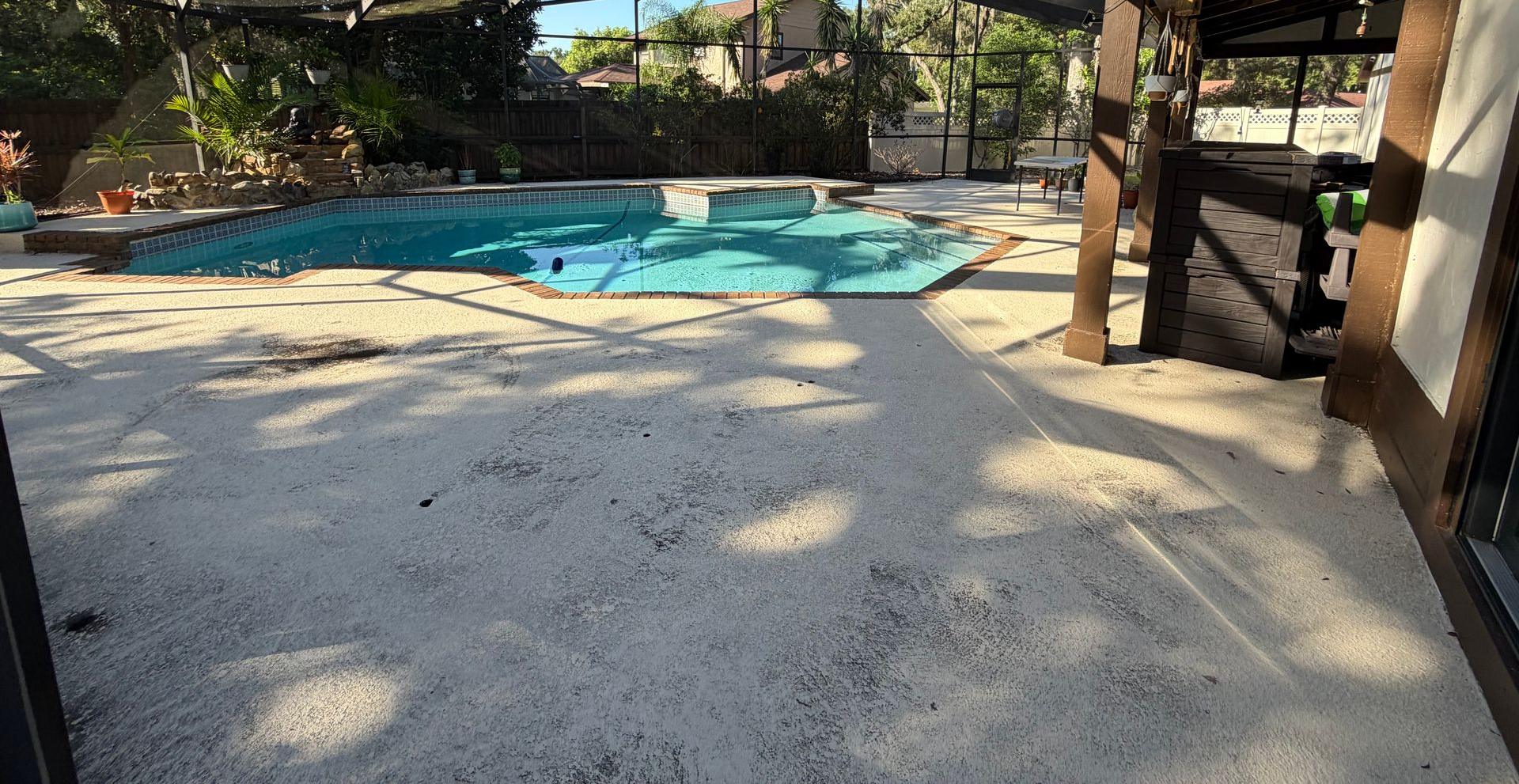
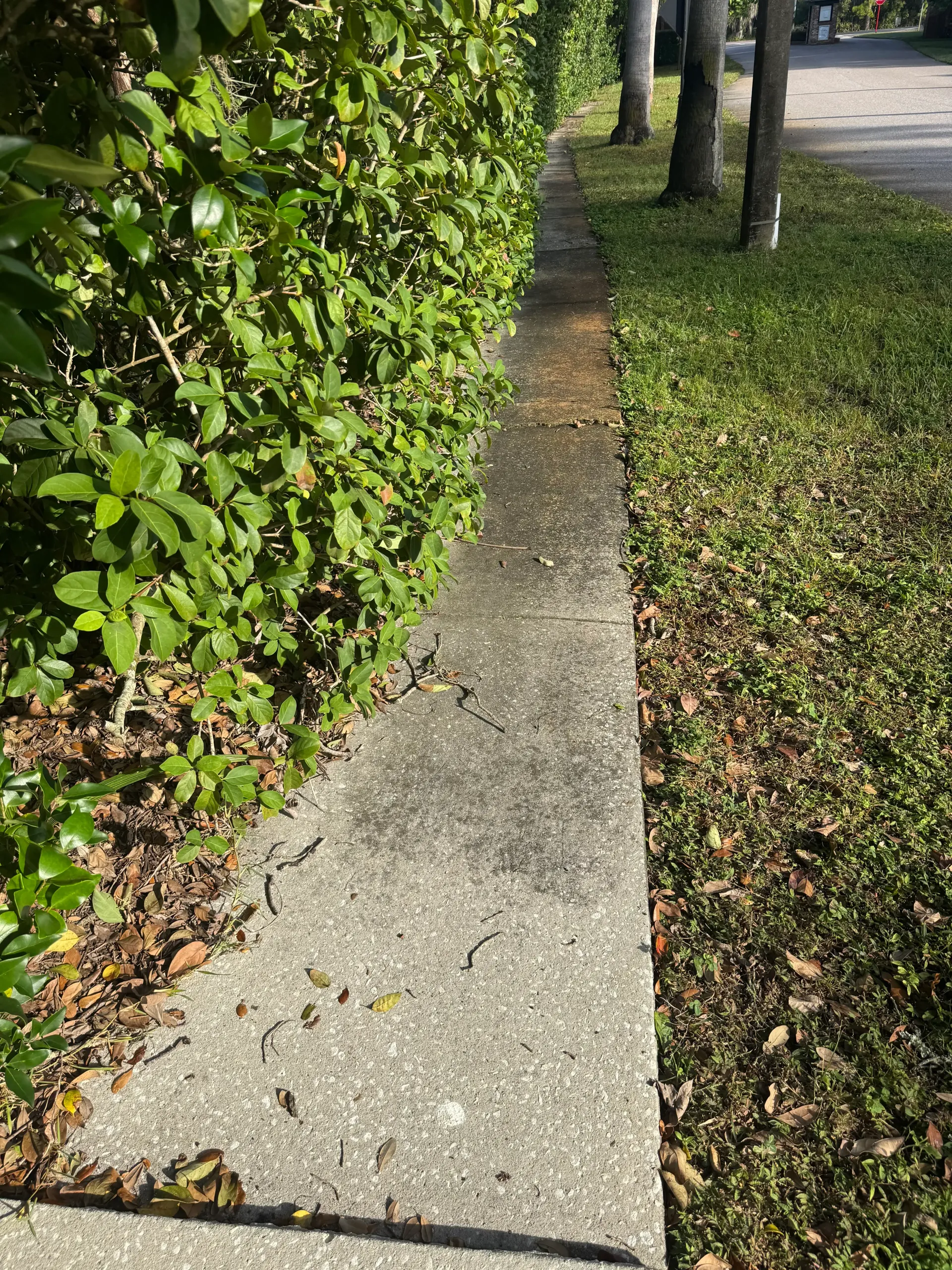
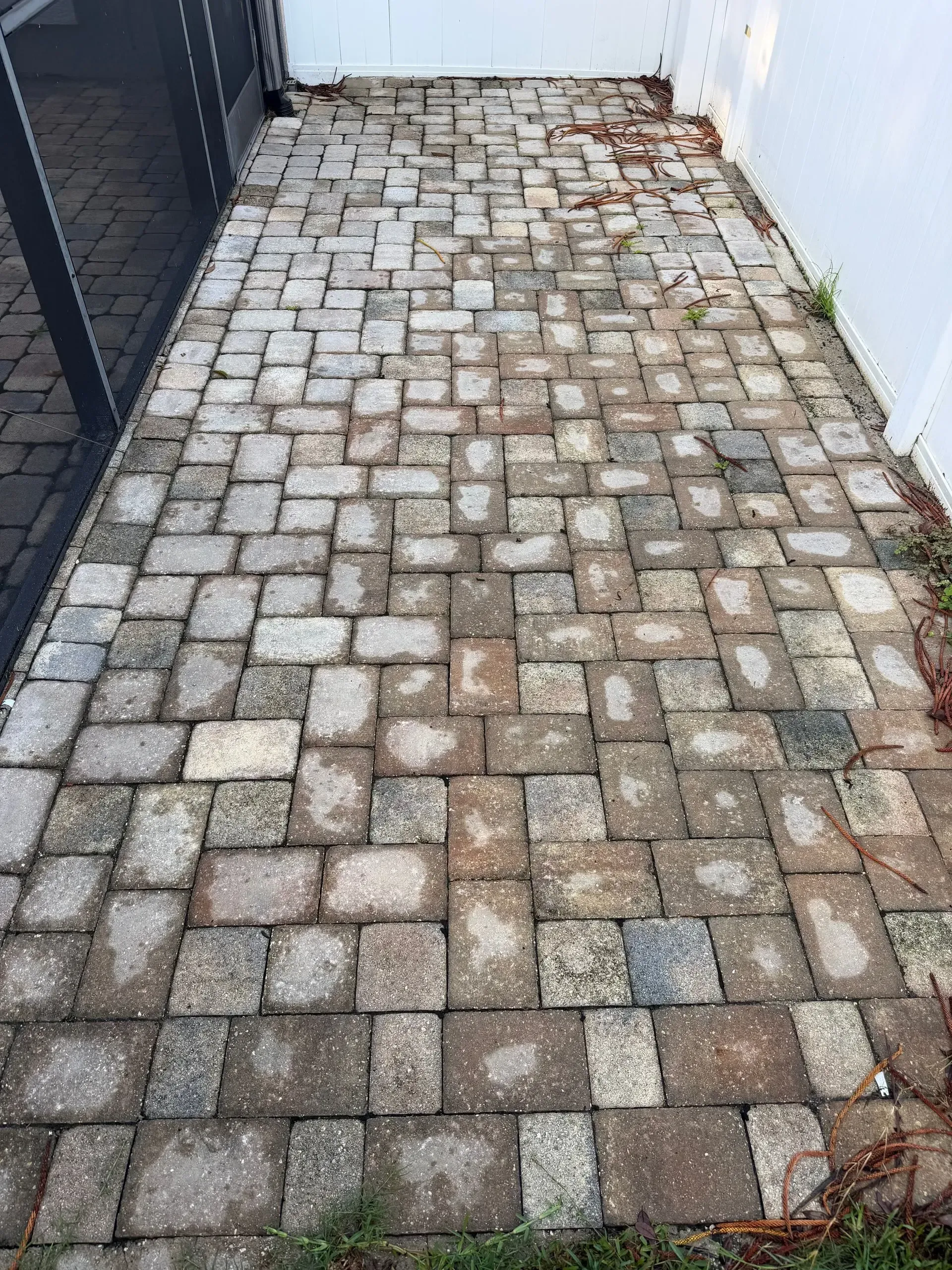
- Hardscape last — the lanai and pool deck collect the salt that came off everything above them.
That first flood rinse and that final one are the steps that make a waterfront wash last. Skip them and you've cleaned the growth off and left the salt that caused it.
[PHOTO: before/after of a bayfront elevation, water side — Culbreath Isles or Beach Park]
Runoff matters more here than anywhere
On a property with a seawall, every gallon that leaves the house has a short trip to the bay. That's not a place to be casual. Our crews manage runoff deliberately on waterfront jobs — directing it to landscape and drains rather than over the wall, using the minimum effective concentration, and pre-wetting and rinsing plantings so nothing carries through.
It's the right thing to do and it's also what keeps a job from becoming a neighbor's problem.
The homes that look right from the water
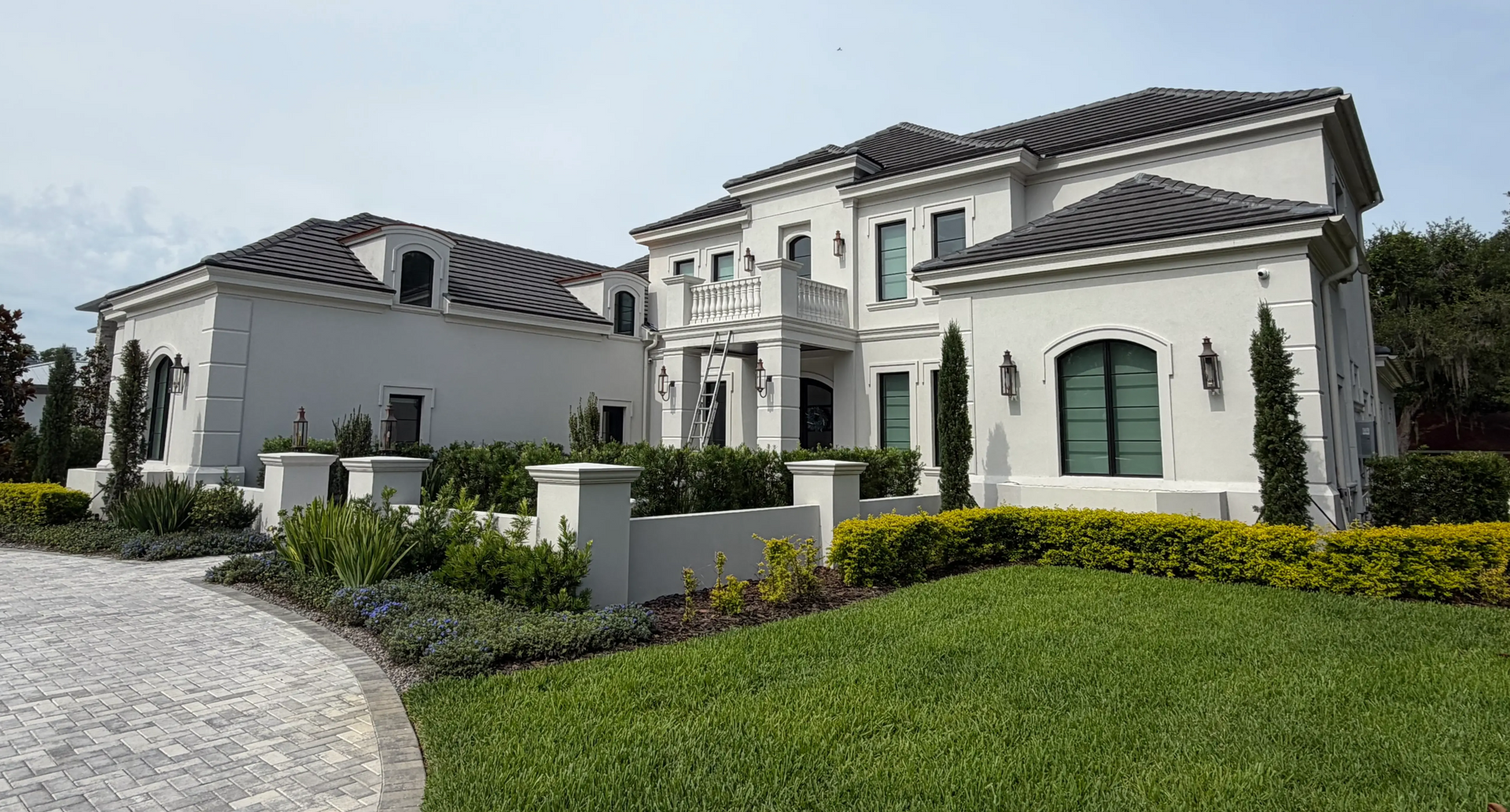
There's a tell on Culbreath Isles. From the street, most of these homes look excellent. From a boat, you can immediately see which ones get the water side maintained and which ones don't — and the water side is the one your guests see from the dock, the pool and every window on the back of the house.
Our Culbreath Isles pressure washing, roof cleaning and paver sealing work is built around waterfront specifically, and the full scope is on our house washing and exterior cleaning pages.
Get on a waterfront schedule
We'll look at the property, tell you which elevations are on a faster clock than the others, and set a cycle that matches what the bay is actually doing to your house.
Wild West Washing is veteran-owned and serves Hillsborough, Pasco and Pinellas counties. Call 813-957-1174 for a free quote.