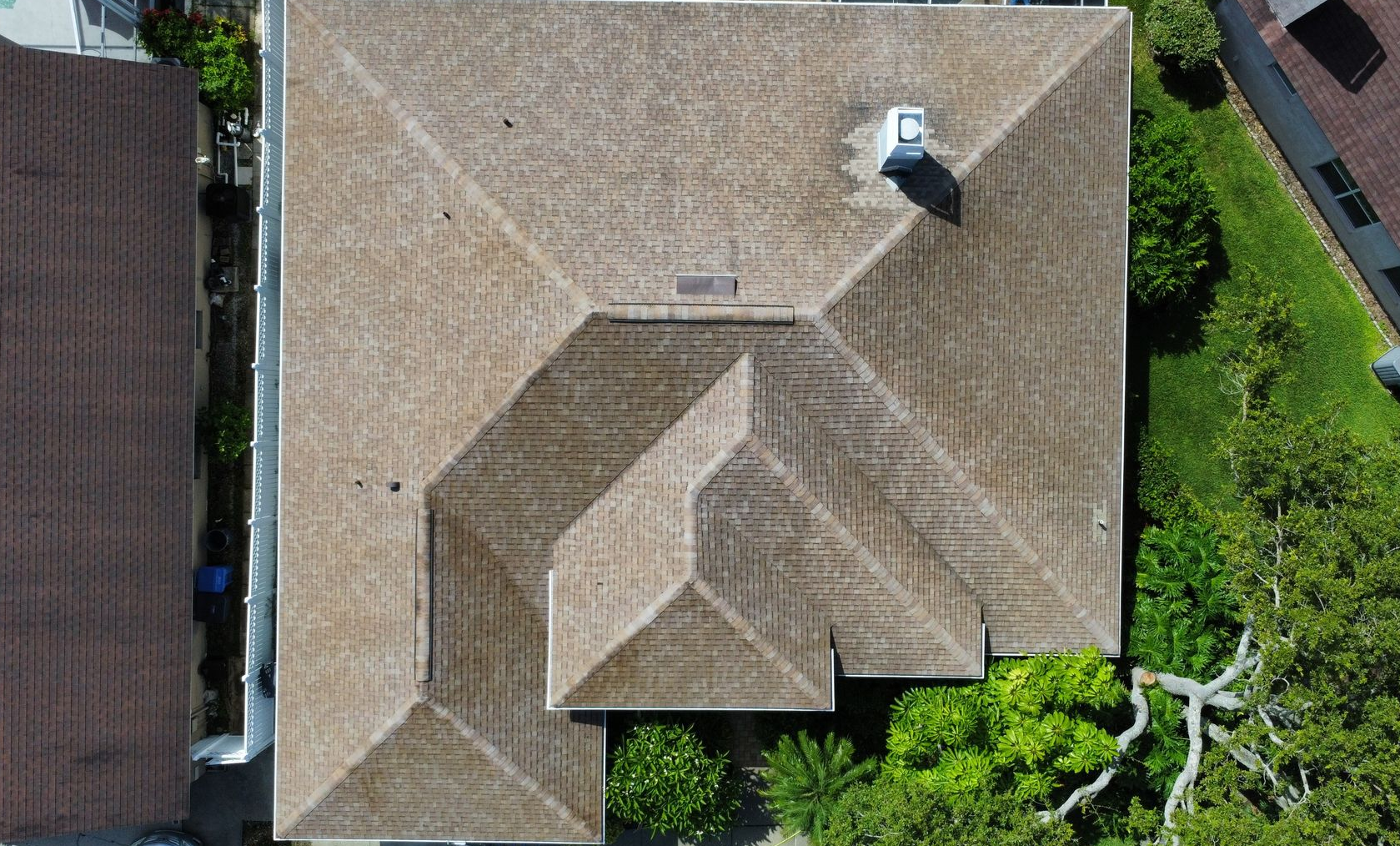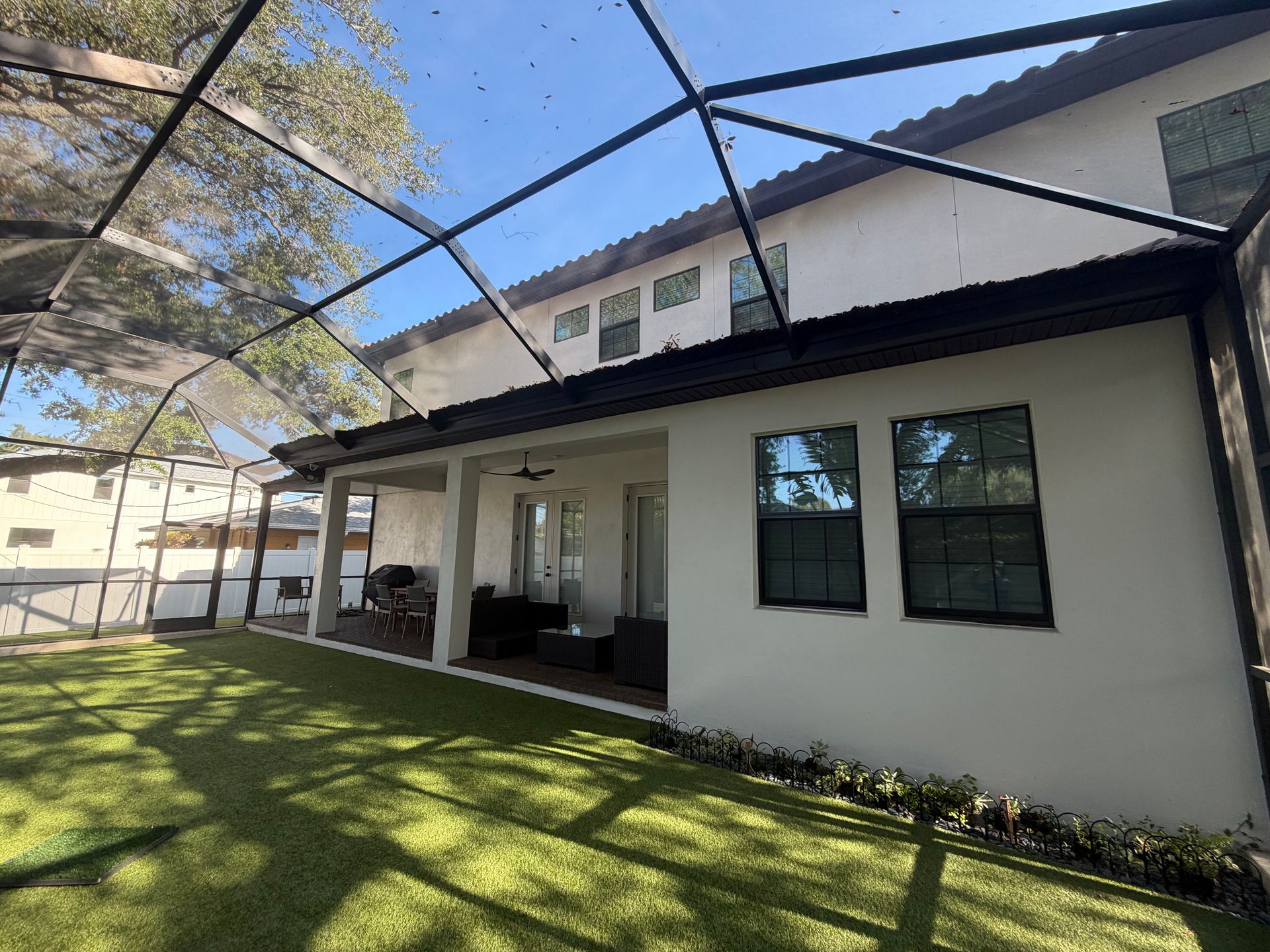
Why It Doesn't Come Off the First Time
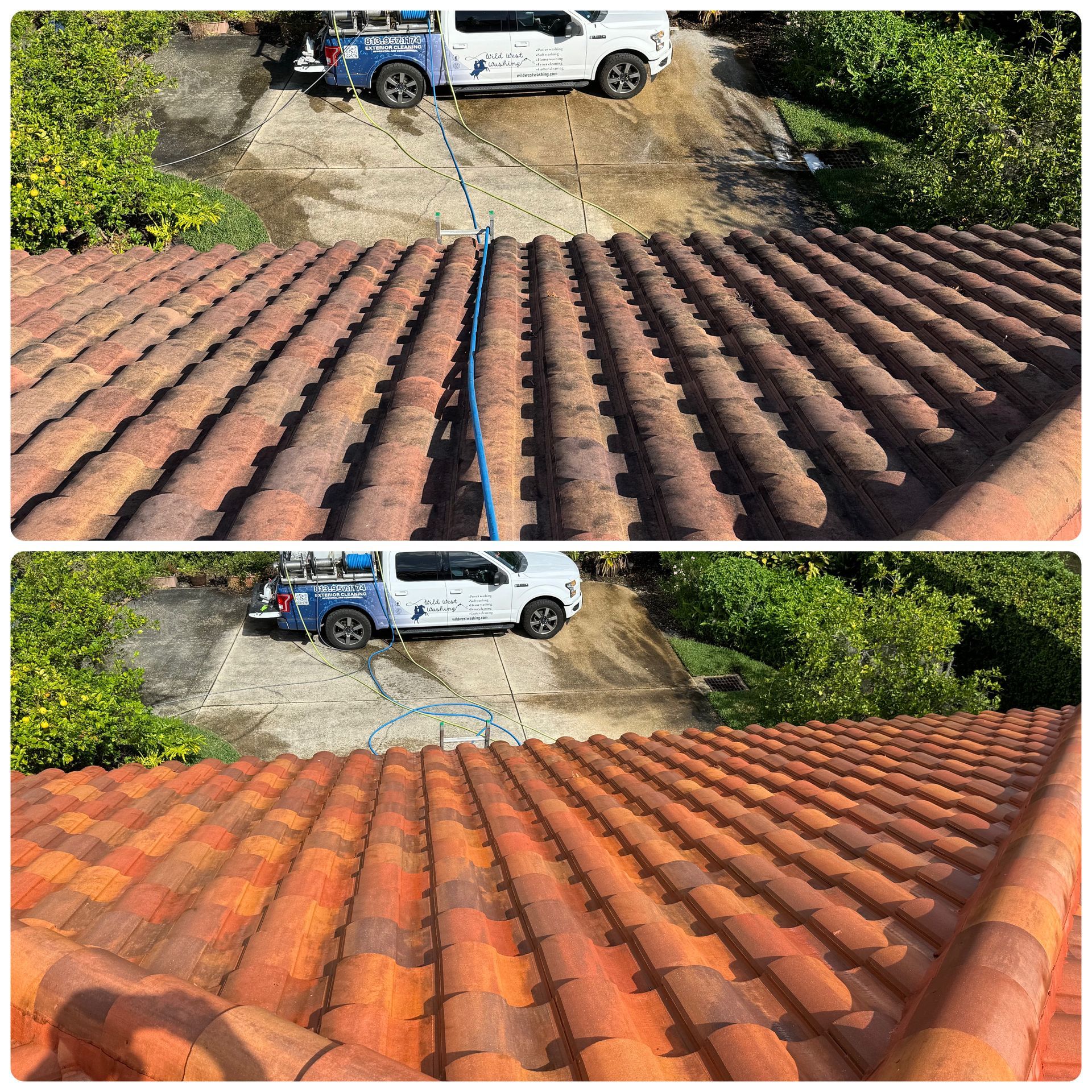
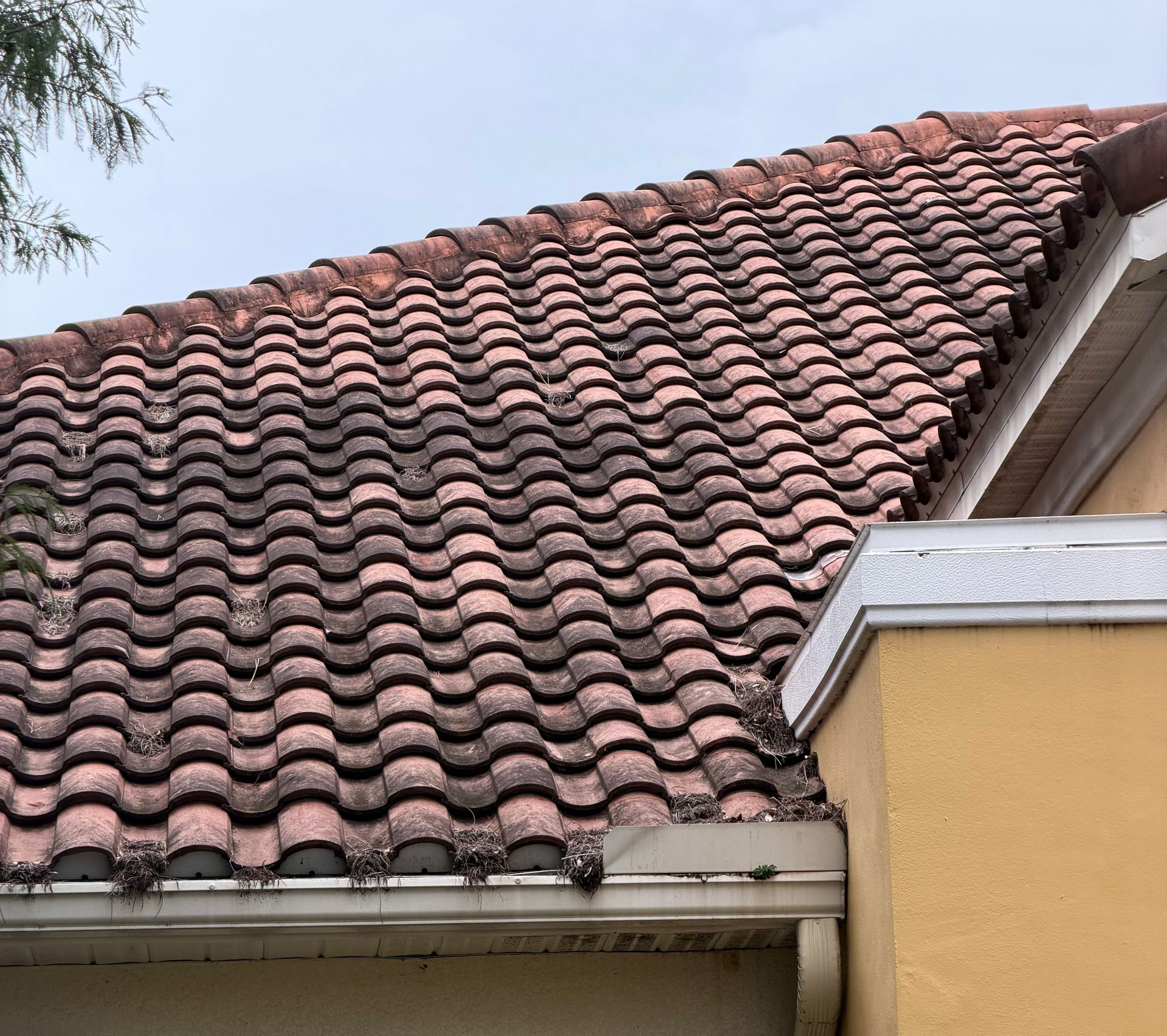
Those crusty gray-green circles scattered across your barrel tile are not algae. They're lichen, and lichen removal on a tile roof in Tampa is the one roof problem that cannot be finished in a single visit. Not by us, not by anybody. It dies on the first treatment and then it has to weather off, which takes two to eight weeks of sun and rain.
Anyone who tells you they'll have your lichen gone by Thursday is either going to pressure wash your roof — which will cost you tiles and underlayment — or they're going to leave and let you discover the truth yourself.
What's the difference between algae and lichen?
Algae — the black streaks, Gloeocapsa magma — is a single organism living on the tile surface. It feeds on moisture and the limestone filler in the tile, it spreads downward with runoff, and it rinses away once it's killed.
Lichen is a composite organism: a fungus and an algae living together. The fungus half puts out root-like structures called rhizines that physically grip and penetrate the tile's porous surface. That's the whole problem. You can kill lichen thoroughly on the first application and the dead body is still mechanically attached to your roof.
Visually: algae is a streak, lichen is a patch. Algae is flat and dark, lichen is raised, crusty, circular, and ranges from gray-green to pale sage. If you can feel it with a gloved hand, it's lichen.
[PHOTO: close-up of raised gray-green lichen patches on barrel tile vs. flat black algae streaking]
How long does lichen take to disappear after treatment?
Realistically:
- Day of service: lichen is killed. It changes color — usually to a lighter, bleached tone — but it's still visibly there.
- Weeks 1–3: the rhizines break down. Rain and wind start removing patches. The roof looks progressively patchy, which is normal and is the part homeowners worry about.
- Weeks 4–8: the bulk of it is gone. Light staining may remain where heavy colonies sat.
- Second treatment, if needed: a follow-up application catches the stubborn 10–15%. We include this on heavy lichen jobs rather than pretending one visit is enough.
Time of year changes this. Treat in the summer rainy season and it clears fast. Treat in a dry December and it sits looking bleached for longer. Fall is a good compromise — enough rain to move things along, cool enough that chemistry doesn't flash off the tile before it can work.
Why can't you just scrub or pressure wash it off?
Because the lichen is more firmly attached than the tile's surface is. The outer layer of a concrete barrel tile — the cream coat and color — is the only thing standing between your roof and twenty years of accelerated wear. Pressure strong enough to dislodge rhizines removes that layer, and once it's gone the tile becomes a sponge: it absorbs more water, grows biological material faster, and gets heavier.
There's also what happens under the tile. Pressure forces water past the headlaps onto the underlayment, which is the actual waterproofing layer of a tile roof. Soaked underlayment plus a sealed-in moisture path is how a cosmetic problem becomes a leak. And walking a barrel tile field to scrub it cracks tile — not occasionally, routinely.
So: chemistry, dwell, patience, and access from ladders and lifts rather than foot traffic. Same philosophy as our approach to Black Streaks on a Tile Roof?, just a longer timeline.
Does lichen damage a tile roof?
Over years, yes. Three mechanisms:
- Moisture retention. Lichen holds water against the tile and in the headlaps long after a rain, which accelerates underlayment aging.
- Surface breakdown. Rhizines physically degrade the tile's porous face, and lichen produces mild acids as it metabolizes.
- Concealment. A heavily colonized roof hides cracked, slipped, and broken tiles. Every lichen roof we treat, we find tile damage underneath — sometimes a lot of it.
That last point is the practical argument for doing it sooner. The cleaning reveals what needs repair while the repair is still small.
[PHOTO: tile roof three weeks post-treatment showing patchy weathering-off of dead lichen]
What does the process look like?
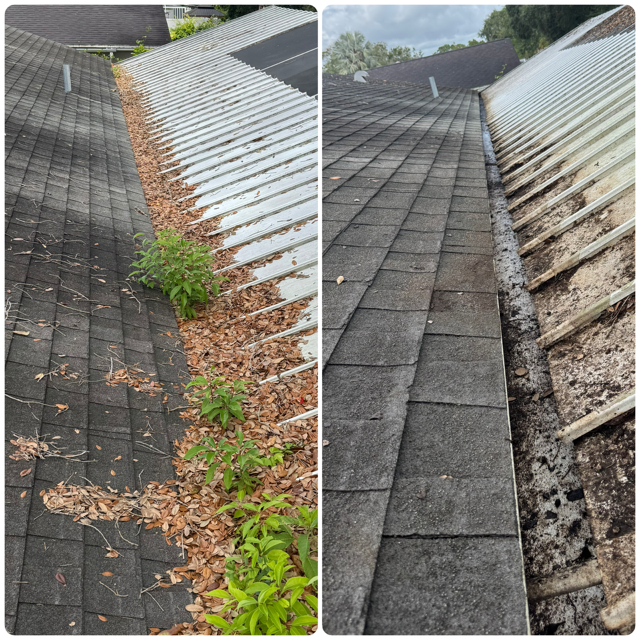
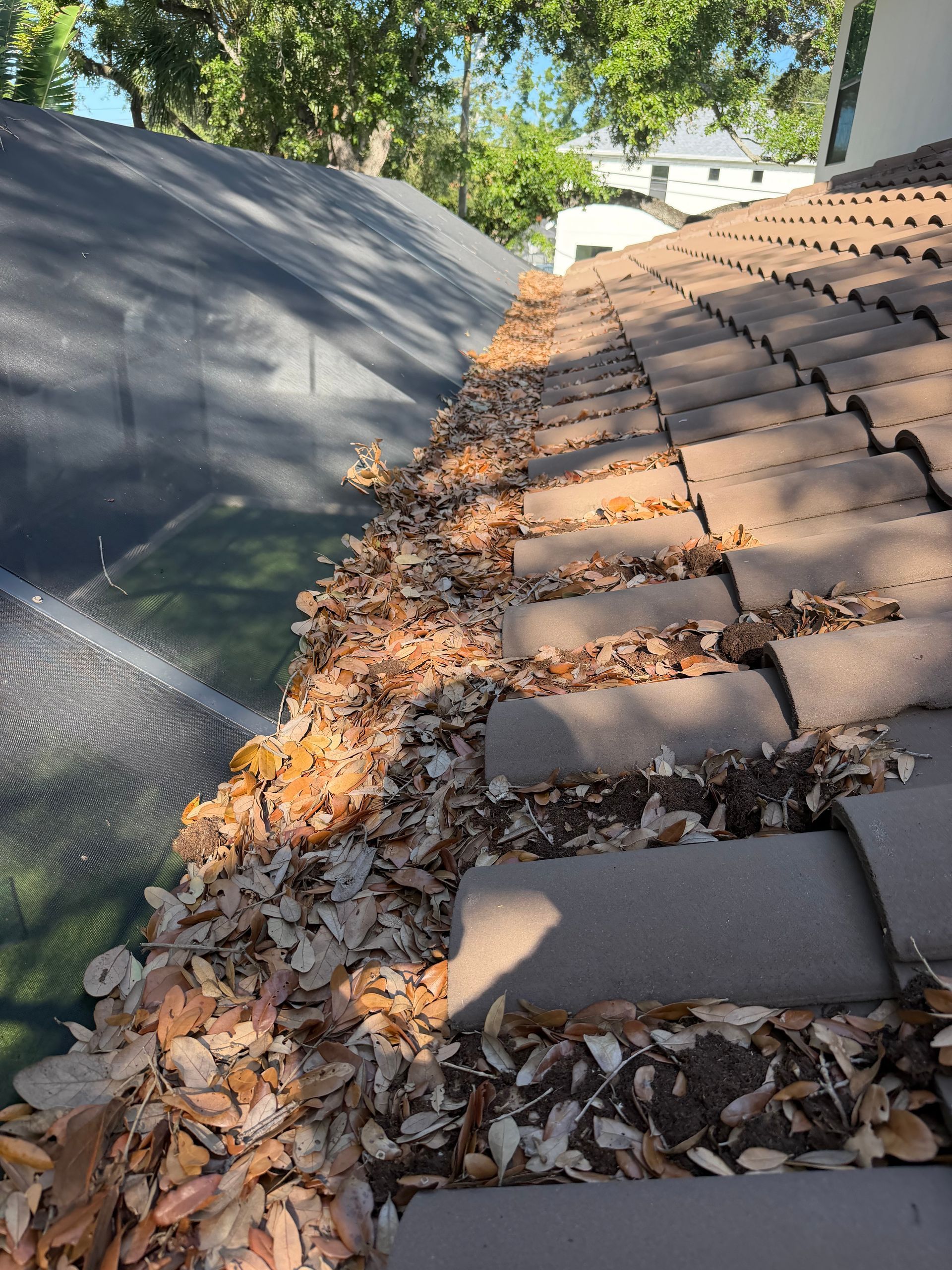
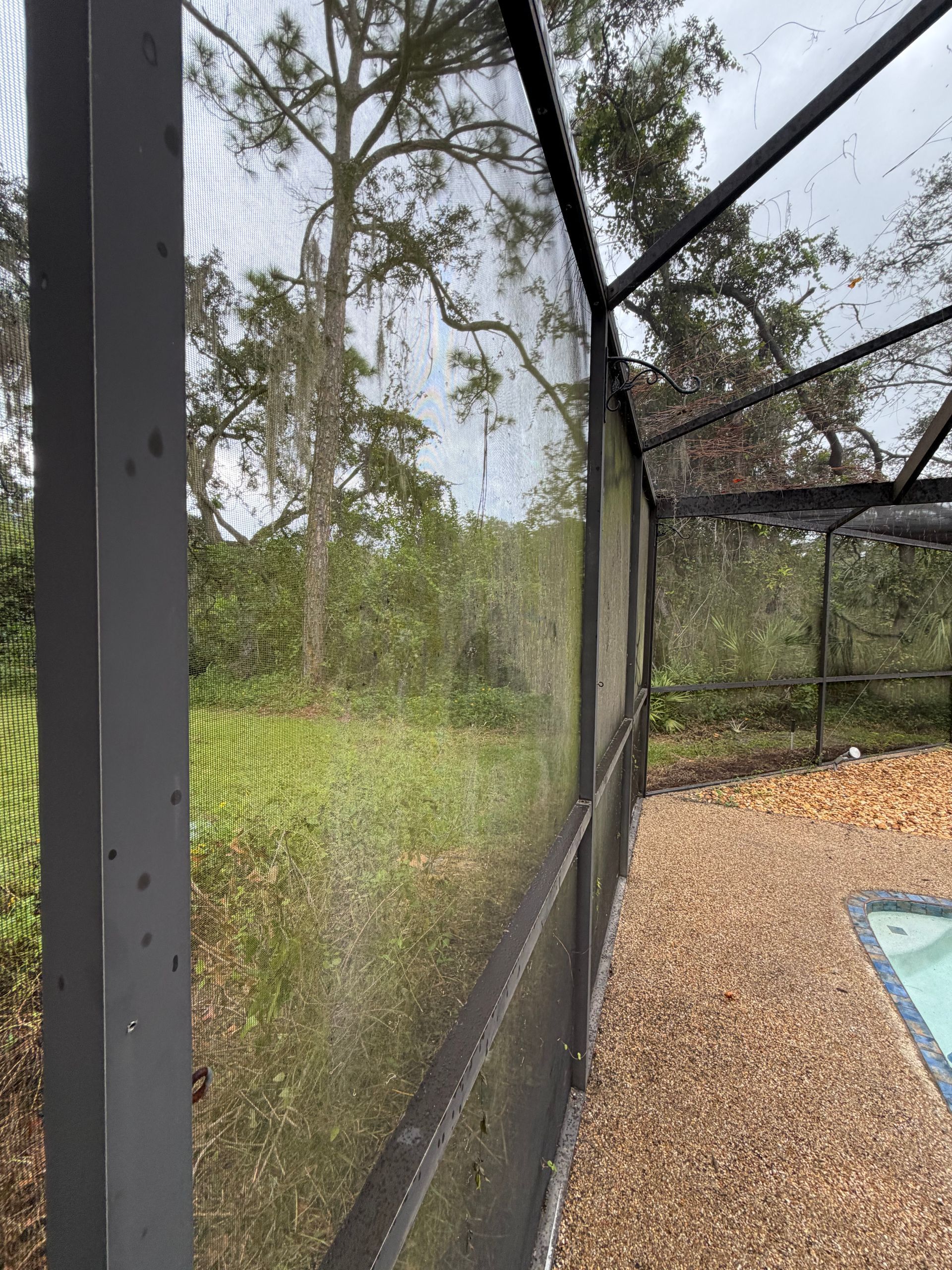
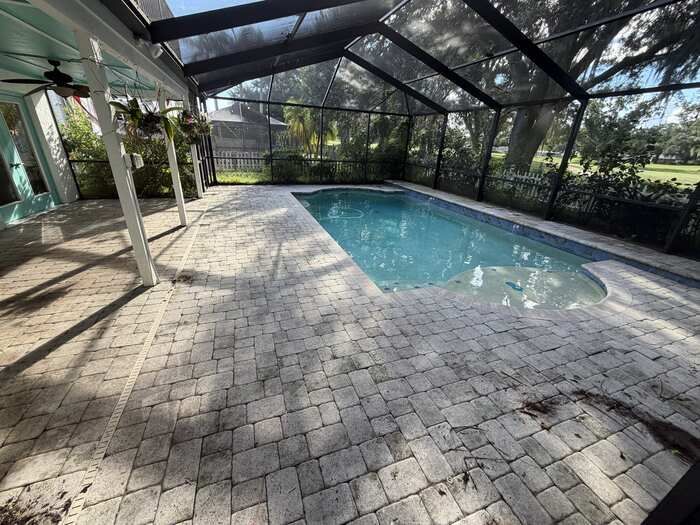
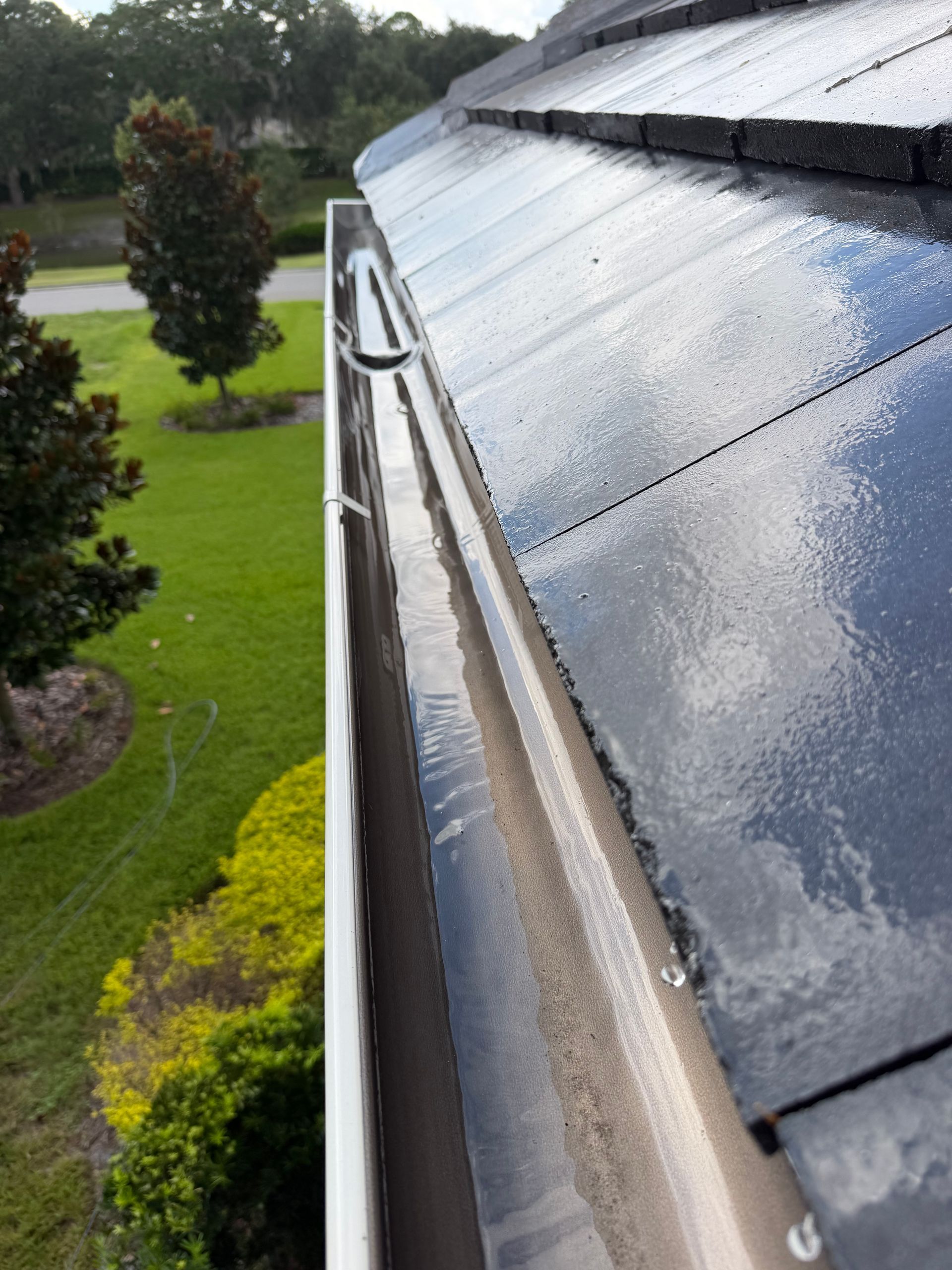
Access set from ladders and lifts, no foot traffic on the tile field. Gutters cleared first so runoff drains instead of pooling. Plants, pool cage, pool water, and all painted surfaces below pre-wet and protected. A controlled low-pressure application of the treatment with a long dwell. A gentle rinse that moves debris off the roof rather than driving it into the laps. Gutters and the hardscape below flushed afterward. Then we tell you honestly what week to expect what, and we come back for the second pass if the colony was heavy.
Heavy lichen roofs in Avila, Cheval, and Keystone are usually the ones with the most mature oak canopy. Shade plus leaf litter plus humidity is exactly what lichen wants.
Get a straight answer about your roof
Our veteran-owned crew has treated a lot of lichen in Tampa Bay, and we'd rather set your expectations correctly on day one than have you wonder in week two why the roof looks worse. Call 813-957-1174 for a free roof evaluation. More on our process at roof cleaning, and what we handle for luxury pressure washing in Avila.