What Nobody Mentions Before You Install It

Artificial turf cleaning in Tampa is the maintenance item almost nobody budgets for, and the one that decides whether a synthetic lawn looks like a golf course at year five or a flat gray mat. Florida turf needs the infill decompacted, the fibers groomed upright, and the whole surface sanitized — usually once or twice a year. Rinsing it with a hose does none of that.
Nobody is at fault for not knowing this. The pitch when you bought it was "no mowing, no watering, no maintenance," and two of those three are true.
Why synthetic lawns struggle specifically in Florida
Turf was engineered for drainage and UV resistance. What it wasn't engineered for is our particular combination of heat, humidity and organics:
- Sun load. Dark infill absorbs heat, and surface temperatures on an unshaded Tampa turf lawn in July run far above ambient. Heat accelerates fiber fatigue.
- Humidity in the infill. Water drains through, but the lower infill layer stays damp for days. That is an ideal culture for bacteria and, in shade, for algae and moss right at the backing.
- Organic fallout. Oak catkins, acorns, Spanish moss, bougainvillea bracts, pine needles. It all works down into the infill and composts there.
- Pets. Urine drains but the solids and the ammonia salts don't. They bind to the infill and the backing, which is why a two-year-old pet lawn smells worst after a rain — moisture reactivates what's sitting down there.
[PHOTO: close-up split shot of matted, debris-filled turf next to freshly groomed turf with fibers standing upright]
How often does artificial turf need professional cleaning?
- Once a year for a decorative lawn with light foot traffic and no pets.
- Twice a year for pet areas, putting greens, play areas, and any turf under an oak canopy.
- Quarterly for commercial installs and amenity-center play surfaces that take constant traffic.
In between, you help it a lot by blowing debris off weekly and brushing high-traffic paths against the grain with a stiff push broom. That one habit adds years to the look.
What a real turf service includes
A proper visit is four distinct jobs, and skipping any of them is why DIY attempts disappoint:
- Debris extraction. Not just blowing the surface — pulling the composted layer out of the infill, which is where the smell and the algae live.
- Power brooming and fiber lifting. Mechanical grooming stands the blades back up and breaks the compaction that makes turf look flat and gray. This is the single biggest visual change.
- Sanitizing. A low-pressure application of a turf-safe, pet-safe antimicrobial that neutralizes ammonia salts and kills algae at the backing rather than masking odor.
- Infill assessment and top-up. Traffic displaces infill. Low infill means fibers have nothing holding them upright, and the backing starts taking UV damage it was never meant to take.
High pressure, for the record, is the fastest way to ruin a $25,000 lawn. It blasts infill out of the zones you hit, frays fiber tips, and can separate the backing seams. Turf gets low pressure and mechanical grooming — never a turbo nozzle.
Putting greens are their own animal
If you've got a practice green in Odessa, Keystone or out on an Avila lot, the standard is higher because the surface has to play right, not just look right. Compacted infill makes a green putt slow and inconsistent; over-groomed nap makes it break in directions the contours don't justify.
Greens want:
- Grooming in the direction the designer intended the grain to run
- Sand infill leveled rather than just topped up, so roll speed stays even from fringe to cup
- The collar and fringe transition cleaned separately, since that's where debris collects
[PHOTO: backyard putting green, before/after — matted fringe and leaf debris vs. clean leveled green]
The surfaces around it
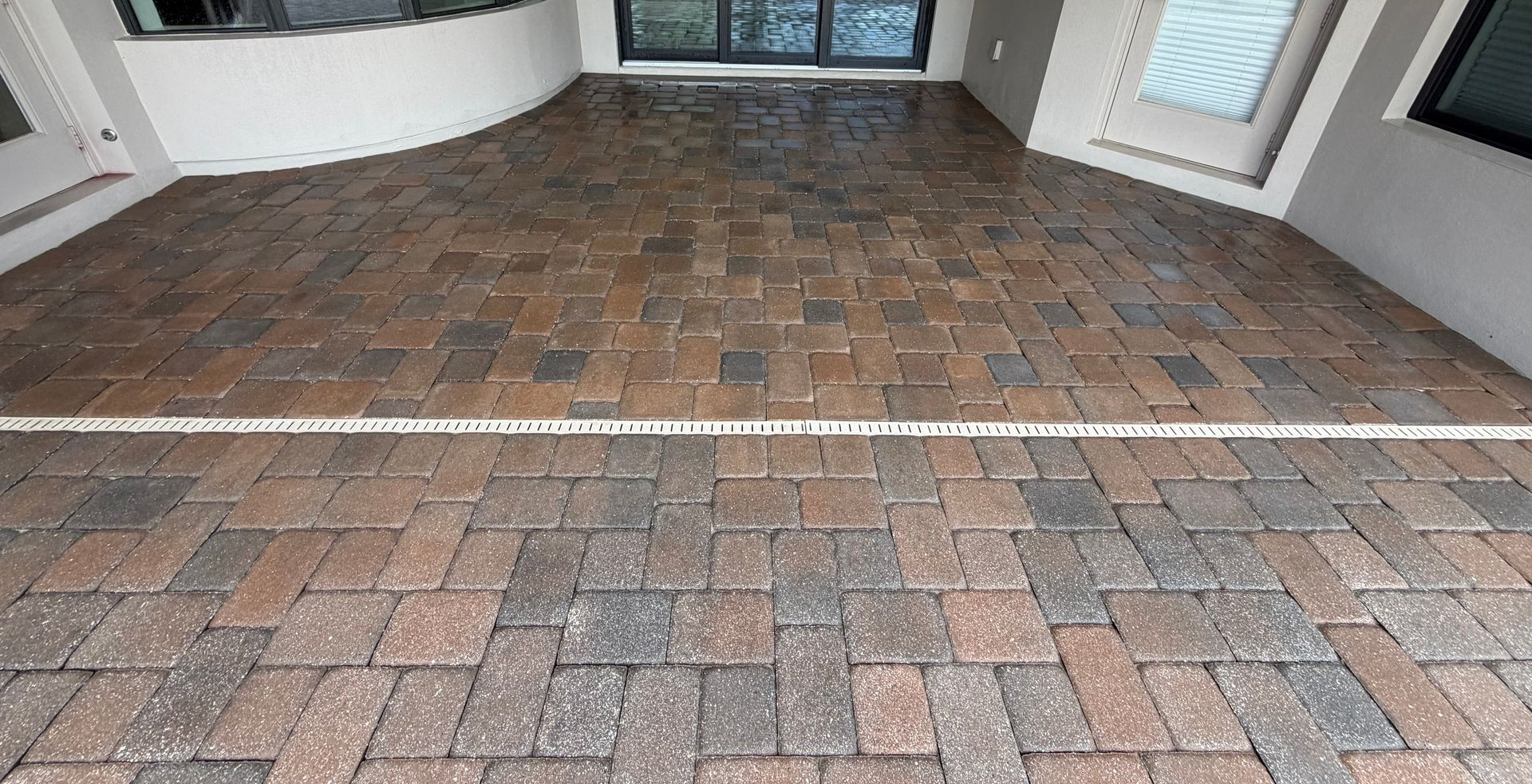
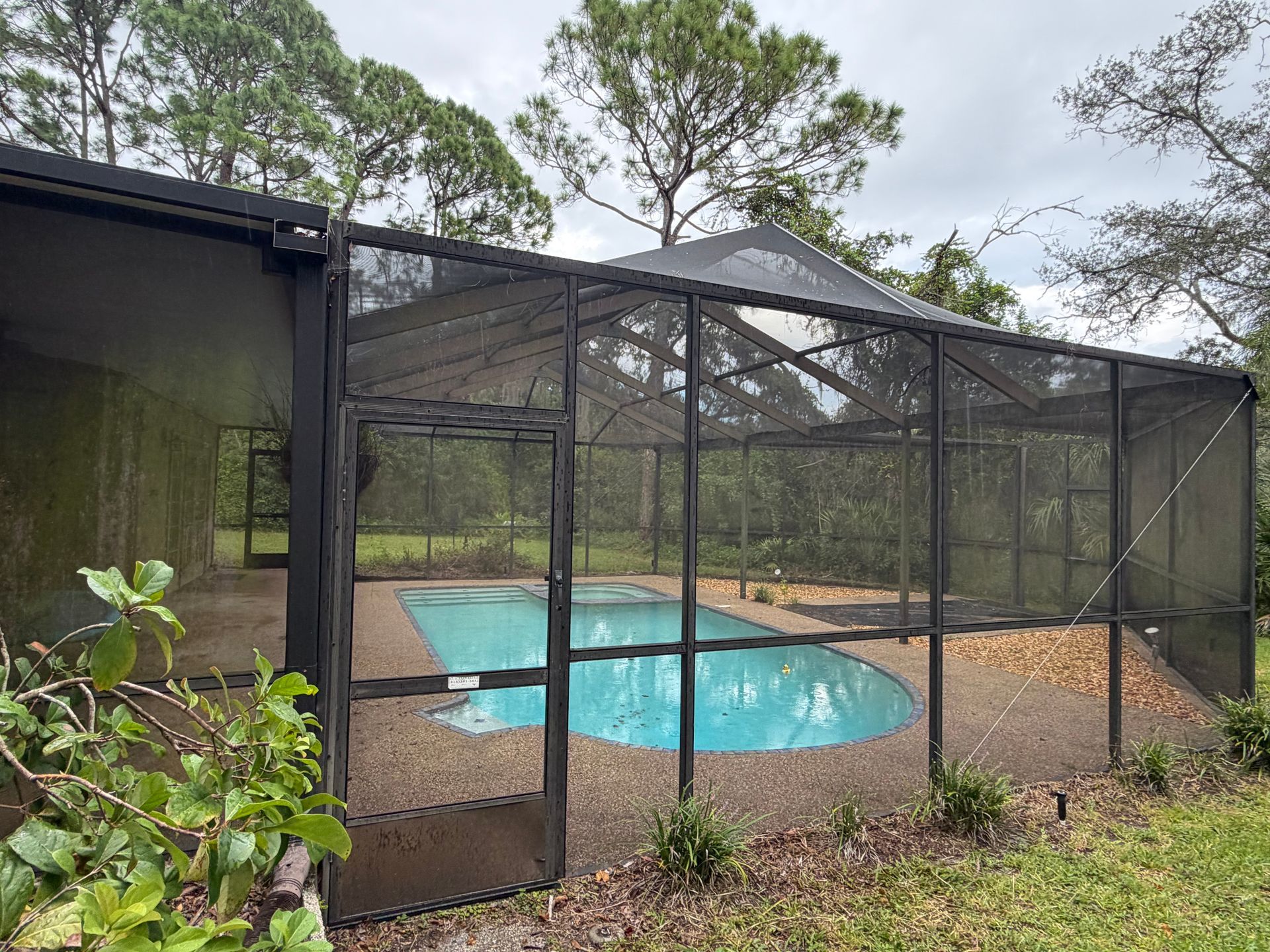
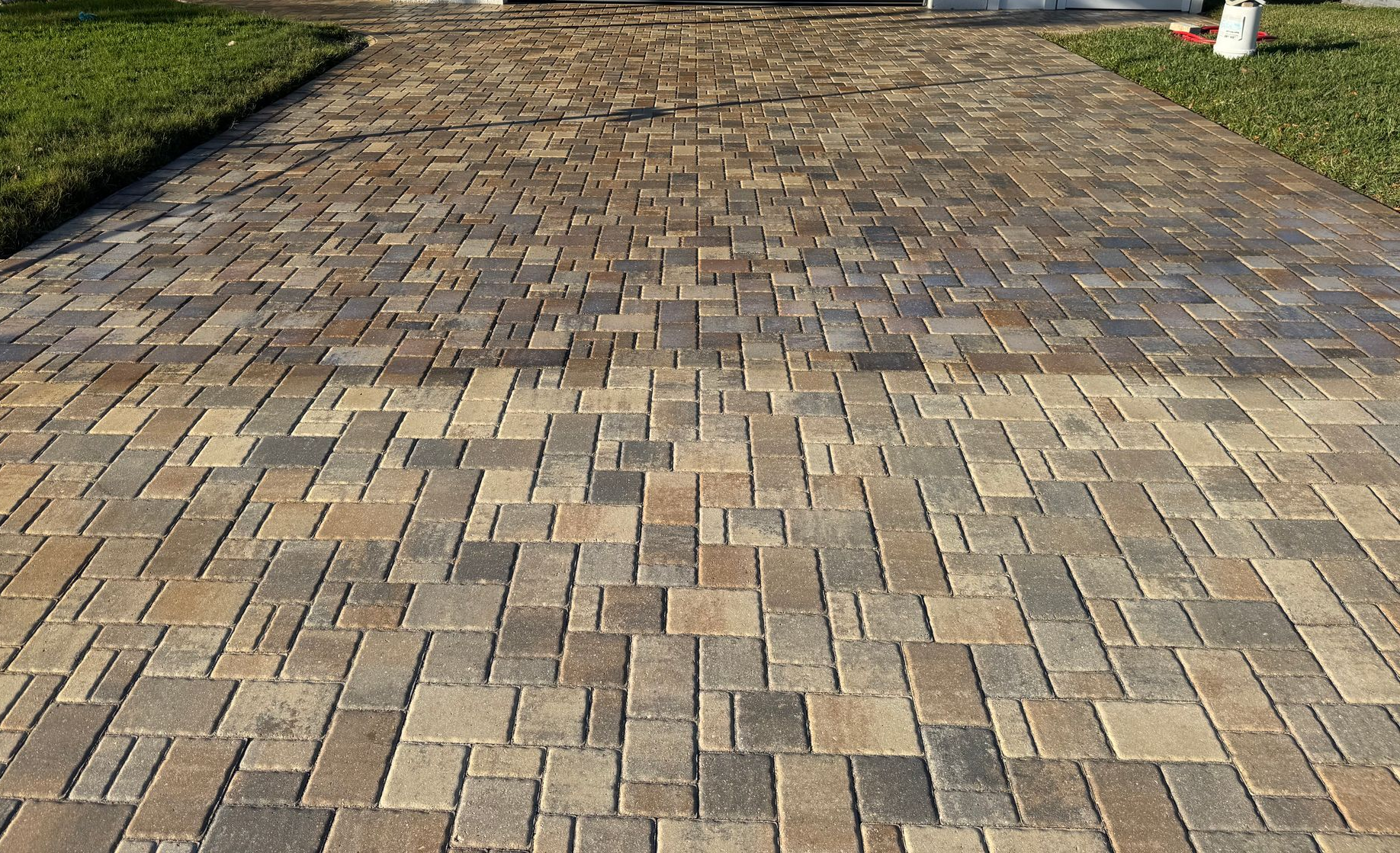
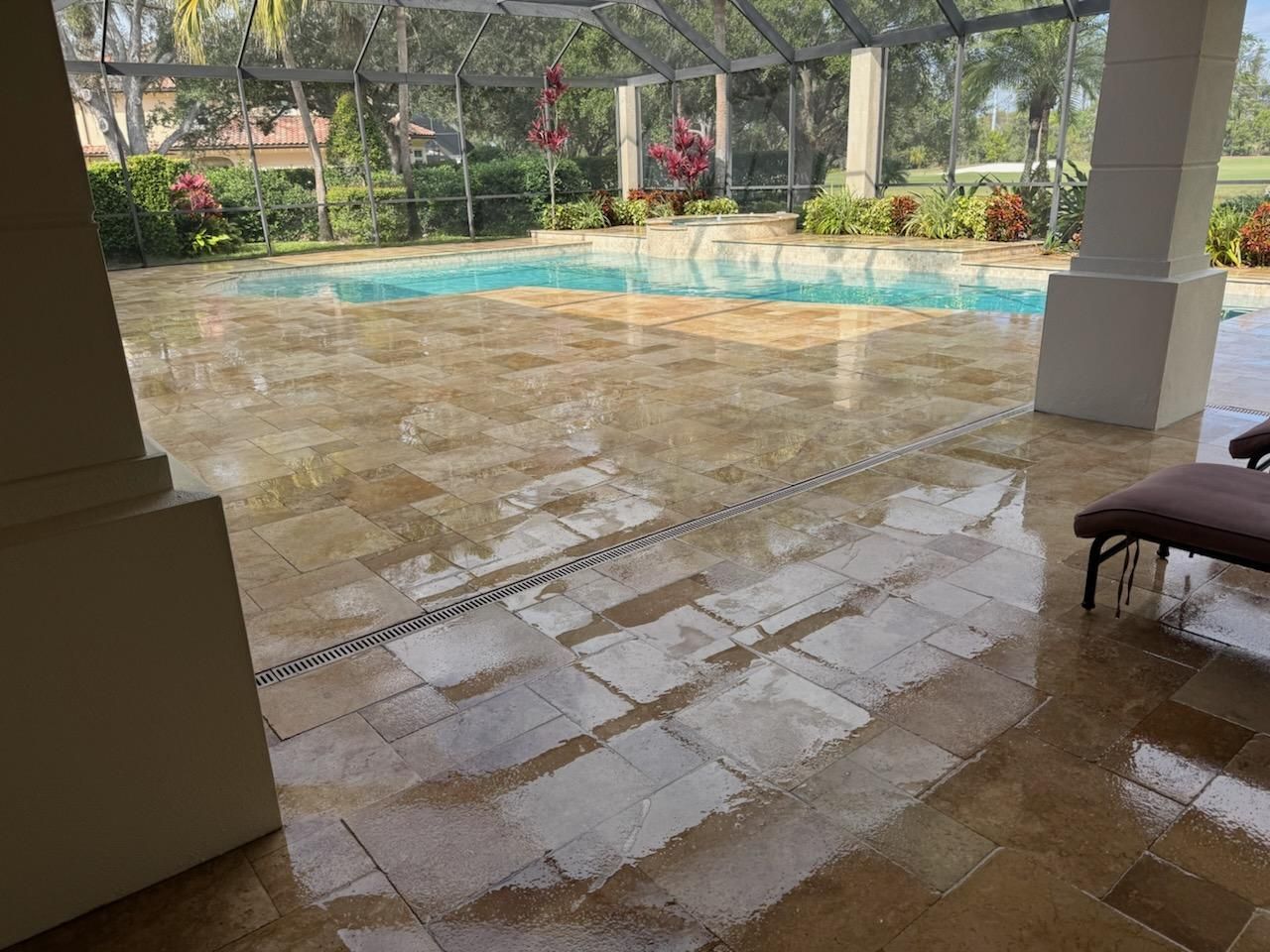
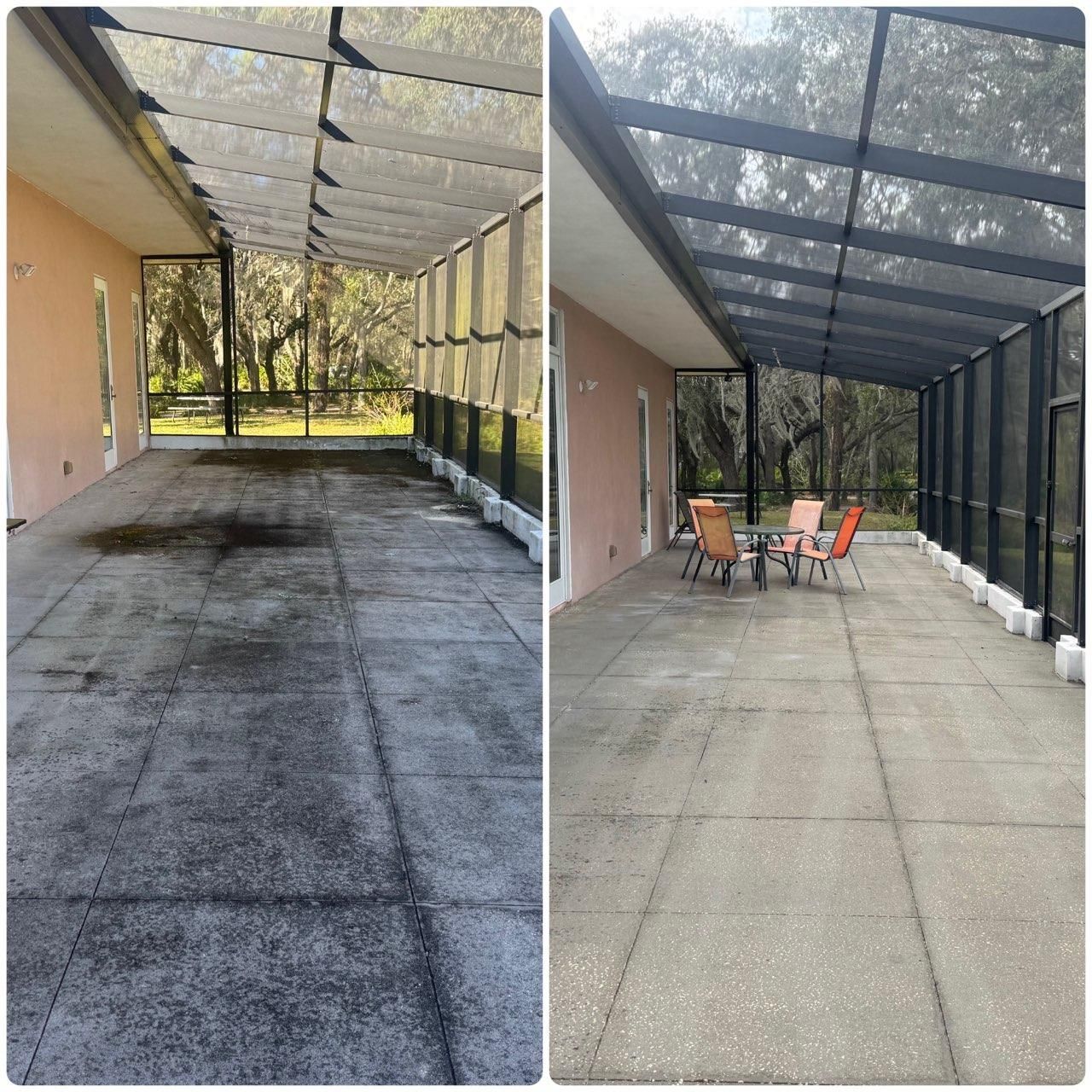
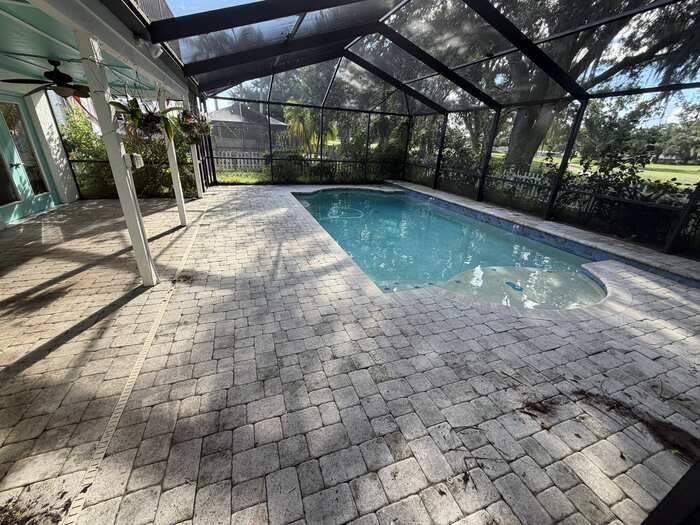
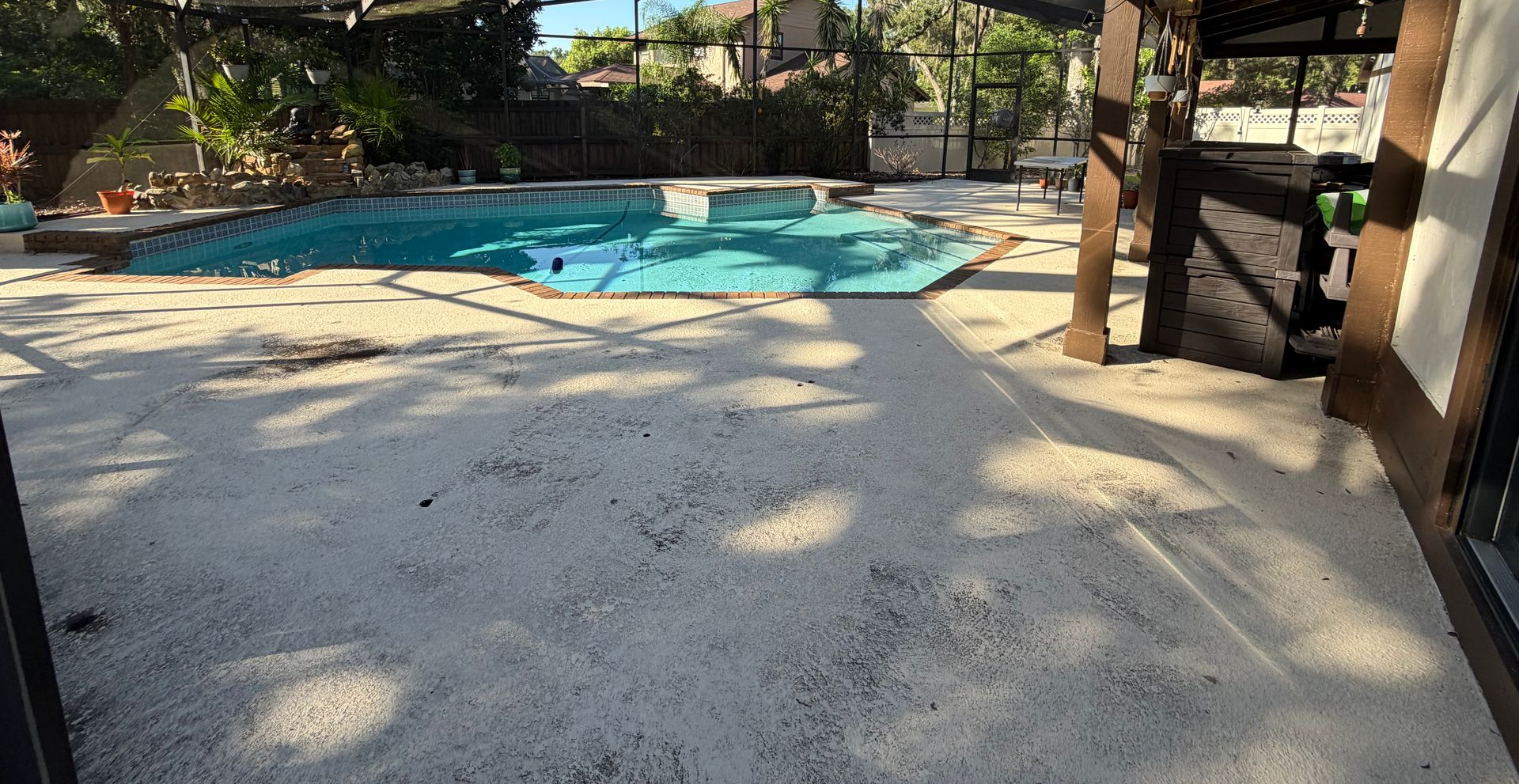
Turf almost always meets something else: pavers, travertine coping, a pool deck, a screened cage. Those transition lines are where algae gets a foothold, and they're the lines your eye reads first. Cleaning the turf and leaving a green-black band along the paver edge just draws attention to the band.
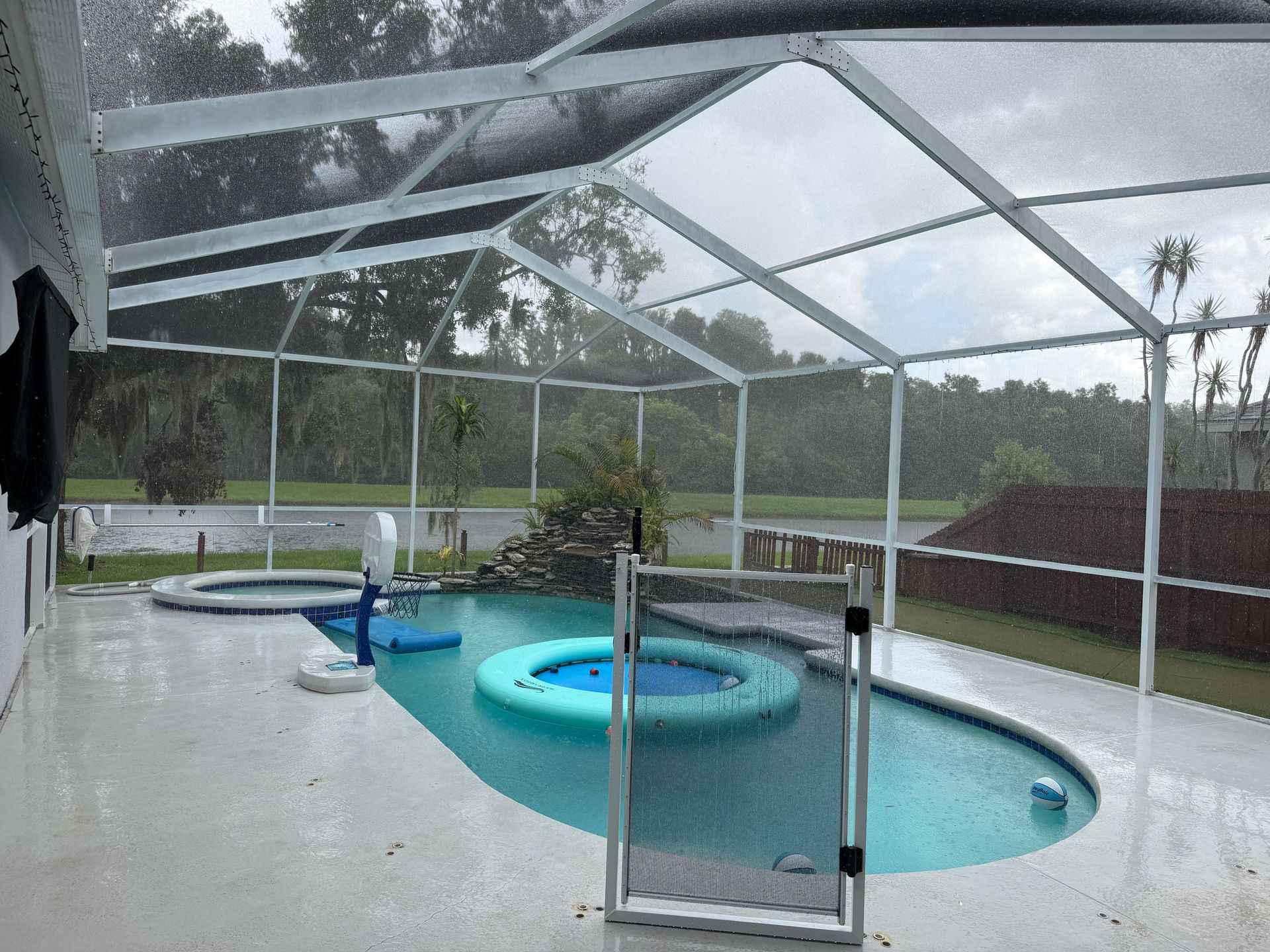
Most of our turf work happens alongside pool deck cleaning in Tampa Bay or as part of a broader exterior cleaning visit, because that's when the whole backyard reads as finished instead of patched.
Get a quote
If your turf has gone flat, gray, or has a smell that comes back every time it rains, it is almost certainly fixable — most of what looks like worn-out turf is compacted infill and composted debris, not failed product. Call 813-957-1174 and we'll come look at it and tell you honestly whether it needs service or replacement.
Our veteran-owned crew works Hillsborough, Pasco and Pinellas, including the estate lots around Odessa where half the putting greens in Tampa Bay seem to live.