historic home exterior cleaning Hyde Park
Historic home exterior cleaning in Hyde Park follows one rule above all others: the house is older than any cleaning equipment ever built for it, and it gets the method it can survive. That means low-pressure soft washing, chemistry matched to original materials, and in some places nothing stronger than a soft brush and a garden hose. Pressure that's routine on a 2019 stucco build will take the face off 1920s brick.
Walk down Swann or South Boulevard and you can spot the houses that learned this the hard way — the ones with a lighter, rougher band of brick about shoulder height where somebody stood with a wand.
What's actually on these houses
Hyde Park, Parkland Estates, Golfview and the older pockets of South Tampa are a different material inventory than the rest of the market:
- Soft, hand-struck brick with lime mortar joints. Lime mortar is intentionally softer than the brick. Blast it out and you've opened a path straight into the wall.
- Original wood siding, often cypress or heart pine, carrying decades of paint layers — some of which, on a pre-1978 house, are lead-based.
- Lath-and-plaster walls behind that siding, which do not forgive water intrusion.
- Hand-glazed and sometimes original single-pane glass in wood sash, bedded in glazing putty that's a century dry.
- Terra cotta tile, slate, and clay barrel roofs that are repairable but effectively irreplaceable in matching color.
- Mature live oak canopy, which means tannin staining, heavy organic load, and a lot of shade — so algae grows year-round instead of seasonally.
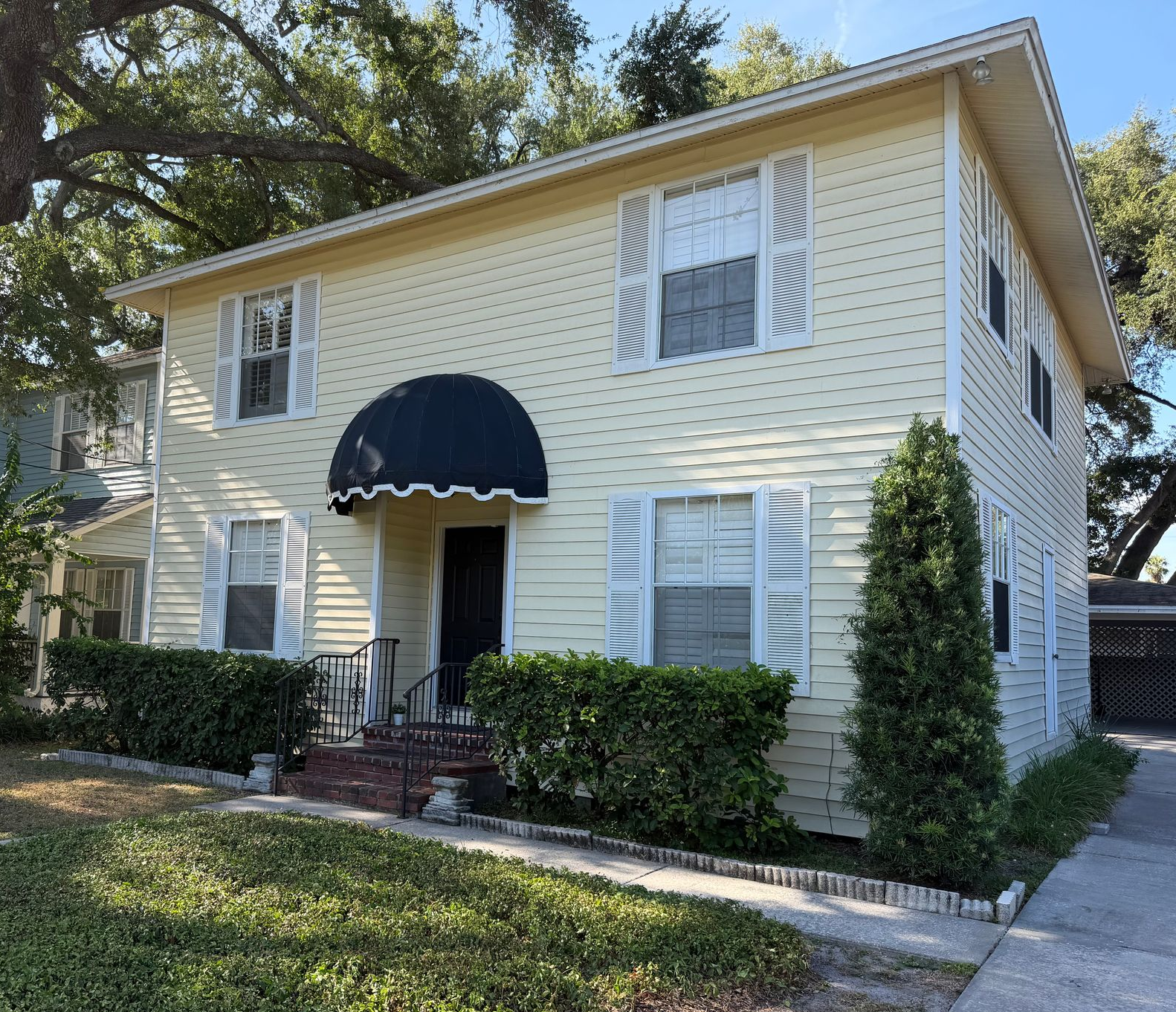
[PHOTO: 1920s Hyde Park brick elevation under oak canopy, dark organic growth on the shaded north wall]
The lead paint question nobody raises
If your house predates 1978, assume lead paint until tested. That isn't scaremongering, it's just the era. It changes how the work is done: no aggressive pressure that aerosolizes or chips paint, containment of wash water at the base of the wall, and no sanding or abrading disguised as "cleaning."
A crew that doesn't bring this up on its own at a 1915 house in Hyde Park hasn't thought about your house. It's a fair thing to ask about on the first walkthrough.
What safely cleans each surface
Soft brick and lime mortar. Low pressure — garden-hose range — with a masonry-safe biological cleaner and dwell time. No acid on lime mortar. No rotary surface cleaners. Where biological growth is stubborn, repeat gentle applications beat one aggressive one every single time.
Painted wood siding. Soft washing only: apply, dwell, rinse gently from the top down, always working with the lap direction so water sheds out rather than in. Any paint that's already failing will come off — and better to find that now than to discover it after you've paid a painter.
Original windows and glazing putty. Hand-washed. Period. Pressure drives water past dry putty into the sash, and a split muntin on an original window is a restoration bill, not a repair.
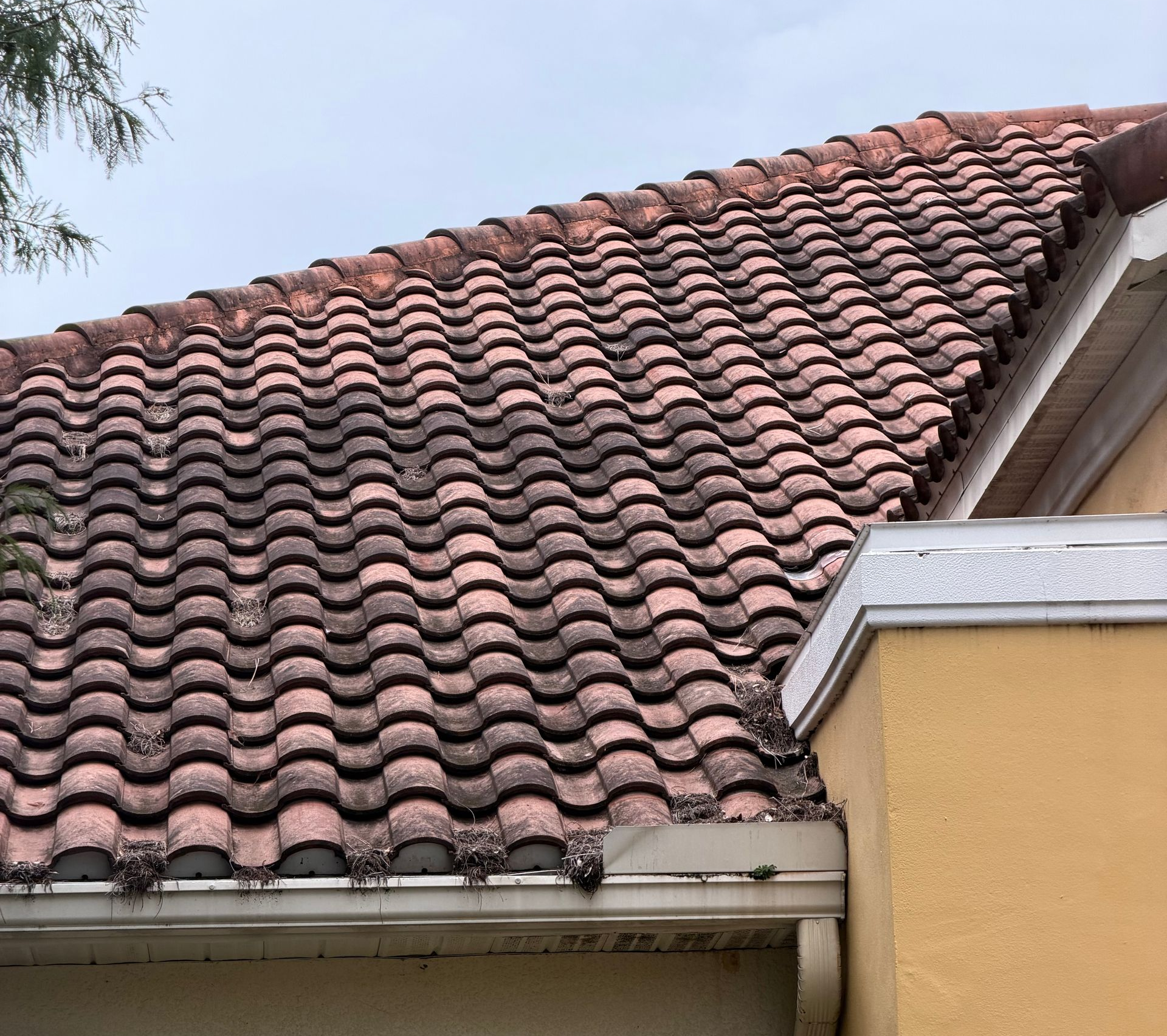
Tile and slate roofs. Never walked where it can be avoided, never pressure washed. Low-pressure application and gentle rinse, with attention to where the runoff goes — these roofs drain onto brick and plantings that both need protecting.
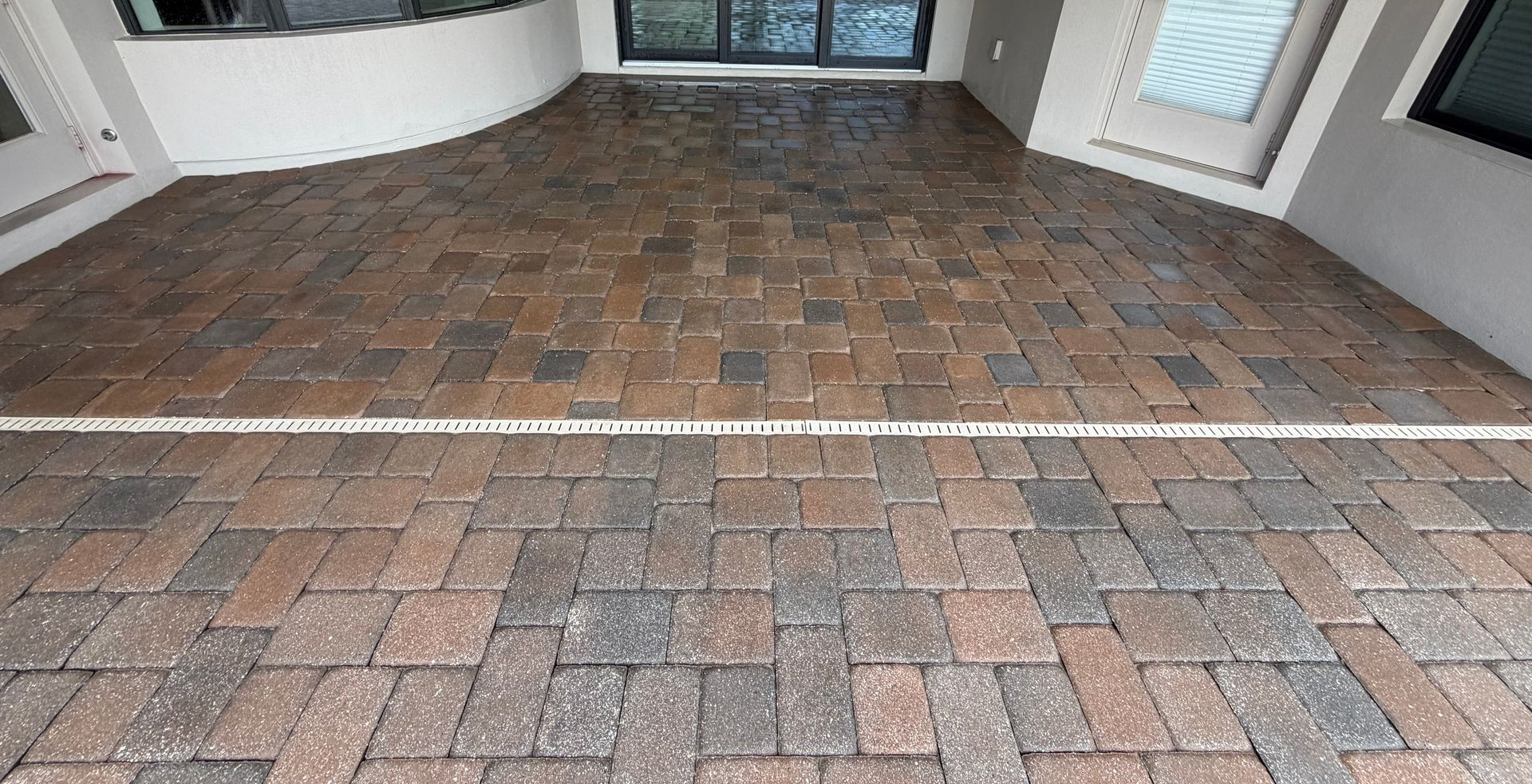
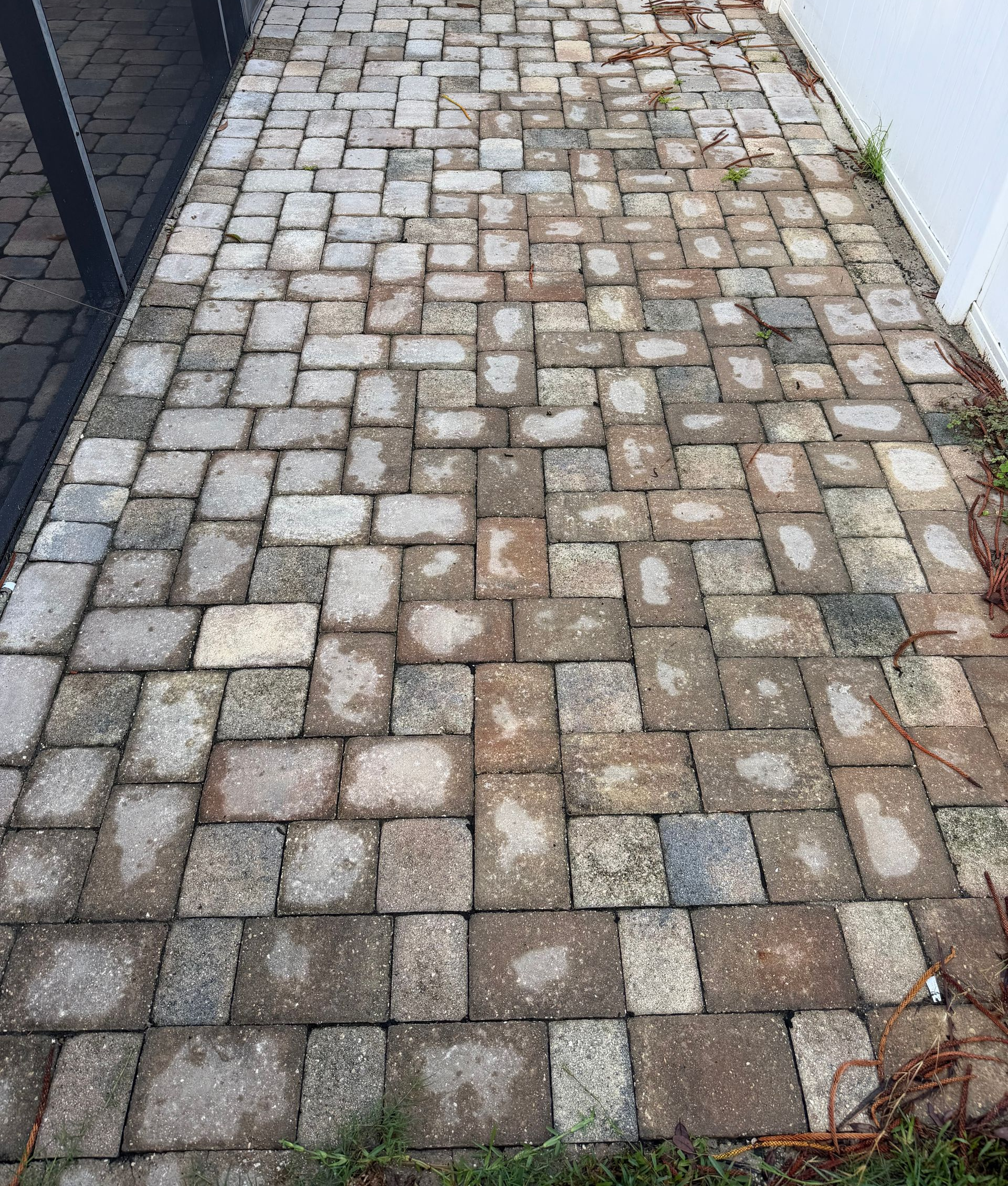
Brick walkways, steps and the hex-tile porches. Low pressure, and expect some settled sand or mortar loss to show up. That's pre-existing, but we photograph it before we start so nobody's guessing later.
How often should a historic Tampa home be washed?
Under heavy oak canopy — which is most of the neighborhood — plan on a gentle house wash every 12 to 18 months rather than waiting for visible green. Little and often is kinder to old finishes than occasional and aggressive. Roofs and brick hardscape generally run on a longer cycle, every two to three years, depending on shade.
The pattern we'd steer you away from: letting growth build for five years, then needing something strong enough to remove five years of it. That's when damage happens, and it's avoidable.
Working on a block like this
Practical things that matter more here than anywhere else in Tampa:
- Lot lines are tight. Overspray reaches the neighbor's car and the neighbor's camellias. We tarp, we pre-wet, and we knock on doors.
- Street parking is a negotiation. We stage small and we don't block driveways.
- Landscaping is often older than the owner. Established gardenias, azaleas and oaks get pre-wet and rinsed, not just covered.
- Documentation. Photos of every existing crack, chip and paint failure before the first drop of water. Protects you and us.
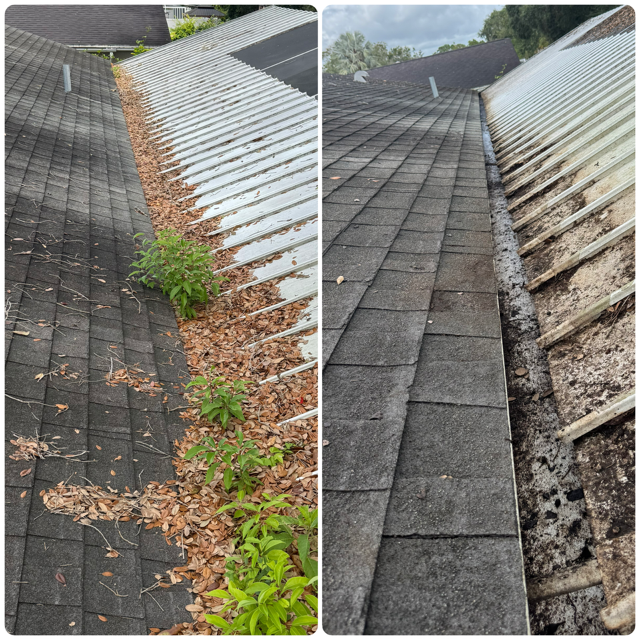
[PHOTO: before/after of a brick-and-wood historic elevation, same angle, oak shade visible]
Get a quote
If you own one of these houses, you already know it asks more of you than a new build does. We'd rather spend an hour walking it with you and telling you which surfaces we'd leave alone than quote something sight unseen.
Call 813-957-1174 for a free on-site quote. Wild West Washing is veteran-owned, Tampa-based, and we take house washing on century-old homes seriously — see what we do throughout Hyde Park and South Tampa.