Getting the Pattern Back
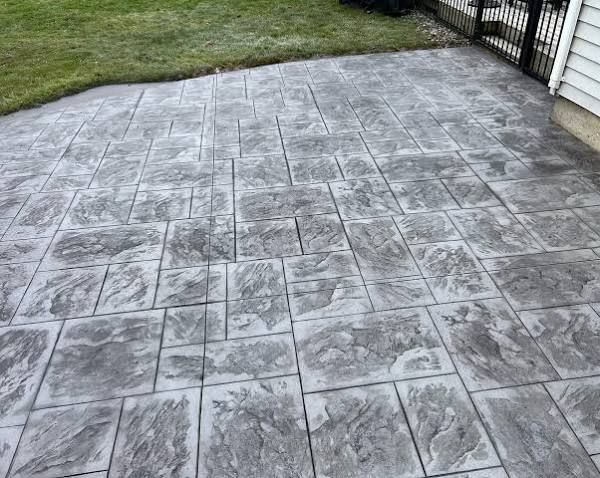
Stamped concrete cleaning and sealing in Tampa needs to happen about every two to three years. The pattern itself never wears out — it is pressed three-eighths of an inch into the slab and it is going nowhere. What disappears is the color, because the integral and release colors live in the very top skin of the concrete and the only thing protecting them is a sealer that our sun eats for breakfast. Clean it at the right pressure, re-seal it correctly, and the pattern snaps back into focus.
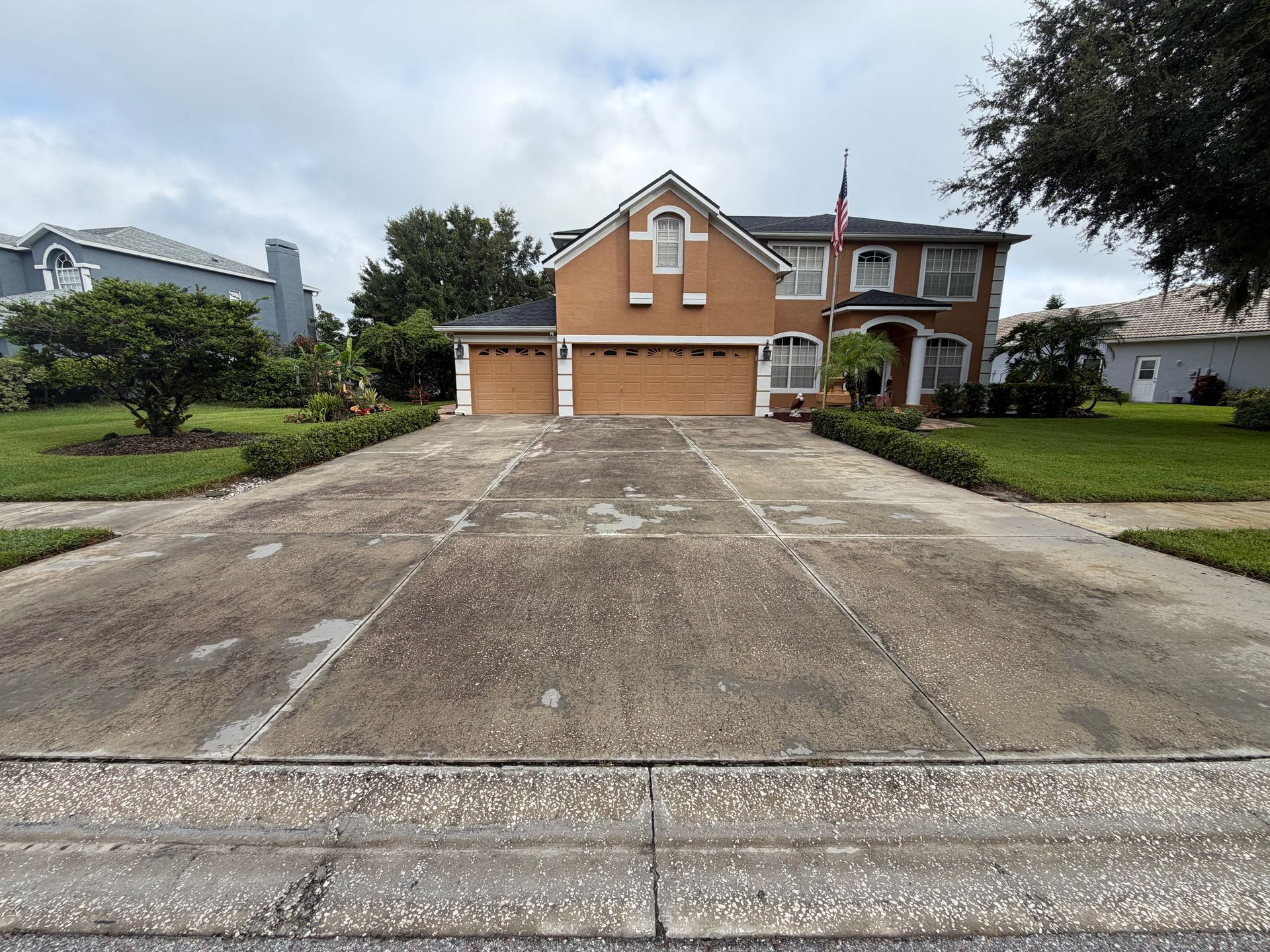
Here is the quickest way to find out what your driveway is supposed to look like: slide the planter by the garage about six inches to the left. That little shaded rectangle is the original color. Everything around it is what fifteen Florida summers do to an unprotected slab.
Why stamped concrete fades faster here than almost anywhere
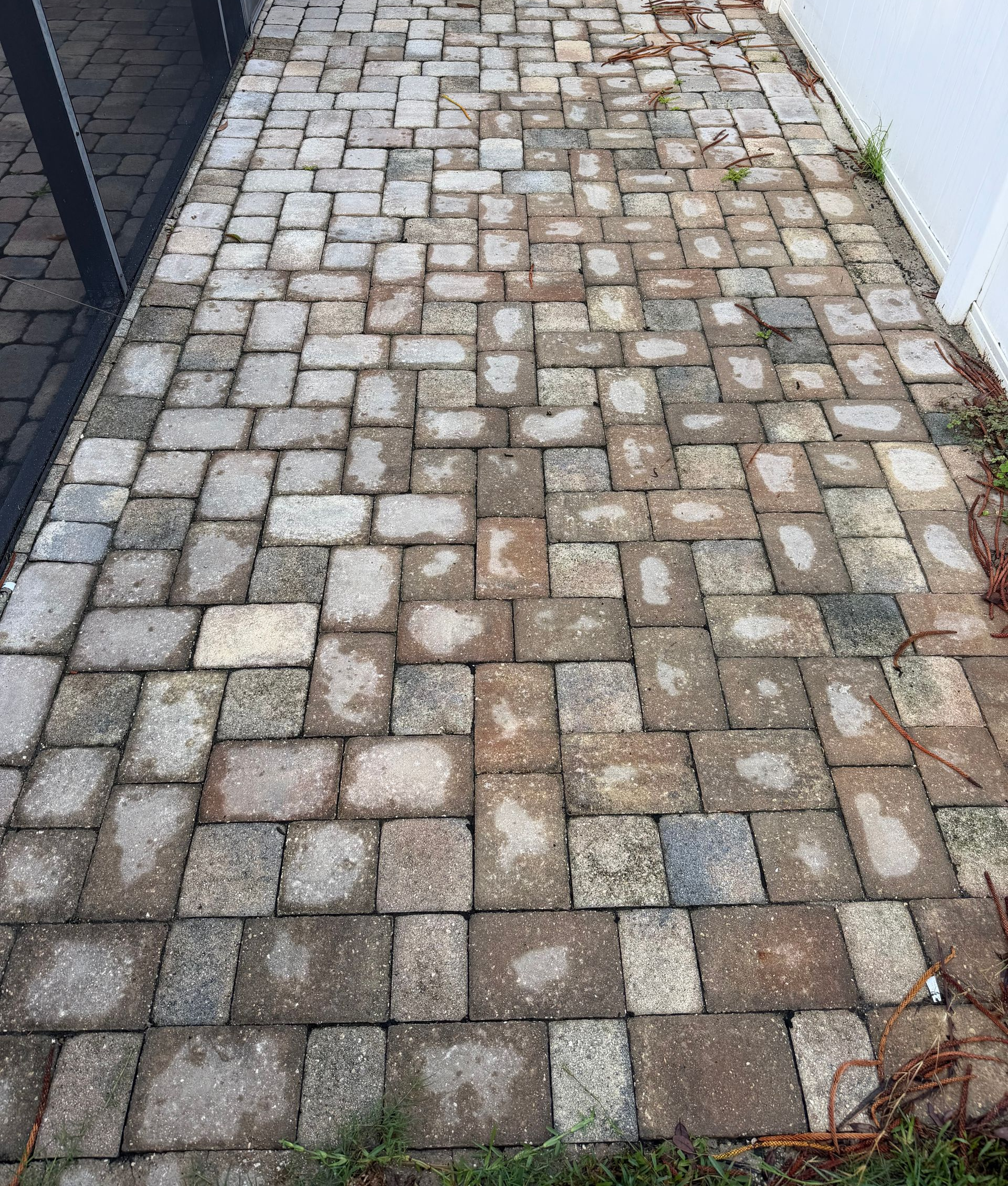
Stamped concrete gets its depth from two colors working together — an integral color mixed through the pour, and a release color dusted on the surface before the mats go down. The release color is what gives you the variation and the shadowing that makes a slab look like real stone instead of gray cement in a costume. It is also sitting right on top, totally exposed.
In Tampa Bay, three things come after it at once:
- UV load. We run roughly 240 sunny days a year. Acrylic sealers chalk and break down under that, and once the sealer goes milky, it stops protecting anything.
- Standing water and humidity. Afternoon storms put water on the slab daily for four months straight. Water sits in the low points of the stamp pattern — which is exactly where you will see algae start.
- Hot-and-cold cycling. Not freeze-thaw, but a 95-degree slab hit with 72-degree rain, over and over, works at the bond between the sealer and the concrete.
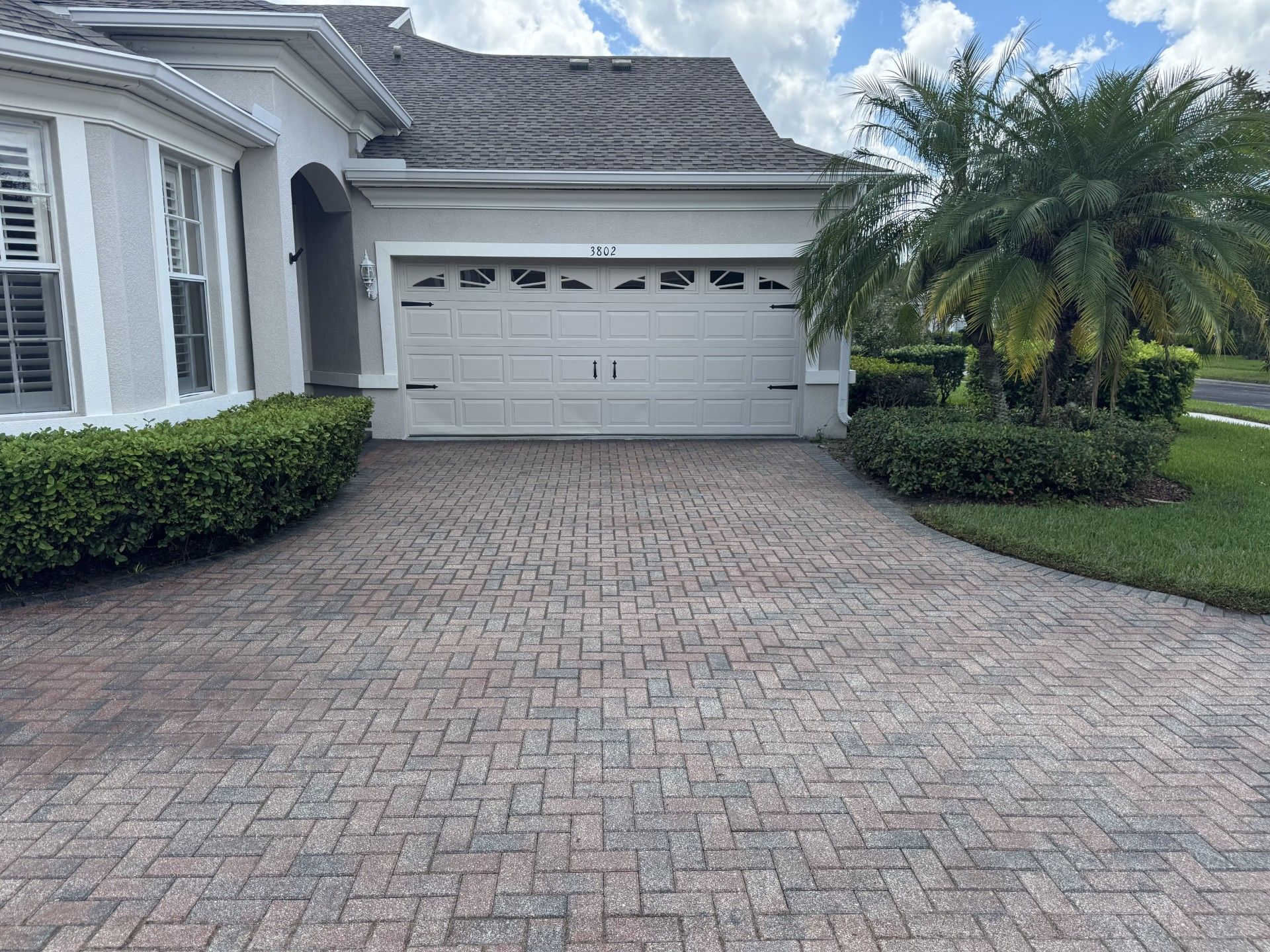
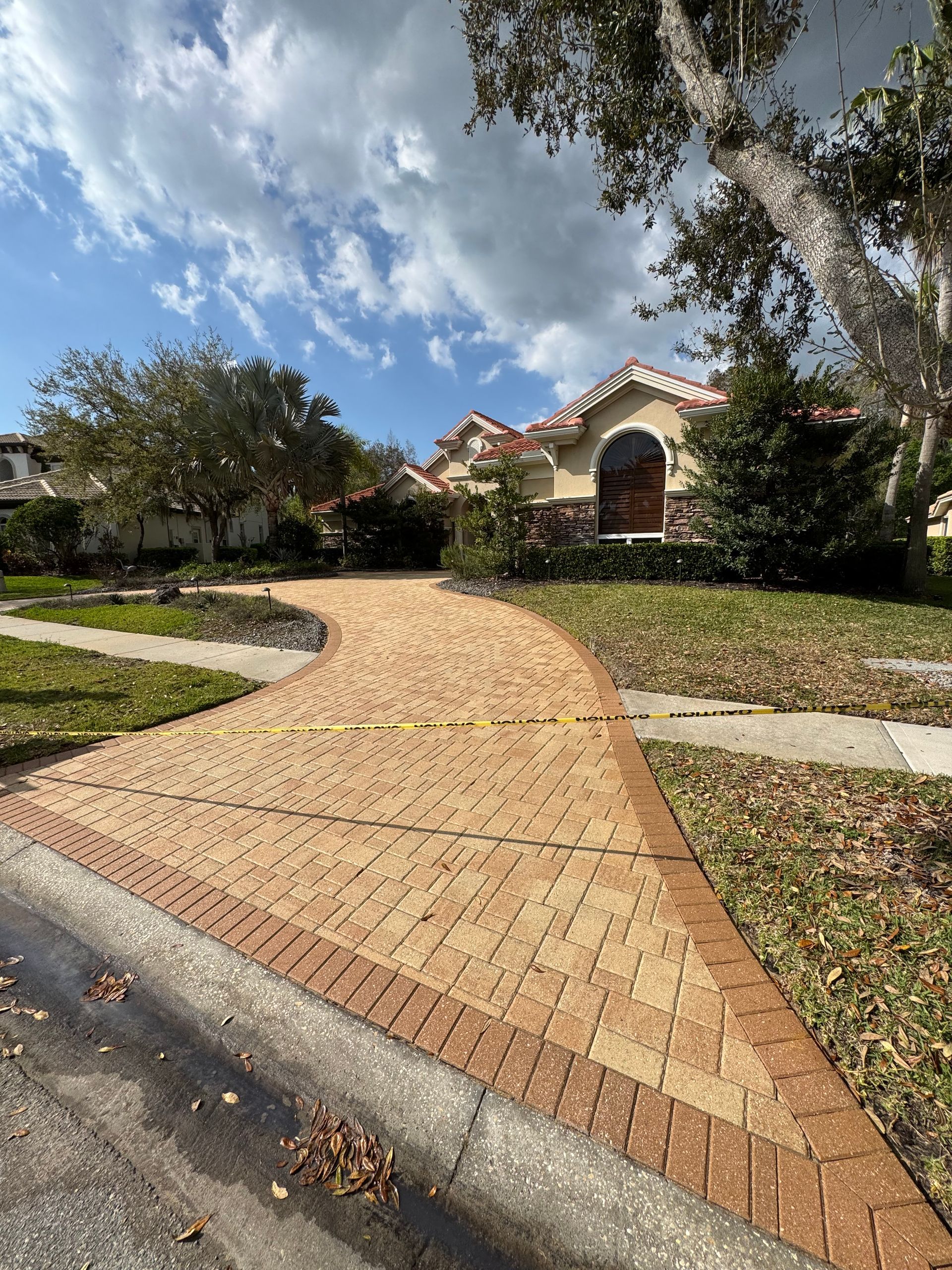
[PHOTO: before/after of a faded stamped concrete driveway with the pattern coming back after sealing — Starkey Ranch]
Can you pressure wash stamped concrete?
Yes, but not the way you would clean a sidewalk. A zero-degree tip at full pressure will flake off the remaining sealer in strips and leave visible wand marks that no sealer will hide. It can also strip the release color right out of the texture, and that color cannot be put back — it was in the mix.
The correct approach is a surface cleaner or a wide fan tip at moderate pressure, with a cleaning solution doing the actual work. Chemistry lifts the algae and the old oxidized sealer; water rinses it away. If the old sealer is failing in patches, it has to come off completely before anything new goes down, and that is a stripping job, not a washing job. Sealing over a half-failed sealer gives you a cloudy, blotchy driveway.
What a proper stamped concrete restoration involves
- Assess the existing sealer. A few drops of water tell us a lot — if it beads, there is sealer left; if it darkens the slab immediately, there is not.
- Pre-treat for organic growth. Algae and mildew in the grout lines get a dwell time, not a blast.
- Clean at controlled pressure with a surface cleaner, then detail the stamp lines and edges by hand.
- Strip failed sealer where it is peeling, hazing, or trapping moisture underneath.
- Let it dry completely — usually 24 to 48 hours in our humidity, longer if we have had rain.
- Apply sealer in two thin coats, not one thick one. Thick coats are what cause bubbling and the white blush you see on a lot of driveways around here.
How often should it be re-sealed in Florida?
Every two to three years on a driveway, and you can stretch to three or four on a covered lanai or a shaded pool deck that does not take direct sun. Anyone who tells you five years for a south-facing Tampa driveway has not watched one for five years.
Gloss, satin, or matte?
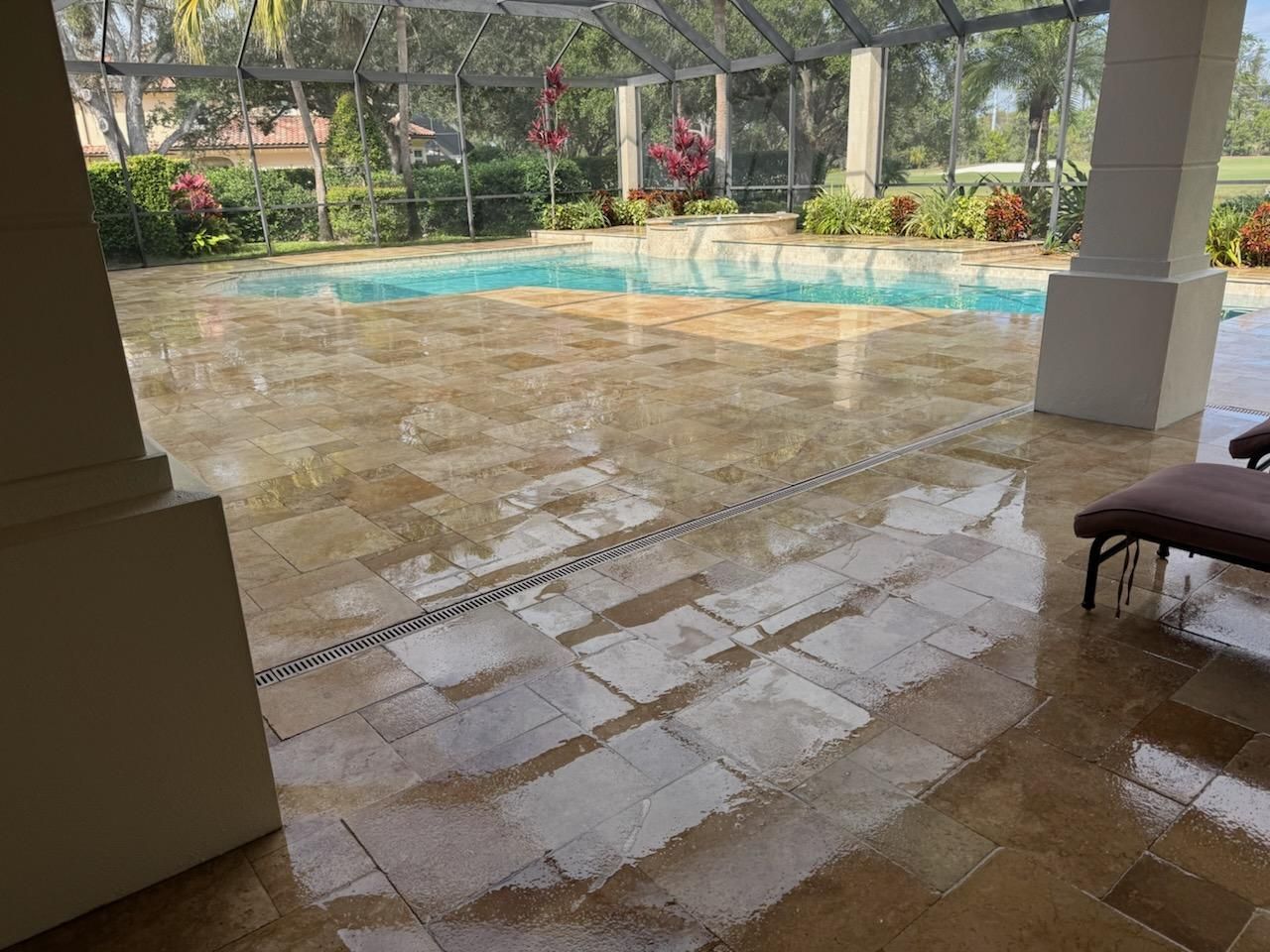
Gloss makes the color pop hardest and shows the most. It also gets slick when wet, which matters a great deal if the slab wraps a pool. Satin is where most of our clients land — it deepens the color without turning the driveway into a mirror, and it hides tire scuff better. Matte looks the most natural and the most like real stone, and it is the most forgiving as it ages. On pool decks we add a grit additive regardless of finish.
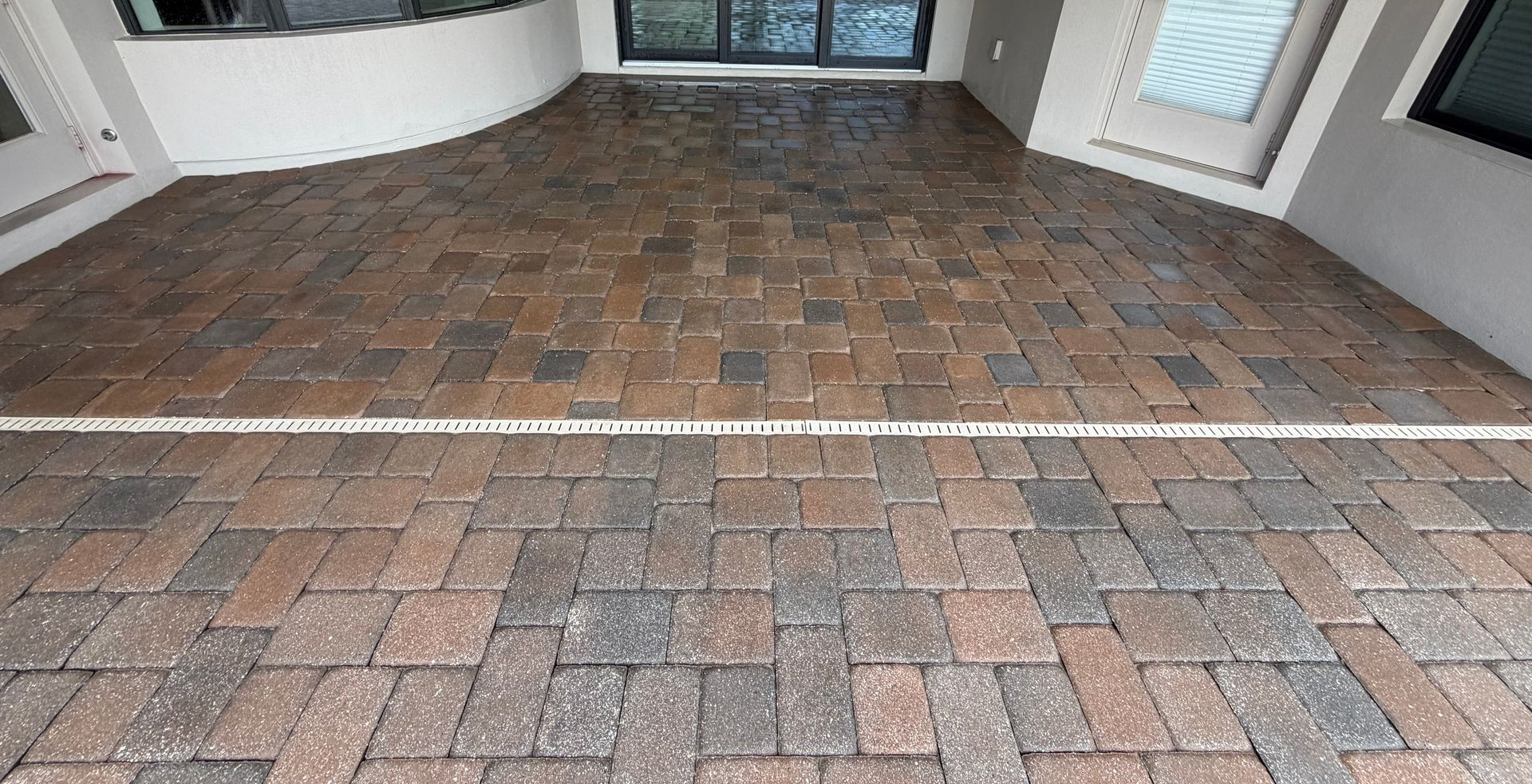
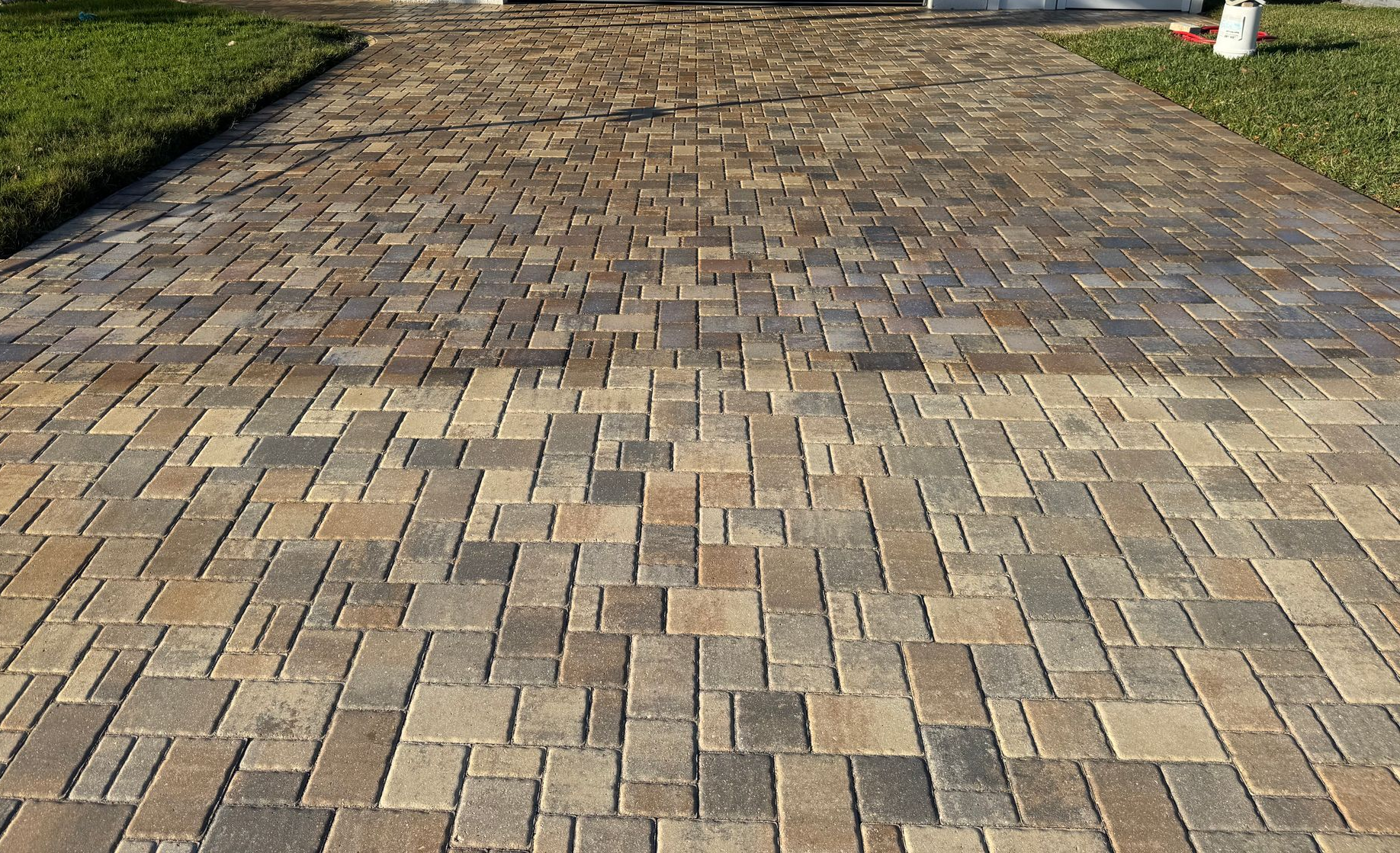
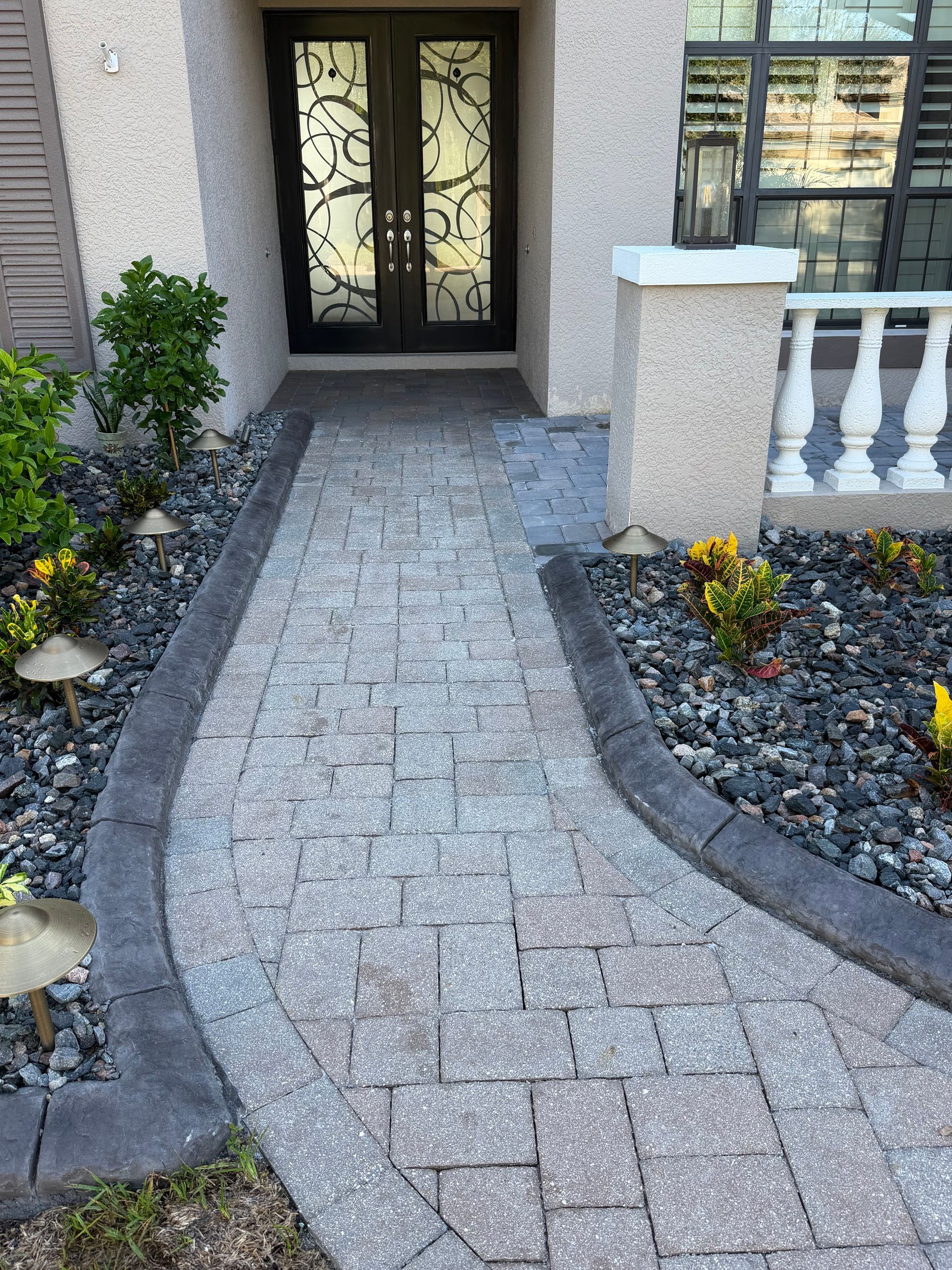
[PHOTO: close-up of the stamp pattern and grout lines, wet with fresh sealer — Bexley]
Tampa Bay neighborhoods where we see this most
The newer master-planned communities west and north of town are full of stamped concrete, because builders used it heavily on driveways, entry walks, and pool decks through the 2010s. We spend a lot of time on it in Starkey Ranch and Bexley, where entire streets were poured the same year and are now hitting the same wall at the same time. If your neighbor's driveway suddenly looks ten years younger than yours, that is usually all that happened.
Stamped concrete is also the surface most often handed to whoever has a machine in their truck, and it is the one least able to survive that. It is a finish, not a slab — treat it like a finish. You can see the full range of what we handle on our exterior cleaning page.
Let us take a look at it
Send us a photo of the slab and the planter trick above, and we will tell you honestly whether you need a clean and seal or a strip and reset. Call 813-957-1174 for a free quote. We are a veteran-owned Tampa company, our crews are the same faces every visit, and we would rather talk you out of the wrong service than sell it to you.