Why Yours Is Slick

If your court has gone slippery in the shaded corner and the color has drifted from "new" to "greenish," you do not have a surfacing problem. You have a biology problem, and it is reversible.
Tennis court cleaning in Tampa should happen every twelve months, more often on courts with tree cover or poor drainage. The slickness is a thin algae and mildew film growing in the texture of the acrylic coating, fed by humidity and shade. It cleans off chemically. What it does not survive is a pressure wand, which will strip the acrylic right off the asphalt or post-tensioned slab underneath — a $40,000 mistake made in about ninety seconds.
Why Florida courts grow a film and courts up north don't
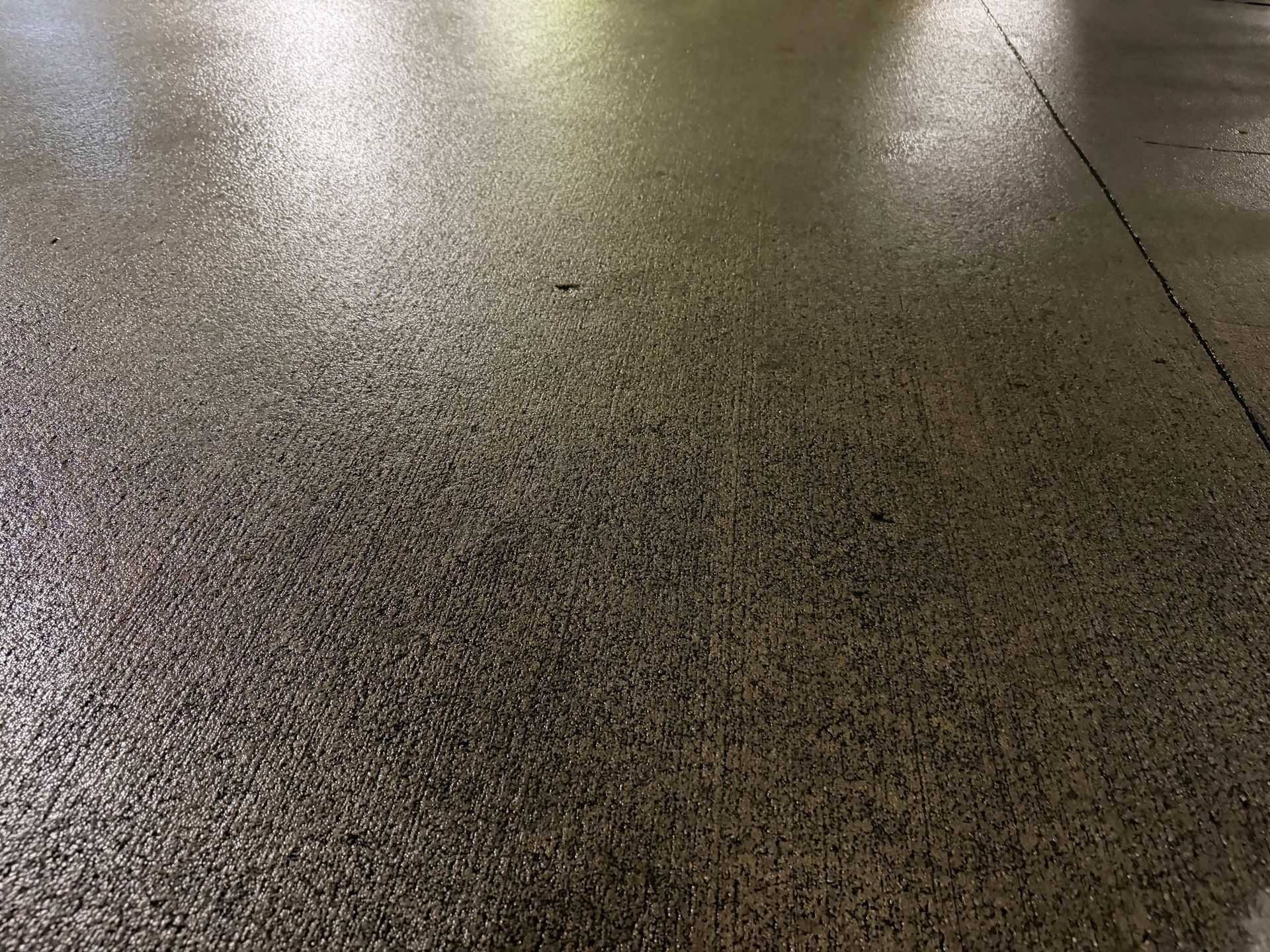
A hard court surface is acrylic color coat over asphalt or concrete, with silica sand mixed in for texture and grip. That texture is what gives you footing. It is also thousands of tiny sheltered pockets, and in Tampa Bay they stay damp.
Add the specifics of a luxury estate court — oak canopy on one side, irrigation overspray, a windscreen that cuts airflow, a court built low relative to grade so it holds water after a storm — and you have ideal conditions for algae. The north and east corners always go first. Every single time.
[PHOTO: tennis court mid-clean, clear line between algae-filmed surface and cleaned surface — Avila estate court]
How often should a hard court be cleaned?
- Full sun, good drainage, open airflow: once a year.
- Partial shade or tree canopy: every six to nine months.
- Low-lying courts that pond after rain: every six months, and fix the drainage.
- Courts near irrigation heads: annually, and reposition the heads.
Debris matters as much as scheduling. Leaf litter left on an acrylic surface for a week in August leaves a tannin stain and a colony. Blowing the court weekly is free and it halves how much actual cleaning it needs.
What proper court cleaning involves
- Clear the court. Nets down or loosened, windscreens and benches moved, debris blown out of corners and fence lines.
- Pre-wet the surface and surrounding landscaping.
- Apply a low-concentration cleaning solution rated for acrylic sport surfaces — sodium hypochlorite based, dwelling long enough to kill the organic growth without sitting long enough to lighten the color.
- Agitate gently where the film is heaviest, with a soft brush, not a surface cleaner.
- Rinse at low pressure — well under 500 PSI, fan tip, consistent distance. The texture must survive.
- Flush the perimeter so nothing runs into the landscaping or the pool.
What is not on that list: a surface cleaner, a turbo nozzle, a wand held close, or any attempt to "brighten" the court with pressure. Those take the color coat with them.
Pickleball courts, and the sport court problem
Half the estates we service in Avila, Cheval and Carrollwood have converted or added a pickleball court in the last few years, and they come with their own quirks. Pickleball courts are smaller, so the wear pattern concentrates; the kitchen line area glazes faster. Many are overlaid on an existing tennis slab with fresh lines, which means two generations of coating and a seam that collects growth.
Modular sport court tile — the snap-together plastic systems — is a different animal again. Those clean beautifully but the growth lives under the tiles in the shaded airspace, so cleaning the top does nothing for the slickness. Those need the solution to reach below the tile surface.
When cleaning won't fix it
Being straight with you: cleaning restores grip and color on a surface that still has a color coat. If your court has crazing, spider-web cracking, bare asphalt showing through at the baseline, or birdbaths that hold water after a rain, you are looking at resurfacing, and no cleaning will substitute. We will tell you that on the quote rather than take your money and hand you back a cleaner version of the same problem.
What cleaning does do is buy you years. A court that gets washed annually holds its coating far longer than one that grows a decade of organic film into the texture.
[PHOTO: pickleball court with fresh lines, before/after of the kitchen area]
Courts, cages, decks and everything else out back
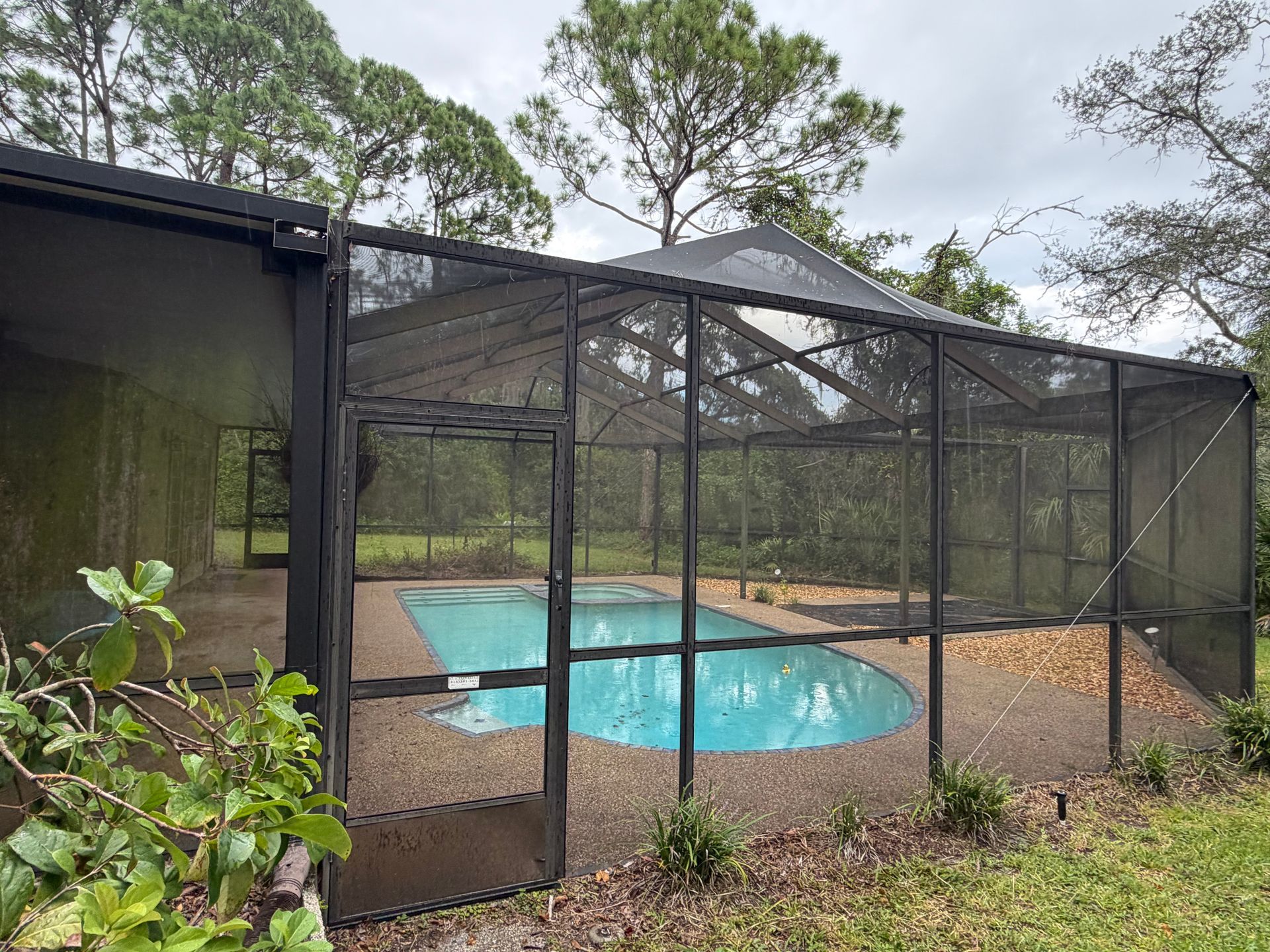
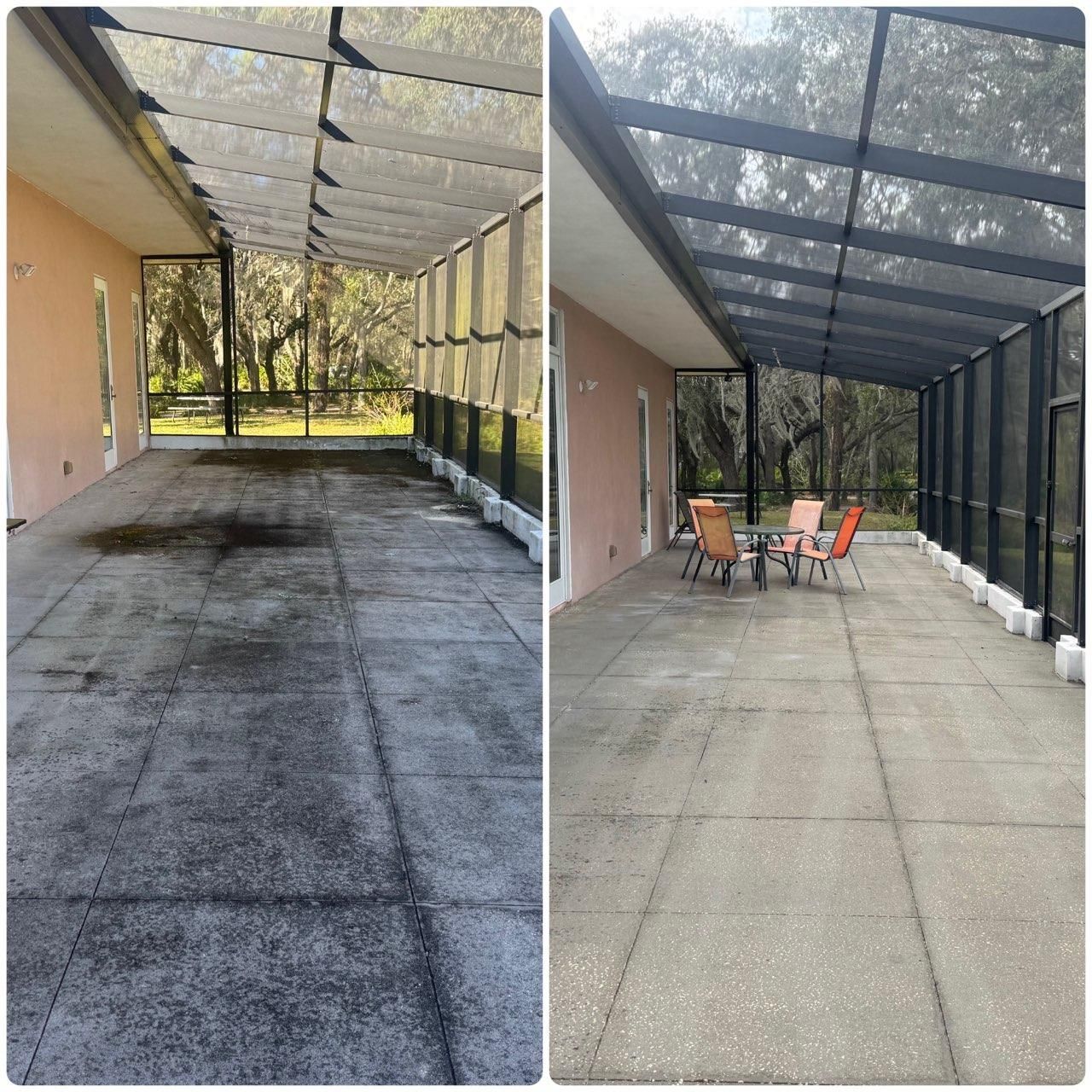
A court rarely stands alone. Most of the estates we work on have us do the court, the pool deck, the cage and the walkways in one visit — details on our residential services in Tampa page, and the full surface list under exterior cleaning. We regularly handle pressure washing and roof cleaning in Avila and the surrounding gated communities.
Call 813-957-1174 for a free quote. Veteran-owned, Tampa Bay based, and we have never once cleaned a court with a wand.