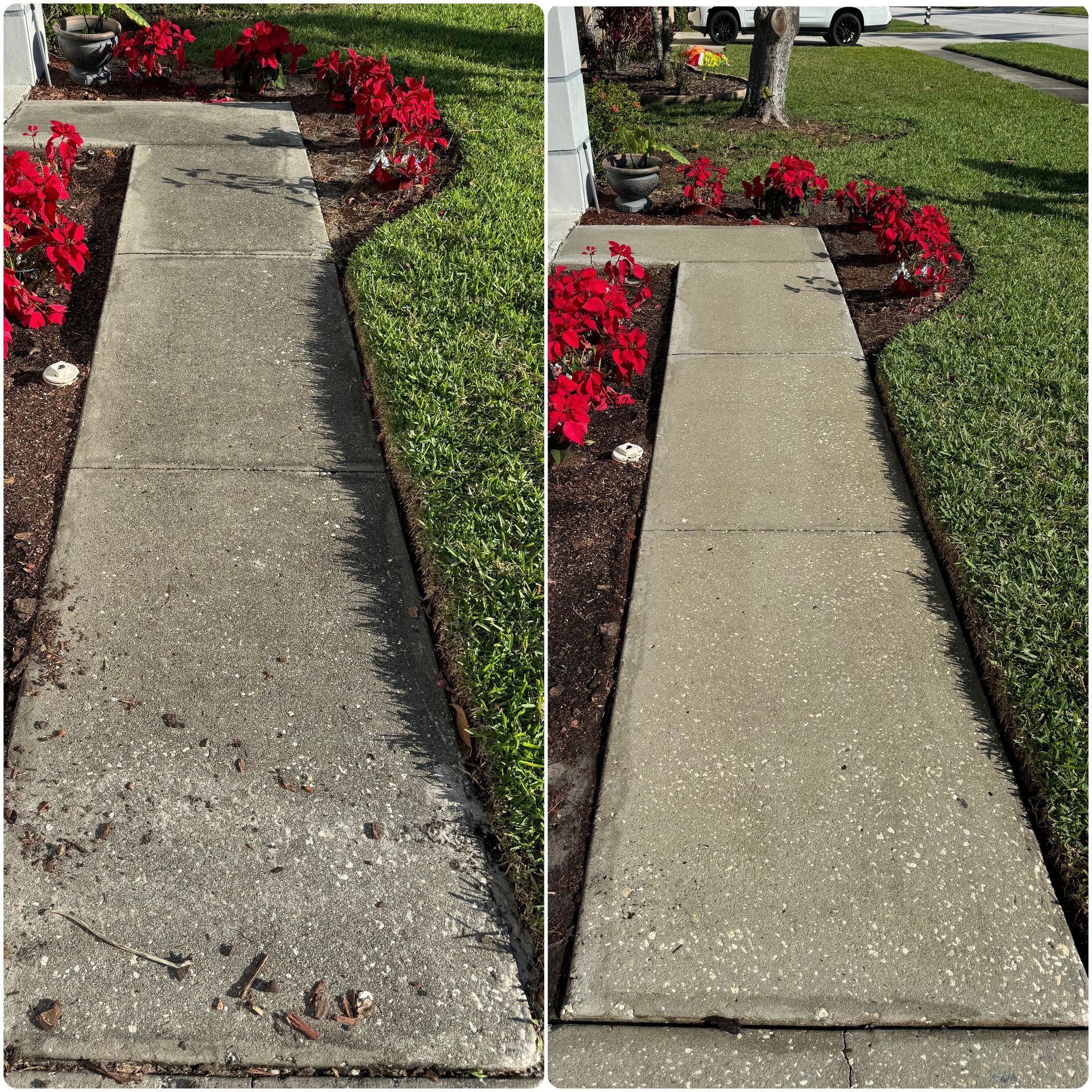
Limestone and coral stone cleaning in Tampa
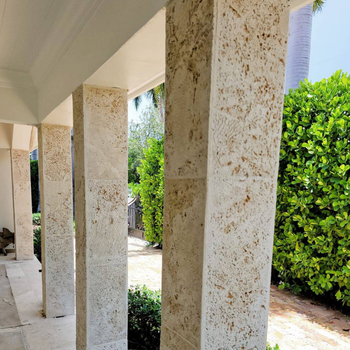
Here is the single most important fact about limestone and coral stone cleaning in Tampa: acid dissolves it. Limestone, coral stone, shellstone, and keystone are all calcium carbonate, which means the acid-based cleaners that work beautifully on concrete will chemically eat the surface of your stone. One pass with the wrong product leaves a dull, pitted, lighter-colored patch that cannot be cleaned back out. The job is done with neutral-pH chemistry, dwell time, and soft agitation — nothing else.
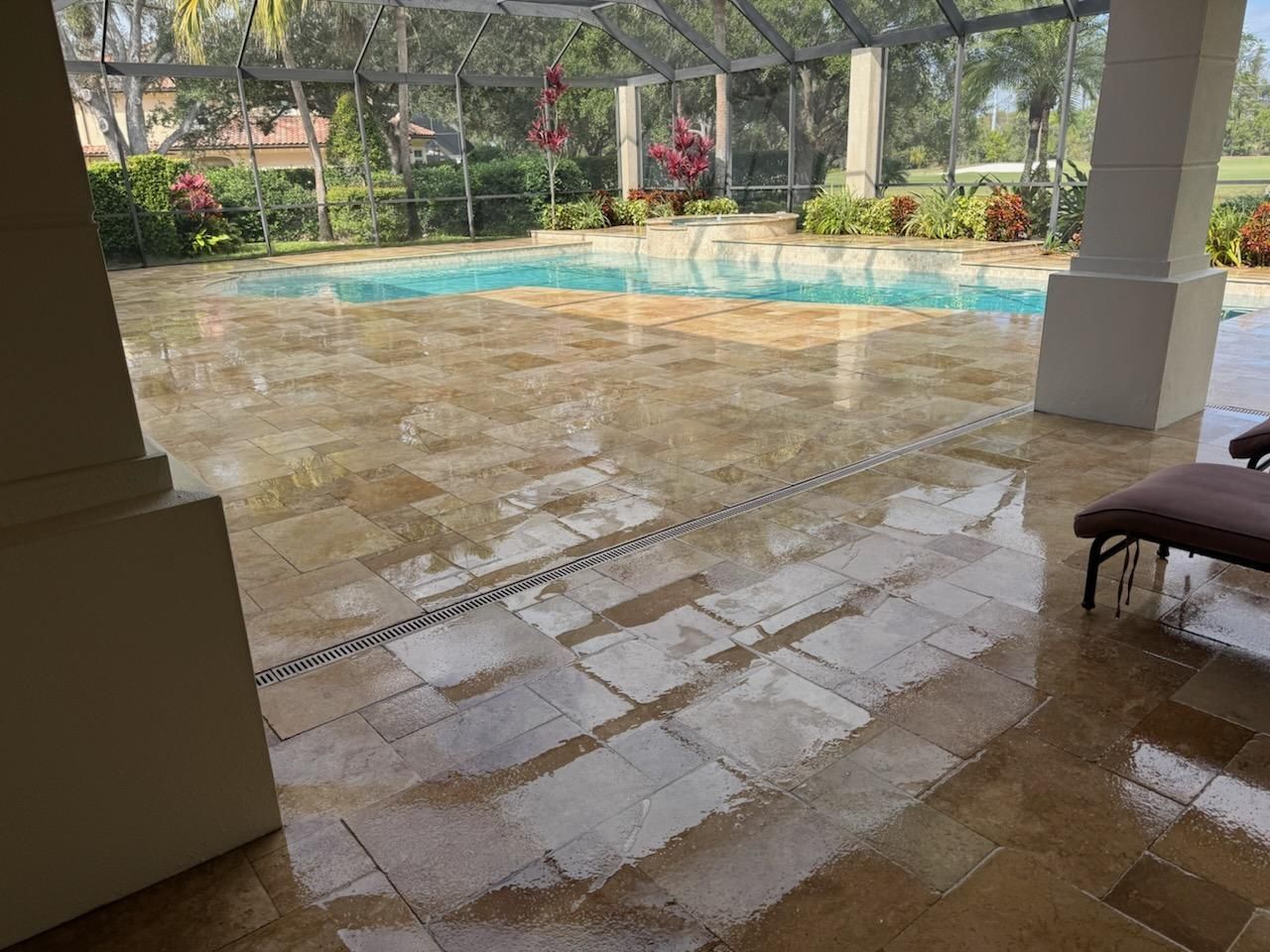
Sunset Park is wall-to-wall with this material. Keystone caps on seawalls, coral stone entry surrounds, shellstone pool decks, limestone treads and pavers. It's the right choice for a waterfront house — it stays cool underfoot, it handles salt, and it looks like Florida is supposed to look. It's also the most commonly damaged surface we get called out to look at.
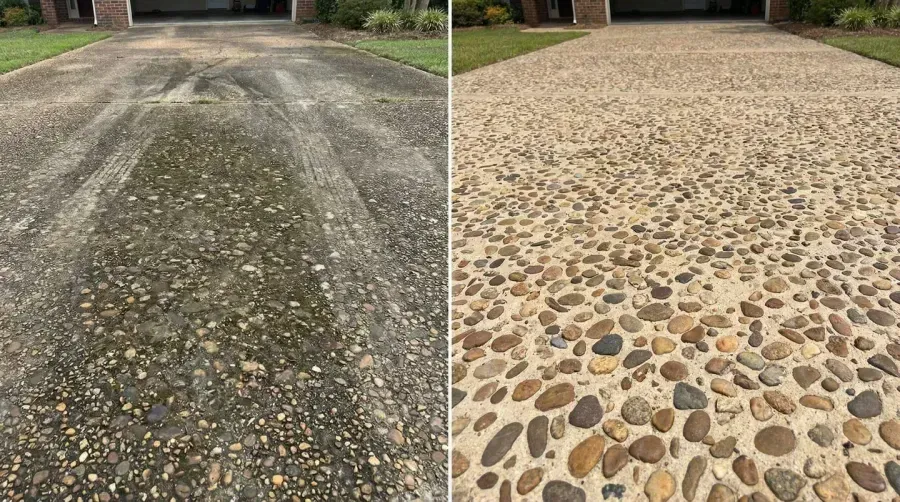
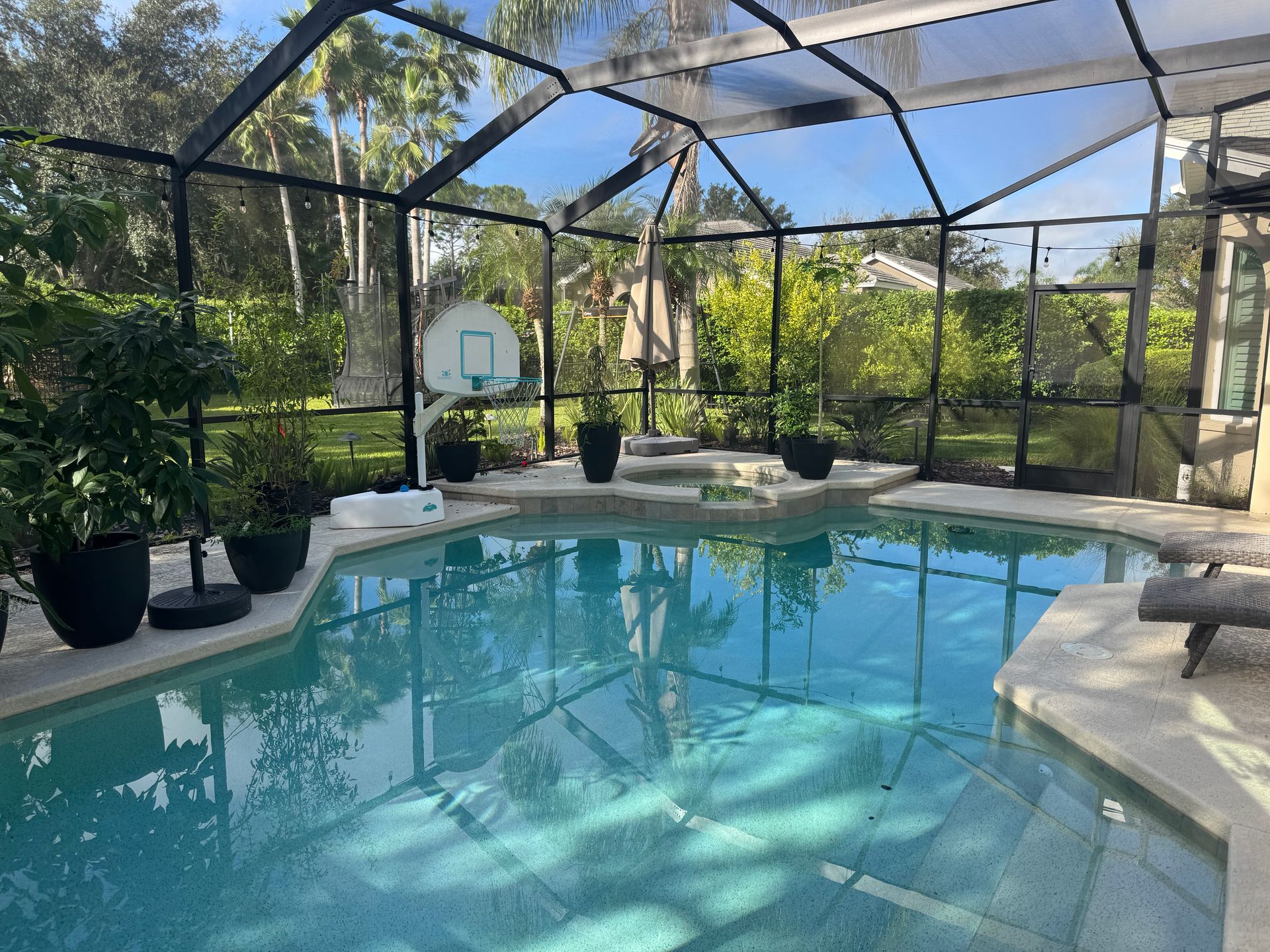
[PHOTO: before/after of a shellstone pool deck with organic staining removed — Sunset Park]
How to tell what you have
- Shellstone / keystone: visible fossil shell fragments, open pores, often a warm cream color. Quarried in Florida and the Keys.
- Coral stone: denser, finer pattern, the "chiseled edge" look common on entry columns and pool coping.
- Limestone: more uniform, often honed or tumbled, used for treads, pavers, and caps.
- Travertine: also calcium carbonate, also acid-sensitive, with the characteristic linear veining and filled pits.
If it fizzes when you put a drop of vinegar on a hidden corner, it's calcium carbonate and acid is off the table.
What stains it and what comes out
Organic growth — algae, mildew, lichen. This is most of what you're looking at, and it comes out well. A diluted, carefully controlled sodium hypochlorite application with proper dwell and a thorough rinse handles it. Note that chlorine on stone has to be managed: too strong, too long, or inadequately rinsed and it will yellow or lighten the stone.
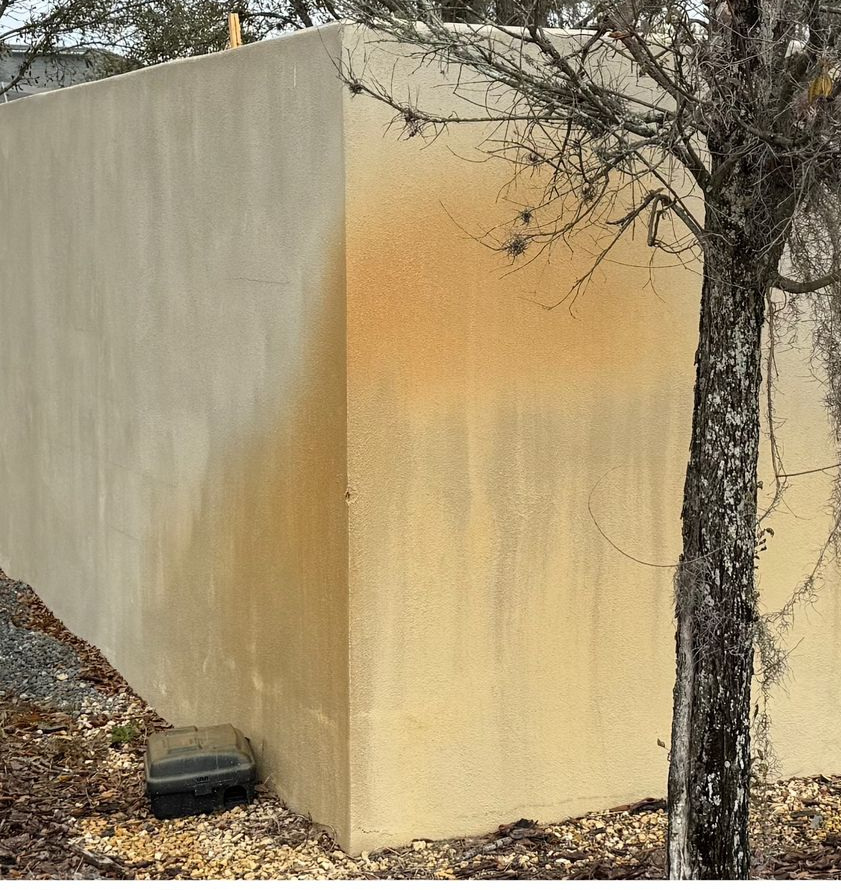
Rust from irrigation or furniture. Comes out, but needs a non-acidic rust remover formulated for stone. Standard oxalic treatments are risky.
Salt efflorescence. The white haze that appears after the stone has been wet and dried repeatedly. Comes off mechanically and with the right cleaner, and tends to come back if the underlying moisture path isn't addressed.
Oil, suntan lotion, and food. These soak into the pores. Poultice treatments pull a good amount out. Deep old stains in open-pored shellstone may not fully release.
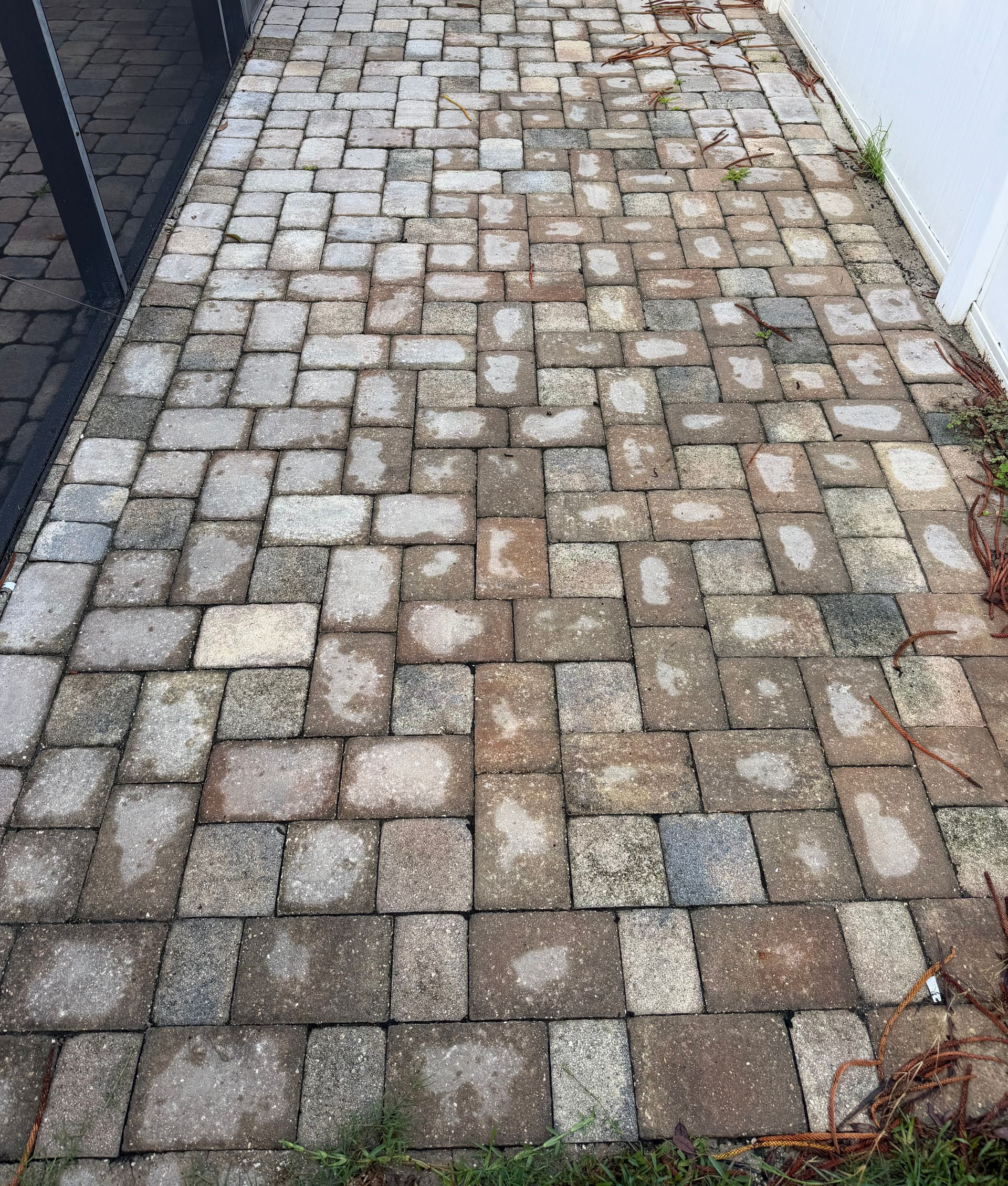
Etch marks from prior acid cleaning. These are not stains. The surface is gone. Honing or replacement is the only fix, and we'll tell you that rather than sell you a cleaning that won't help.
Can limestone be pressure washed?
At very low pressure, yes — mostly as a rinse. Shellstone in particular is soft and porous, and a surface cleaner at normal concrete pressure will erode the high points and open the pores further, which makes the stone stain faster forever after. We rinse at the lowest pressure that will carry the debris away.
The process on a waterfront stone deck
- Clear furniture and debris, and flush the deck drains and scuppers.
- Pre-wet the stone thoroughly so the cleaner can't wick deep into dry pores.
- Protect adjacent plantings, metal fixtures, and pool water.
- Apply neutral or carefully diluted solution in manageable sections, with dwell.
- Soft brush the grout joints and the shaded perimeter, where growth is worst.
- Low-pressure rinse, then a second clean-water rinse — on stone, the rinse is as important as the wash.
- Assess for sealing. Not all stone should be sealed, and a breathable penetrating sealer is the only kind that belongs on it.
[PHOTO: close-up of keystone seawall cap showing shell fossils, clean vs. stained]
How often?
Waterfront stone in Sunset Park, Beach Park, and Culbreath Isles generally wants cleaning every 12 months. Shaded stone, or stone with irrigation overspray, closer to every 9. Covered or fully sunlit stone can stretch to 18 months.
If you take one thing from this: do not let a crew put an acid-based "concrete brightener" on your stone, and do not let anyone surface-clean it at driveway pressure. Those two mistakes account for nearly every ruined stone deck we see in South Tampa, and they are both irreversible. It's a genuinely confusing area — the products are sold side by side at the same supply house with very similar labels.
We work on stone every week
Shellstone, coral stone, limestone, travertine, and marble across Sunset Park, Beach Park, Culbreath Isles, Davis Island, and the rest of Hillsborough, Pasco, and Pinellas counties. See our exterior cleaning services, our pool deck cleaning in Tampa Bay, or our luxury pressure washing in Sunset Park.
Call 813-957-1174 for a free quote. Veteran-owned, and we'd rather talk you out of the wrong process than show up and do it.