Wrought iron fence cleaning in Tampa
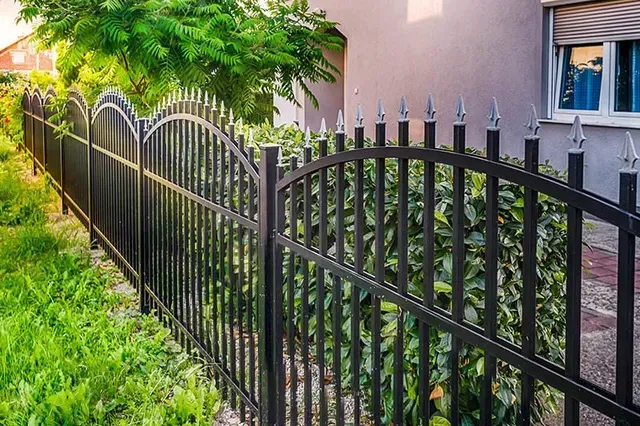
Salt air eats iron. That's the whole story along Bayshore, and it's why wrought iron fence cleaning in Tampa is as much about catching corrosion early as it is about getting the fence looking black again. A gate two blocks from the water behaves completely differently than the same gate out in Wesley Chapel — and the difference shows up in about eighteen months.
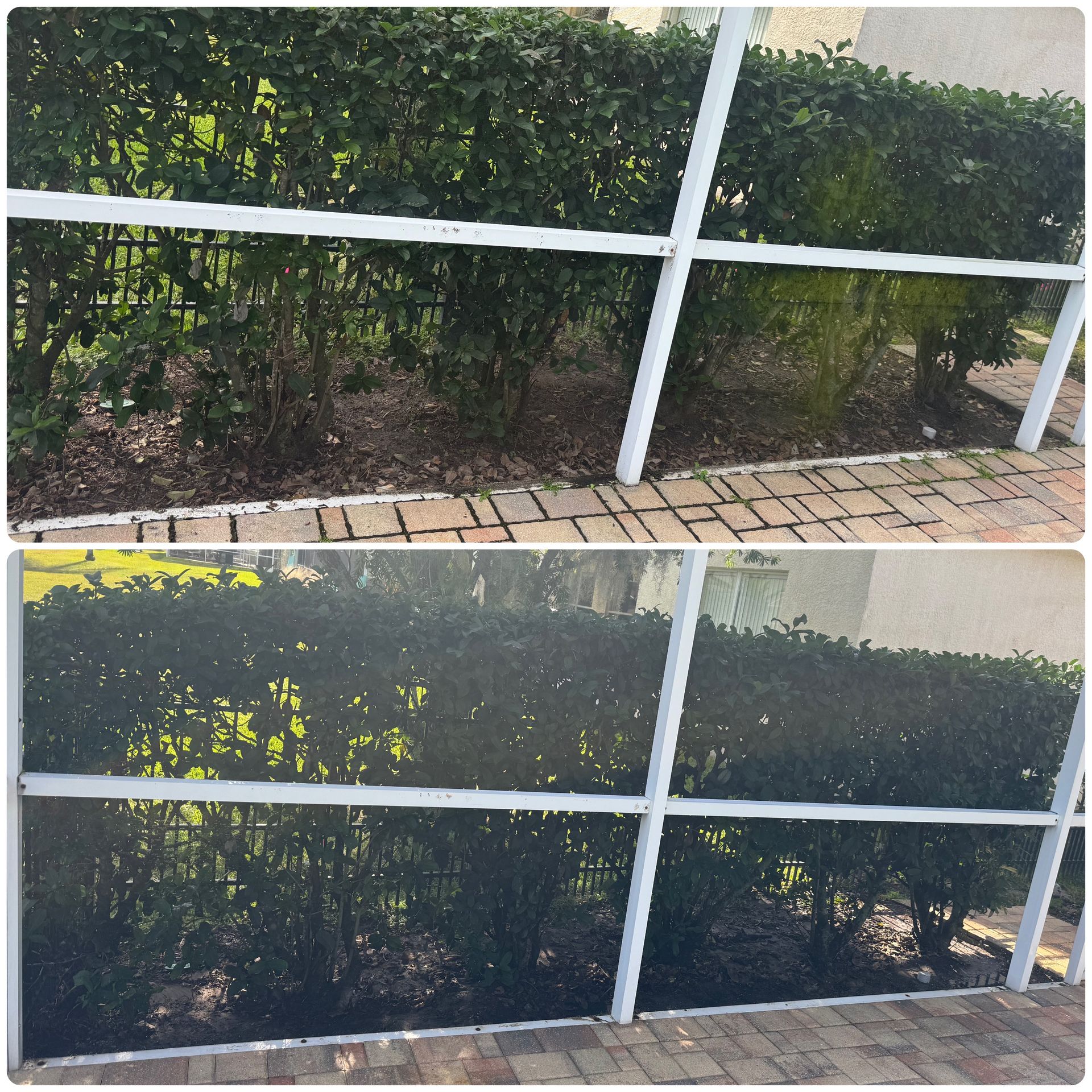
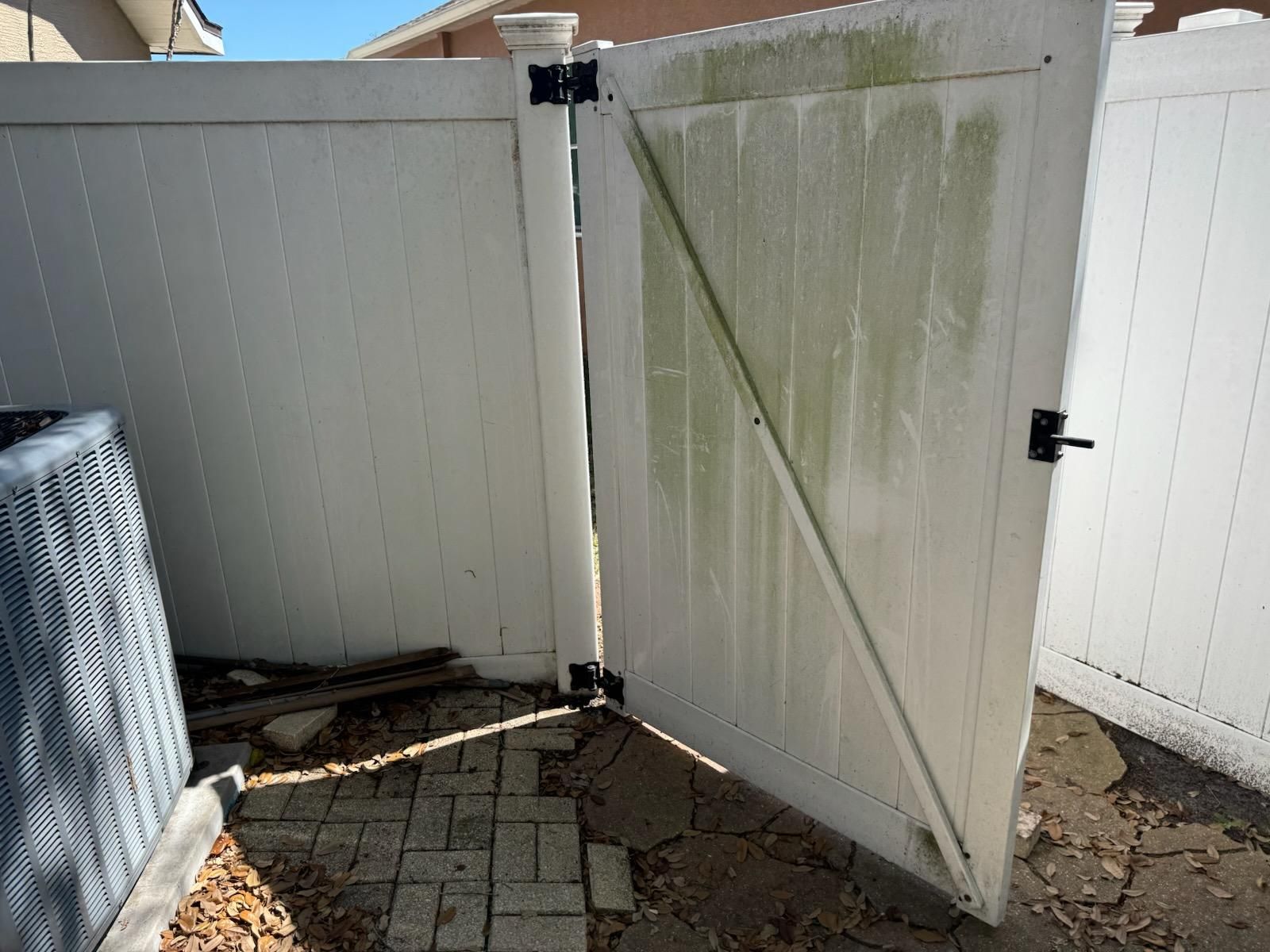
[PHOTO: before/after of a wrought iron fence section with rust bleed at the base — Bayshore]
What's actually happening to your fence
Three failures, often at once:
Chalking of the powder coat. The UV in Florida sun breaks down the resin at the surface. You'll notice it when you brush against the fence and come away with a dull gray-black residue on your sleeve. The fence isn't dirty — the finish is oxidizing.
Rust bleed at the pickets and base plates. Water sits where the picket meets the bottom rail and inside the hollow sections. It rusts from the inside out, and by the time you see a blister on the outside the metal under it is already compromised.
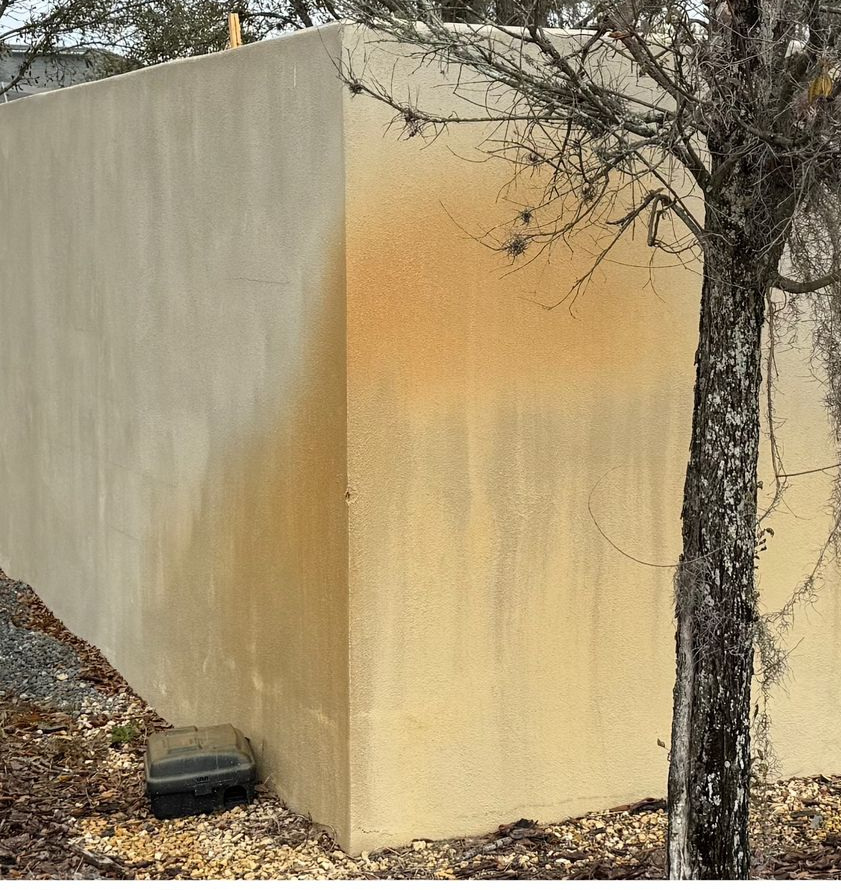
Rust staining on the masonry below. This is the one that usually prompts the call. Orange streaks running down a white stucco column or a limestone cap below an iron gate. That stain is iron oxide in the stone, and it comes out with an oxalic or specialized rust remover — not with pressure, and not with a general exterior mix.
Can a wrought iron fence be pressure washed?
Lightly, and mostly for rinsing. High pressure on an aging powder coat accelerates its failure, drives water into the hollow pickets through any pinhole it finds, and on an older fence will peel paint in sheets. Our process is a hand-applied cleaner, soft brush agitation on the horizontal rails and finials where grime collects, and a controlled rinse.
What we can do:
- Remove mildew, salt film, pollen, and the chalked oxidation layer.
- Clean and lubricate the hinges, latch, and gate hardware while we're there.
- Treat the rust staining on the adjacent stucco, stone, or concrete.
- Tell you honestly which sections are cleaning problems and which are refinishing problems.
What cleaning cannot do: restore a powder coat that has already failed, or stop rust that has started inside a hollow section. Those are paint and metalwork jobs. We'll point them out and leave the quoting to the people who do that work.
The columns and the stone matter as much as the iron
On Bayshore, Golfview, and Beach Park the fence is usually only part of the picture — there are stucco or coquina columns between the panels, a stone cap, and often a driveway gate flanked by two masonry piers with light fixtures on top. Those elements all collect salt and mildew, and they all stain from the ironwork above and beside them.
Doing the iron without the masonry leaves you with a clean fence between two dirty columns, which somehow looks worse than when you started.
How often should it be cleaned?
Distance from the water is the variable that matters:
- Within a few blocks of Hillsborough Bay: every 6 to 12 months. Salt deposition is relentless and it's cumulative.
- One to three miles inland: annually.
- Inland Hillsborough and Pasco: every 18 to 24 months, mostly for mildew and pollen rather than salt.
A simple thing that helps between visits: if you have irrigation heads hitting the fence, move them. Repeated wetting with Tampa's mineral-heavy well or reclaimed water does more damage to a powder-coated fence than rain ever will, and it's the single most common cause of premature rust bleed we see.
While we're on the property
Iron fence cleaning is a short job on its own and almost always worth bundling with the house, the driveway, and the walls. A full exterior visit also lets us look at the whole salt-exposure picture — window frames, light fixtures, outdoor hardware, the garage door track — and flag what's heading toward trouble.
See our deck and fence cleaning, our exterior cleaning services, or our luxury pressure washing along Bayshore.
Call 813-957-1174 for a free quote. We're veteran-owned and Tampa-based, we work waterfront properties year-round, and we know the difference between a fence that needs washing and a fence that needs a welder.