irrigation rust stain removal Tampa
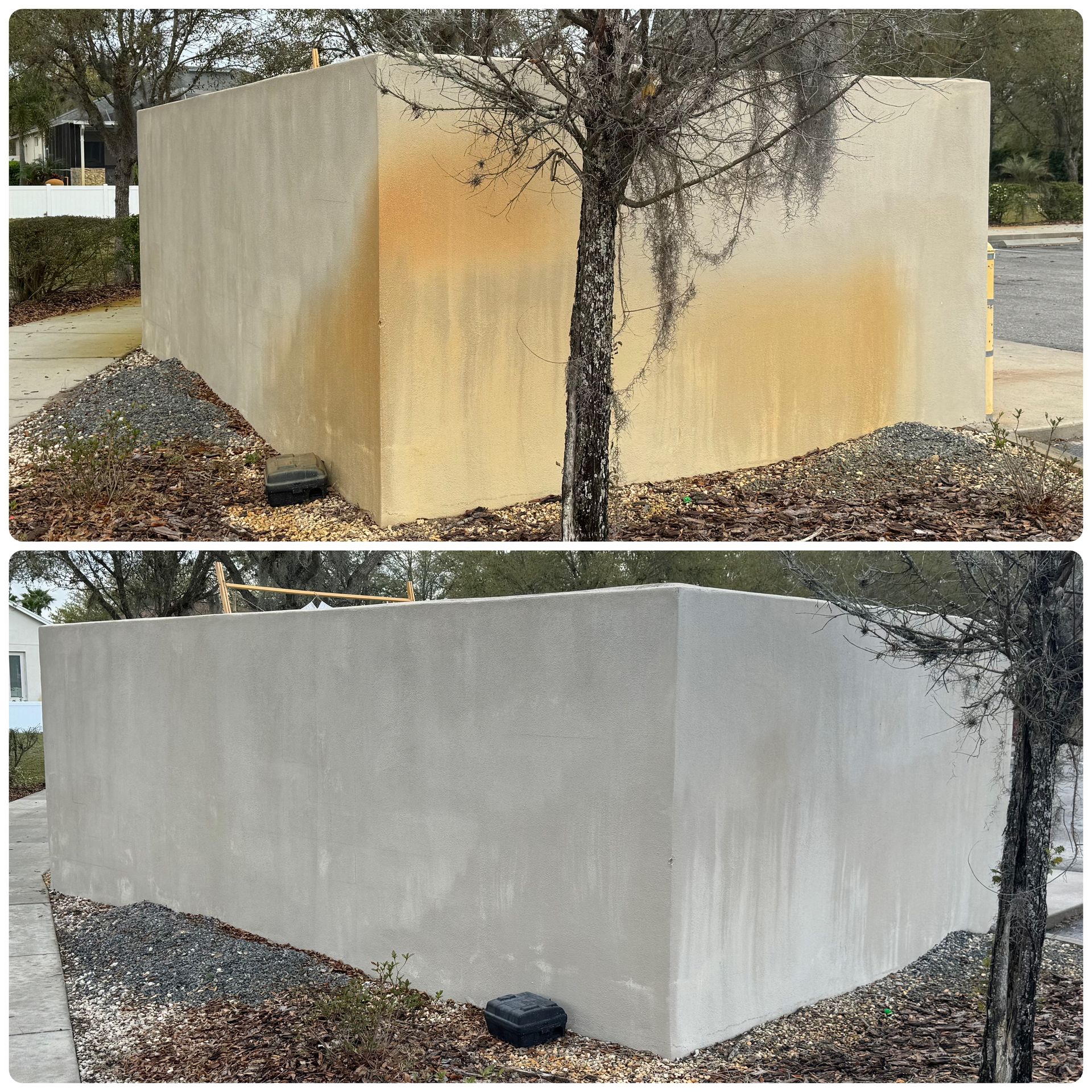
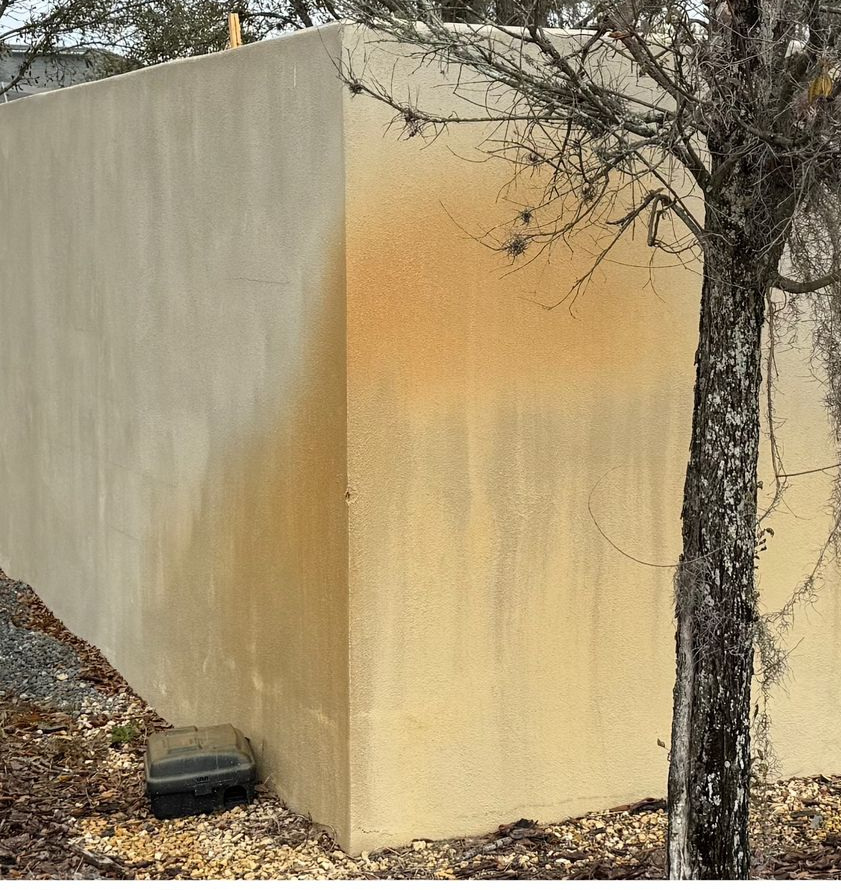
Irrigation rust stain removal in Tampa is a chemical job, not a pressure job. Those orange arcs on the bottom three feet of your stucco are iron deposited out of well water by your own sprinkler heads, and no amount of pressure will move them — the iron has bonded into the surface. An oxalic or specialty rust remover dissolves it in minutes. Pressure just erodes your stucco finish and leaves the stain behind.
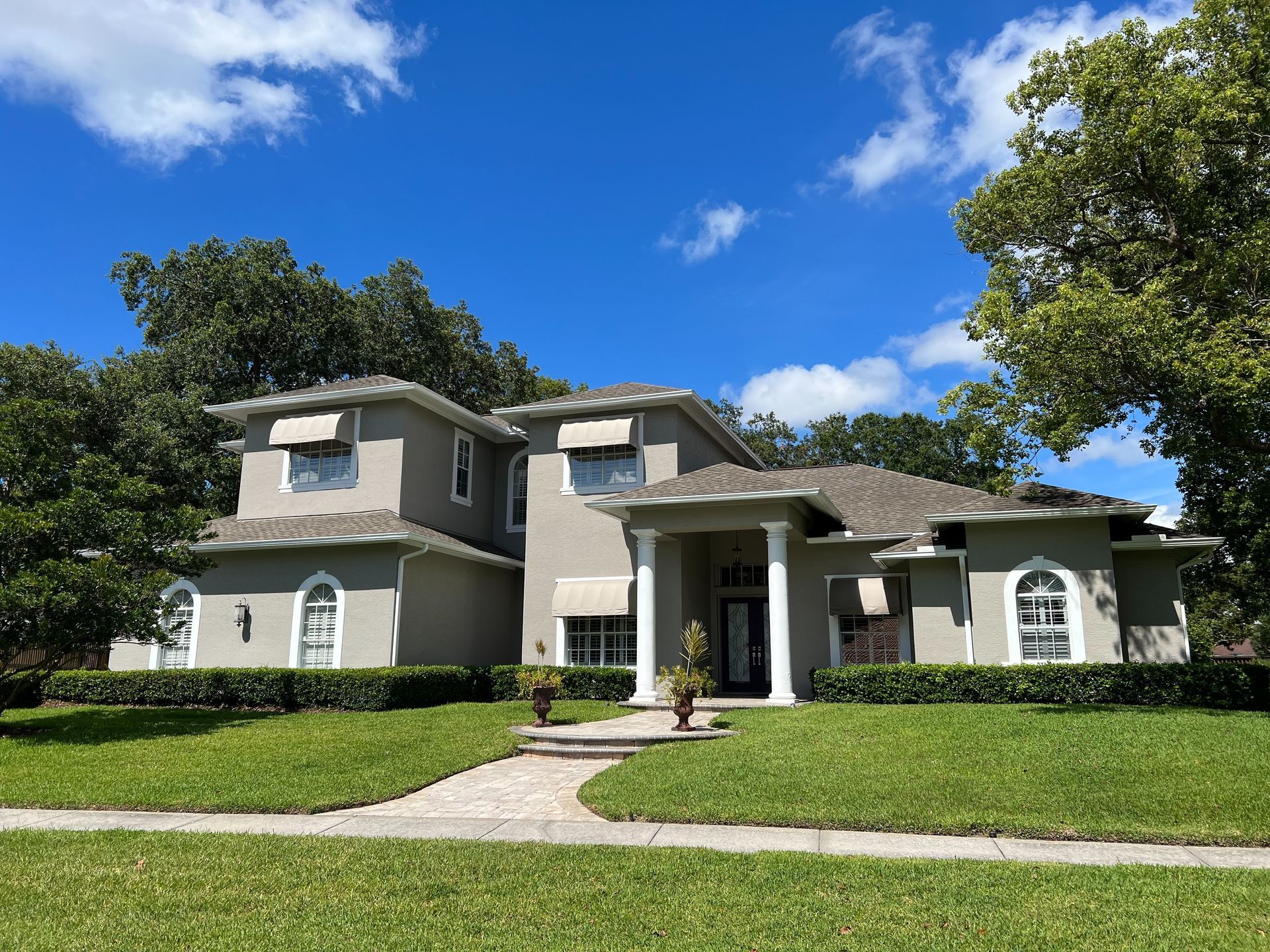
If the staining stops at a clean, curved line about four feet up the wall, you don't have a mystery. You have a rotor head aimed at the house.
Why Tampa Bay well water does this
Most of Hillsborough and Pasco sits on limestone with iron-bearing groundwater underneath it. Pull that water up through a well, spray it into the air, and the dissolved ferrous iron meets oxygen and immediately oxidizes into ferric iron — rust. It lands on whatever the spray hits and it dries there. Every cycle adds another microscopic layer.
Homes on county water almost never have this. Homes on a private well, or on a reclaimed-water irrigation system, get it reliably. That is why entire streets in the horse-country areas northwest of town have the same orange band at the same height, and why the house two blocks over on city water looks fine.
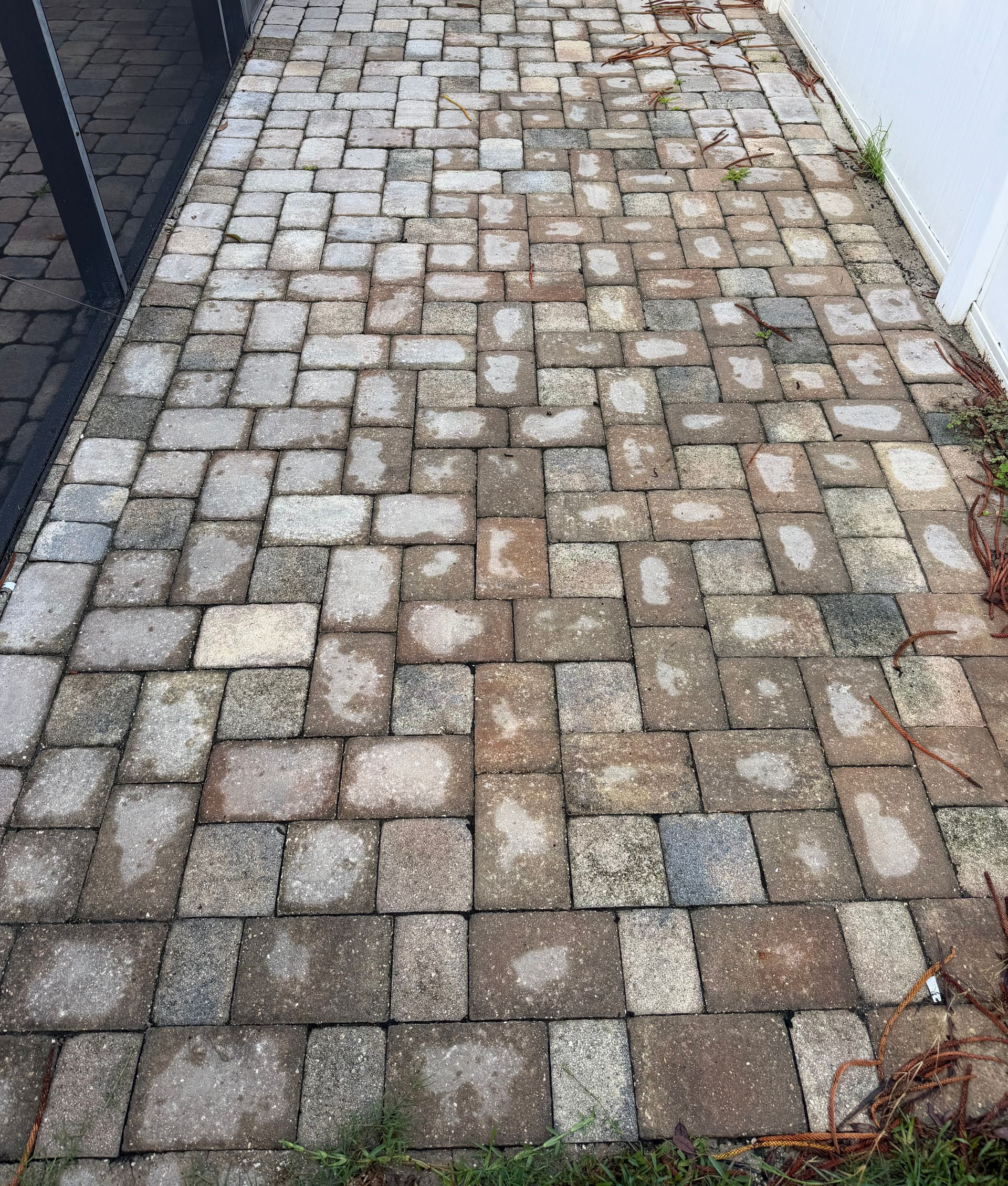
Fertilizer makes it worse. Most lawn fertilizers carry iron as a greening agent, and granules that land on a driveway and then get watered in leave a constellation of small rust freckles that are a different problem with the same chemistry.
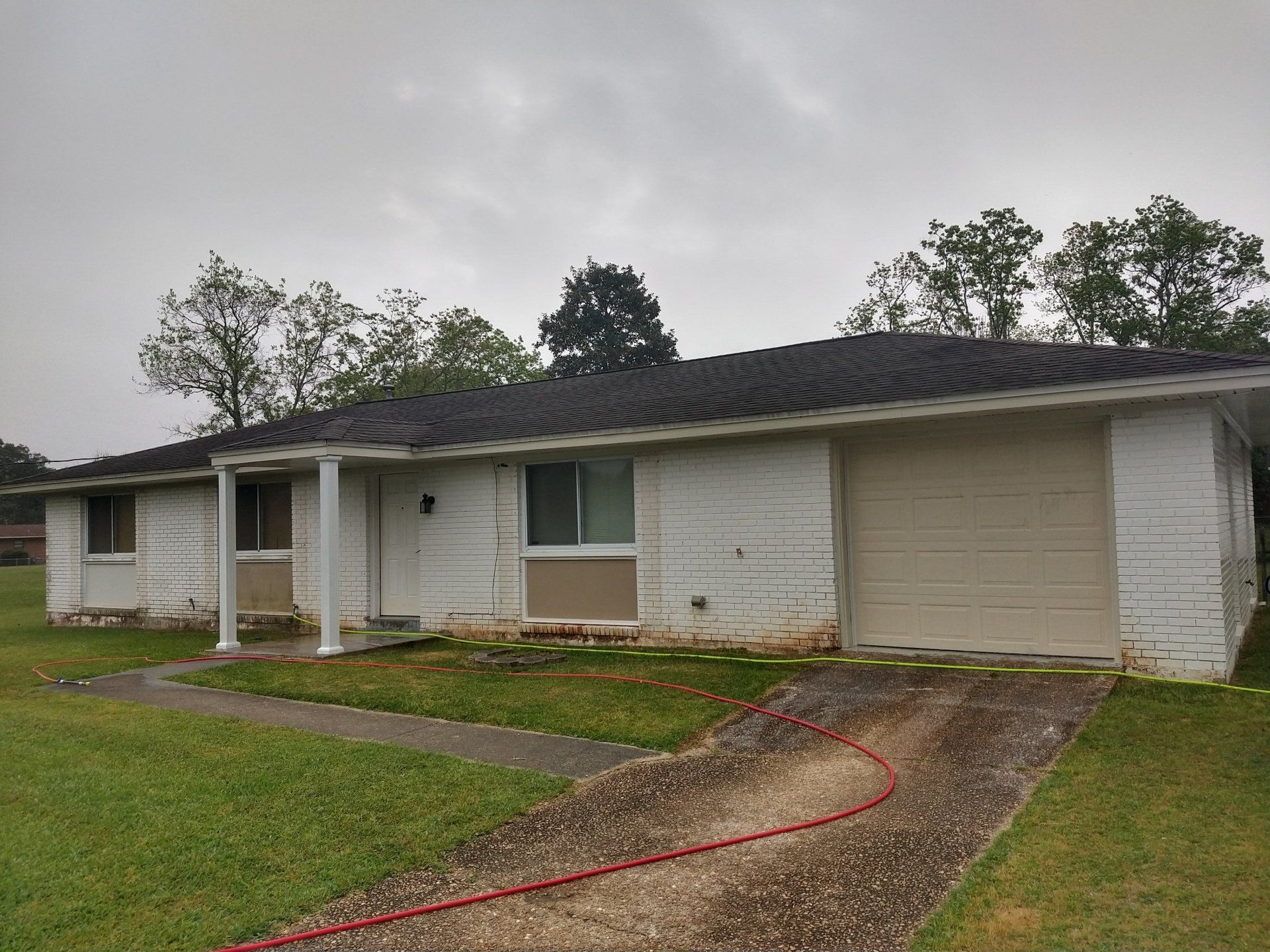
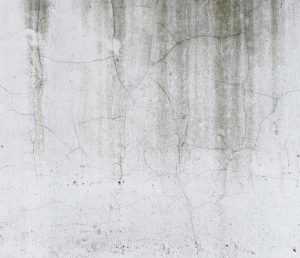
[PHOTO: close-up of orange irrigation staining on white stucco with the spray arc clearly visible — Keystone]
What actually removes irrigation rust?
A dedicated rust remover — oxalic acid based for most surfaces, or a stronger formulation for concrete — applied at the right dilution, given time to dwell, and then neutralized and rinsed thoroughly. On a white stucco wall the stain usually releases in under five minutes, and it is one of the more satisfying things in this trade to watch.
What does not work:
- High pressure. It will not break the iron bond. It will burn the texture off stucco, open the pores, and make the next round of staining soak in deeper.
- Chlorine or sodium hypochlorite. Excellent on algae and mildew. Does essentially nothing to rust, and on some metals it makes it worse.
- Household rust products meant for fabric or porcelain. Wrong concentration, and they can etch or discolor a painted surface.
- Waiting. Iron staining does not weather off. It accumulates.
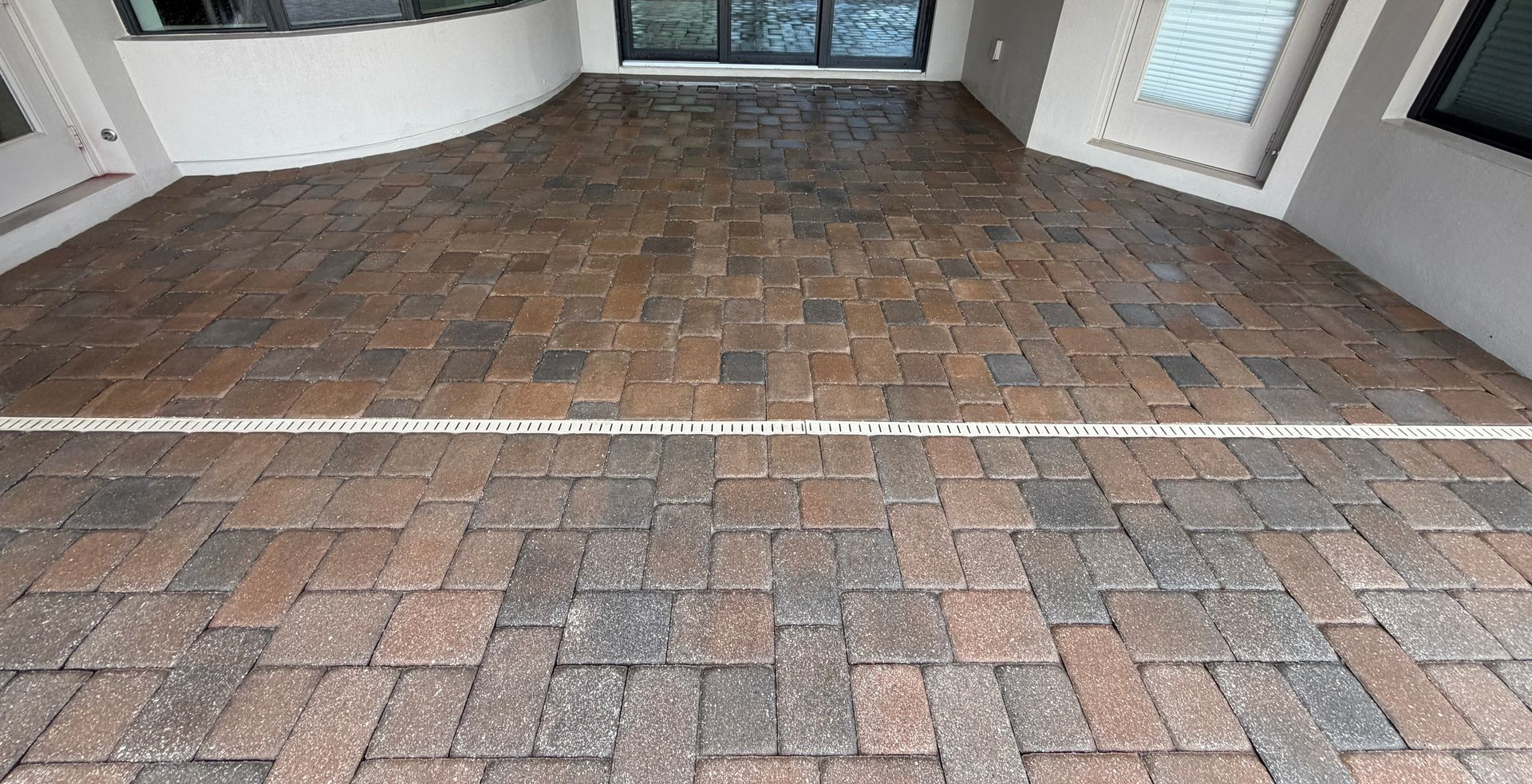
Surface matters enormously. Painted stucco, unpainted stucco, white marble chip, travertine, concrete pavers, and vinyl all need different dilutions and different dwell times, and a few of them need a different acid entirely. Travertine and natural limestone in particular can be etched dull by a product that is perfectly safe on concrete.
How often does it come back?
As fast as you keep watering, which is the part homeowners find frustrating and which we would rather be straight about. Removing the stain is a cleaning. Preventing it is a plumbing and landscaping fix. Both are worth doing.
What actually stops it:
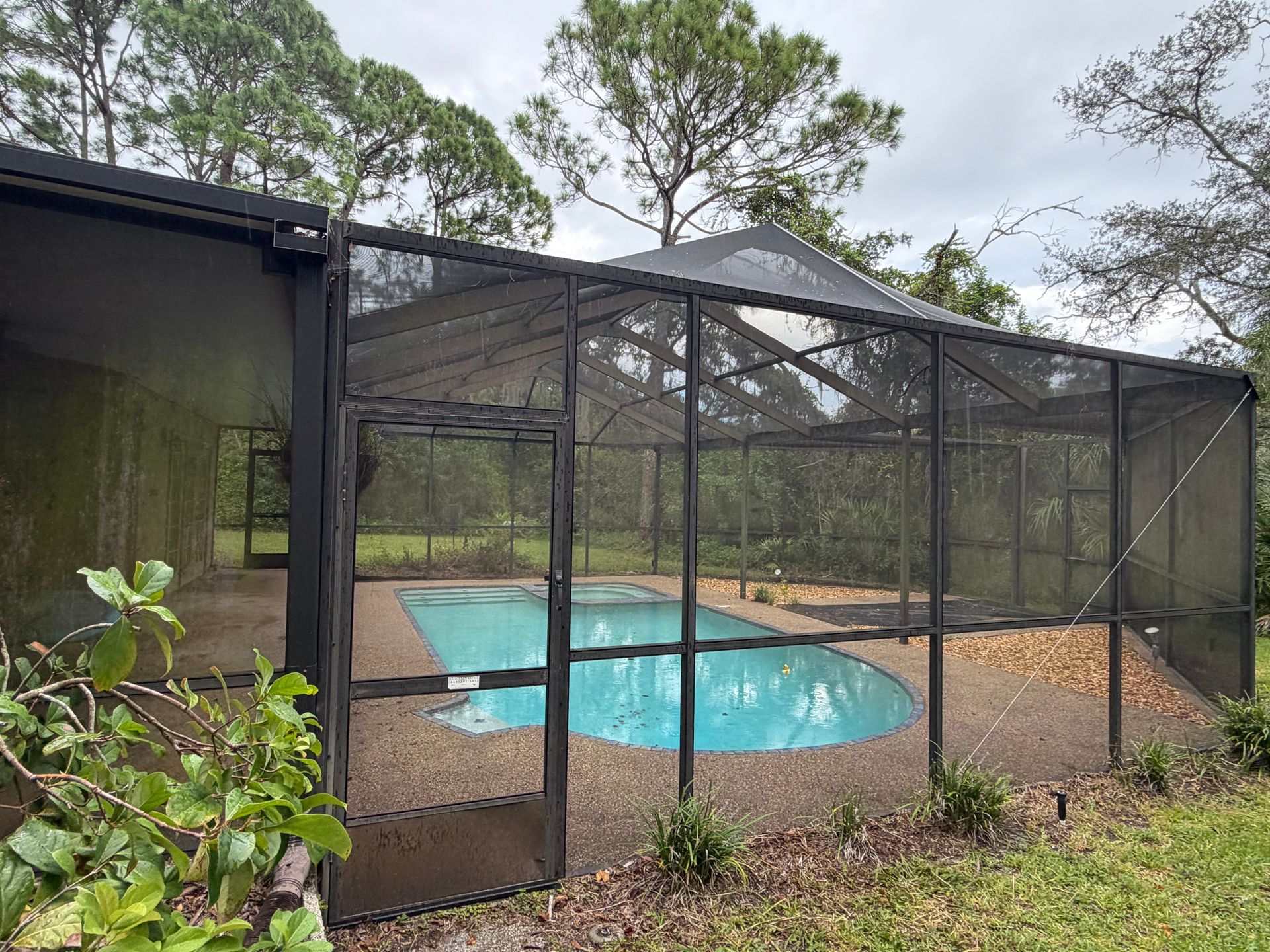
- Re-aim or swap the heads so spray stops hitting the house, the driveway, and the pool cage. This is usually a one-afternoon fix and it solves most of the problem.
- Install an iron filter or an injection system on the irrigation line. Not cheap, and worth every dollar on a large estate where re-aiming isn't enough.
- Water at the right time. Watering in early morning so the surfaces dry fast gives the iron less time to set.
- Keep fertilizer off hardscape. Blow the granules back onto the turf before you run the system, not after.
- Put the house on a wash cycle. Annual or twice-annual soft washing keeps the deposit thin enough that it releases easily instead of building into a stain you can see from the street.
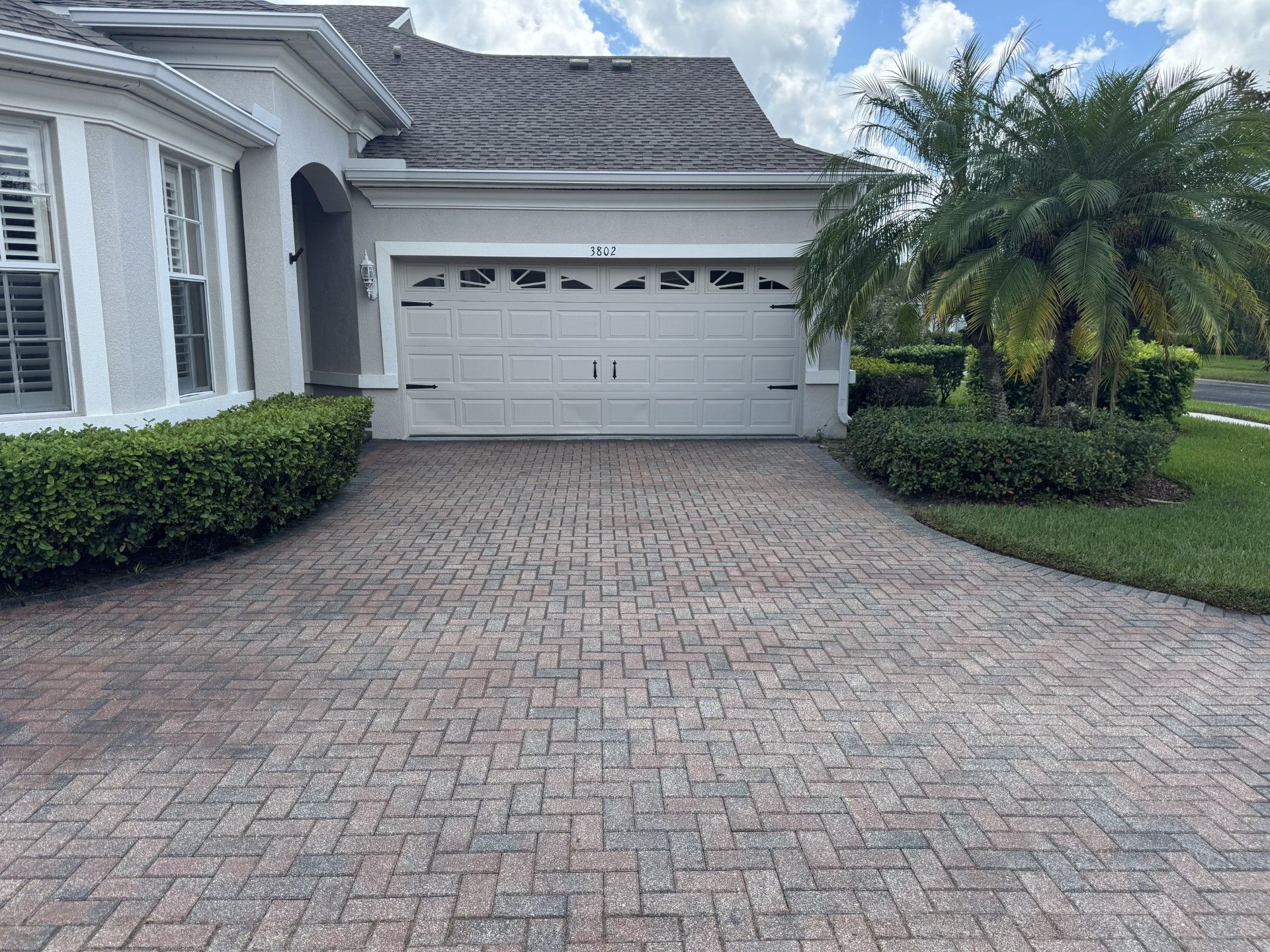
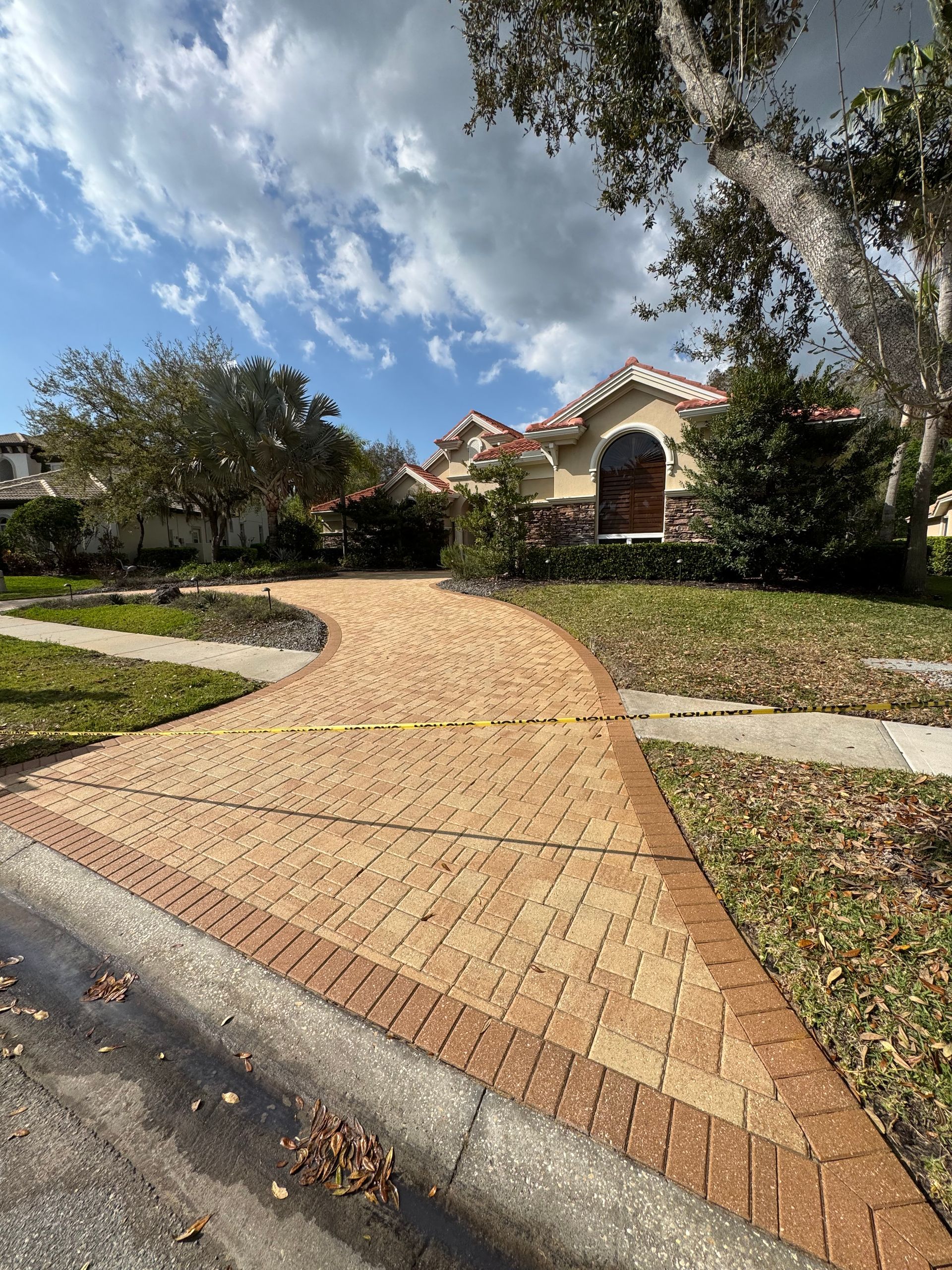
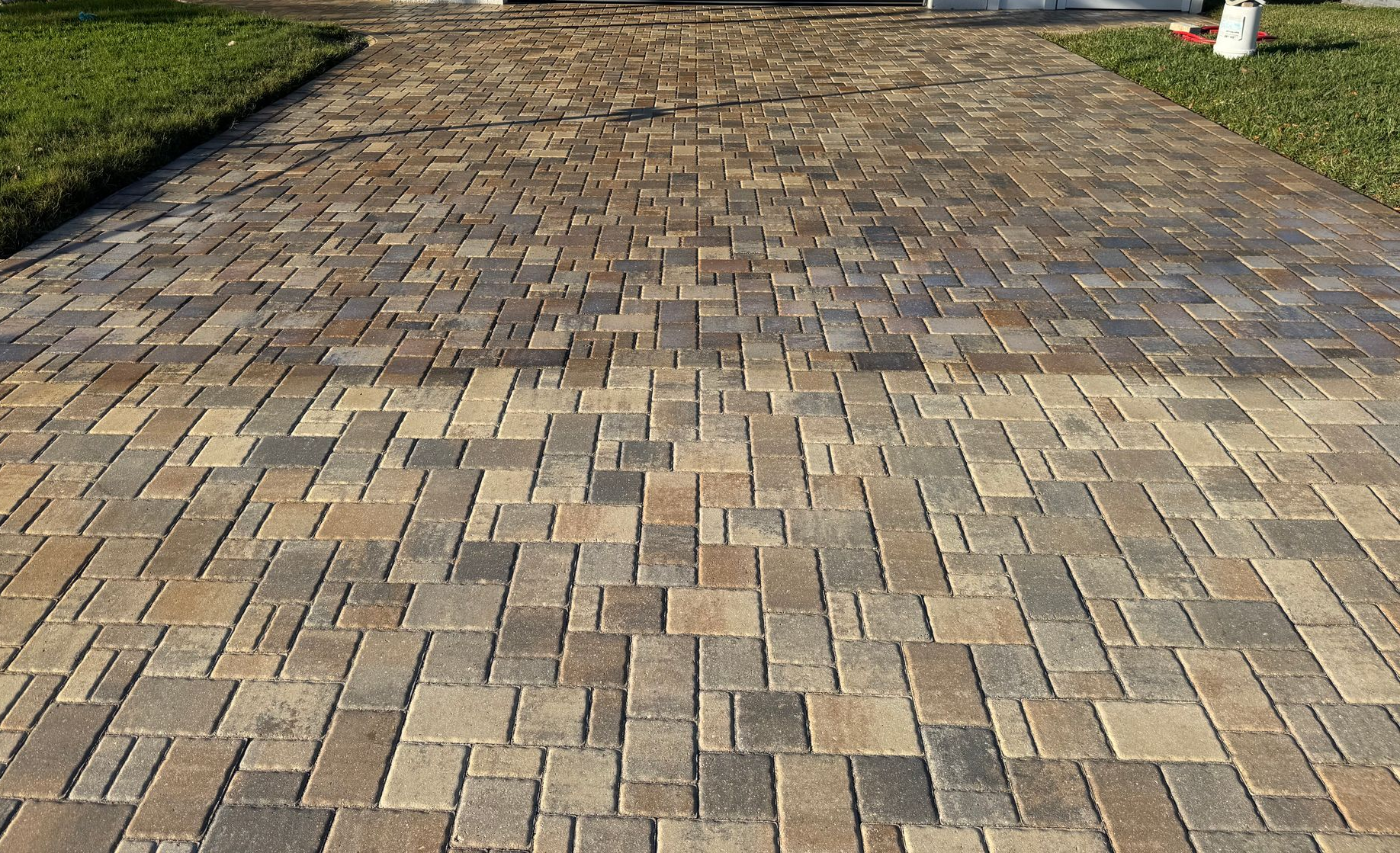
[PHOTO: before/after of a white paver driveway with fertilizer rust freckles removed — Odessa]
Where we do the most of this
Almost all of it is well-water country: the large-lot, heavily irrigated neighborhoods out past the Suncoast. We handle a steady run of it in Keystone and Odessa, where the combination of private wells, two-acre lots and serious landscaping budgets makes it close to universal. Lutz and Land O' Lakes run a close second.
On most of those homes the rust work rides along with a full house washing visit, because the same water that stained the stucco has been feeding algae on the shaded north wall the whole time.
We will tell you which stain you have
Not every orange mark is iron. Tannin from oak leaves, clay splash, and a failing paint primer all read orange from twenty feet away and all take different treatment. Text us a photo and we will identify it before we quote it.
Call 813-957-1174 for a free quote, from a veteran-owned crew that has argued with more Pasco County well water than anyone should have to.