When Heat Is the Only Thing That Works

Hot water pressure washing in Tampa is what removes grease, oil, chewing gum, and food residue; cold water at any pressure will not. Heat changes the chemistry — it melts and emulsifies fats so they can be carried away in the rinse, and it lets detergents work at a fraction of the contact time. For organic growth like algae and mildew, heat is irrelevant and chemistry does the work. Knowing which problem you have is the whole decision.

Here is the blunt version: a cold machine at 4,000 psi will not move a flattened piece of chewing gum. A hot machine at 1,500 psi will lift it off in two seconds. People buy pressure when they should be buying temperature.

What heat actually does

Three things, and they stack:

  • It melts. Grease, wax, gum, tar and cooking oils soften somewhere between 120 and 180 degrees. Once soft, they release from the pores of the concrete instead of being driven deeper into them.
  • It speeds up chemistry. Most detergents roughly double in effectiveness for every 20 degrees of temperature. That means shorter dwell times and less product on the surface.
  • It breaks surface tension. Hot water penetrates a porous surface faster, which matters on concrete that has had oil sitting on it for years.

What heat does not do is kill a stain you can't dissolve. Rust needs acid. Algae needs a biocide. Heat is not a substitute for either, and a contractor who brings a hot machine to a rust problem is bringing the wrong truck.

[PHOTO: before/after of a restaurant drive-thru lane with grease and gum removed — Tampa]

Which surfaces need hot water?

Yes, bring heat:

  • Restaurant drive-thru lanes, service aisles and walk-in cooler pads
  • Dumpster pads and enclosures
  • Loading docks and trash corrals
  • Gas station fuel islands and canopies
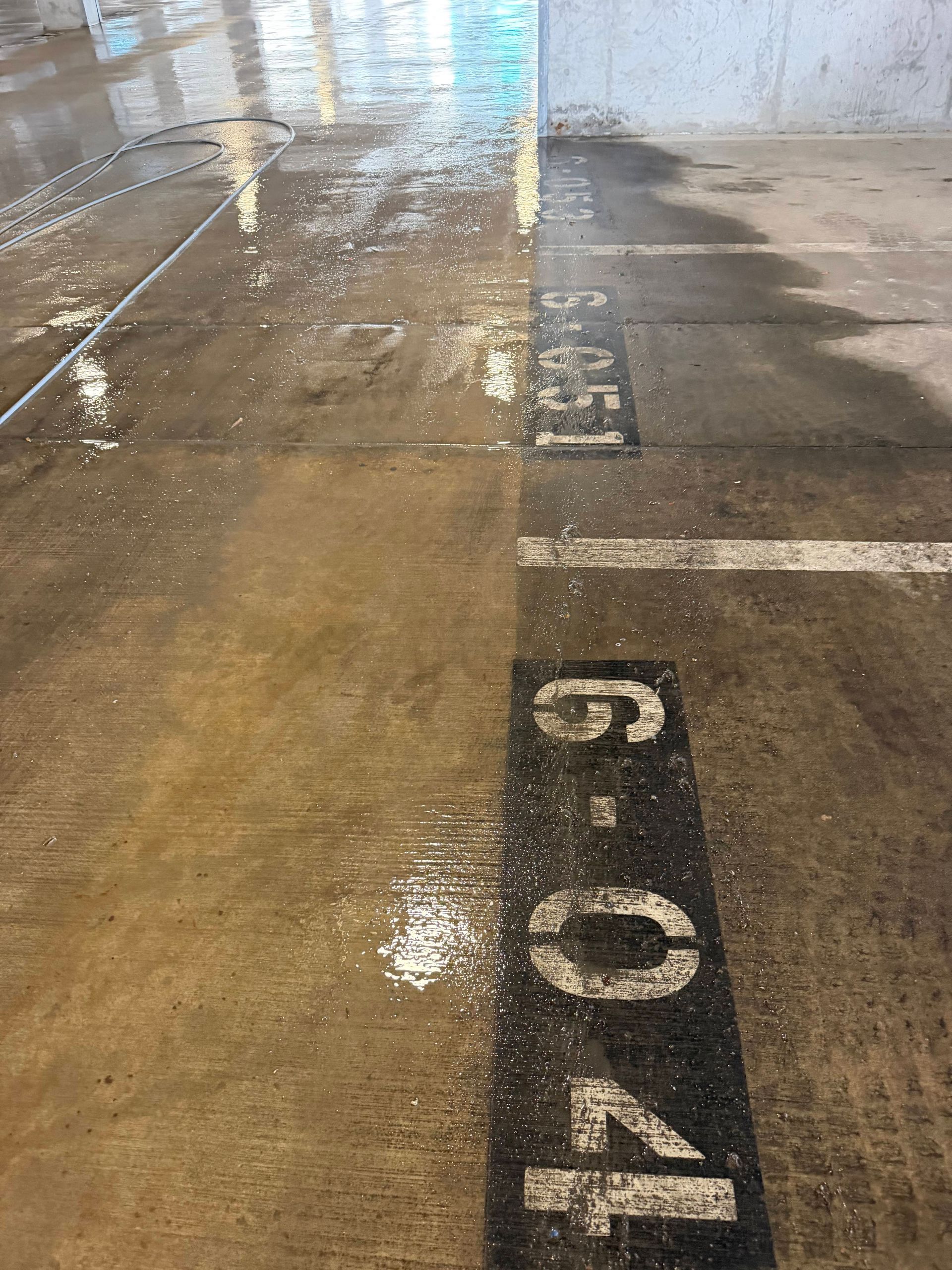
  • Parking garages, especially the lower decks where drip oil collects
  • Sidewalks outside any food tenant, where gum is the primary problem
  • Residential garage floors and driveway oil spots
  • Outdoor kitchens and grill surrounds

No, cold water and the right chemistry:

  • Roofs of any material — heat does nothing for algae and can damage shingle granules and sealants
  • Painted stucco and siding
  • Vinyl and aluminum fencing
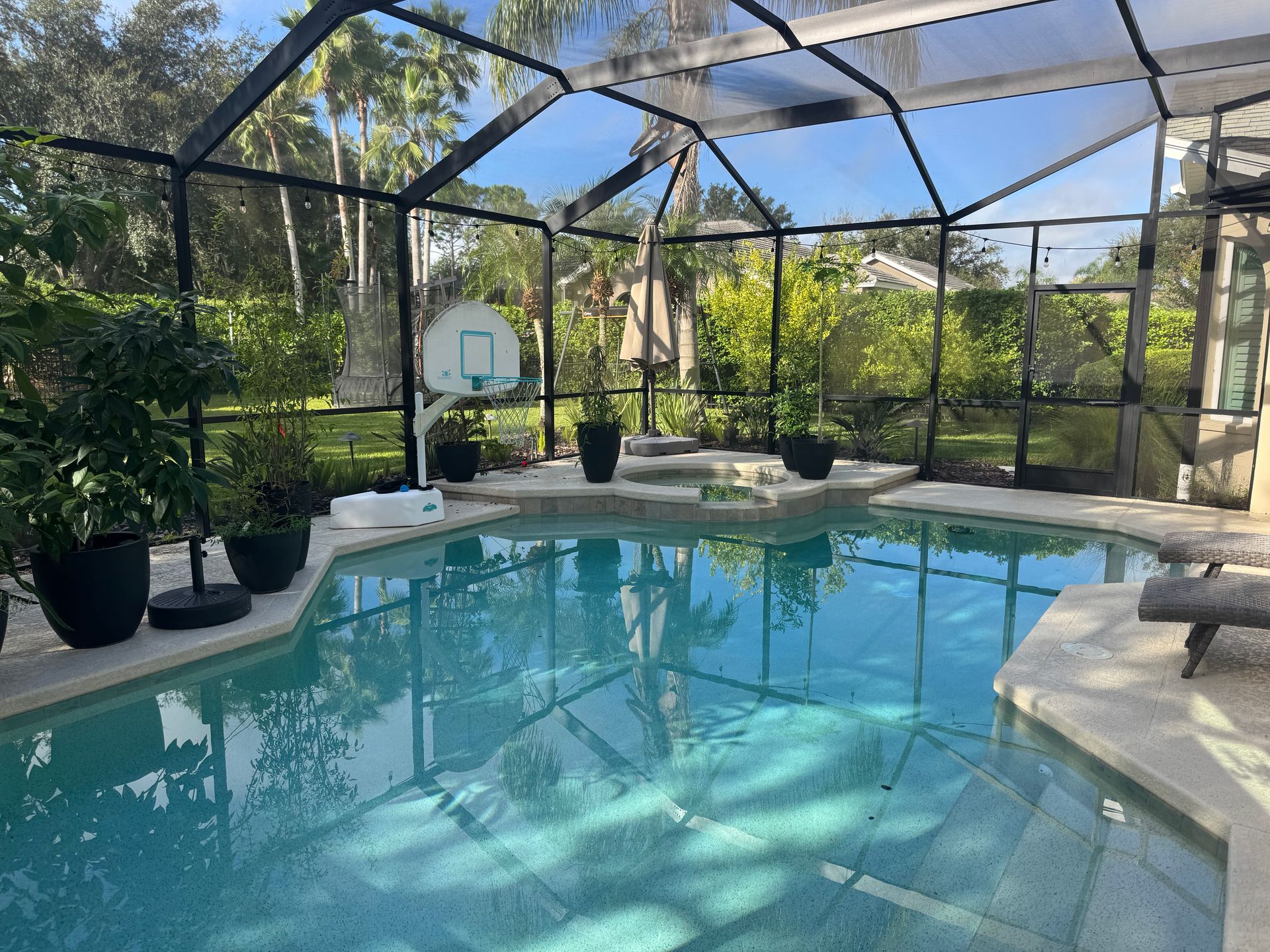
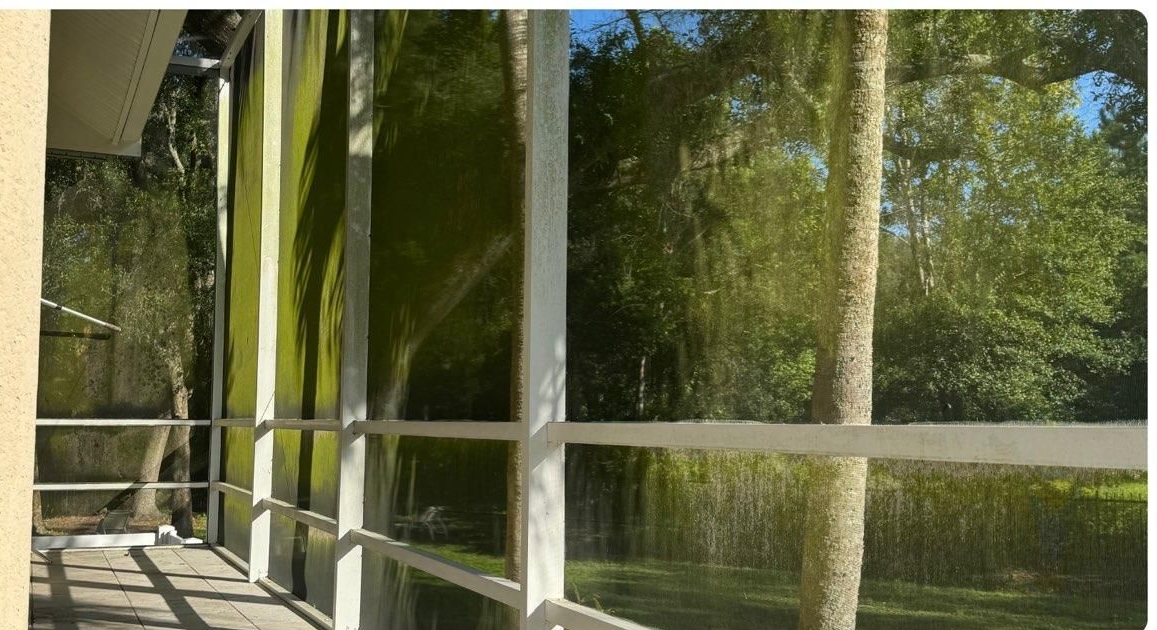
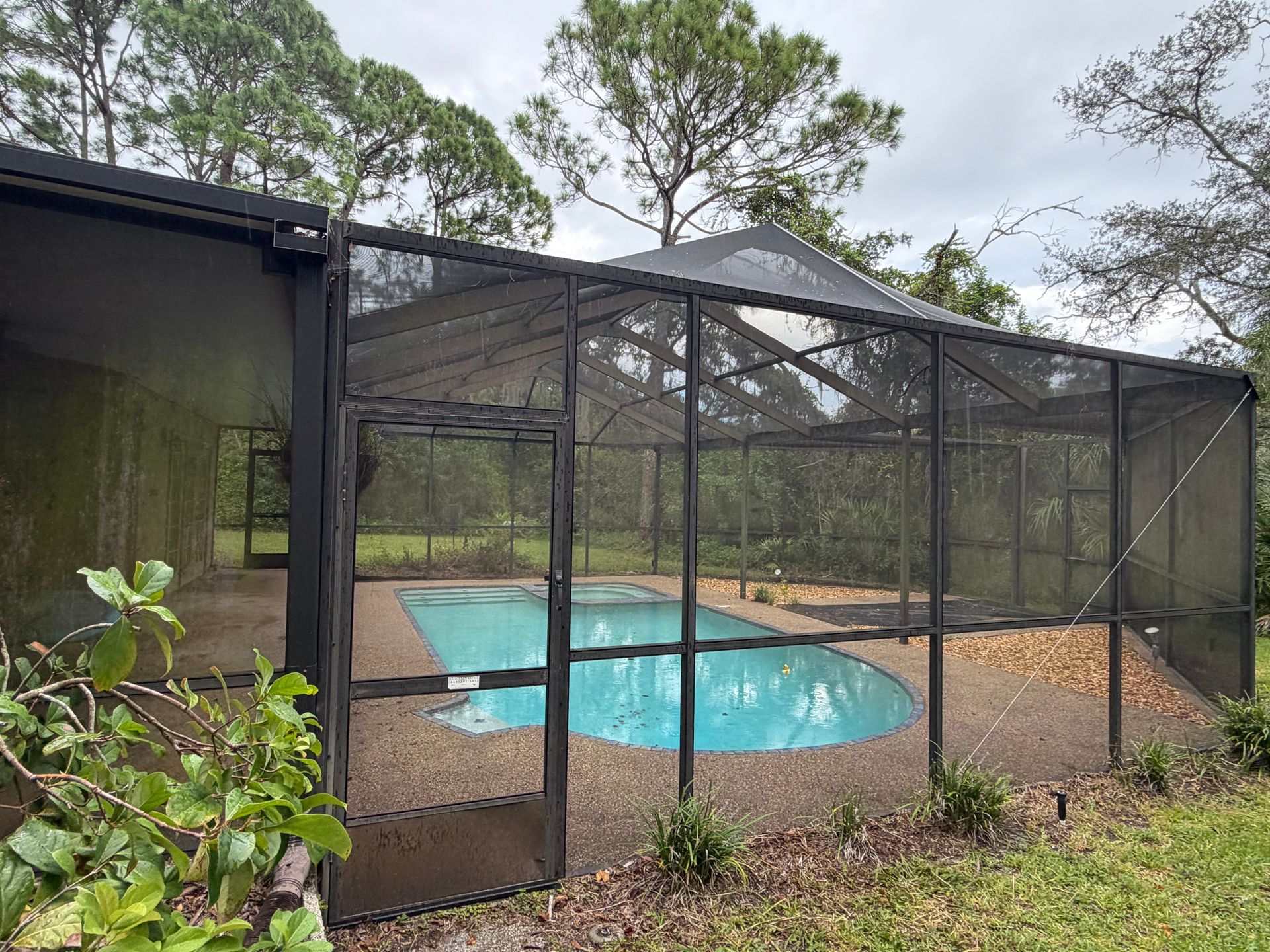
  • Pool cages and screen enclosures
  • Wood decks and fencing, where hot water raises grain and can scorch softwoods
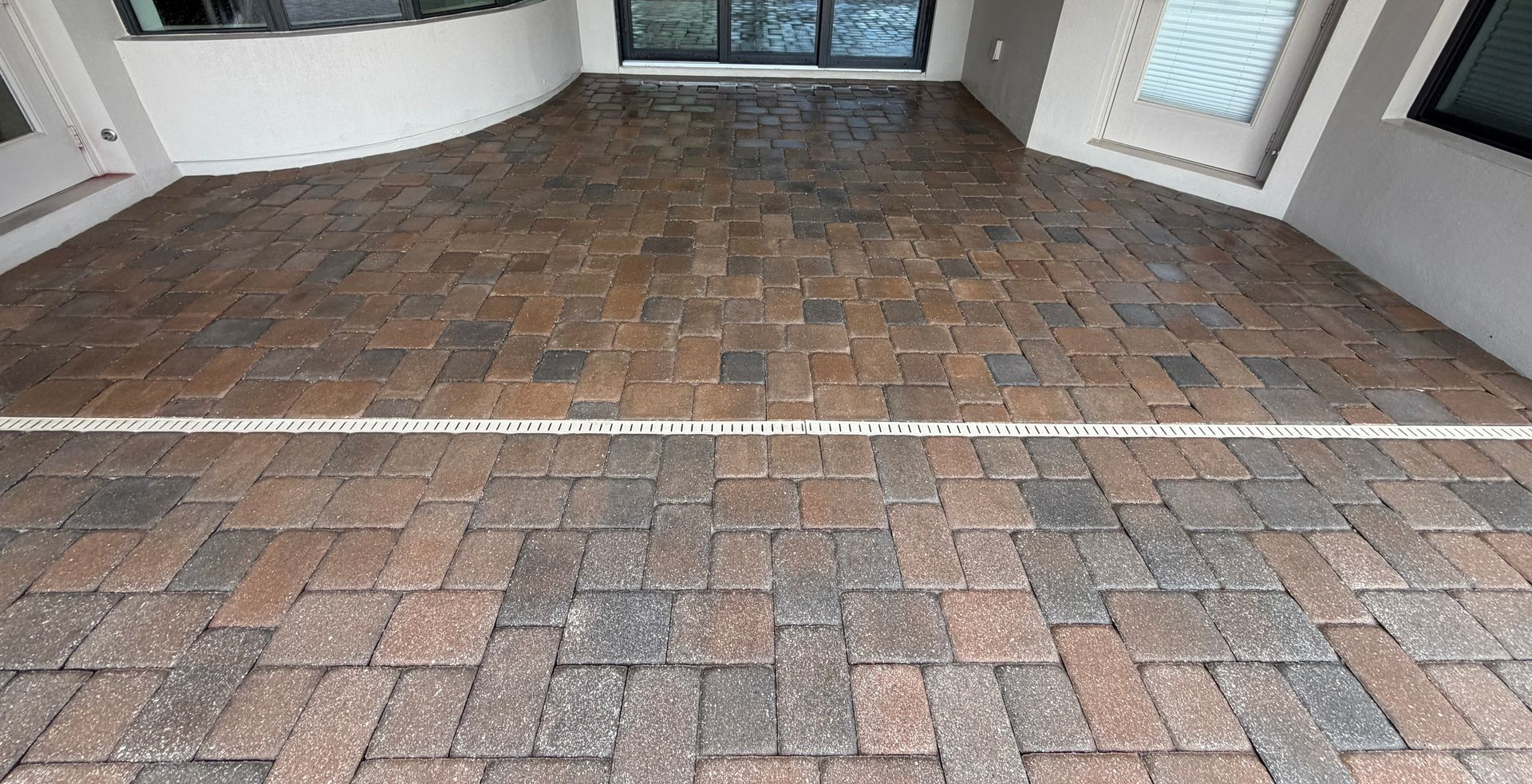
  • Any paver that has been sealed, since heat will soften and cloud an acrylic sealer

That last one surprises people. A hot machine run across a freshly sealed paver driveway will leave a hazy, slightly tacky path exactly as wide as the surface cleaner. It is not easily fixed.

How hot is hot enough?

For grease and gum on concrete, 180 to 200 degrees at the tip is the working range. Below about 140 you are mostly just washing with warm water and not getting the emulsification you paid for. Above that, you are limited less by the machine and more by what the surface can take.

The sequence matters as much as the temperature:

  1. Dry sweep or blow the area — wetting loose debris just turns it into paste.
  2. Apply a degreaser cold and let it dwell. Hot application flashes it off too fast.
  3. Agitate the heavy areas, usually with a stiff broom.
  4. Hit it with heat through a surface cleaner, overlapping passes by a third.
  5. Detail the edges and corners by hand with a wand, where a surface cleaner can't reach.
  6. Recover and rinse. On commercial flatwork the water gets contained and vacuumed, not pushed to the curb.

Skip step two and you will double your time on step four.

[PHOTO: hot water surface cleaner on a parking garage deck, visible steam — Tampa Bay]

Does hot water damage concrete?

Not sound concrete. What it can damage is what is sitting on the concrete — a sealer, a coating, an epoxy, or a decorative overlay. It can also open up existing spalling and make it obvious, which feels like damage and is really a diagnosis. If your garage floor comes out of a hot wash with a few new flaky patches, those patches were already delaminated; the heat just finished the argument.

On pavers, the risk is the sealer and the joint sand. On stamped or stained concrete, it is the color. Anywhere there is a finish on top of the slab, we drop the temperature and lean on chemistry instead.

The practical takeaway

If your problem is biological, it is green or black and it comes back every year — that is a chemistry job. If your problem is petroleum or food, it is dark, slick, and in a specific spot where something sat or dripped — that is a heat job. Most commercial properties need both, done in the right order, which is why we carry hot water on our commercial rigs as standard rather than as an upsell.

You can see the full range on our exterior cleaning page, with the commercial flatwork specifics under commercial concrete cleaning and commercial building and parking lot cleaning.

Tell us what the stain is

Send a photo. We will tell you whether it needs heat, acid, or a biocide before we quote it, and we will tell you if it is not coming out at all — some things have been there too long, and you deserve to know that up front.

Call 813-957-1174 for a free quote. Wild West Washing is veteran-owned and Tampa-based, and we own the hot machines because half this town's concrete needs them.

By Casey West • November 12, 2026
Flat roof cleaning in Tampa is about drainage, not looks. Why low-slope membranes hold algae and water, and how they are cleaned.
By Casey West • November 11, 2026
HOA common area pressure washing in Tampa covers entry monuments, clubhouses and mail kiosks. How boards scope and budget it.
By Casey West • November 10, 2026
Irrigation rust stain removal in Tampa takes acid, not pressure. Why well water stains stucco and pavers orange, and how to stop it.
By Casey West • November 10, 2026
Commercial pressure washing water recovery in Tampa keeps wash water out of storm drains. What property managers should require.
By Casey West • November 9, 2026
Stamped concrete cleaning and sealing in Tampa restores faded color and pattern. The right pressure, the right sealer, the right schedule.
By Casey West • November 6, 2026
Hard water spots from well-water irrigation start as surface deposits but can etch into the glass permanently. See which stage yours is in and what helps.
By Casey West • November 5, 2026
A month-by-month exterior cleaning schedule for Tampa homes: roof, pavers, gutters, cage and glass, timed to Florida's wet and dry seasons.
By Casey West • November 5, 2026
Country club pressure washing in Tampa covers clubhouse, cart paths, valet circle and pool deck. How to scope and schedule it.
By Casey West • November 3, 2026
A slick, greenish court surface is algae, not a surfacing problem, and pressure washing can strip the acrylic coat. See how courts should be cleaned instead.
By Casey West • November 3, 2026
Post construction cleaning in Tampa removes the mortar haze, stucco splatter and overspray that builders leave behind on a new build
By Casey West • November 2, 2026
A stained driveway and streaked roof read as deferred maintenance in seconds. See the order of operations for pressure washing before you list in Tampa.
By Casey West • November 2, 2026
Paver sealing in Tampa works best November through April, when humidity drops and sealer cures properly. Here's why the dry season wins
By Casey West • October 29, 2026
Historic home exterior cleaning Hyde Park: how century-old brick, wood and original glass get washed safely, and what pressure ruins
By Casey West • October 29, 2026
Three-story house washing Tampa: how pros reach 35-foot walls without ladders, and why soft washing from the ground is the method.
By Casey West • October 27, 2026
White powdery bloom on stucco is efflorescence, not mold, and mold treatments won't touch it. See the 10-second test that tells the two apart.
By Casey West • October 27, 2026
Artificial turf cleaning Tampa: why synthetic lawns and putting greens flatten, smell and grow algae here, and how pros restore them
By Casey West • October 27, 2026
Solar panel cleaning Tampa: how pollen, salt film and roof algae cut output, how often panels need washing, and the safe method. Internal
By Casey West • October 23, 2026
Hotels, hospitals and churches can't shut down for cleaning. See how we schedule overnight, phased exterior washing around guests, patients and services.
By Casey West • October 22, 2026
Etched concrete and striped stucco don't wash out, they're permanent. See what pressure washing damage looks like and how to avoid hiring the wrong crew.
By Casey West • October 21, 2026
Salt air settles on Davis Island homes daily and doesn't rinse off in the rain. See why waterfront houses need washing every 9-12 months, not 18.
By Casey West • October 20, 2026
Oak canopy drops tannin that stains Westchase driveways differently than open subdivisions. See why paver sealing needs a different plan under the trees.
By Casey West • October 20, 2026
Roofs, pavers, pool decks and walls don't all come due at the same time. See the ideal month-by-month exterior cleaning schedule for Tampa Bay homes.
By Casey West • October 16, 2026
Those vertical stripes on your gutters aren't dirt, they're oxidation, and soap won't remove them. See what gutter brightening actually involves.
By Casey West • October 16, 2026
Lichen on tile roofs can't be removed in one visit; it has to weather off over weeks. See the real difference between lichen and algae, and why it matters.
By Casey West • October 15, 2026
Hard water stain removal on windows in Tampa: why sprinkler spots etch glass, and when restoration beats another cleaning.
By Casey West • October 15, 2026
Gate Access, Vendor Insurance, and ARC Approval
By Casey West • October 15, 2026
Cleaning Hotels, Medical Offices, and Churches While They're Open
By Casey West • October 14, 2026
Old Hyde Park homes need low pressure and careful chemistry, not a wand. See why lime mortar, wood trim and original glazing require extra care when washing.
By Casey West • October 14, 2026
Buyers judge your listing photos in seconds. See which exterior surfaces move the needle most and the ideal pressure washing timeline before showings.
By Casey West • October 13, 2026
Mortar haze, stucco splatter and concrete slurry are easiest to remove in the first 90 days after a new build. See what a builder's final clean misses.
By Casey West • October 12, 2026
Chalky white film on your pavers may be efflorescence, not dirt or a failed sealer. See the quick checks that tell you which problem you actually have.
By Casey West • October 12, 2026
Why does only one wall of your Westchase home turn green? See how shade and moisture drive algae growth, and how often exterior washing should happen.
By Casey West • October 9, 2026
Waterfront homes near Culbreath Isles need washing every 9-12 months, not 18. See why salt air makes bayfront exteriors dirty differently, not just faster.
By Casey West • October 7, 2026
Insurance, water source, chemistry, roof access, crew and warranty: the 7 questions that reveal whether a Tampa pressure washing company is the real deal.
By Casey West • October 6, 2026
Those black streaks on your barrel tile are a living cyanobacteria, not dirt. See why pressure washing destroys tile and what actually kills it for good.
By Casey West • October 5, 2026
Post-storm cleaning works best within 4-6 weeks, before snowbird season begins. See what salt, pollen and storm debris leave behind on a Tampa home.
By Casey West • October 2, 2026
HOA exterior bids only compare fairly when the scope is defined first. See what belongs in an annual pressure washing contract for Hillsborough County HOAs.
By Casey West • October 2, 2026
Wet look, matte or natural: the paver sealer finish you choose is the one you live with daily. Compare the options for Tampa Bay driveways and patios.
By Casey West • October 1, 2026
Black-streaked docks and green seawalls are the most-postponed waterfront job in Tampa Bay, and the one where neglect turns structural fastest.
By Casey West • October 1, 2026
Travertine is calcium carbonate, like chalk, and the wrong acidic cleaner etches it permanently. See what's safe for cleaning a Tampa travertine pool deck.
By Casey West • September 30, 2026
Chalky white railings and fences aren't dirty, they're oxidized. See why washing alone won't fix it and what oxidation removal actually involves.
By Casey West • September 30, 2026
Standing seam metal roofs need milder chemistry than tile or the factory coating gets stripped. See how to safely clean algae film off a Tampa metal roof.
By Casey West • September 29, 2026
Inspectors photograph roof condition, not leaks. See why cleaning algae and black streaks before a 4-point or wind mitigation inspection protects your policy.
By Casey West • September 29, 2026
Caretakers and property managers: here's the October punch list for getting a seasonal Tampa Bay home exterior ready before the owners fly back.
By Casey West • September 28, 2026
Pressure washing removes what's sitting on a surface; soft washing kills what's growing in it. See which one your Tampa Bay home actually needs.
By Casey West • September 24, 2026
Bids can look identical on paper. Here are the questions about insurance, chemistry and technique that separate a real Tampa pressure washing crew from a risk.
By Casey West • September 24, 2026
Roofs, stucco, pavers and pool cages all grow things at different rates. See our full surface-by-surface pressure washing schedule for Florida homes.
By Casey West • September 23, 2026
Tile roof cleaning in Tampa uses low pressure and chemistry, never a wand, since cracked tile can't always be matched. See why those black streaks spread.
By Casey West • September 22, 2026
A Tampa summer alone can turn a clean house green. See what months of heat and humidity do to an empty snowbird home, and the order to fix it.
By Casey West • September 21, 2026
Hurricanes drive salt, pollen and debris deep into Tampa Bay homes long after the storm passes. See what to clean first and why timing matters.